
SEAT Leon 5F 1.4 TSI Style front view

SEAT Leon 5F 1.4 and 1.5 TSI Buying Guide: Problems and UK Costs

The SEAT Leon 5F 1.4 TSI and 1.5 TSI offer a compelling middle ground: more performance and character than their modest capacities suggest, sensible everyday dimensions and a substantial UK parts market. They can be a better fit than a diesel for mixed use without the buying and running-cost commitment of a Cupra.

This guide covers the mainstream turbocharged petrol engines in the third-generation Leon, 2013–2020, across five-door hatchback, three-door SC and ST estate where offered. It is separate from our Cupra coverage. Older chain-driven TSI advice, diesel maintenance and fourth-generation eTSI/hybrid specifications must not be applied automatically.

Quick buying verdict

A well-maintained 1.4 TSI manual is a strong starting point. The later 1.5 TSI deserves consideration too, provided its cold low-speed driveability is convincing and any software work is documented. Choose DSG for convenience after a proper cold/warm assessment, not because a service stamp or a low mileage supposedly guarantees the transmission.

Choose the engine, body and gearbox separately

The 5F uses the later EA211 petrol family in the applications covered here. The familiar “TSI” badge spans different generations of technology, so the badge alone cannot settle timing-drive or repair advice. Obtain the VIN, engine code, exact power output and transmission details before comparison or parts ordering.

ChoiceMain appealBuying focus
1.4 TSIGood everyday response with manual/DSG choices depending on application.Belt-engine identification, oil servicing, cooling and ignition condition.
1.4 with ACT where fittedCylinder deactivation for suitable light-load running.Confirm actual equipment; distinguish normal transition from misfire.
1.5 TSILater engine choice with useful response.Cold low-speed hesitation assessment and VIN-specific software history.
ManualStraightforward driver involvement.Clutch take-up, gear selection and noise.
DSGConvenient in commuting and mixed use.Exact gearbox, clutch/mechatronics condition, applicable servicing.
SC / five-door / STDifferent access and load-carrying priorities.Try rear access and real luggage; check estate equipment and water ingress.

A 1.4 badge may cover different outputs, and ACT is not universal across every version. Likewise, do not assume a later registration establishes the engine from its advertisement title. Ask for the specification record and verify it physically. Modifications, remaps and retrofitted equipment need disclosure to the insurer and may complicate diagnosis.

Which body and trim?

The five-door suits most buyers, the SC trades rear access for its three-door shape, and the ST is worth considering if you need estate practicality. Try your actual child seats, parking space and usual luggage rather than deciding from a boot-capacity headline. Check folding seats, parcel shelf or load cover, underfloor equipment and the availability of the locking-wheel key.

FR appearance, wheels and seats can be attractive, but test ride quality on the roads you use. LED headlights, parking equipment, climate control and infotainment should all work. A lower trim with complete history and healthy tyres can be a wiser buy than a higher trim whose premium equipment is partly broken.

History and price comparison

Compare the same engine/output, gearbox and body style, then adjust for mileage, history, condition and seller. Ask what the advertised “full service history” actually includes. A printout or stamp may record a visit without proving belt, plugs, brake fluid or gearbox work. Collect invoices and reconcile them with the correct schedule.

Use GOV.UK to read the full MOT sequence. Repeated worn tyres, brake corrosion or suspension advisories deserve explanation and a physical check. A fresh MOT is useful evidence of a limited test, not certification of engine health or DSG longevity. A provenance check and professional inspection answer different questions and are both worthwhile.

Price essential work before negotiating. Record purchase price, due maintenance, diagnosed defects and optional improvements separately. A few hundred pounds saved at purchase can disappear into tyres, a second key, a leaking cooling component or incomplete servicing. Unknown transmission symptoms can create a much less predictable bill.

EA211 engine checks: separate facts from older TSI folklore

Timing belt and water-pump arrangement

The 1.4 EA211 belt arrangement must not be confused with the older chain-driven 1.4 engines found in earlier models. Ask SEAT or a specialist for current requirements by engine/VIN, rather than adopting an interval quoted for another year or country. The correct question is what this engine needs now, supported by its age, mileage and history.

Where belt work has been carried out, the invoice should identify the complete kit, required hardware and date/mileage. The EA211 water pump and its drive are separate from the main timing-belt job in the JBS 1.2/1.4 menu. Do not assume a belt price automatically includes that pump, or add a diesel-style belt-and-pump package to a petrol budget.

The 1.5 requires its own confirmed application and procedure. The published 1.4 price below is not certified as a 1.5 quote. If belt history is unclear, obtain the correct requirement and written quotation before purchase. Visible condition alone cannot establish the remaining life of every timing component.

Oil servicing and mechanical condition

Ask for oil invoices showing the correct approval and service mileage. A recently changed oil filter does not recover years of missed maintenance. Check the level using the handbook method, look for leaks and ask about top-up frequency. A level that looks correct at the viewing is only a snapshot; persistent oil use or smoke warrants diagnosis.

Arrange a cold start and listen for unusual noises, uneven idle and warning messages. The engine should settle and pull cleanly during normal acceleration. Misfires may involve ignition, fuelling, air leaks or mechanical condition. A code identifying a cylinder does not prove a coil is the only cause, and fresh plugs do not certify compression.

On a modified car, find out who altered the software and what hardware was changed. Ask for invoices, emissions integrity and insurance disclosure. Removing a remap before sale may not tell you how the car was used. If you want predictable ownership, an original car with coherent records is usually easier to assess.

Cooling leaks and temperature behaviour

Inspect accessible coolant housings, hose connections and the surrounding area for residue or wetness, with the engine cold. Ask whether coolant has been topped up and why. Any recurrent loss needs a pressure test and targeted diagnosis rather than a reassuring bottle left in the boot.

Assess warm-up and cabin heat through the drive, then look for fresh leakage without touching hot parts. Do not open a hot expansion tank. A water-pump, housing or thermostat estimate should specify the correct engine and all required seals, coolant and labour. The cheapest bare component is not a fitted repair.

ACT and light-load transitions

Where active cylinder technology is fitted, it can change engine operation during suitable light-load conditions. Learn the normal indications for the exact vehicle, then test smooth light-throttle cruising and reapplication of load. Do not accept repeated shaking, a warning light or obvious misfire as normal simply because the car has ACT.

A specialist should compare symptoms, fault history and live data before deciding whether ignition, software, mounts or another system is involved. Equally, do not replace expensive ACT-related components because an online discussion uses the same descriptive word. Reproducing the condition and measuring it is more useful than guessing.

1.5 TSI cold hesitation and software history

Spend time assessing a 1.5 from cold, particularly pulling away gently and driving at low speed. Ask whether the owner has experienced hesitation or surging and whether SEAT has carried out software updates or diagnostic work. Obtain the invoice or workshop record, including the reported symptom, rather than accepting “all updates done” as a complete diagnosis.

An update history is not a promise that every driveability complaint has been cured on every car. Repeat the test when warm and judge the actual behaviour. If the seller only allows a pre-warmed demonstration, you have not completed the assessment. Persistent hesitation deserves investigation before payment; it may have causes beyond software.

Manual and DSG: the right checks for each

Manual transmission

Try every gear cold and warm, including reverse after stopping normally. Check clutch progression in ordinary starts and manoeuvres. Under normal acceleration, engine speed should not flare without corresponding road speed. Do not deliberately stall or abuse the drivetrain as a test.

Listen for bearing or flywheel-related noise and note whether clutch position changes it. Several components can create similar symptoms, so obtain a diagnosis and complete quote. Include the release mechanism, flywheel assessment, fluids and any necessary associated work rather than treating an inexpensive clutch kit as the whole job.

DSG identification and maintenance

Mainstream small-engined 5F petrols commonly use a seven-speed dry-clutch DSG application. Confirm the actual gearbox code: it is not safe to assume that a wet-clutch DSG oil/filter package from a Cupra or diesel is the right service. Clutch lubrication design, gear oil and mechatronic requirements are different questions, all controlled by the actual transmission.

Request the gearbox-specific record and ask a VAG specialist what servicing, campaigns or repairs apply to that unit. A claim of “DSG serviced” needs the fluid, job and gearbox code on the invoice. Conversely, absence of a wet-clutch-style service invoice should not trigger an invented maintenance procedure for a dry-clutch unit.

Test drive and reverse engagement, gentle take-up, slow traffic, parking manoeuvres, normal acceleration and changes after warming. Repeated judder, delay, banging, slipping or loss of drive needs investigation. A clutch adaptation is a diagnostic/workshop procedure, not a universal cure for wear or a mechatronic fault.

Ask for a scan of the relevant transmission module and an explanation of any stored faults before clearing them. If previous clutch or mechatronic work is claimed, check who did it, the parts, calibration and warranty. A new component without evidence of a correct repair should not automatically command a premium.

Find a SEAT Leon 5F 1.4/1.5 TSICompare current complete-car advertisements, then use this guide to check the version, history and condition.Browse cars for sale ↓

Chassis, bodywork and electrical checks

Listen for knocks, squeaks and bearing noise on a mixed road test. Inspect springs, dampers, bushes, joints and mounting areas on a lift. A car that wanders or wears tyres unevenly may need more than tracking. The cause could include worn components, damaged wheels or previous impact; establish that before agreeing an alignment allowance.

Check brake discs on both faces, pad wear and signs of binding. Low-mileage cars can still have substantial corrosion from inactivity. The parking-brake arrangement varies by build; identify the fitted system and confirm that it applies and releases normally. Rear brake work should follow the correct procedure for that version.

Inspect tyre dates, sidewalls, tread and correct sizes/load ratings. Large FR wheels can make pothole damage and tyre replacement more expensive. Look at inner rim edges and ask for alignment or wheel-repair evidence where uneven wear or vibration is present. A recently fitted tyre can conceal a long-standing geometry problem rather than prove it has been solved.

SEAT Leon 5F 1.4 TSI rear view
The five-door 1.4 TSI offers a useful everyday package. Check rear lamps, bumper repairs, hatch seals and the luggage well. Photograph: © M 93 / Wikimedia Commons, CC BY-SA 3.0 (DE). Display resized.

Walk around in good light and compare paint finish and panel gaps. Look for overspray, disturbed fasteners and poor seam repairs. Inspect sill and jacking areas, underside protection and corrosion. A history report does not record every repair, so seek a body inspection when physical evidence raises doubts.

Water ingress, interior and infotainment

Look under mats and in the boot floor for dampness or staining. Check door seals, tailgate area, lamps and roof/headlining where applicable. A musty smell or recurring condensation deserves investigation. Do not assume a leak has been fixed because the carpet surface is dry on a sunny viewing.

Test the display, touch controls, audio sources, USB connection and phone pairing. Early and later systems differ, and the presence of a screen does not guarantee Full Link or current navigation/connectivity features. Confirm any activation or retrofit through proper records. Test modern phone compatibility with your own handset.

Operate climate controls through temperatures and fan speeds, assessing sustained air-conditioning cooling. Try parking sensors, lighting functions, windows, mirrors and every supplied key. An intermittent screen or camera needs a diagnosed price, not an allowance based on a used online component whose coding or compatibility is unknown.
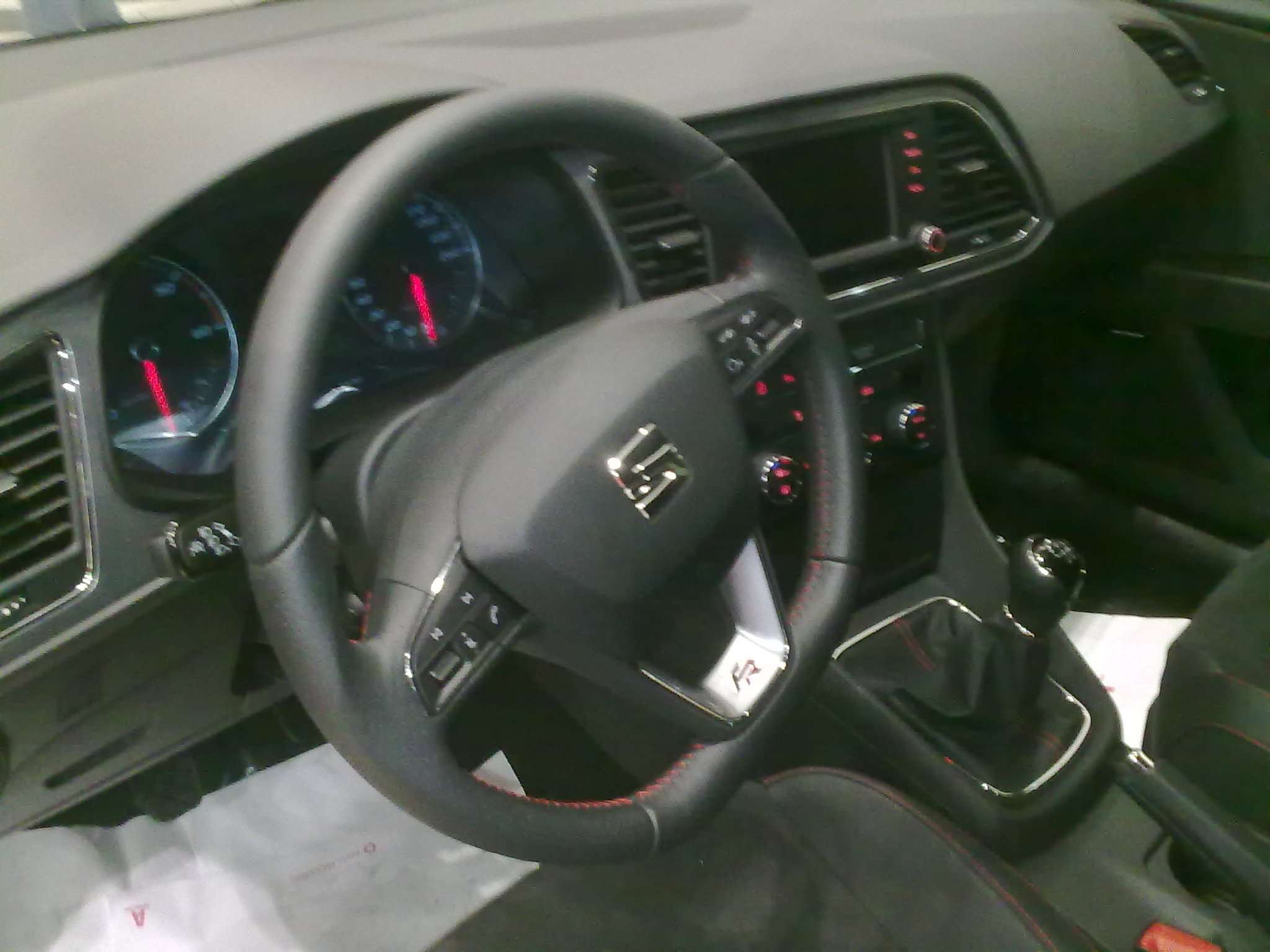
SEAT Leon 5F FR dashboard and cabin
An early left-hand-drive FR cabin illustrates the dashboard layout. UK equipment and later infotainment systems vary; verify every advertised function. Photograph: Juancar22 / Wikimedia Commons, CC BY-SA 3.0. Display resized.

A useful viewing checklist

  1. Before travelling: obtain VIN/registration, engine/output and gearbox. Read MOT and provenance records, request invoices and agree a cold start.
  2. Before starting: inspect oil/coolant safely, leaks, tyres and body repairs. Confirm the warning-lamp sequence and check both keys.
  3. Cold drive: pay particular attention to low-speed 1.5 driveability, clutch take-up and DSG manoeuvring. Do not let a pre-warmed engine replace this test.
  4. Mixed roads: assess steering, braking, acceleration, cooling and unusual noise at legal speeds. Repeat gearbox checks fully warm.
  5. Workshop: obtain a VAG-capable scan and lift inspection. Investigate present symptoms and interpret stored faults before erasing anything.
  6. After inspection: compare written repair/service quotes with alternative cars. Keep a reserve after purchase.

Make notes during the viewing rather than trying to remember every reassurance. Photograph invoices with permission and compare the registration/VIN and mileage. If a seller cannot explain a gap, treat it as a gap. An independent inspection is especially valuable when symptoms would otherwise be attributed to software or a supposedly simple sensor.

Buy, investigate or decline

FindingResponse
Good cold/warm operation and coherent invoicesProgress to an independent inspection and realistic total-cost comparison.
Missing belt evidence or known minor wearConfirm the schedule and obtain complete written prices before negotiating.
Persistent 1.5 hesitation or DSG judderDiagnose first; an update, adaptation or oil change is not automatically the cure.
Overheating, repeated smoke, serious repair concerns or disabled emissions equipmentLeave unless independently and properly resolved before purchase.

UK parts, labour and fitted-cost planning

JBS publishes VAT-inclusive VAG service packages and engine-specific belt prices. These are useful evidence for budgeting, but eligibility and current scope must be confirmed for your VIN. The package prices do not disclose a separate labour/parts split; the figures below keep that distinction clear. Do not apply a 1.4 quote to a 1.5 without workshop confirmation.

JobParts and labour scopePublished fitted price
Petrol service up to 1.5 litresJBS genuine VAG parts/fluids, inspection and diagnostic scan. Confirm which filters/plugs are included at the chosen level.Minor £145; intermediate £215; major £380 including VAT.
EA211 1.2/1.4 timing beltMatched belt kit; JBS states general belt-job duration 3.5–7 hours depending on model, not an exact Leon labour time.£540 genuine parts or £425 OE parts, including VAT. Water-pump job is separate.
EA211 1.2/1.4 water pump and drive beltPump/drive components; separate from main timing-belt package.£330 including VAT; confirm vehicle and complete scope.
1.5 TSI belt/pump workCorrect engine code, requirements and procedure.Obtain an individual quote; the menu above names 1.2/1.4, not this application.
Clutch/DSG, cooling leak or electrical faultDiagnosis, complete parts, labour, coding/calibration where needed.Vehicle-specific written quotation. No older Leon or wet-DSG price is substituted here.

A worked catch-up budget

For a confirmed eligible 1.4, a £380 major service plus a £540 genuine-parts belt package totals £920. If the separate pump/drive job is genuinely required and confirmed at £330, the total becomes £1,250. These are menu calculations, not a quotation for every Leon or a claim that every car needs all three jobs simultaneously.

Ask about overlap before adding packages. Then include tyres, brakes, a key or other defects only where the inspection identifies a need. Keep optional cosmetic work outside the essential budget. An unresolved DSG or engine fault should not simply be absorbed into an optimistic generic reserve.

The ClickMechanic clutch estimator was checked, but the visible 1.4 rows were for older cars rather than a corresponding 5F application. Those figures are deliberately not used as a fitted 5F price. A model selector or shared engine capacity is not sufficient evidence that a repair estimate applies.

Leon 5F 1.4/1.5 TSI service-parts table

Affiliate disclosure: qualifying eBay UK purchases may earn Unusual Cars a commission. Search results can include unsuitable products. Confirm VIN, engine/gearbox codes, required approvals, part numbers, kit contents, seller and returns. A 1.4 search is not a 1.5 fitment guarantee.

Part / jobFitment priorityeBay UK search
1.4 oil/filter kitCorrect EA211 engine and oil approval/quantity.Compare 1.4 oil/filter kit
1.5 oil/filter kitExact later engine application and specified oil.Compare 1.5 oil/filter kit
Air/cabin filtersActual airbox and cabin-filter specification.Compare air/cabin filters
Spark plugsEngine code, plug specification and quantity.Compare spark plugs
1.4 timing-belt kitComplete matched kit and hardware.Compare 1.4 timing-belt kit
1.4 pump and driveSeparate assembly/drive; match part number.Compare 1.4 pump and drive
1.5 timing partsVerify requirement and exact engine code first.Compare 1.5 timing parts
Auxiliary belt/tensionerCorrect routing, pulley and engine.Compare auxiliary belt/tensioner
AlternatorOutput, connector, pulley and exchange terms.Compare alternator
BatteryRequired technology/capacity and adaptation needs.Compare battery
Discs and padsBrake PR codes, dimensions and axle.Compare discs and pads
Manual clutch componentsGearbox and flywheel/release-system scope; not DSG.Compare manual clutch components

For DSG parts, start with a professional gearbox identification and diagnosis rather than buying a clutch or mechatronic assembly from symptoms alone. Installation, programming and adaptation can be essential parts of the bill. A cheap component is poor value if it is wrong for the transmission or the cause lies elsewhere.

Hidden ownership costs

Wheels and trim: damaged large rims, premium tyres, LED lighting and missing estate accessories can consume money that would be better kept for maintenance. Establish current replacement prices before using extra equipment to justify the purchase.

Software and connectivity: navigation maps, activation, compatible hardware and retrofit quality are separate issues. An advertised smartphone feature should work in the car during the viewing. Do not assume the cost of a licence, cable or used unit will resolve every compatibility problem.

Keys and batteries: price proper key programming and the correct battery technology. Replacing a stop-start battery may require the appropriate adaptation. A dashboard of low-voltage faults deserves a charging-system check as well as a battery test.

Insurance and tax: get figures using the registration, actual engine/output and declared modifications. Compare your typical fuel use rather than relying on an official economy headline. Check official clean-air information for the destinations you use.
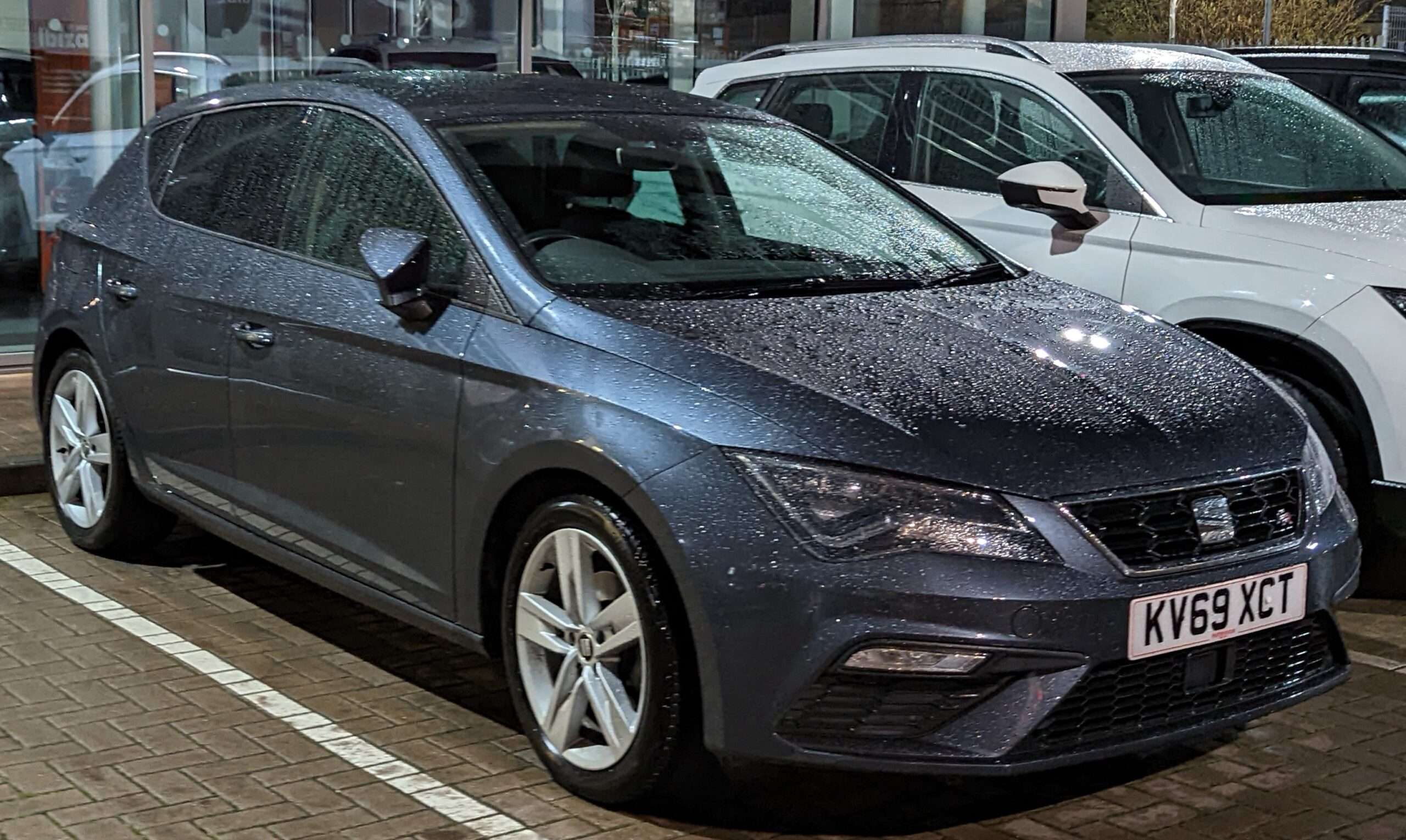
2019 SEAT Leon FR TSI front view
A later FR TSI illustrates the appeal of the facelift. Appearance alone cannot establish engine, gearbox or maintenance condition. Photograph: Calreyn88 / Wikimedia Commons, CC BY-SA 4.0. Display resized.

Verdict: one of the more rounded used petrol choices

The 5F 1.4/1.5 TSI can be an excellent everyday Leon when selected on evidence. The manual 1.4 is a sensible starting point, while a healthy later 1.5 or properly assessed DSG can be equally appropriate for the right driver. Choose the body that fits your life and the equipment you will actually use.

Keep older TSI advice separate, confirm belt and cooling requirements, insist on a cold drive and investigate hesitation or gearbox symptoms before purchase. A good example should leave you enjoying the car’s balance of performance and practicality rather than funding a sequence of speculative repairs.

Frequently asked questions

Is this the old chain-driven 1.4 TSI?

The 5F EA211 applications covered here use different timing-drive advice. Identify the engine before transferring information from an older Leon.

Does a timing-belt package include the water pump?

Not automatically. The cited EA211 1.2/1.4 menu lists a separate pump/drive job. Compare the complete written scope.

Is every 1.4 an ACT model?

No. Verify the actual engine and specification; do not assume cylinder deactivation from capacity or trim.

Will a software update cure all 1.5 hesitation?

No universal promise is appropriate. Check VIN-specific history and the actual cold/warm behaviour, then diagnose unresolved symptoms.

Can I use a Cupra DSG service kit?

Only if independently confirmed for the exact gearbox, which should never be assumed. Mainstream small-petrol dry-clutch applications have different requirements.

SEAT Leon 5F 1.4/1.5 TSI cars for sale

Live third-party advertisements, not inspected or endorsed cars. Check generation, engine, history and seller before travelling. Listings change and may include imperfect matches.

Right Now on eBay 
Clicking a link to eBay may result in a referral commission being paid if a purchase is made.
Loading…

Sources and further checks

Inspection advice identifies checks, not the incidence of faults. Confirm current SEAT requirements and any updates by VIN. Prices and listing contents change.

Featured photograph: © M 93 / Wikimedia Commons, CC BY-SA 3.0 (DE). Display resized. Other photographs carry individual credits.

Return to the buying guides hub →

SHARE THIS PAGE:

Posted

in

by

Tags: