
IN-DEPTH BUYING GUIDE · MK7/MK7.5 · ORDINARY 1.4 AND 1.5 TSI PETROL
A good Golf Mk7 petrol delivers much of what makes this generation appealing without the purchase price, insurance or performance-car maintenance of a GTI or R. The 1.4 and 1.5 TSI offer useful everyday performance, a practical cabin and a wide choice of specifications. That choice is an advantage: there is little reason to accept poor gear changes, unexplained coolant loss or a doubtful history just to obtain one particular colour or wheel design.
This guide covers the EA211-family 1.4 TSI and 1.5 TSI Evo in the seventh-generation Golf hatchback and Estate, including the facelift commonly called Mk7.5. It excludes the GTE plug-in hybrid, e-Golf, GTI, R, diesel engines and the later Mk8. A 1.4 badge on an older Golf does not make it the same engine: some earlier TSI installations have a very different timing system and fault profile.
For the performance versions, use our separate Golf GTI Mk7 guide or Golf R Mk7 guide. R-Line is an equipment/appearance description, not evidence of an R engine or drivetrain.
The buying verdict
Our starting point: a correctly identified 1.4 TSI or a 1.5 TSI that performs cleanly from genuinely cold, with credible oil and timing-drive history, stable coolant level and a healthy manual or DSG. Sensible wheels and the equipment you actually need are worth more than an expensive trim badge on a neglected car.
Pay for: a VAG-aware inspection, a meaningful cold and warm road test, invoices identifying major work and an independent check of the gearbox. Resolve before purchase: repeated cold hesitation, persistent DSG shudder, clutch slip, engine warnings, coolant loss or wet carpets. Treat a promised software update or cheap part as a proposal until the fault is diagnosed and the result demonstrated.
Identify the engine, ACT system and gearbox first
The Golf Mk7 arrived in 2012; Volkswagen’s UK press pack records first deliveries of the updated car in March 2017. Model year, build date and registration are different pieces of information. A 2017 registration can sit around the changeover, and the adoption of the 1.5 engine was not a rule that every facelift car instantly followed.
Begin with the VIN, engine code and gearbox code, supported by service records. The ordinary 1.4 in this guide is the EA211 belt-driven family. Establish its exact output and whether it has active cylinder technology. The later 1.5 TSI Evo also needs identifying by code and output, particularly when comparing a 130 PS BlueMotion with a 150 PS version.
| Version | What matters | Buying consequence |
|---|---|---|
| Mk7 1.4 TSI EA211 | Several outputs and ACT/non-ACT applications | Use engine code and fitted specification for parts, timing information and an inspection. |
| Mk7.5 1.5 TSI Evo 150 PS | Facelift-era petrol with cylinder-management technology | Test cold response, cooling, service history and any software/repair work. |
| 1.5 TSI ACT BlueMotion 130 PS | Factory-described Miller-cycle/variable-geometry turbo version; DSG eco-coasting specification differs | Do not assume it is simply the same 150 PS engine with a different badge or map. |
| Manual | Driver-operated clutch and gearbox | Assess take-up, release, slip, gear selection and flywheel concerns where applicable. |
| DSG | Identify actual transmission; relevant smaller petrol applications commonly use a dry-clutch seven-speed | Do not copy a GTI’s wet-clutch DSG fluid service or repair assumptions. |
| Hatchback/Estate | Different carrying space and body equipment | Check rear load area, seat folding, water entry and the condition behind family/delivery use. |

ACT and BlueMotion: useful details, not purchase guarantees
Active cylinder management switches cylinders out of operation under suitable light-load conditions. Its presence is neither a reason automatically to reject the car nor permission to ignore a persistent misfire. A normal operating-mode change needs distinguishing from a fault through a drive and relevant diagnostic data. Do not accept an engine warning as simply the cylinder system working.
Volkswagen’s 2018 description of the 130 PS 1.5 ACT BlueMotion identifies different combustion and turbocharger technology and a DSG eco-coasting function. Its references to micro-hybrid operation describe that particular contemporary system; they should not be interpreted as proof that every ordinary Mk7.5 is a later 48-volt mild hybrid. Confirm the actual battery and charging requirements rather than ordering by a vague hybrid label.
Check what is fitted to the individual car: cruise/ACC, parking sensors, climate control, navigation, phone integration, headlamps and suspension options. A desirable trim can lack an option you assumed was standard. Test the equipment and consult the original specification where possible. A replacement touchscreen or wheel does not establish the rest of the factory build.
Prices: compare the right petrol Golf
Separate 1.4 and 1.5, pre-facelift and facelift, hatch and Estate, manual and DSG, private and dealer advertisements. Mileage and service history belong alongside price. A cheap 1.4 with clutch work, a coolant problem and poor tyres is not a comparable purchase to a car with those jobs properly documented.
Use current UK 1.4 Golf advertisements and model-specific complete-car searches below as starting points. The AutoTrader model page spans generations, so filter the actual Mk7/EA211 cars before drawing conclusions. An asking price is a seller’s offer, not evidence of what similar cars have sold for.
Build your own comparison sheet with registration, engine, gearbox, mileage, service dates, timing evidence, advertised price and disclosed faults. Deduplicate repeated advertisements. For a dealer car, ask what preparation is included and obtain an explanation of any warranty terms. For any car, commission the inspection before treating the price as a bargain.
Reserve money for the first year. Insurance, tax, a baseline service, four tyres or a cooling-system repair can materially alter the total. Compare an inexpensive example’s price plus immediate work with a better-prepared car, and use written estimates to negotiate. A broad market rewards patience more than accepting an unexplained defect because the seller says other buyers are on the way.
Cold starting, oil history and everyday engine checks
Ask for an overnight-cold start and establish whether the car has been run before you arrive. Watch starting, idle and warning-lamp behaviour, then drive gently while it warms. Compare how it pulls away, accepts light throttle and changes speed before and after reaching operating temperature. A short drive in a pre-warmed car can miss the behaviour most likely to trouble its next owner.
On a 1.5, pay particular attention to low-speed response when cold. If there is hesitation, repeated surging or kangarooing, record the circumstances and have a specialist assess the actual cause and software level. Software history can be relevant, but should not become a universal explanation for ignition, fuelling, clutch or mechanical faults. Ask to see a repaired example cold again before paying.
Inspect the oil-service record for dates, mileage and the specification used. Long gaps and a collection of fluid top-ups are different from a coherent maintenance history. Ask how much oil the owner adds and over what distance. A clean engine bay and an absence of visible smoke during one start do not establish consumption over normal use.
| Symptom | Investigation | Buying response |
|---|---|---|
| Misfire under load or at idle | Codes, plugs/coils, air/boost leaks, fuelling and mechanical condition as indicated | Require a diagnosed cause and retest; a cheap coil is only one possibility. |
| Cold hesitation/surging | Reproduce from cold; check engine controls/software and separate clutch/transmission behaviour | A warm test or reset cannot settle the question. |
| Coolant loss | Inspect and pressure-test the cooling system, pump/thermostat area and relevant connections | Do not accept repeated topping-up as normal maintenance. |
| Reduced boost or engine warning | Air/boost control, actuator, wiring and related sensor data | Price the actual repair, not an assumed turbo replacement or adjustment. |
| Oil loss or smoke | Distinguish external leaks, breather issues and internal consumption | Obtain evidence; an additive is not a buying inspection. |
Cooling: find the source before replacing a module
Check the expansion-tank level only when safe and look for residue, staining, drips and a history of repeated coolant purchase. Ask whether the pump, thermostat or associated housing has been replaced, and whether the original symptom stopped. A receipt matters more when it explains what leaked and what was fitted.
Have concealed areas inspected on a lift where appropriate. Pressure testing and a warm assessment can reveal more than a casual look from above. Stop a drive if the engine overheats; do not open a hot pressurised system. Unexplained loss without an obvious external leak deserves further diagnosis rather than a small negotiating allowance.
The separate pump arrangement on these EA211 applications is an important budgeting distinction. A main timing-belt job does not automatically renew every cooling-system component. Ask which pump/thermostat assembly and drive are actually present and what a proposed repair includes. A listing headed belt-and-water-pump kit may still require detailed checking of what it contains.
Timing belt: confirm scope and schedule for the engine code
The EA211 1.4/1.5 engines here must be distinguished from older chain-driven TSI designs and from the GTI/R’s different engines. Verify the actual car before borrowing an internet interval or a parts list. Current manufacturer guidance for the VIN is the starting point; historical garage rules and forum accounts are not a universal replacement schedule.
Ask for invoices showing date, mileage, engine application, kit and associated work. A statement that the cambelt was checked needs its own scope: a visual inspection is not the same as replacement. If records are incomplete, obtain a specialist assessment and an agreed preventive-maintenance plan before relying on the car for a long journey.
JBS lists EA211 1.2/1.4 timing-belt work separately from water-pump/drive-belt replacement. PSC likewise explains that the EA211 pump is independently driven. That separation should appear in your quote. Include appropriate tensioning components, necessary fixings, any separate pump-drive work and the installer’s responsibility for the procedure.
A cheap incomplete kit can become expensive if it delays a booked job or supplies the wrong application. Discuss parts sourcing before purchasing independently. Ask whether a fitted-price quotation uses genuine or suitable OE components, whether VAT is included and what additional work would require approval.
Love cars you don’t see every day?
Get forgotten cars, surprising motoring stories and the most interesting finds from Unusual Cars by email.
Free to join. No spam. Unsubscribe whenever you like. See our privacy policy.
DSG: buy the gearbox you have identified
DSG is a family description, not one universal transmission. Many relevant front-wheel-drive 1.4/1.5 petrol applications use the seven-speed dry-clutch DQ200 family. Confirm the actual code, build and history before ordering parts or assigning a service interval. The wet-clutch gearbox in a GTI, R or another higher-torque model is a different reference.
That distinction matters when a service invoice says only “DSG oil”. Ask which gearbox it covered, which fluid circuit and procedure were involved and whether the work was routine maintenance or an attempted cure. Do not prescribe a wet-clutch 40,000-mile oil/filter service to every seven-speed car simply because an online garage menu mentions DSG.
Test selection of drive and reverse with the car stationary, gentle take-up, slow crawling, repeated stops and normal acceleration through the gears. Repeat the assessment after the car is properly warm. A dual-clutch car can feel different from a torque-converter automatic, but repeated shudder, slipping, harsh engagement, warning messages or a refusal to select need diagnosis.
Have a relevant specialist scan the transmission as well as the engine, interpret the findings and explain whether clutch wear, adaptation, mechatronic, software or another mechanical issue is indicated. An adaptation reset can be a legitimate procedure within a repair; it is not proof that a worn clutch or hydraulic/electrical fault has been repaired.
Ask for invoices identifying clutch and mechatronic work, the original complaint and the outcome. A recent bill is stronger when the same symptom has not returned. Be cautious about a seller offering to service or reset a visibly faulty gearbox after you have committed: agree diagnosis and a successful cold/warm demonstration before buying.
Manual clutch and gearbox
For a manual, check pedal action, first/reverse engagement from stationary, every forward gear and the feel of the lever as the car warms. Listen for persistent whine, crunching, rattles and changes when the clutch is operated. Ask a workshop to separate linkage, clutch release, mounts and internal transmission issues.
Check for clutch slip during normal acceleration and judder during ordinary take-up. Do not abuse it with repeated high-load or stall tests. Discuss whether flywheel or release components belong in a proposed repair, rather than assuming a low clutch-kit price covers the whole job. On a modified engine, extra torque can change the buying risk even when the car looks standard.
Suspension, brakes and tyres: trim does not establish the hardware
Golf suspension and brake equipment varies by version, output and options. Establish what is fitted before quoting a rear-axle design, damper or brake kit for every Mk7. A GTI/R parts list is not the ordinary petrol car’s shopping list. Record the relevant build/PR codes and confirm dimensions with the installer.
Inspect tyres for matching specification, damage, age and uneven wear. Large R-Line wheels may look attractive but can increase tyre costs and reduce comfort compared with a more modest specification. Check inner edges, wheel damage and whether the car tracks straight. An alignment printout is useful only when worn or damaged components have been dealt with first.
Listen for knocks over ordinary bumps and have springs, dampers, bushes, bearings and mountings assessed on a lift. Where adaptive dampers are fitted, test the modes and check for faults and leaks. A conventional replacement damper price should not be used as an allowance for a failed adaptive system.
Brake progressively in safe conditions. Investigate pulling, judder, a long or inconsistent pedal and parking-brake faults. Check pipes, hoses, discs, pads and the electronic parking brake’s operation. An MOT advisory should prompt inspection of the actual component, not an assumption that the cheapest pads will resolve it.

Body, water entry and family-car wear
Inspect panel gaps, paint finish, bumper mountings and the relationship between visible repairs and the structure beneath. Look at sills, jacking points, wheelarches, boot floor and accessible suspension mounting areas. Front-end repairs may also affect radar, headlamp and parking-sensor installations; a tidy bumper does not prove correct calibration.
Feel accessible carpets, inspect under loose mats with permission and check the boot’s lower compartments. Water can travel before collecting, so trace it rather than assuming a wet boot must be a particular lamp seal. Door membranes, body seals, drains, apertures and previous repairs all belong in a diagnosis as the evidence directs.
A panoramic roof adds its own inspection. Operate it normally, inspect seals and visible drainage areas and look for staining in the headlining and pillars. Do not force a reluctant roof or probe drains aggressively at a viewing. A motor, cassette, trim and water-damage repair can be a different proposition from clearing an accessible obstruction.
On an Estate, examine the load area, folding mechanisms and rear access equipment. Look for abrasion, damaged trim, damp storage compartments and signs of repeated heavy loading. Check any towbar installation, electrical socket, recorded towing limits and the history of use; a neat detachable fitting does not reveal how the car has been used.
Cabin, infotainment and driver-assistance checks
Try both keys, central locking, windows, mirrors, all climate functions, heated seats where fitted, lights, wipers and washers. Inspect seat bolsters, belt operation, rear-seat latches and child-lock functions. Use the car as you intend to use it: fit your child seat and check that the driving position still works with passengers behind.
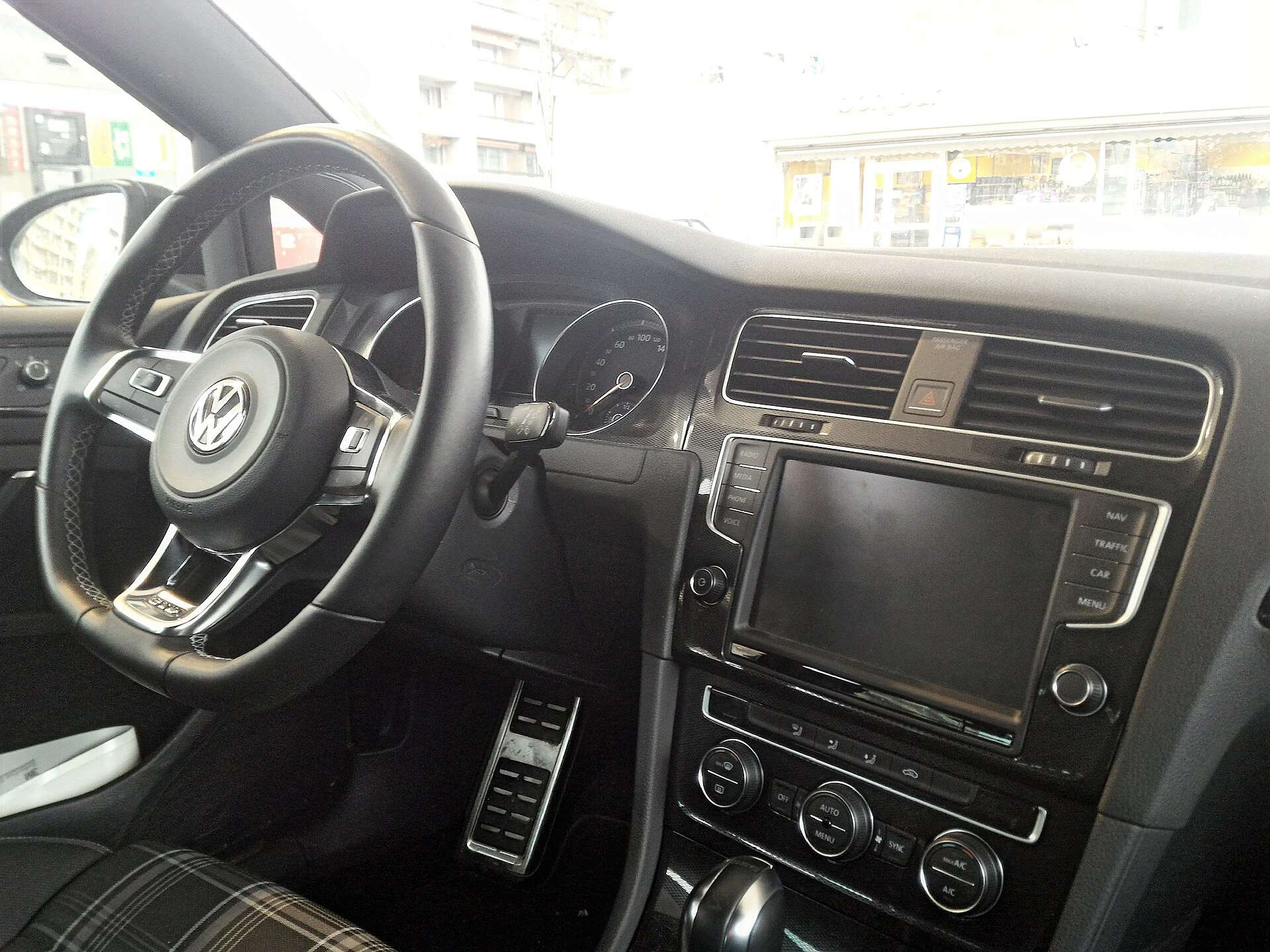
Check touchscreen response, audio, navigation where fitted, Bluetooth and the phone interface with your own device. A larger replacement screen may need supporting hardware or activation; its appearance does not establish original fitment or complete functionality. Ask what has been changed and retain documentation for competent retrofits.
Test parking sensors, camera and assistance systems within normal safe use. Review any warning messages and invoices for windscreen or front-end work. A sensor icon disappearing after a reset does not establish correct operation. Do not deliberately create an emergency-braking scenario to test the system.
Contemporary factory descriptions of connected services and subscriptions need treating as historical specifications. Confirm what remains supported, what costs extra and whether ownership can be transferred. Value the car’s working equipment today, rather than the full list in its original brochure.
UK maintenance costs: separate parts, labour and fitted work
The references below were observed in November 2026. They are published retail/menu examples, not quotes for every Golf or eBay prices. Obtain an inclusive written quotation for the VIN, exact engine and job scope. A parts figure from one supplier and a fitted menu from another should not be subtracted to invent a labour charge.
| Job/reference | Parts-only evidence | Fitted cost or labour evidence | Scope qualification |
|---|---|---|---|
| 1.4 TSI 125 PS application: main timing kit | INA 530 0592 11 advertised at £61.49 including 20% VAT, excluding delivery | JBS EA211 1.2/1.4 menu: £425 OE parts or £540 genuine parts, including VAT | The displayed INA contents are main belt, tensioner and deflection pulley. Check actual fitment and necessary fixings. |
| Separate water-pump drive/assembly reference | INA 530 0742 30 advertised at £148.99 including VAT, excluding delivery; 87-tooth drive-belt/pump set | JBS EA211 1.2/1.4 menu: £330 including VAT for water pump and drive belt | Different parts scope from the camshaft belt. Do not automatically add or substitute kits. |
| Timing job labour planning | Parts depend on confirmed application | JBS describes approximately 3½–7 hours across its timing-work range | A broad workshop planning range, not a Golf 1.5 labour-time quote or an hourly rate. |
| Brake-fluid change | Not separately itemised | JBS general services menu from £65 | Confirm final inclusive price and the car’s requirements. |
| Wheel alignment | Repairs/parts extra if required | JBS general menu from £45 | Alignment does not repair worn joints, bent wheels or accident damage. |
Sources: AUTODOC’s displayed 1.4 TSI 125 PS catalogue, JBS timing menu and JBS services menu. Retail prices and discounts change. These are examples of named products/applications, not endorsements of universal compatibility. Use the model-specific eBay searches below to compare current purchasing options.
For a 1.5, obtain a specific quote rather than carrying the JBS 1.4 figure across. PSC’s petrol timing service separates engine/ACT options and explains the independent pump drive. Its selected engine and options change the booking total, so the headline base price is not a reliable universal 1.5 figure.
Routine service planning
Establish the current schedule for the VIN and compare it with invoices for oil, filters, plugs, brake fluid and timing-drive work. A service record can contain regular oil changes while other due items remain outstanding. Ask for the actual digital-history printout and the supporting invoices rather than relying on a dashboard service reset.
Discuss use with the workshop. Frequent short trips, long storage, towing or modifications may change the sensible preventive plan, even though the car still displays a long interval. Use the correct oil approval and avoid treating one viscosity number as a complete specification. Keep evidence of exactly what was done after purchase.
Service-parts table: 1.4 and 1.5 TSI eBay searches
Affiliate disclosure: these links use campaign 5339238906. We may earn a commission from qualifying purchases at no extra cost to you. Results are searches, not verified recommendations for every listing. Check engine/gearbox codes, build date, PR codes, dimensions and the installer’s requirements.
| Part | Choose engine/application | Before ordering |
|---|---|---|
| Oil/filter service kit | 1.4 TSI · 1.5 TSI | Use the exact oil approval and engine-code application. |
| Air filter | 1.4 TSI · 1.5 TSI | Match the housing and production date. |
| Cabin filter | 1.4 TSI · 1.5 TSI | Check size and filter type. |
| Spark plugs | 1.4 TSI · 1.5 TSI | Correct heat range, specification and quantity. |
| Ignition coils | 1.4 TSI · 1.5 TSI | Diagnose the misfire; confirm connector and part number. |
| Main timing-belt kit | 1.4 TSI · 1.5 TSI | Distinguish the camshaft belt from the pump-drive belt. |
| Pump/thermostat assembly | 1.4 TSI · 1.5 TSI | Check assembly, housing and separate drive requirements. |
| Auxiliary belt/tensioner | 1.4 TSI · 1.5 TSI | Confirm actual accessory layout. |
| Manual clutch kit | 1.4 TSI · 1.5 TSI | Use gearbox code and check release/flywheel scope. |
| Front discs/pads | 1.4 TSI · 1.5 TSI | Verify brake/PR code and dimensions. |
| Battery | 1.4 TSI · 1.5 TSI | Confirm technology, capacity and registration/coding needs. |
| Alternator | 1.4 TSI · 1.5 TSI | Match output, pulley and electrical connections. |
Compare 1.4 main timing-kit listings with the contents of your quote, and confirm whether pump/thermostat parts are a separate job. For 1.5 alternators, match output, pulley and connections after testing the battery, charging system and wiring.
Do not order a DSG clutch or mechatronic assembly as an experiment. Identification, diagnosis, correct tools, software procedures and an accountable installer are part of that repair. Similarly, an independently supplied timing kit may leave missing fixings or a warranty dispute. Agree the parts-supply arrangement before booking.
Hidden ownership costs
Wheels and optional systems: price the actual tyres, adaptive dampers, headlamps and roof equipment. A low purchase price does not make an expensive option cheap to repair. Replacing a mismatched set of tyres can be a sensible first job but belongs in the budget.
Insurance and tax: obtain quotes using the actual registration and declare modifications. Check the car’s recorded tax position; a facelift date or a seller’s historic bill cannot establish the current amount for your purchase. Do not assume a sporty trim has the same insurance cost as another output.
Cooling and gearbox diagnosis: an apparent small leak or intermittent judder can require investigation before a workshop can price the repair. Budget inspection time and transport if the car should not be driven. A service is maintenance, not a guaranteed cure.
Equipment completeness: a second key, phone-integration activation, missing parcel shelf, damaged boot floor and an ineffective air conditioner can add up. Check them before negotiating, alongside the larger mechanical work.
A practical viewing sequence
- Before travelling: request VIN, engine/gearbox codes, service invoices, timing evidence and disclosure of coolant, gearbox or cold-running concerns. Review MOT mileage and repeated advisories.
- Identify the car: distinguish Mk7/Mk7.5, 1.4/1.5, ACT specification and manual/DSG. Check the documents against the actual vehicle.
- Inspect it dry: assess body repairs, tyres, carpets, boot compartments and roof staining. Arrange lift access for hidden areas.
- Start cold: observe warnings, idle and gentle pull-away; reproduce any hesitation rather than warming it away.
- Drive warm: assess normal acceleration, gear selection, braking, tracking and suspension. Repeat parking manoeuvres and a hot restart.
- Check equipment: both keys, climate, touchscreen, phone connection, assistance systems and folding/load arrangements.
- Commission diagnosis: ask a VAG specialist to interpret engine and gearbox faults and quote confirmed work. Keep unresolved questions separate from cheap possible fixes.
For a car with an uncertain timing record, ask the workshop whether it should be transported rather than driven. For a gearbox fault, require a successful retest after repair. For poor structural repairs or unexplained identity, choose another example. The strength of the ordinary Golf market is the ability to keep looking.
Frequently asked questions
Is the Mk7 1.4 TSI the same as an older chain-driven 1.4?
No assumption should be made from capacity alone. This guide covers the EA211 belt-driven application; verify the engine code and actual installation.
Should I choose 1.4 or 1.5?
Choose the stronger individual car. The 1.5 adds later technology, but a well-documented 1.4 can be a better purchase than a newer car with unresolved cold response or gearbox behaviour.
Does seven-speed DSG always need the GTI service?
No. Identify the transmission and relevant fluid circuits. The ordinary dry-clutch application is different from the GTI/R’s wet-clutch units.
Does a cambelt change include the water pump?
Not automatically. The EA211 pump is independently driven, and workshop menus can price it separately. Read the quote’s actual contents.
Is R-Line a Golf R?
No. R-Line describes trim/equipment. Confirm engine, output and drivetrain independently.
Is a software update enough to buy a hesitant 1.5?
Only a diagnosed cause and demonstrated successful outcome settle the issue. Recheck the car genuinely cold and do not assume every hesitation is software-related.
Our recommendation
Buy a correctly identified engine and gearbox with demonstrable cold and warm behaviour, a credible service record and a realistic first-year budget. Make cooling and timing scope explicit, test all expensive options and use the broad market to reject unresolved faults. A healthy ordinary petrol Golf should earn its appeal through practical ownership, not a performance badge borrowed from another model.

Love cars you don’t see every day?
Get forgotten cars, surprising motoring stories and the most interesting finds from Unusual Cars by email.
Free to join. No spam. Unsubscribe whenever you like. See our privacy policy.