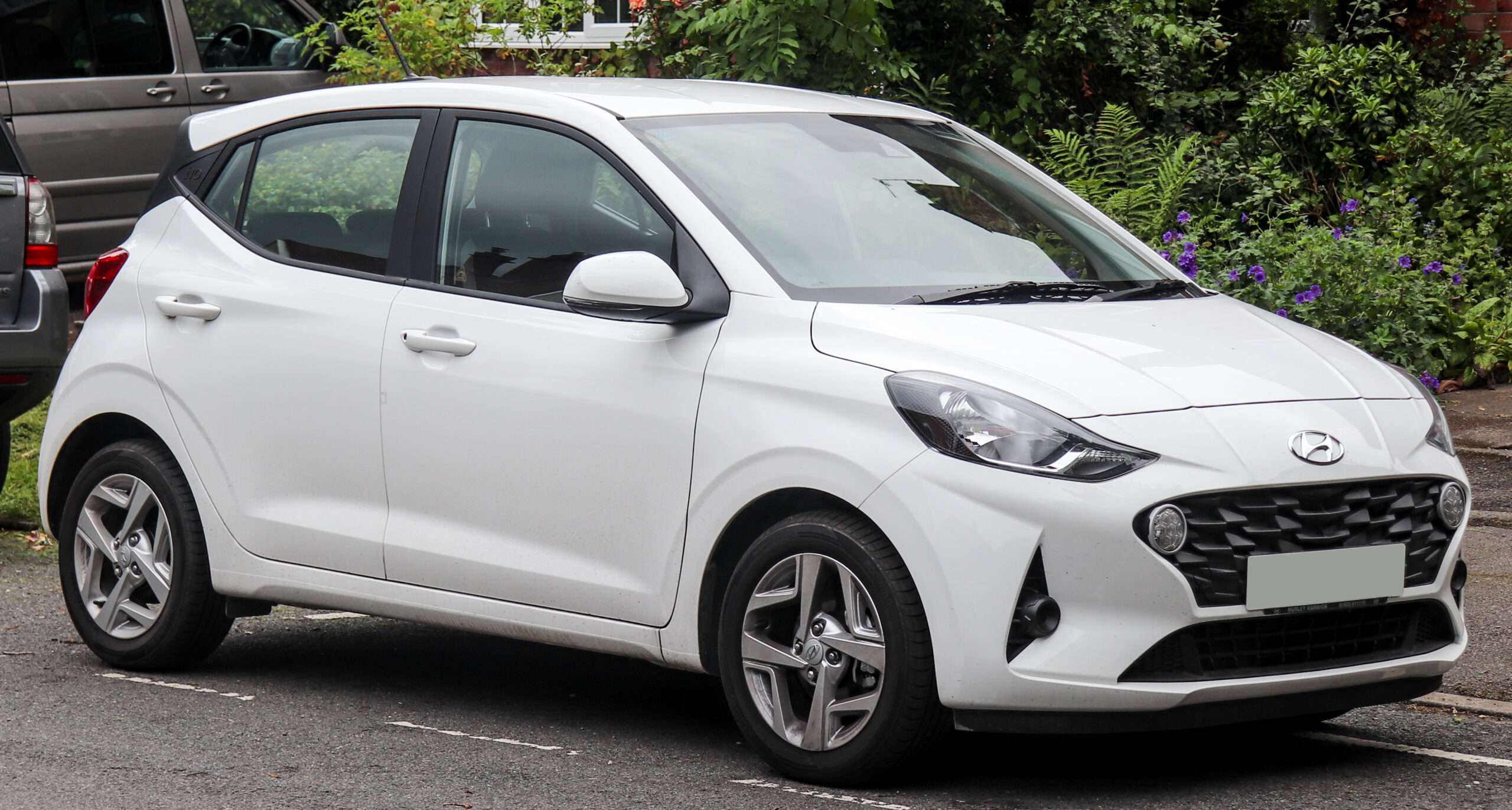
If you plan to keep your i10, a worthwhile scanner is one you can use on a perfectly ordinary Tuesday. You can plug it in after a warning appears, save the car’s report and take it to the garage on Friday, even if the dash is clear by then. After the repair, you can see which controllers are communicating and whether the same fault returns. That record has value across several years of ownership, especially when different garages service the car.
What makes a reader Hyundai-capable? The same socket can offer two quite different views of your i10. In generic OBD mode you can check emissions-related engine faults. In the Hyundai menu, a suitably equipped reader can also ask the automated gearbox, anti-lock brakes, steering and restraint systems for their own reports. An engine that starts and runs smoothly can share a car with a gearbox that refuses drive. Knowing which computer has actually answered is the first saving you can make.
On the five-speed automatic, the buying decision comes down to one demonstration. Can the seller show a scan of an AC3 AMT, open the transmission controller and display what happens between moving the selector and engaging a gear? A tool that does that lets you bring evidence to a clutch quote. A box promising ‘transmission diagnostics’ without identifying the AMT leaves the expensive question open.
Which automatic is in your i10?
This guide covers the AC3-generation petrol i10 with Hyundai’s five-speed automated manual transmission (AMT). Check the build year, engine and transmission against the vehicle identification number. The word ‘automatic’ on a used-car invoice tells you how the driver operates it, but says little about the hardware underneath. Hyundai’s handbook identifies a gear actuator and a separate clutch actuator working on a manual gearbox. A scanner listing for an earlier i10 automatic is therefore a poor guide to coverage.
Amazon affiliate link. As an Amazon Associate, Unusual Cars earns from qualifying purchases.
A pause you can describe is easier to diagnose
Write down the sequence. Did the display continue to show neutral after you selected drive? Did the gear indication change promptly but the car hesitate as you moved away? Was reverse available, and was this the first start of the day or the end of a long crawl in traffic? The brief interruption in drive during a normal automated-manual shift feels different from a refusal to engage. A before-and-after change in the behaviour of your own car is valuable evidence.
An emissions scan may read the engine successfully. Check the list of controllers that actually answered. Look for direct AMT fault memory and, where supported, selector request, brake-pedal recognition, target gear and engaged gear. Save the description and status of each fault before clearing anything. A reader that cannot open the transmission has given an incomplete answer.
Like our guides and unusual cars?
Get forgotten finds, useful motoring content and the most interesting car stuff from us by email.
Free to join. No spam. Unsubscribe whenever you like. See our privacy policy.
What three superficially similar complaints look like on the i10
| Owner’s question | What to read or compare | How it changes the next step |
|---|---|---|
| The engine starts, but the display stays in N. | Compare driver selection and brake-pedal recognition with the gear the controller requests. | If drive was never requested electronically, start at the inputs before considering gearbox removal. |
| First gear appears, but the car shudders as it takes up drive. | Separate confirmed gear from clutch movement. Record whether it happens cold, hot, forwards or in reverse. | Ask for a clutch actuation and mechanical assessment under the conditions that produced the shudder. |
| The display warns about transmission temperature after crawling uphill. | Record the warning sequence, stop-start conditions and any AMT fault status. Follow the cooling instructions on the display and in the handbook. | A thermal protection event calls for a different investigation from a cold refusal to select first gear. |
A hot queue and a cold driveway are different workshop jobs
Picture an i10 inching up a steep car-park ramp. An automated manual still has a friction clutch, and repeated low-speed take-up generates heat. Hyundai’s handbook describes escalating temperature warnings and protection at the upper limit. The owner’s most valuable observation is what happened just before the message. Was the car repeatedly creeping on the incline, or did the same warning appear immediately after an overnight stop?
A workshop can compare those histories with the saved AMT report. An isolated warning in the queue, followed by normal operation after the handbook’s cooling procedure, has a plausible operating explanation. A warning that repeats from cold deserves investigation of the control inputs and temperature information available on that build. Ask whether a displayed temperature is measured or calculated before treating it as proof that a temperature sensor has failed.
There is also a limit to what buying a scanner achieves. On a one-off breakdown, a garage with the correct Hyundai software can capture more than a basic handheld. For a recurring fault that vanishes by appointment day, the owner who can save the first report has something even a well-equipped garage cannot reconstruct afterwards.
Worked example — drive selected, neutral still displayed
Imagine an i10 that ignores the first request for drive after starting. The next attempt succeeds. At the workshop, a technician can check whether the transmission saw the driver’s selection and the required brake input. If the lever moved but the recorded request stayed in neutral, the selector input and its route to the controller deserve attention. A new clutch would leave that missing request unexplained.
Suppose the scan instead records a request for first gear but the confirmed gear stays in neutral. That moves the investigation towards gear selection, actuator operation, its supply and mechanical travel. If gear engagement is confirmed promptly and the hesitation begins only as drive is taken up, ask what the clutch-control readings show at that moment. A reading labelled ‘command’ gives the intended movement. Independent feedback or a physical check is needed to establish what moved.
When a clutch quote is on the table
Ask the garage to identify the observation that supports clutch wear and the checks it performed on actuation. A historic low-voltage entry after a flat battery belongs in the timeline, but one old entry cannot explain every later symptom. Nor does a blank fault memory rule out mechanical wear. Keep the initial report, the repair findings and the post-repair engagement check together.
Before buying a reader, ask for an example of its AC3 AMT data screen on your engine. Reading faults, recording several signals together and carrying out a clutch learning procedure are separate functions. For an owner trying to catch an intermittent refusal, recording the first two is more valuable than experimenting with a reset. If the car cannot engage reliably, arrange assistance.
Amazon affiliate link. As an Amazon Associate, Unusual Cars earns from qualifying purchases.
For the iCarsoft JP V3.0, confirm the functions above with the supplier for your UK model year and equipment before ordering.
Hyundai i10 handbook, automated manual transmission · Explore the Hyundai scanner guides
Model photograph by Vauxford, CC BY-SA 4.0.
Like our guides and unusual cars?
Get forgotten finds, useful motoring content and the most interesting car stuff from us by email.
Free to join. No spam. Unsubscribe whenever you like. See our privacy policy.