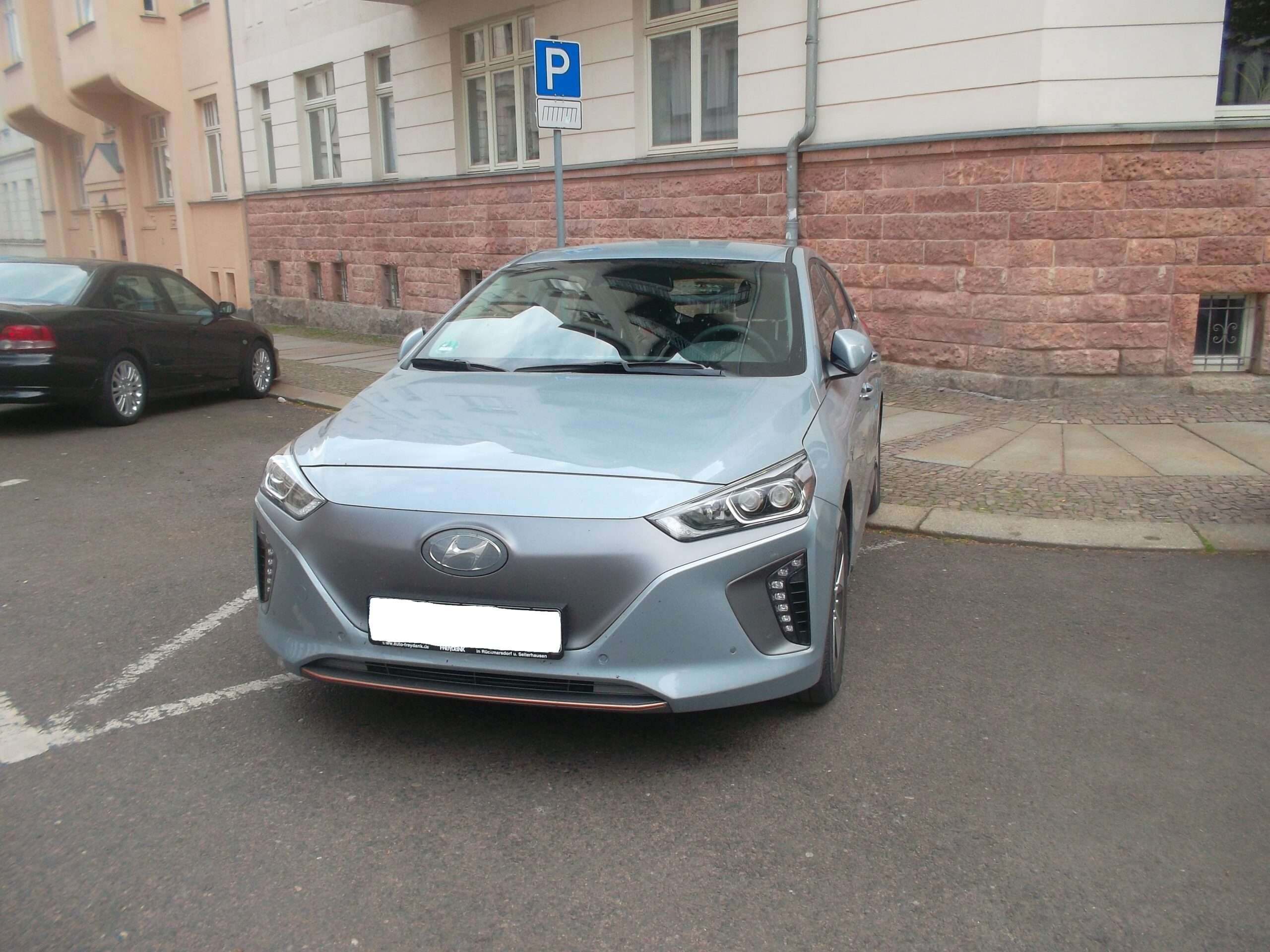
A first-generation Ioniq Electric owner can get real value from a scanner without ever removing a cover. The dashboard tells you whether the car is charging. A Hyundai-capable reader with the right EV coverage can help you preserve what the car saw during a failed session and compare it with a successful one. That record is useful when the charge operator blames the vehicle and the garage asks whether you have tried another charge point.
The financial question is where to investigate first. A detachable cable, an inlet locking mechanism and the vehicle’s charging electronics are different purchases. Before buying a reader, ask whether its AE Electric software can show connector detection, available lock feedback and the charging controller’s own fault history. A battery percentage on the screen adds little to what you already know.
Start with the original Ioniq Electric
This guide concerns the battery-electric AE hatchback. Give the workshop the build year, battery version and VIN. The original hybrid has no external charging socket, and the plug-in hybrid and later Ioniq 5 have different equipment. A search result headed simply ‘Ioniq’ can lead to the wrong diagnostic menu or replacement part.
Record whether the failed session was AC home charging, public AC or DC rapid charging. Note the state of charge, any timer or charge limit, the car’s lock setting, the charge-point message and whether the plug released normally. A scheduled session that has been accepted but has yet to start tells a different story from a connector the car never detects.
Amazon affiliate link. As an Amazon Associate, Unusual Cars earns from qualifying purchases.
Why the inlet lock deserves its own question
Hyundai US bulletin 18-BE-018 documents two symptoms on 2017–2019 US-market Ioniq Electrics. The connector could fail to stay secured or fail to release. On those specified vehicles Hyundai supplied the locking actuator separately from the inlet wiring assembly. For a UK owner, that gives the workshop a concrete part and failure mode to investigate. Confirm the UK inlet design and parts availability by VIN before drawing a conclusion from the American procedure.
The bulletin concerns lock operation. A click followed by a failed charge can have other causes. A charge point can reject authorisation, a timer can delay charging, and the car can recognise a plug yet fail at a later stage. Save both sides of the conversation while the details are still available.
Like our guides and unusual cars?
Get forgotten finds, useful motoring content and the most interesting car stuff from us by email.
Free to join. No spam. Unsubscribe whenever you like. See our privacy policy.
Where did the charging sequence stop?
| Owner’s question | What to read or compare | How it changes the next step |
|---|---|---|
| The plug is inserted but the vehicle shows no connection. | Compare a known-good compatible cable and point, and record whether the car recognises insertion. | Investigate detection and the shared equipment before interpreting a missing lock command. |
| The plug is detected but fails to stay secured. | Record lock request and confirmation if available, physical behaviour and vehicle lock setting. | Ask the specialist whether the locking mechanism or its feedback failed. |
| The plug locks but energy transfer never begins. | Record schedule, target charge, session authorisation and any later vehicle or charger error. | Follow the stage that actually failed. A lock that confirmed normally is a poor starting purchase. |
How to make a two-charger comparison count
A home wallbox and a public AC post can still share two things: your detachable cable and your car’s programmed charge timer. Write those beside your test results. A second failed attempt with both unchanged tells you less than a successful session using another compatible cable under the same settings. An EV technician can use that difference to select the next check without opening the high-voltage system.
If the connector remains trapped after the session, the evidence changes again. Note whether the station ended the session and whether the vehicle responded to its normal unlock command. Follow the owner’s handbook and the operator’s instructions. The US bulletin cited below documents locking failures in both directions and identifies a separately serviceable actuator on its listed cars. UK application and parts availability still require a VIN check.
Worked example — two charge points, the same brief click
Suppose an owner tries two otherwise working AC points and sees the same symptom. If the same detachable cable was used both times, the cable remains common to both attempts. A controlled comparison using a known-good compatible cable is more informative than buying one immediately. Note what changes in the vehicle indication as well as on the charger.
Ask an EV specialist to read the charging-related controllers. Where the vehicle and tool expose the data, compare connector detection, the requested lock state, lock confirmation and charge status during the failed attempt. Detection followed by a lock request without confirmation gives the technician a reason to examine the actuator, feedback, supply and mechanism. If lock confirmation arrives and the session stops later, ask which later condition ended it. Replacing the lock on the strength of a sound alone could miss the fault entirely.
What to take to the appointment
Give the garage the session time, charge-point identifier, charger error message and any report from the car. Ask which controller supplied each reading and whether it was captured during the failure. An engine-only reader or an app showing battery percentage cannot establish that the inlet locked. Check specifically for AE EV charging faults and live connector or lock status before buying.
If the connector stays trapped, follow the handbook for that vehicle and the charge operator’s instructions. Leave inlet disassembly and high-voltage work to an EV-qualified technician. The useful owner job is preserving the sequence while the fault is present.
Amazon affiliate link. As an Amazon Associate, Unusual Cars earns from qualifying purchases.
For the iCarsoft JP V3.0, confirm the functions above with the supplier for your UK model year and equipment before ordering.
Hyundai US technical bulletin 18-BE-018, charging inlet locking actuator · Explore the Hyundai scanner guides
Model photograph by Fiver, der Hellseher, CC BY-SA 4.0.
Like our guides and unusual cars?
Get forgotten finds, useful motoring content and the most interesting car stuff from us by email.
Free to join. No spam. Unsubscribe whenever you like. See our privacy policy.