Love cars you don’t see every day?
Get forgotten cars, surprising motoring stories and the most interesting finds from Unusual Cars by email.
Free to join. No spam. Unsubscribe whenever you like. See our privacy policy.
Quick verdict: which Octavia Mk4 should you buy?
For mixed family use, start with a 1.5 TSI manual or a well-documented 1.5 e-TEC DSG. The 1.0 TSI is worth considering if you value purchase price and spend most journeys lightly loaded. A 2.0 TDI makes more sense for regular longer trips than repeated short urban runs. Choose condition and evidence before trim: a properly maintained SE Technology can be a better purchase than a cheaper, heavily used high-spec example.
The strongest reasons to buy are space, motorway comfort, an enormous luggage area and a large supply of cars and service parts. The reasons to pause are unresolved software or driver-assistance warnings, incomplete gearbox records, neglected cooling faults and a diesel whose use does not suit its emissions equipment. A glowing dashboard is a diagnostic job, not a normal characteristic to accept.
Identify the generation and engine before comparing prices
The Mk4 arrived around the 2020 changeover. Registration year alone does not identify it because older-generation cars remained in the market. Confirm the body, dashboard, VIN and build information. Adverts can use the same broad Octavia model name for very different cars. Our Octavia Mk3 TDI guide covers the previous diesel generation, while the Mk4 vRS buying guide deals with performance versions.
A conventional TSI petrol, an e-TEC mild hybrid and an iV plug-in hybrid are not interchangeable descriptions. The e-TEC uses a 48-volt system to support the petrol engine and cannot be plugged in for an electric commute. The iV has a charging socket and a substantially different high-voltage drivetrain. This guide does not replace a plug-in-specific battery, charging and hybrid-system inspection.
| Version | Who it suits | Buying priority |
|---|---|---|
| 1.0 TSI | Value-conscious buyers, lighter loads and mixed journeys | Cold running, clutch or DSG behaviour, exact service specification |
| 1.5 TSI | Family loads and more relaxed overtaking | Low-speed response, cooling system, oil history and gearbox identification |
| 1.0/1.5 e-TEC | Buyers wanting a DSG petrol with mild-hybrid assistance | 48V warnings, stop/start transitions and documented gearbox requirements |
| 2.0 TDI | Regular motorway and longer-distance use | DPF, EGR and SCR/AdBlue diagnosis, belt history and transmission servicing |
Outputs, transmissions and equipment changed during production. Use the engine and gearbox codes, not a badge or an online registration lookup alone, when ordering parts. Check whether a particular TDI is manual or DSG and front-wheel drive or four-wheel drive rather than assuming every diesel has the same hardware.
UK prices and the active buying market
A November 2026 marketplace check found 738 Octavia adverts across the broad 2020–2024 year range. That total includes changeover-generation cars, performance versions and other powertrains; it is a measure of available choice, not the number of ordinary Mk4s or a search-volume figure. It does show why careful specification filtering matters.
Examples included a 2021 1.0 TSI SE Technology with 34,508 miles advertised at £13,138, a 2021 2.0 TDI SE Technology with about 125,000 miles at £7,500, and a 2021 1.0 e-TEC DSG with about 124,000 miles at £6,490. These are asking-price snapshots, not valuations or evidence of what sold. Mileage, trade terms, accident history and remedial work can explain large gaps.
Build your own comparison set of the same generation, engine, gearbox and body. Put tyre condition, remaining service work, keys and warranty terms beside each price. A cheap DSG needing diagnosis and a diesel with an emissions warning can quickly erase a several-thousand-pound saving. A low-mileage car still needs time-based servicing and evidence of appropriate use.
Service history: what good evidence looks like
Ask for invoices as well as the digital service record. You want dates, mileage, oil specification, filters, plugs where relevant, brake-fluid work and any additional transmission or four-wheel-drive servicing required by that VIN. A stamp saying “full service” does not prove the correct oil approval, a DSG oil change or a timing-belt inspection.
Škoda’s advertised oil-and-inspection and extended-scope servicing are distinct items. Its published framework describes extended scope at year three/30,000 miles and then every two years/additional 20,000 miles, while brake-fluid work can be charged separately. The exact car’s current service schedule and operating regime remain the authority: do not turn a generic fixed-price menu into a universal oil-change interval.
For a high-mileage fleet car, reconcile each invoice with MOT mileages and ownership changes. Ask what happened between leaving the fleet and reaching the current forecourt. For a low-mileage private car, look for long calendar gaps. A specialist should explain any ambiguous record before you buy, particularly where a seller describes a repair as a “recall” without a campaign reference or completion document.
Petrol engine checks: TSI and e-TEC
Arrange a genuinely cold start. Listen for persistent abnormal noise, watch for smoke and check that the idle settles without a misfire or warning. Drive gently from low speed, then test normal acceleration when warm. A slight three-cylinder character in a 1.0 is different from an uneven idle, hesitation or stored misfire. Do not accept “they all do that” without an independent assessment.
On a 1.5 TSI, pay attention to smooth take-up and light-throttle response as well as full-power performance. Repeat the test after a warm restart. Software history can be relevant to drivability, but an update is not proof that a remaining symptom is harmless. Check whether the specific car has outstanding manufacturer campaigns or updates rather than assuming every build needs the same remedy.
Inspect coolant level only when safe and cold. Look for staining around accessible housings and hoses, a sweet smell, repeated top-ups in the service history or evidence of previous overheating. A pressure test is a useful next step if anything is suspicious. Do not price an unexplained coolant loss as merely the cost of a bottle of coolant.
These engines require engine-specific belt and oil information. Obtain the current timing-drive inspection/replacement guidance for the engine code, age and market; avoid importing a blanket five-year rule or a belt interval from another VW Group engine. If work is due, get a written quote for the full job, including associated components the workshop considers necessary.
The e-TEC’s 48-volt system adds another layer. Watch for battery, electrical and charging messages, check smooth coasting/restart transitions and insist on diagnosis of intermittent warnings. Its starter-generator arrangement is not a reason to order a conventional alternator from a generic Octavia listing. Ask a suitable workshop to check both stored faults and battery condition if the car has been standing.
Looking for a used Škoda Octavia Mk4?Compare current Škoda Octavia Mk4 asking prices on eBay UK.See cars for sale ↓TDI buying checks: DPF, EGR and AdBlue
A TDI can be an excellent distance car, but the fuel saving needs to suit your actual journey pattern. Ask how the seller used it, not simply how many miles it has covered. Repeated short cold trips, interrupted regeneration and a long period sitting unused deserve more investigation than a tidy body and a clean dashboard can provide.
Have a diagnostic inspection assess the emissions system, including relevant DPF data, fault history and SCR/AdBlue operation. The interpretation belongs with a technician who understands the system: a single generic scan showing no current code is not a full health report. Check that warning lights illuminate at start-up and extinguish normally; do not buy a car with unexplained countdown or emissions messages.
Ask about previous EGR, sensor, AdBlue and DPF work, including what was diagnosed and whether the underlying cause was resolved. Reject undocumented emissions-system removal or software suppression. A “DPF cleaned” invoice should be considered alongside the reason it became blocked, subsequent use and the current diagnostic results.
For belt servicing, verify the engine-specific schedule and the actual job recorded, not an owner’s recollection that “the belt was done”. Check cold starting, operating temperature, smoke, fluid condition and any oil dilution concerns with the inspecting workshop. A high-mileage diesel should be priced with a realistic contingency for clutch, flywheel, transmission and emissions equipment.
DSG, manual gearbox and four-wheel-drive checks
Identify the DSG before applying any service advice. Dry-clutch petrol units and wet-clutch diesel or higher-torque installations can have different maintenance requirements. “Every DSG needs an oil service every 40,000 miles” is not an adequate specification. Ask Škoda or a specialist to identify the code and provide the correct schedule and fluid requirement in writing.
From cold and fully warm, test selection of drive and reverse, parking manoeuvres, creeping traffic, gentle take-up, a moderate hill and normal acceleration. Repeated shuddering, delayed engagement, banging shifts or a warning deserve diagnosis before purchase. Avoid holding the car on a hill with the accelerator; test it using the normal brake and hill-hold procedure.
A manual needs a clean clutch take-up, sensible pedal feel, easy selection and no slip under appropriate load. Listen for abnormal noises at idle and when the clutch is operated. Where a dual-mass flywheel is fitted, a clutch-only parts price is not a fitted clutch-and-flywheel budget. Ask the workshop to quote the complete proposed repair.
On four-wheel-drive versions, check the specific coupling and final-drive service requirements, leaks and tyre matching. Do not apply this cost to every front-wheel-drive Octavia. Four tyres of the right size, appropriate load rating and similar wear are preferable to a collection of unrelated bargain replacements.

Electronics, infotainment and driver assistance
Budget at least ten minutes parked to work through the cabin. Test the screen from a cold start, phone pairing, wired or wireless connection as fitted, navigation, sound, USB ports, climate adjustment and heated equipment. Restart the car and repeat the functions that matter to you. Check that the seller’s phone connecting successfully is not the only demonstration.
Operate the parking sensors and camera, check steering-wheel controls and note any assistance or emergency-call messages. Record a recurring fault and ask for a written diagnosis. A screen that reboots once during your visit may indicate more than an inconvenience, particularly if important vehicle functions become inaccessible.
Ask a dealer to check VIN-specific campaigns and software status. Keep expectations precise: a later software version may address certain faults, but it does not guarantee that every electrical complaint is a software issue. Windscreen replacement, collision repair, battery condition and sensor calibration can also be relevant. Obtain invoices for any recent glass or front-end repair.
Body, suspension, brakes and family practicality
Examine the car in daylight when dry. Look along panels for changes in colour or texture, check gaps and inspect the boot floor and spare-wheel area for damp or poor repairs. Open the tailgate, doors and bonnet, test locks and check that the load cover, floor panels and any puncture kit are present. An estate used for work may hide hard wear beneath a fresh valet.
RAC’s review describes around 600 litres of luggage capacity for the hatch and 640 litres for the estate in the ordinary range; powertrain and equipment can alter usable space. Try your pushchair, wheelchair, dog crate or regular luggage. Test child-seat access and rear legroom with the front seats in your own driving positions.
Drive over uneven surfaces at sensible speed and listen for knocks, clunks or wheel-bearing drone. Uneven tyre wear may indicate alignment, suspension wear or previous damage rather than just old tyres. Inspect wheel rims and all four tyre dates, tread and matching axle pairs. Large wheels can add replacement expense without improving a family car’s usefulness.
Brake smoothly from different normal road speeds, checking for vibration, pull or grinding. Inspect disc faces where visible and ask for measured pad/disc condition. An electronic parking brake needs a suitable service procedure; a parts catalogue match alone does not establish the correct disc size or rear-brake specification.
UK maintenance costs: parts, labour and fitted prices
The figures below are sourced examples, not a quotation for every Mk4. Fixter’s Octavia pages combine model years and trims; use them as budgeting evidence and obtain a registration/VIN-based written quote. Labour is shown as the provider’s time allowance where published, not an invented hourly charge. Fitted service packages are separate products from a basket of owner-supplied parts.
| Job | Parts evidence | Published labour evidence | Fitted/package example |
|---|---|---|---|
| 1.5 TSI service | A Mk4-titled oil/filter kit was advertised around £108.91; check approval and contents | Fixter 1.5 SE: 30 minutes–1 hour 18 minutes | 1.5 SE full service £122–£192; 1.5 SEL £137–£215 |
| Major service | Plugs and additional filters may be separate from a basic kit | Depends on engine and included operations | Fixter 1.5 SEL major service £245–£385 |
| Rear discs and pads, EPB listing | Disc diameter, PR codes and pad specification must match | Fixter’s 1.5 SE rear-brake examples show roughly 43 minutes–1 hour 28 minutes; confirm exact job | 1.5 SE Technology EPB example £173–£271 |
| DSG, timing belt or emissions repair | Engine/gearbox-specific parts, fluids and diagnosis | Written specialist estimate required | No defensible universal Mk4 fitted figure from these menus |
For service-parts shopping, this Octavia Mk4 1.5 TSI service-kit search is a starting point. The oil grade printed in an advert is not enough: verify the manufacturer approval, engine code, capacity and filters. A cheaper 5W-30 kit and a 0W-20 kit should not be treated as interchangeable because both appear in search results.
Model-specific service-parts shopping table
These eBay links are affiliate searches using our campaign. We may earn a commission at no extra cost to you. Results change and may include unsuitable parts. Confirm fitment with the seller using VIN/engine and gearbox codes before ordering; safety-critical work belongs with a competent workshop.
| Service item | Model-specific eBay search | Fitment and buying notes |
|---|---|---|
| Oil and filters, 1.0 TSI | Compare oil and filters, 1.0 tsi | Check oil approval and sump/filter specification. |
| Oil and filters, 1.5 TSI | Compare oil and filters, 1.5 tsi | Do not substitute a generic Mk3 kit. |
| Oil and filters, 2.0 TDI | Compare oil and filters, 2.0 tdi | Check emissions-compatible oil approval. |
| Spark plugs | Compare spark plugs | Engine code and specified plug type matter. |
| Air filter | Compare air filter | Petrol and diesel applications differ. |
| Cabin filter | Compare cabin filter | Choose the correct housing and filter type. |
| Timing-belt kit | Compare timing-belt kit | Confirm engine code, current schedule and associated parts. |
| Water pump and thermostat | Compare water pump and thermostat | Diagnosis first; versions differ. |
| DSG service parts | Compare dsg service parts | Order only after identifying gearbox and procedure. |
| Front brake discs and pads | Compare front brake discs and pads | Match PR codes, disc size and fitted hardware. |
| Rear brake discs and pads | Compare rear brake discs and pads | Confirm electronic parking-brake specification. |
| Wipers | Compare wipers | Hatchback and estate rear fitment may differ. |

Hidden ownership costs
Allow for tyres, alignment, diagnostic time, a second key and incomplete maintenance before judging value. Assistance-system calibration after glass or collision work can be a separate expense. A service plan may cover scheduled items while excluding brakes, faults and wear; read its actual scope rather than treating it as a repair warranty.
For an e-TEC, ask about both 12-volt and 48-volt diagnosis and repair capability. For a diesel, keep a reserve for emissions equipment even when today’s scan is reassuring. For a DSG, distinguish routine maintenance from clutch or mechatronic repair. A dealer’s “gearbox service” line does not guarantee that expensive internal components are covered.
Viewing checklist and walk-away signs
- Confirm Mk4 identity, engine code, gearbox, body and accident/finance history.
- Check invoices against mileages and the VIN-specific service schedule.
- Start cold; inspect fluids safely and investigate smoke, misfire or coolant loss.
- Test gearbox operation cold and warm, including reverse and parking.
- Exercise infotainment, climate, assistance and parking equipment repeatedly.
- Inspect tyres, brakes, suspension, boot floor and family practicality.
- Obtain a diagnostic report and written prices for every unresolved fault.
Walk away from unexplained overheating, an emissions countdown, transmission warnings, suppressed warning lights or a seller who refuses a reasonable independent inspection. A cosmetic imperfection can be priced; an undiagnosed drivetrain fault should not be financed with optimism.
Frequently asked questions
Is an Octavia e-TEC a plug-in hybrid?
No. It is a 48-volt mild hybrid. The iV is the plug-in model and needs additional charging and high-voltage checks.
Is the 1.0 TSI too small?
It can suit lighter-load use well. Test your usual route and consider a 1.5 if the car will regularly carry people and luggage or spend much of its life overtaking on faster roads.
Should I buy the diesel?
Consider a 2.0 TDI for regular longer journeys, with sound emissions-system and maintenance evidence. For mainly short trips, compare petrol ownership costs rather than relying on the diesel’s advertised economy.
Do all DSGs have the same service interval?
No. Identify the gearbox code and follow the current manufacturer requirements for that installation.
Verdict
A good Mk4 Octavia is a compelling everyday purchase because its usefulness is real. Choose the engine around your journeys, verify the electronics rather than assuming updates have cured everything, and buy documented condition. The ideal example needs an explainable maintenance plan, not a list of faults the next owner is expected to tolerate.
Research and sources
- RAC: Škoda Octavia review — range, mild-hybrid distinction and practicality.
- Škoda UK: servicing and maintenance — published service scope and conditions; confirm the VIN-specific schedule.
- Škoda recall campaigns and software information — check applicability with the manufacturer.
- Fixter Octavia servicing and brake replacement estimates — mixed-year, trim-specific budgeting examples.
- UK asking-price and eBay-parts snapshots checked in November 2026; advertised figures change and do not establish sale prices or guaranteed fitment.
Explore the full buying guides hub.
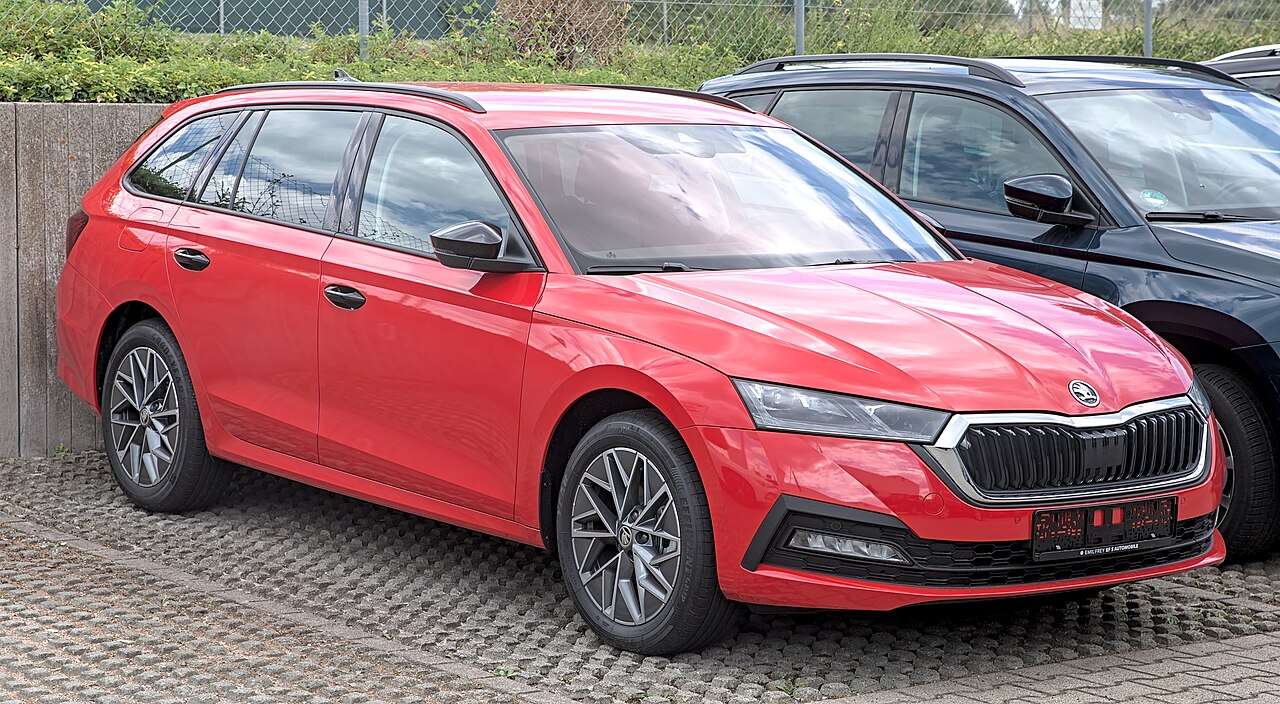
Featured photograph: Mike-fiesta, CC BY-SA 4.0, via Wikimedia Commons. Resized for web.