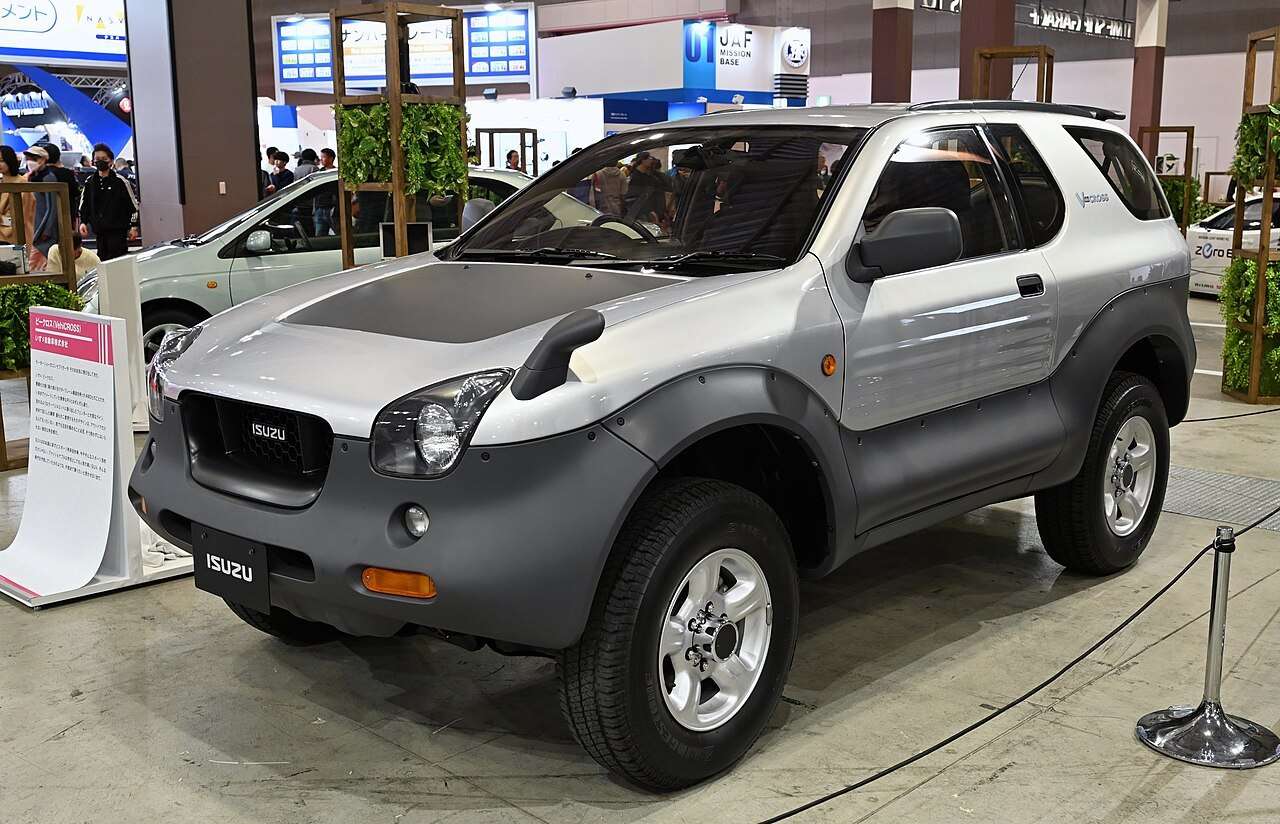
The VehiCROSS looked like it should have stayed under motor-show lights. Isuzu turned it into a production 4×4 and kept much of the sharp, compact style that made the concept arresting.
1. Tokyo saw it four years before production
The concept appeared at the 1993 Tokyo Motor Show. Isuzu subsequently made the stylised little 4×4 into a road vehicle instead of letting the design disappear after the show.
2. Isuzu announced production in March 1997
That is the date in Isuzu’s own retrospective press release. It distinguishes the Japanese launch from the later North American sales story.
3. The Japanese version used a 3.2-litre V6
The domestic catalogue gives 3,165 cc and a four-speed automatic. This is one reason why blanket specifications for the VehiCROSS can be misleading.
4. North America got a 3.5
The US-market car used the larger 3.5-litre V6. A photograph of the similar-looking body on its own cannot settle which engine is fitted.
Love cars you don’t see every day?
Get forgotten cars, surprising motoring stories and the most interesting finds from Unusual Cars by email.
Free to join. No spam. Unsubscribe whenever you like. See our Privacy Policy.
5. Torque on Demand was part of the pitch
An electronically managed system varied the torque going to the front axle as conditions changed. It was a serious technical proposition beneath a body that could easily be mistaken for a styling exercise.
6. The cladding was central to the look
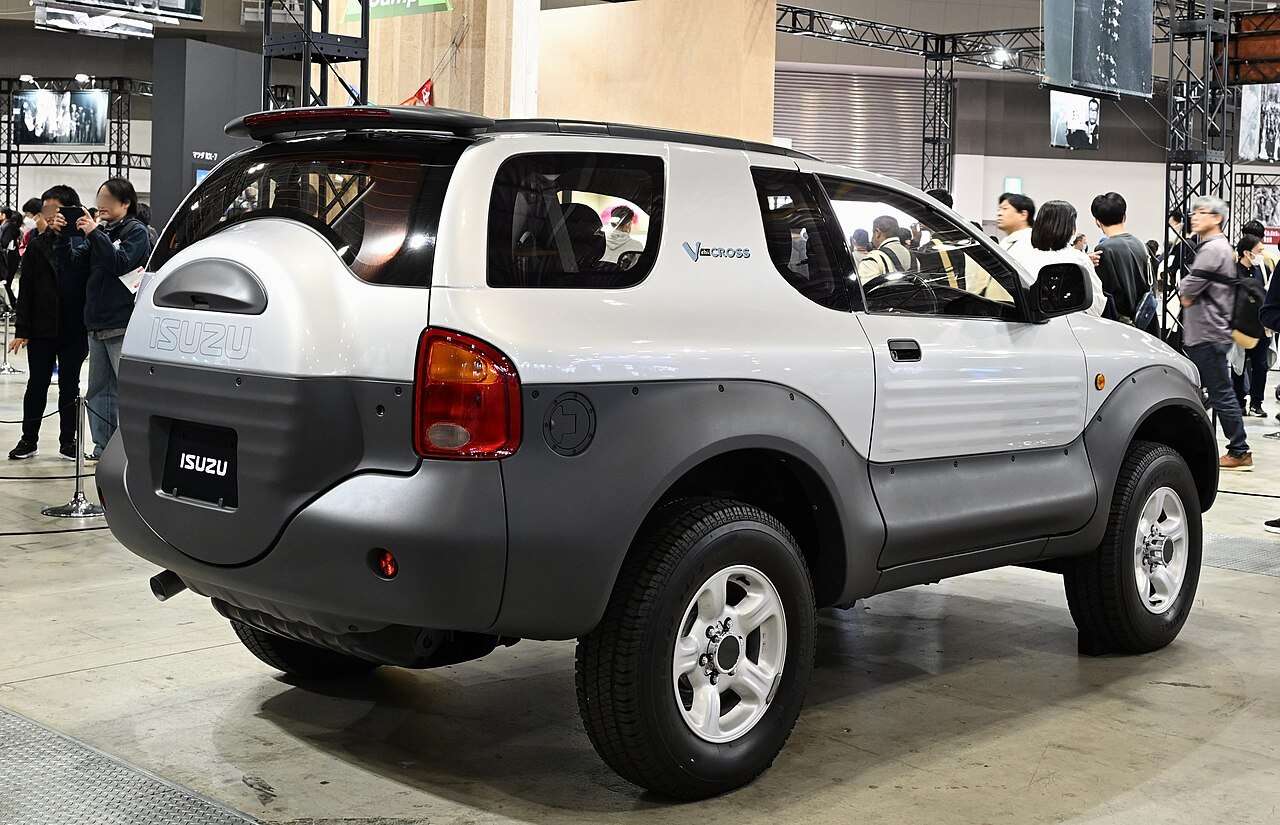
The dark material wrapped around the lower half instead of decorating isolated wheel arches. It made the body look like two interlocking shapes and kept the concept’s idea visible in production.
7. Even the spare wheel was styled into the body
The rear door carried the spare inside a shaped cover. The wheel remained accessible without breaking the back of the body with the conventional exposed-carrier look.
8. It had a special edition numbered in its name
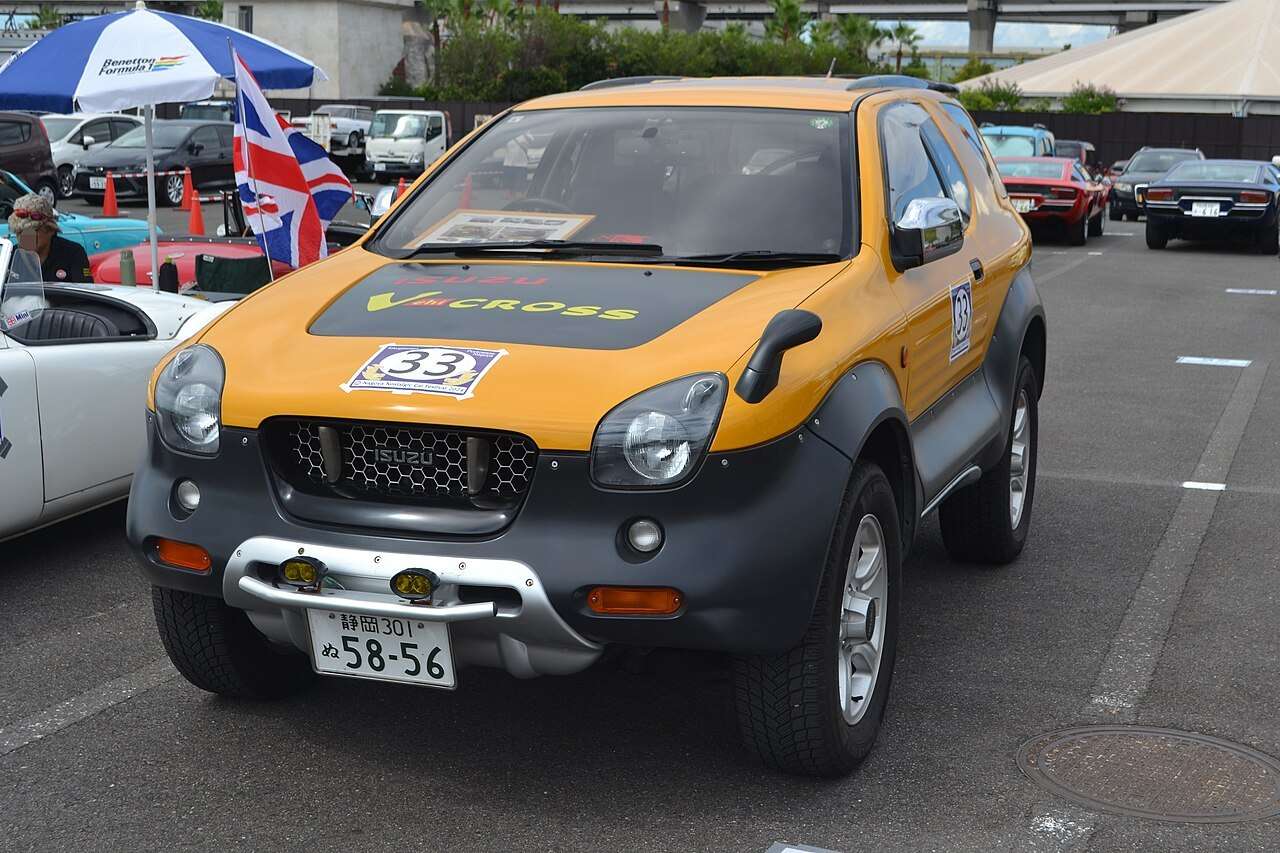
Isuzu announced the Japanese 175 Limited Edition in February 1999. The contemporary release is particularly useful because it records how the manufacturer itself presented a rare variant.
9. The proportions stayed unusually compact
The body had two side doors and four seats in the Japanese catalogue. That made it closer to a compact leisure 4×4 than to the large family SUVs of the period.
10. The resemblance to the show car was deliberate
Isuzu explicitly described the production model as retaining the concept’s bold design. That explains why its details still look like a cohesive proposal rather than parts added to an existing mainstream body.
10 Things You Probably Didn’t Know About the Mitsubishi Pajero Evolution.
Explore more 10 Things articles
Browse the Unusual Cars 10 Things hub.
Sources and further reading
- Isuzu 175 Limited Edition press release and production history
- Toyota Gazoo Japanese VehiCROSS period catalogue data
- Isuzu Japanese and US sales brochure archive
Featured image: Isuzu VehiCROSS on display at the 2025 Japan Mobility Show. Photo by TTTNIS via Wikimedia Commons (CC0, resized).
Join the Unusual Cars Club
Get more forgotten performance cars, surprising motoring stories and new 10 Things articles by email.
Free to join. No spam. Unsubscribe whenever you like. See our Privacy Policy.