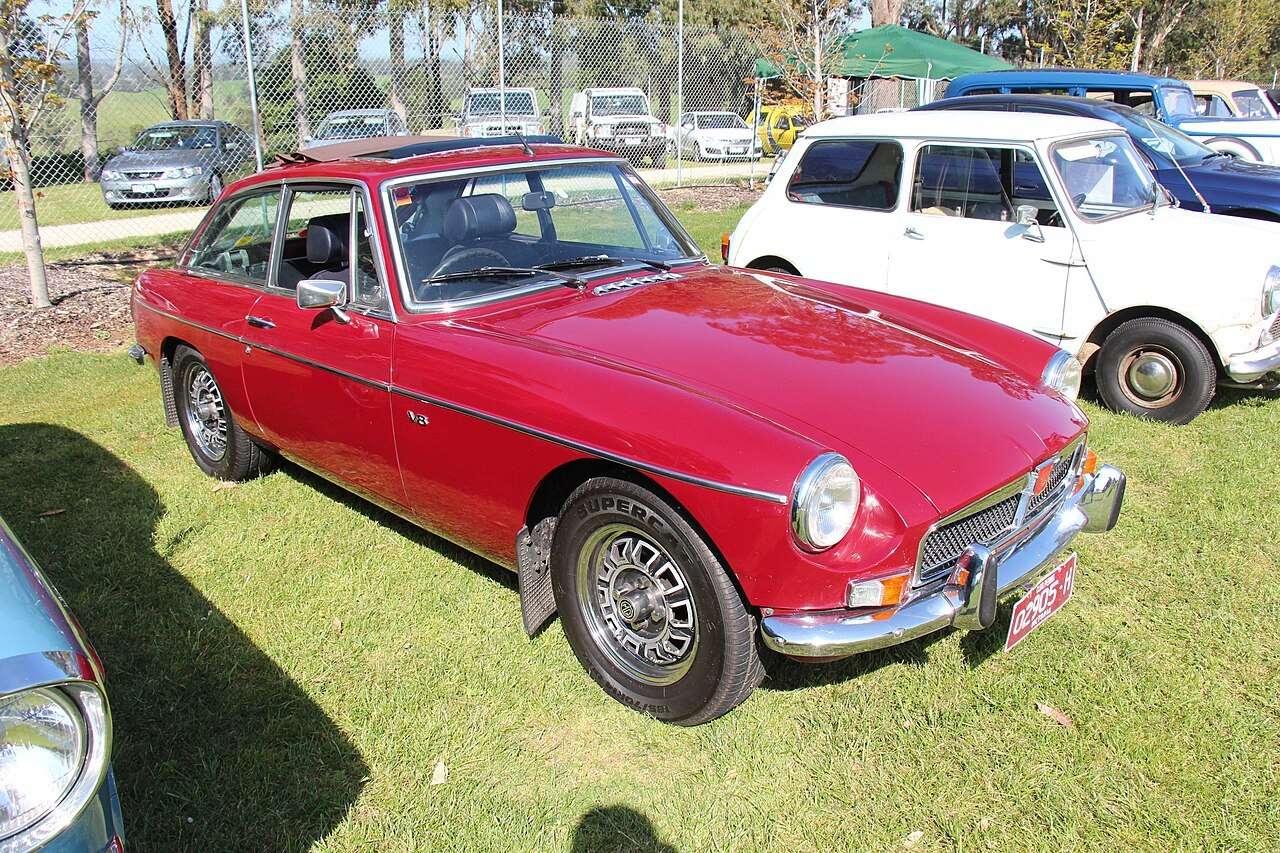
A factory MGB with a Rover V8 sounds like a big change to a familiar formula. MG hid most of the work underneath a GT body which made the extra cylinders surprisingly easy to miss.
1. An independent conversion came first
Ken Costello was fitting Rover V8s to MGBs before the factory production car appeared. His conversions are a separate chapter, and their specifications and identifying details need to be kept separate from the factory model’s.
2. MG launched the production car in 1973
The factory V8 joined the MGB family in 1973. MG based it on the closed GT, which suited the idea of a compact grand tourer with more effortless performance.
3. The V8 was a Rover engine with American ancestry
The 3.5-litre aluminium V8 came from Rover and traced its design back to Buick. Its light alloy construction helped make it a plausible engine for a compact sports car.
4. The factory quoted 137 bhp
The production engine’s 137 bhp is only part of the story. The significant gain was the V8’s ability to make useful torque without needing to be worked as hard as the ordinary four-cylinder.
Love cars you don’t see every day?
Get forgotten cars, surprising motoring stories and the most interesting finds from Unusual Cars by email.
Free to join. No spam. Unsubscribe whenever you like. See our Privacy Policy.
5. It could keep the standard bonnet shape
MG arranged the carburettors and intake to fit under the regular bonnet profile. It spared the factory car a conspicuous bonnet bulge and helped it look so understated.
6. It used twin SU carburettors
The factory installation put the carburettors towards the rear of the engine on a special inlet arrangement. A look under the bonnet explains how the engineers found the necessary clearance.
7. There was a four-speed manual with overdrive
The gearbox offered an overdrive ratio for faster cruising. That suits the character of the GT V8 particularly well, since one of the advantages of the engine was how little drama it needed to maintain speed.
8. Production crossed the bumper change
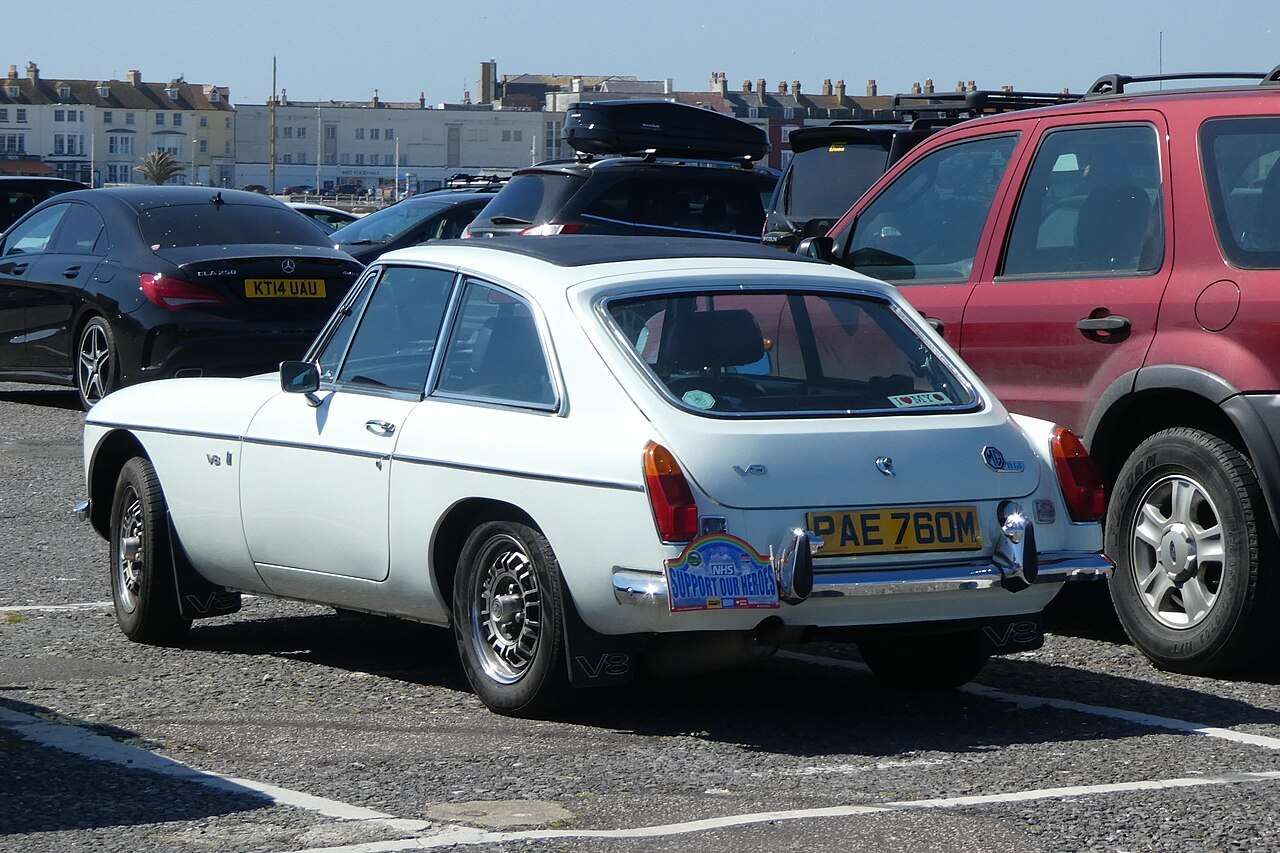
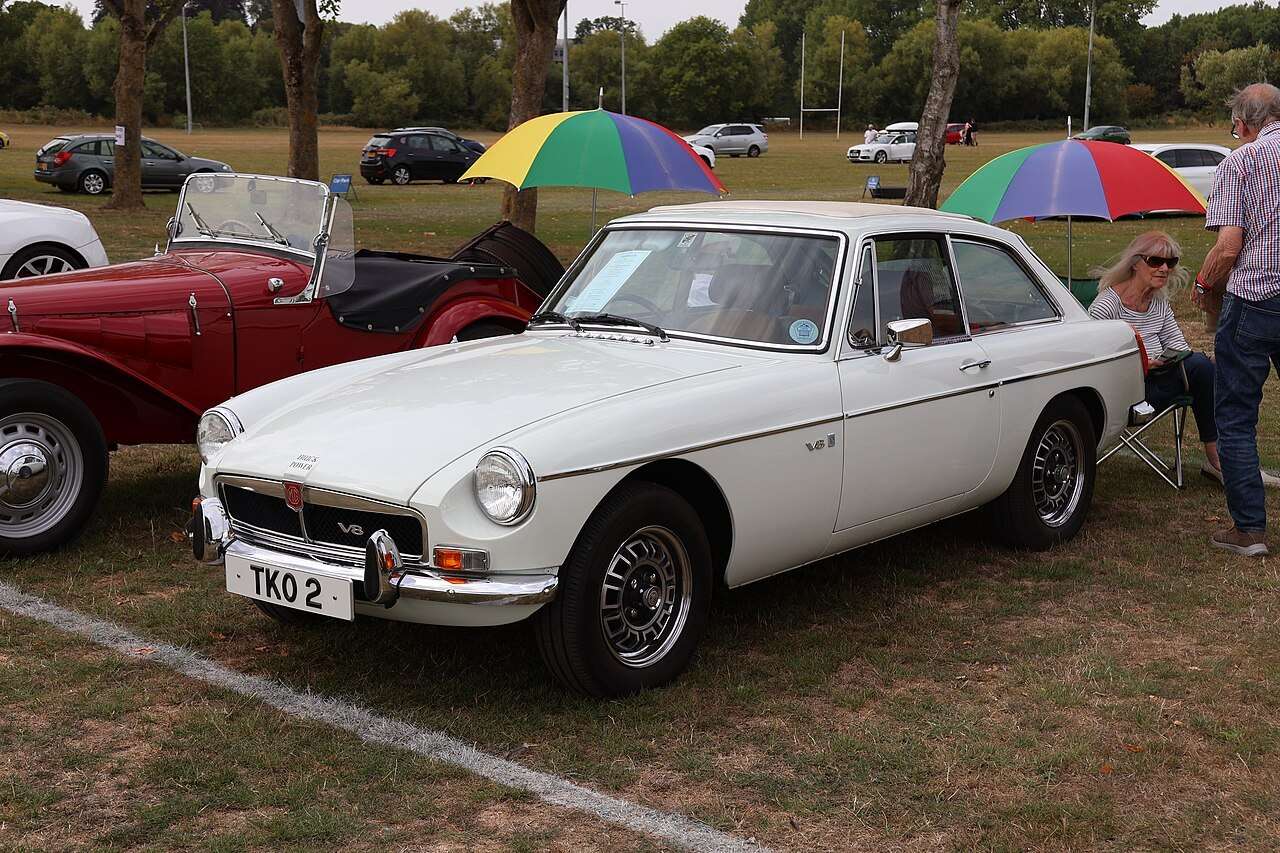
The model ran through the switch from chrome bumpers to the later black bumper treatment. Both appearances belong to the factory V8 story, even if one is more often used in a period photograph.
9. The factory built the GT body only
Roadster V8 conversions exist, but the factory production MGB GT V8 was a fixed-roof car. A photograph of an open V8 MGB needs to be identified as a conversion rather than used to illustrate a standard factory car.
10. Production stayed remarkably small
The MG Owners’ Club records 2,591 factory GT V8s. The ordinary MGB was built in vastly greater numbers, which helps explain why the shape feels familiar even to people who have never seen an original V8.
Explore another British sports car with Rover V8 power, the TVR Chimaera.
Explore more 10 Things articles
Browse the Unusual Cars 10 Things hub.
Sources and further reading
Featured image: Red factory-era MGB GT V8 with chrome bumpers. Photo by Sicnag via Wikimedia Commons (CC BY 2.0, resized).
Join the Unusual Cars Club
Get more forgotten performance cars, surprising motoring stories and new 10 Things articles by email.
Free to join. No spam. Unsubscribe whenever you like. See our Privacy Policy.