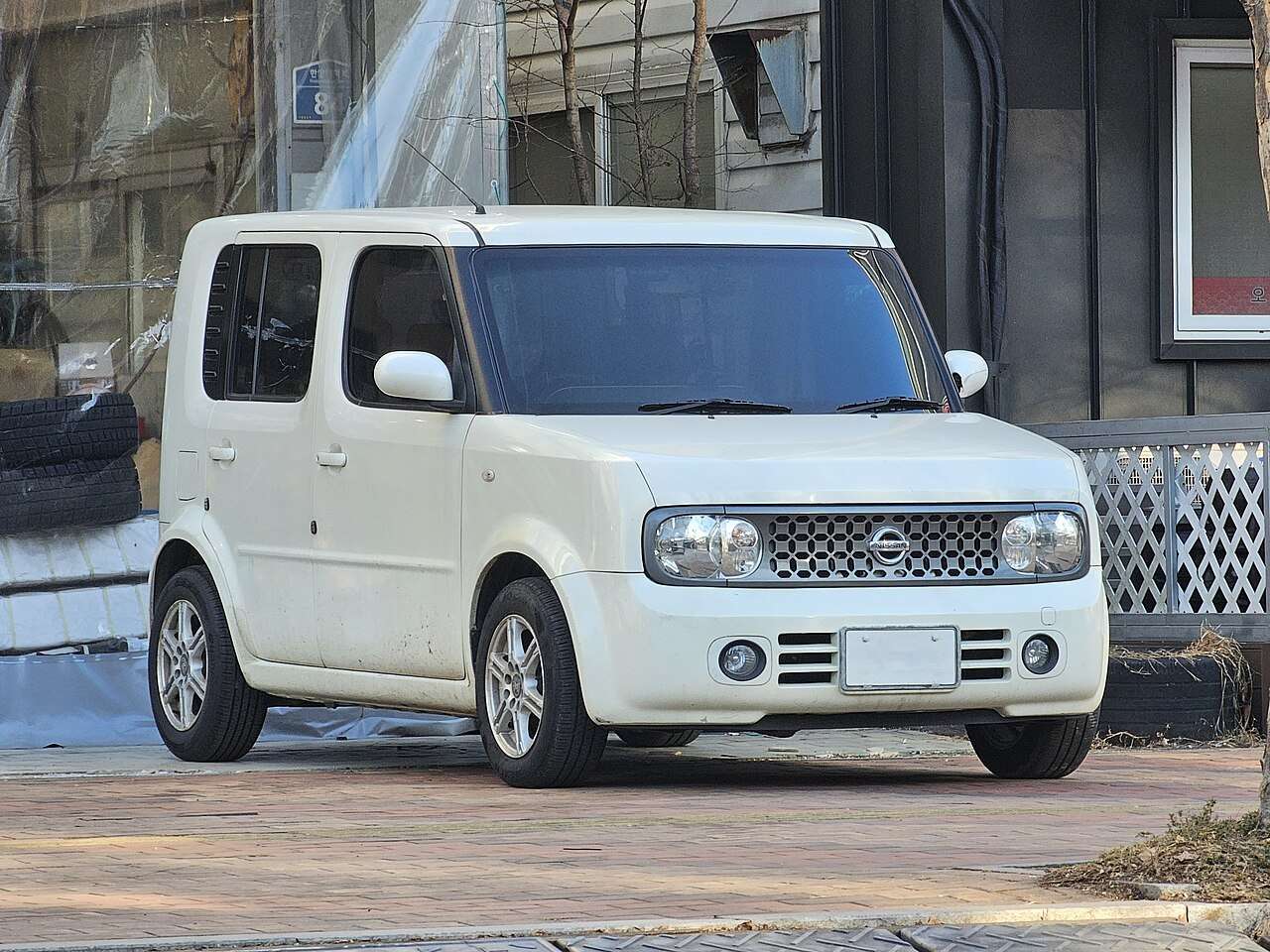
The second-generation Cube used a shape closer to a room than a conventional hatchback. The asymmetrical rear glass made it memorable, while the details underneath explain why the import cars can vary so much.
1. Z11 was the second Cube
Nissan introduced its second-generation Cube in 2002. The earlier Z10 had already established the name, while the Z11 developed the asymmetrical look most people now associate with it.
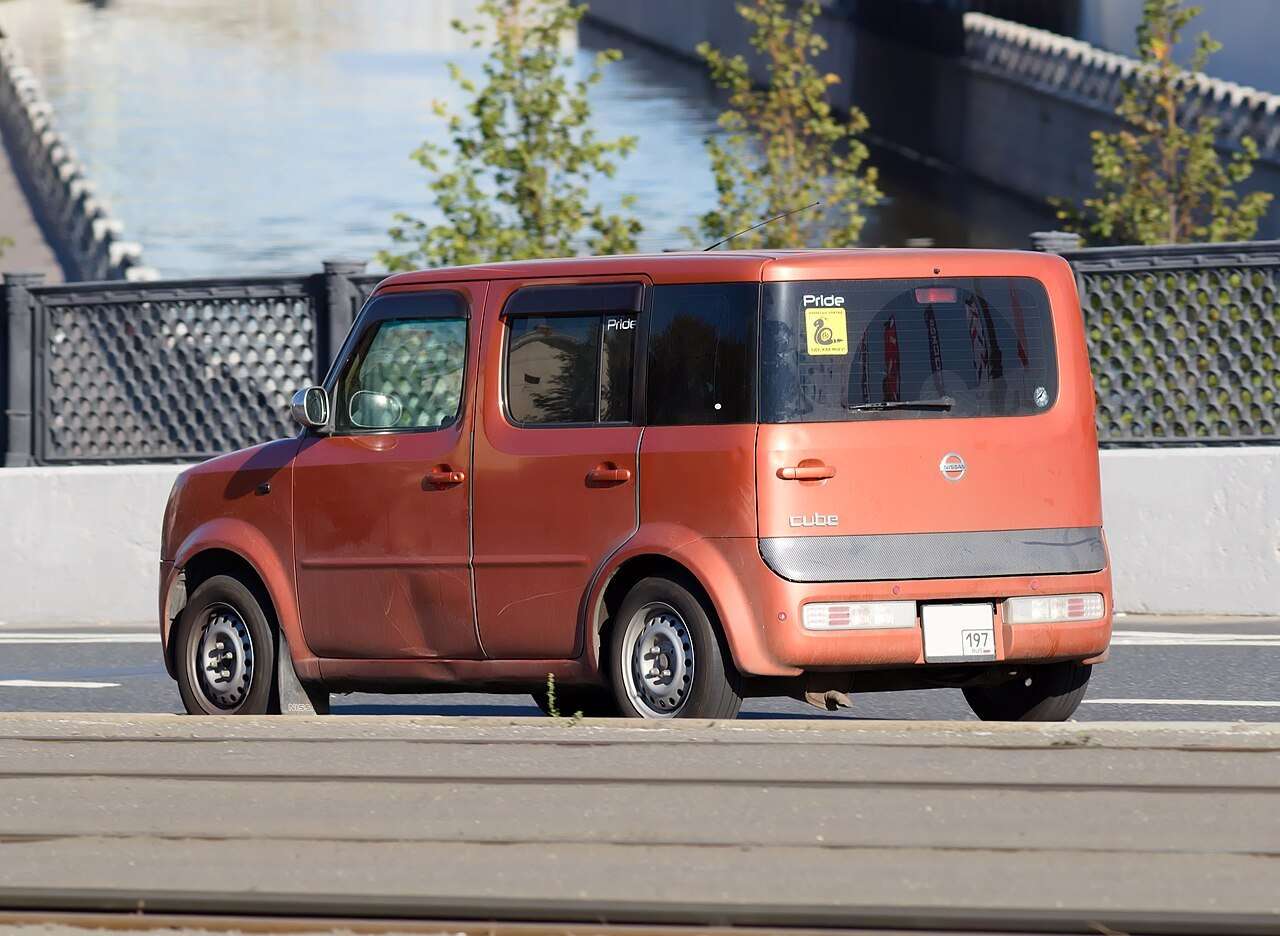
2. Only one rear corner was meant to look glassy
Nissan wrapped the rear glazing around one side, leaving the opposite rear pillar visually stronger. The result looked different from each side even though the passenger space remained broadly square.

3. The tailgate swung sideways
A side-hinged door suited the upright rear and wide opening. It also made the space behind a parked Cube more important if the owner wanted to load luggage.
4. It was shorter than its roominess suggested
Nissan’s preserved 2004 BZ11 example measures 3,730 mm long. Its tall, upright cabin gave Nissan more usable volume without needing the length normally associated with that much interior space.
Love cars you don’t see every day?
Get forgotten cars, surprising motoring stories and the most interesting finds from Unusual Cars by email.
Free to join. No spam. Unsubscribe whenever you like. See our Privacy Policy.
5. The heritage car has an identifiable 1.4
Nissan lists a 1,386 cc CR14DE with 98 PS for the particular 2WD SX 70th-II in its collection. That figure belongs to the documented example, rather than every Japanese import.
6. There were two- and four-wheel-drive versions
Nissan offered more than one driveline across the range. Build codes and the original specification are particularly useful when a car is advertised in Britain under the broad Z11 label.
7. The Cube Cubic made the idea longer
Nissan extended the body to create the Cube Cubic with an extra row of seats. It is easy to identify in a good side view and explains why some square-looking imports have more seating than others.
8. The cabin was part of the design statement
Boxy outside proportions made room for an upright dashboard and a sense of open space. Its interior is as important to the story as the photograph most people know from the back.
9. The UK-market Cube came a generation later
The later Z12 was officially offered in Britain. The Z11 cars encountered here are imports, so UK specifications for the following generation should not be copied across.
10. Its styling makes model-year clues easy to miss
The prominent rear window gets most of the attention, but lamps, trim and grille details vary. Pairing a photograph with a build code is the simplest way to keep a particular car’s story straight.
Explore more 10 Things articles
Browse the Unusual Cars 10 Things hub.
Sources and further reading
Featured image: White Nissan Cube Z11 facelift. Photo by Damian B Oh via Wikimedia Commons (CC BY-SA 4.0, resized).
Join the Unusual Cars Club
Get more forgotten performance cars, surprising motoring stories and new 10 Things articles by email.
Free to join. No spam. Unsubscribe whenever you like. See our Privacy Policy.