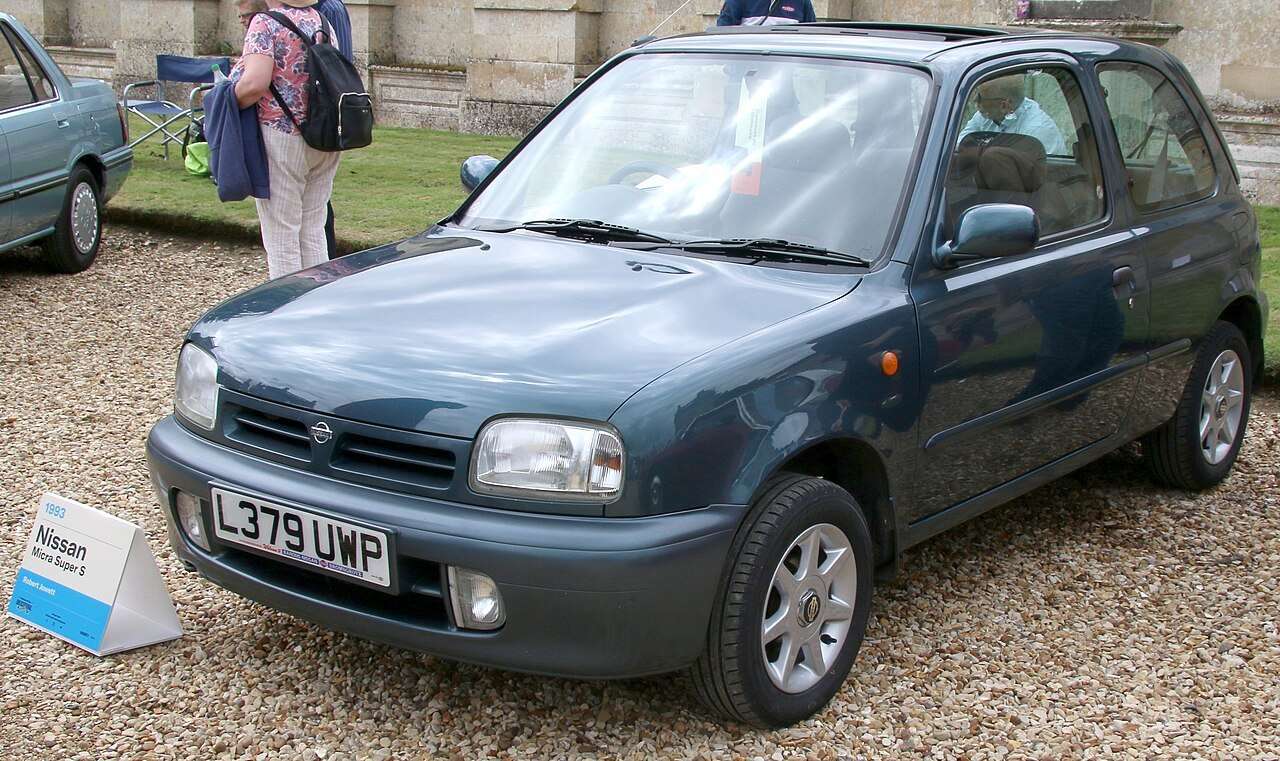
The K11 Micra earned a reputation as a first car. The 1.3 Super S is the one to look for if you remember a Micra with a spoiler, a little more urge and an unexpected entry in the FIA archive.
1. This was the second-generation Micra
The K11 replaced the square-edged first Micra with the rounded body that became a fixture on British roads. The Super S name tells you the trim, while K11 identifies the generation.
2. Sunderland started building it in 1992
Nissan's timeline puts the start of UK Micra production in August. It was the third car line made at Sunderland, where the British operation already had Bluebird and Primera experience.

3. The award was for the whole Micra
The K11 won European Car of the Year for 1993, a first for a Japanese car. The award covered the model range, which puts the Super S in context as one version of an unusually well-regarded small car.
4. Its 1.3 was really 1,275 cc
The FIA lists the Super S at 1,275 cc. Its CG13DE petrol engine used twin overhead cams, 16 valves and fuel injection, a surprisingly busy specification for a small naturally aspirated hatch of the time.
Love cars you don’t see every day?
Get forgotten cars, surprising motoring stories and the most interesting finds from Unusual Cars by email.
Free to join. No spam. Unsubscribe whenever you like. See our Privacy Policy.
5. There was a Super S in the FIA book
The FIA historic database records the Nissan Micra 1.3 Super S as homologation number 5546. That is a useful contemporary identifier for a car often found now under the much broader search term K11 Micra.
6. January 1996 is a motorsport date
The homologation record begins on 1 January 1996. That date says when the car was approved for competition under that form. Nissan's own production history dates the generation to 1992.
7. The styling was deliberately modest
A rear spoiler and sportier exterior details made the Super S recognisable without changing the familiar Micra silhouette. Look at an early UK brochure alongside a base car and the difference becomes much easier to spot.

8. The 1.0 shared the same engineering idea
The smaller CG10 was also a twin-cam, 16-valve four-cylinder. The Super S used the larger member of that engine family, which is why its story is about extracting more from an already sophisticated little platform.
9. March is the Japanese name
Nissan's own archive calls the car Micra (March). Searching both names turns up more of the K11 story, although a Japanese-market March and a UK Super S need to be identified by their individual specifications.
10. Nearly 1.4 million K11s came from Sunderland
Nissan puts the plant's K11 production at nearly 1.4 million before the K12 took over in 2002. That's the whole Sunderland run. It gives some scale to the familiar shell underneath the uncommon Super S trim.
10 Things You Probably Didn’t Know About the Nissan Micra 160SR.
Explore more 10 Things articles
Browse the Unusual Cars 10 Things hub.
Sources and further reading
- FIA historic homologation number 5546
- Nissan Heritage Collection production timeline
- Nissan UK Sunderland production figures
Featured image: 1993 Nissan Micra Super S at the Festival of the Unexceptional. Photo by kitmasterbloke via Wikimedia Commons (CC BY 2.0, resized).
Join the Unusual Cars Club
Get more forgotten performance cars, surprising motoring stories and new 10 Things articles by email.
Free to join. No spam. Unsubscribe whenever you like. See our Privacy Policy.