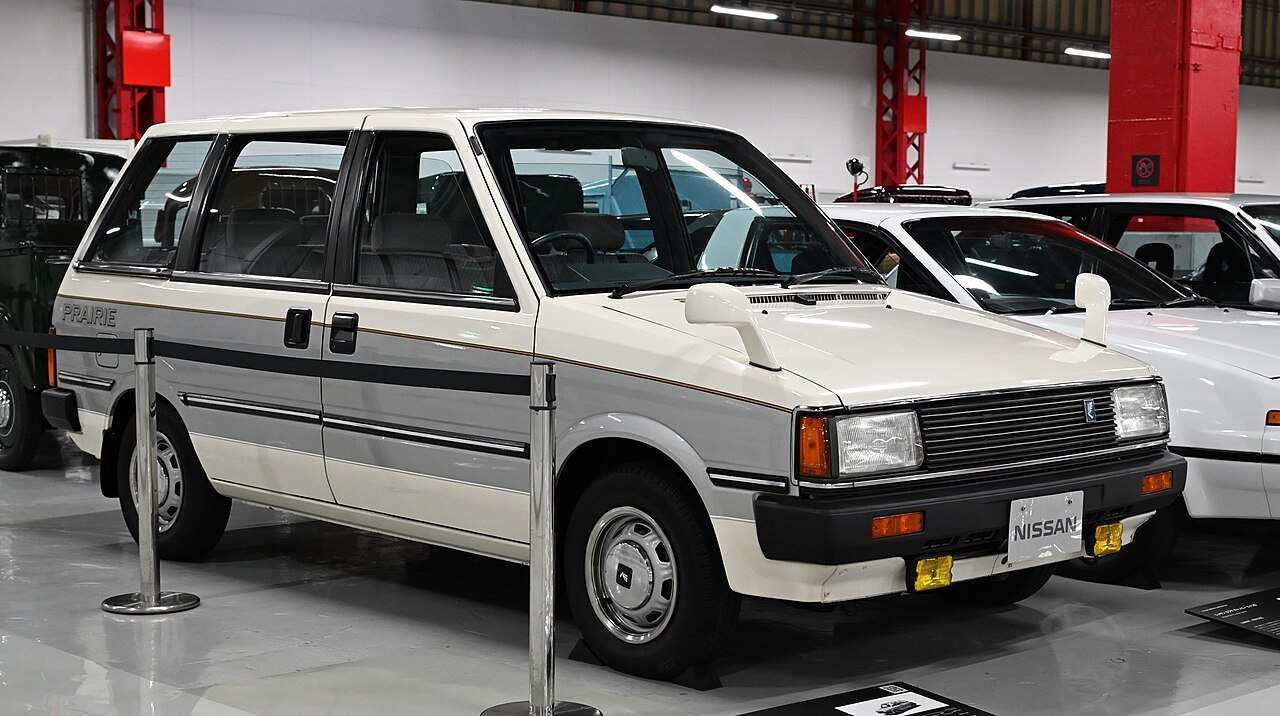
The original Nissan Prairie makes sense the moment its doors are open. Two sliding rear doors and a largely unobstructed opening turned an ordinary-looking early-1980s car into an unusually adaptable people carrier.
1. Nissan introduced it in 1982
The first Prairie went on sale in Japan in August 1982. The M10 code distinguishes it from later Prairies that carried the name into a much more established market.
2. The rear doors slid back
A sliding rear door on either side gave access in tight spaces where a conventional door could be awkward. This feature is one reason the Prairie looks so different with its doors open.
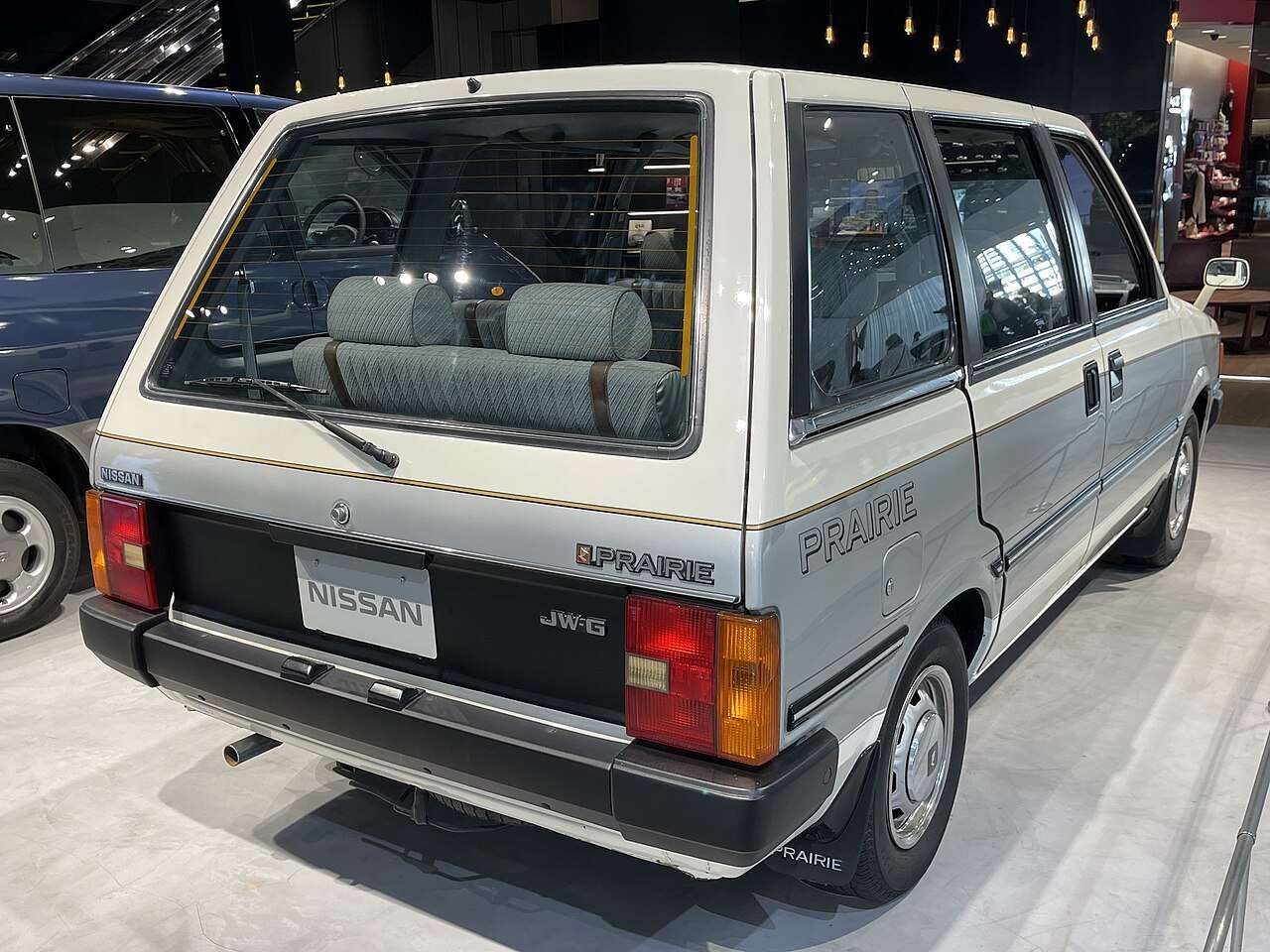
3. There was no conventional fixed centre pillar in the side opening
Opening the side doors gives a wide opening without a fixed pillar standing between front and rear. That was an unusual choice for a production passenger vehicle of the period.
4. Front-wheel drive helped the packaging
Nissan credits the front-engine, front-wheel-drive layout with helping make the Prairie’s arrangement possible. Keeping most of the drivetrain at the front gave the designers more flexibility with the passenger area.
Love cars you don’t see every day?
Get forgotten cars, surprising motoring stories and the most interesting finds from Unusual Cars by email.
Free to join. No spam. Unsubscribe whenever you like. See our Privacy Policy.
5. It was under 4.1 metres long
The 1984 JW-G in Nissan’s collection measures 4,090 mm. Its upright body gave room to passengers without making the car especially long.
6. Nissan offered several seating layouts
The heritage car is an eight-seater. Nissan also lists five-seat and three/six-seat versions. This variation is why it pays to identify a specific trim before attaching a universal seat count to the Prairie.
7. The museum’s 1.8 made 100 PS
Nissan’s example used the 1,809 cc CA18 four-cylinder, rated at 100 PS. It is a documented Japanese specification rather than a figure to apply to every export model.
8. It weighed little more than a tonne in that form
Nissan lists a kerb weight of 1,020 kg for its JW-G. The figure helps put the first Prairie’s compact dimensions in context beside later, larger people carriers.
9. The suspension had an independently sprung rear layout
Nissan lists trailing arms at the rear and struts at the front. The mechanical specification was designed around a practical passenger car rather than around a conventional rear-driven van.
10. The doors are the best way to tell the story
A closed Prairie can look like a tall estate from across the road. Show the side doors open and the choice of shape, seat layout and large entry all become easier to understand.
Read our 10 Things article on the Mk1 Toyota Previa.
Explore more 10 Things articles
Browse the Unusual Cars 10 Things hub.
Sources and further reading
- Nissan Heritage Collection, 1984 Prairie JW-G and specifications
- Nissan global model archive, Prairie
Featured image: 1984 Nissan Prairie JW-G on display. Photo by TTTNIS via Wikimedia Commons (CC0, resized).
Join the Unusual Cars Club
Get more forgotten performance cars, surprising motoring stories and new 10 Things articles by email.
Free to join. No spam. Unsubscribe whenever you like. See our Privacy Policy.