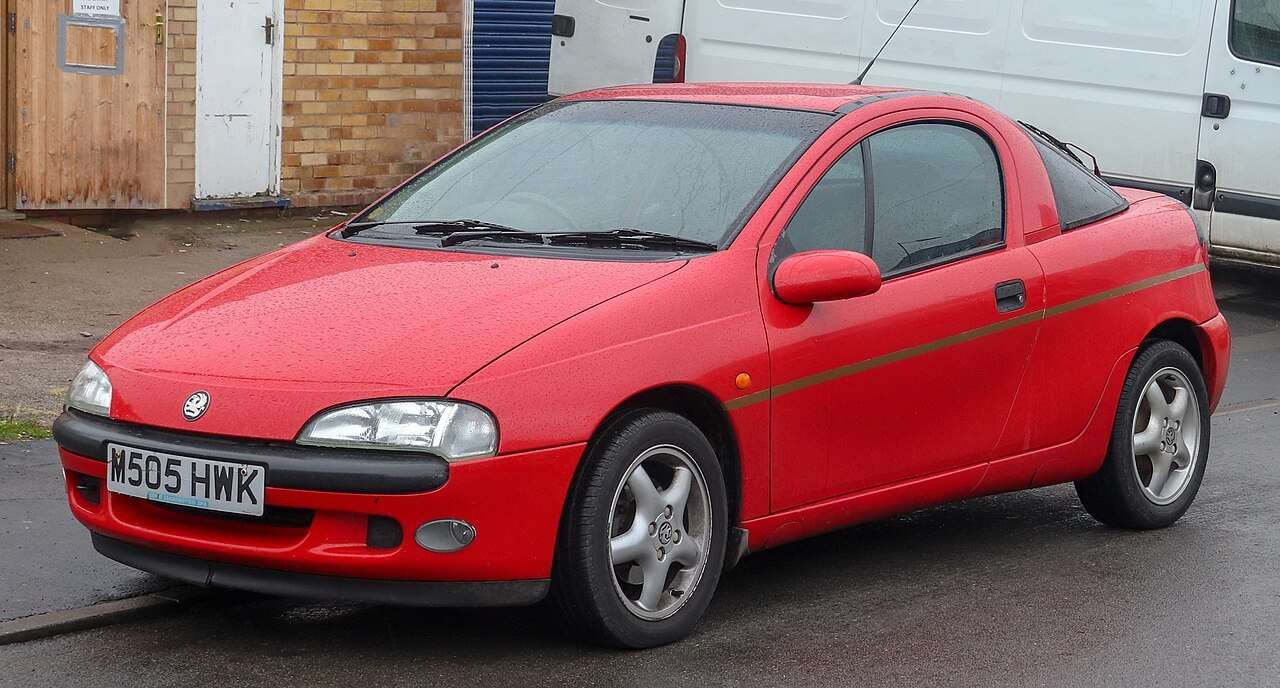
The original Tigra gave nineties Vauxhall buyers a tiny coupé with a huge curved rear window. Underneath was a Corsa connection that made the showroom gamble much more sensible than the shape suggested.
1. The concept reached production quickly
Opel displayed the Tigra concept at Frankfurt in 1993 and put the production coupé on sale the following year. The leap from motor-show idea to showroom car retained the tight proportions and sweeping rear glass that made it distinctive.
2. British buyers knew it as a Vauxhall
The same little coupé largely wore Opel badges elsewhere in Europe. That explains why continental brochures, advertising and surviving photographs often tell the same Mk1 Tigra story under a different badge.
3. It shared its hardware with the Corsa B
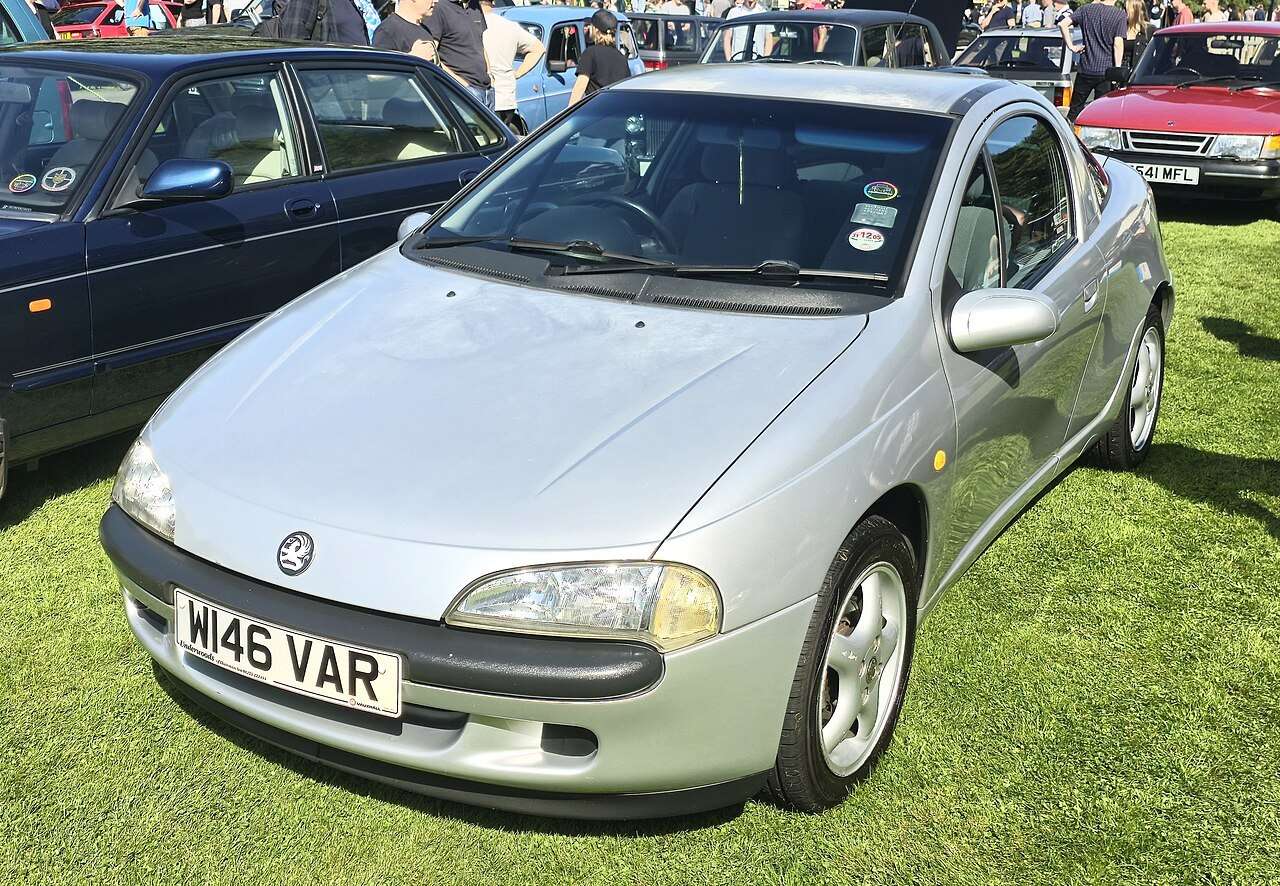
The Tigra drew on the Corsa B for its basic mechanical package. That put familiar front-wheel-drive running gear under an entirely different silhouette, helping a big-volume manufacturer offer a niche coupé.
4. It had two 16-valve engines
The 1.4-litre version was rated at 90 PS and the 1.6 at 106 PS. The two choices were close enough visually that engine badges and period brochures are better clues than a glance at the bodywork.
Love cars you don’t see every day?
Get forgotten cars, surprising motoring stories and the most interesting finds from Unusual Cars by email.
Free to join. No spam. Unsubscribe whenever you like. See our Privacy Policy.
5. The glass gave the car its identity
The rear window wraps down into the tops of the rear quarters. It is the visual trick that makes the short coupé seem lighter and more dramatic than its small dimensions suggest.
6. The rear seats were for occasional duty
The low roofline made this a 2+2 in the everyday sense. The rear seats were useful as extra carrying space on many trips and did give the first Tigra some flexibility beyond a strict two-seater.
7. The television advert sent it underwater
Opel put teenage German swimming star Franziska van Almsick behind the wheel of a Ceramic Blue Tigra. The car appeared to dive underwater to get past a traffic jam, then surfaced on the other side.
8. It came from Spain
Opel built the first Tigra in Zaragoza, where the Corsa was also made. Sharing a factory made sense alongside the shared components, even if it took rather different body panels to turn one into the other.
9. It sold far beyond the original novelty
Opel records 250,728 examples of the first-generation car, with production ending in January 2001. That puts some scale on the experiment and helps explain how a thoroughly unusual shape became a recognisable sight on everyday roads.
10. The sequel had a different roof and purpose
The Tigra TwinTop that followed converted the name into a two-seat folding-hardtop car. Keeping it separate makes it easier to see what was special about the original fixed-roof four-place coupé.
Explore more 10 Things articles
Browse the Unusual Cars 10 Things hub.
Sources and further reading
Featured image: Red first-generation Vauxhall Tigra. Photo by Vauxford via Wikimedia Commons (CC BY-SA 4.0, resized).
Join the Unusual Cars Club
Get more forgotten performance cars, surprising motoring stories and new 10 Things articles by email.
Free to join. No spam. Unsubscribe whenever you like. See our Privacy Policy.