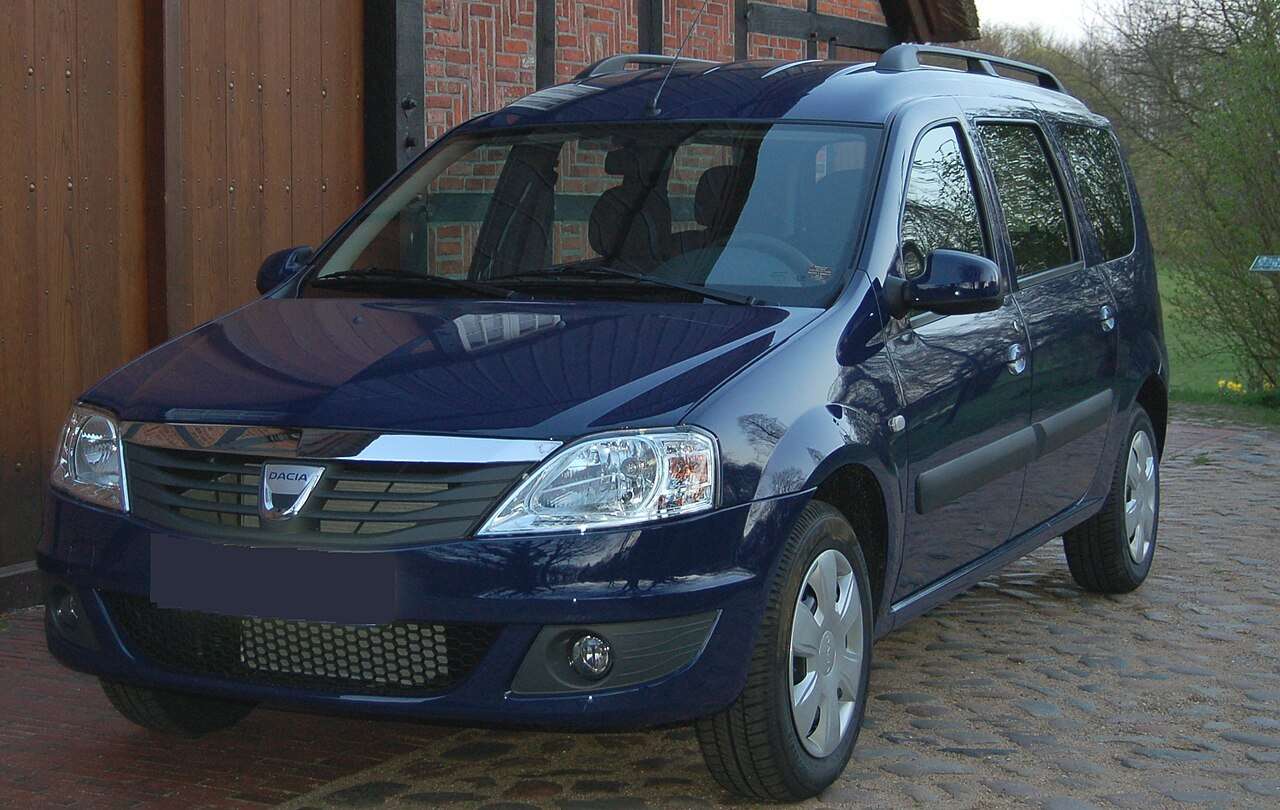
The original Dacia Logan MCV was a long, tall estate that could carry seven adults. Its split rear doors and enormous load space give it a distinct place in the Logan story.
1. The production version debuted in Paris in 2006
The Steppe show car had previewed the idea at Geneva earlier that year. Dacia took the production estate to Paris, then began selling it in Romania that autumn. More European markets followed in 2007.
2. MCV stood for Multi Convivial Vehicle
Renault explained the unusual name in its contemporary corporate material. The idea was to cover several jobs with one family vehicle. That helps explain why the shape looks part estate and part people carrier.
3. Seven seats could mean seven adults
Dacia’s launch material made the claim explicitly. It also sold a five-seat version. Those were practical choices at the point of purchase, rather than two extra seats that appeared only in photographs of a concept.
4. The wheelbase stretched to 2.9 metres
The longer distance between the axles helped make the third row viable. Look at the amount of body between the front and rear wheels in a profile photo. That gives a better idea of what Dacia did than judging the estate purely by the Logan badge.
Love cars you don’t see every day?
Get forgotten cars, surprising motoring stories and the most interesting finds from Unusual Cars by email.
Free to join. No spam. Unsubscribe whenever you like. See our Privacy Policy.
5. The rear doors swung sideways
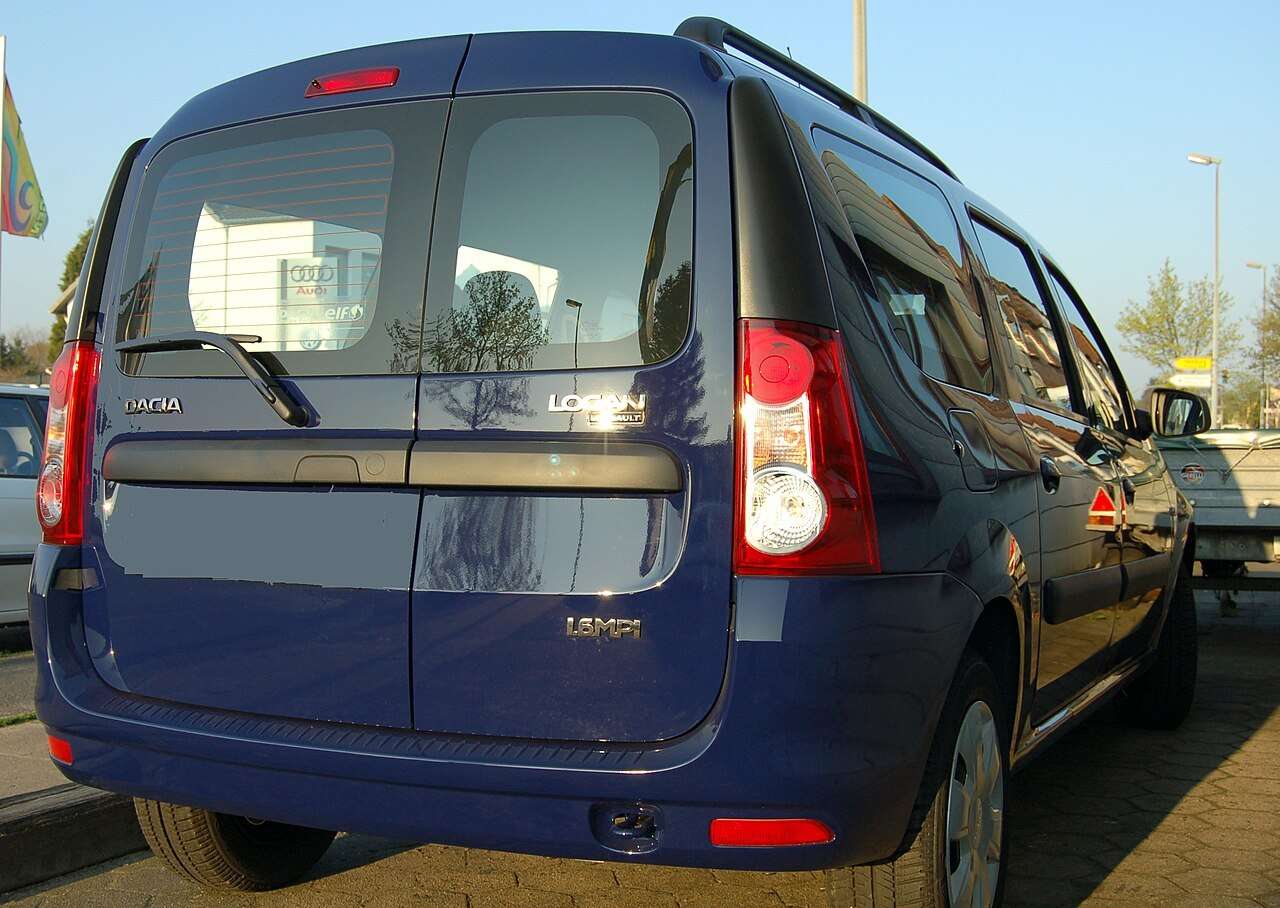
Dacia fitted two asymmetrically split rear doors. Opening only the smaller door could be convenient for a light load. Opening both shows how useful the boxy rear shape could be.
6. There was room left behind the third row
Dacia’s figures put the seven-seat luggage space at roughly 200 litres. In five-seat form the factory gave 700 litres. Those numbers show why it is worth specifying the seating arrangement before comparing boot capacities.
7. It could carry a very large load with the seats out of the way
The launch figures go up to 2,350 litres. The extra height and boxy tail made the shape more useful for large objects than a single volume number can convey. The first MCV offered something quite different from a sleeker five-seat estate.

8. The powertrains came from a familiar Renault family
Early literature lists 1.4 and 1.6 petrols, a 1.6 16V and the 1.5 dCi diesel. That was a deliberately familiar engine range for a car introducing a new body. Country catalogues can show different combinations.
9. It was built in Romania
Renault identifies the Dacia plant at Pitești as the manufacturing base for the original MCV. The factory story matters because it was part of the wider rollout of Logan beyond the saloon. It is easy to forget the scale of that expansion when seeing one old car today.
10. The wider Logan family gained working vehicles too
Dacia followed with a Logan Van and then a Logan Pick-up. The estate makes sense alongside those derivatives because the original programme used the same value proposition for several very different jobs.
Explore more 10 Things articles
Browse the Unusual Cars 10 Things hub.
Sources and further reading
- Dacia’s 2006 German launch release
- Original Logan MCV launch press pack
- Renault contemporary report on the Logan MCV
- Dacia archive on the MCV, Van and Pick-up
Featured image: First-generation Dacia Logan MCV Lauréate. Photo by Huhu Uet via Wikimedia Commons (CC BY-SA 3.0, resized).
Join the Unusual Cars Club
Get more forgotten performance cars, surprising motoring stories and new 10 Things articles by email.
Free to join. No spam. Unsubscribe whenever you like. See our Privacy Policy.