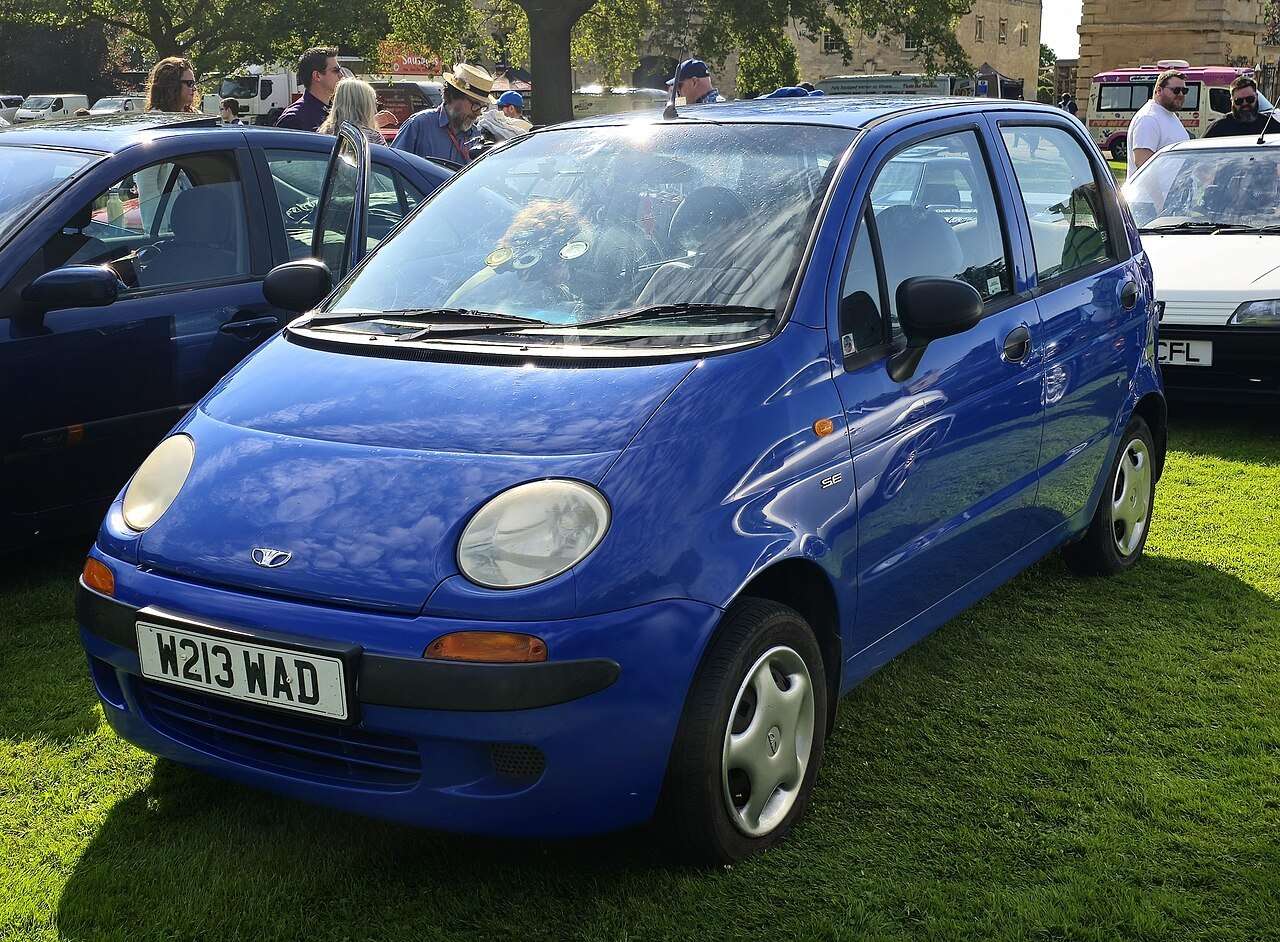
The little Daewoo Matiz started with an Italian research project and reached Britain with five doors and a three-cylinder engine. Its cabin makes more sense when you look at what Italdesign wanted to prove.
1. The first idea was called Lucciola
Italdesign traces the Matiz to the Lucciola research project it presented in 1992. The production car’s shape carried forward the idea of using height and rounded forms to make a small footprint more useful.
2. The seats were inspired by furniture
Giugiaro’s own project archive points to the folding Kartell Plia chair as inspiration for the concept’s seating. The influence belongs to the research project behind the Matiz. It is a lovely explanation for why a car designer was looking beyond the motor industry for ideas.
3. Daewoo picked up the design concept
Giugiaro’s account says Daewoo was interested in the architecture of the Lucciola. The production Matiz went on sale in 1998. Its little petrol engine and everyday trim were the practical expression of a more experimental design brief.
4. The launch engine had three cylinders
The AA’s UK test measured it against ordinary city cars, not concept cars. It lists 796 cc and 51 lb ft at 4,600 rpm. The engine’s capacity is one reason the little car’s talkative character made much more of an impression than its performance figures.
Love cars you don’t see every day?
Get forgotten cars, surprising motoring stories and the most interesting finds from Unusual Cars by email.
Free to join. No spam. Unsubscribe whenever you like. See our Privacy Policy.
5. Five doors helped families use it
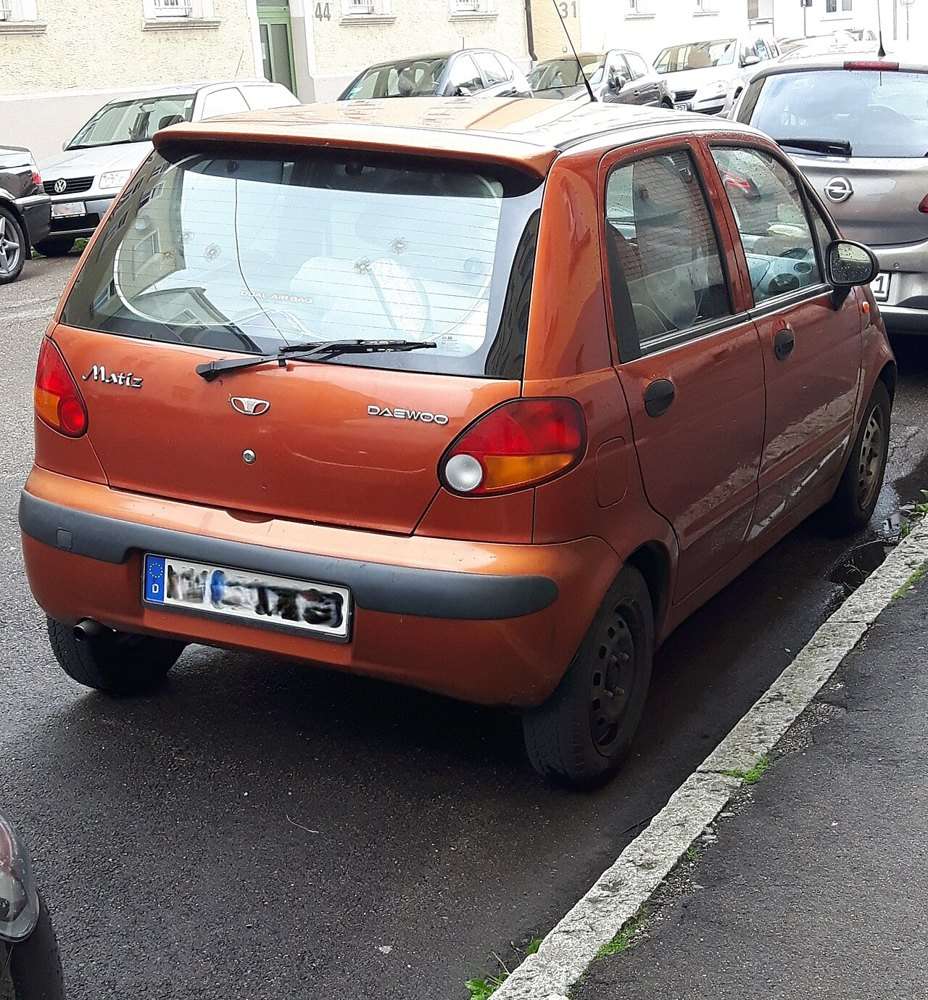
The body had two rear side doors as well as a tailgate. That gave a parent access to the back seat without tipping a front seat out of the way. The useful trick was keeping that convenience in a body short enough for town spaces.
6. The UK test car came with five forward gears
The original AA test includes separate fourth- and fifth-gear figures. A fifth ratio matters when a small engine has to stretch beyond town. That report conveys the experience more clearly than a headline maximum speed.
7. It was lighter on its feet in town
The AA’s figures tell you where the car worked best. The small engine asked for planning at higher speeds, while the upright shell and short dimensions suited close traffic and parking. Both traits are part of the same design compromise.
8. It was tested in Britain by November 1998
The AA archived a full test of the SE Plus in November 1998. That provides a direct view of the original UK model, with contemporary measurements and impressions. It is a better reference than working backwards from a much newer car carrying the same name.
9. Italdesign even gave it a luxury makeover
The d’Arts project was Italdesign’s upscale Matiz proposal. The company described it as an experiment in putting premium details into a tiny city car. It is a reminder that low cost and basic trim were commercial choices, separate from the shape itself.

10. The early shape is easy to distinguish from the facelift
The first version’s round main lights and small separate lamps are the details worth looking for in old photographs. Use the front view and the date together, especially when a listing groups all the earlier Matiz models under one generation.
Read about the Nissan Micra 1.3 Super S (K11).
Explore more 10 Things articles
Browse the Unusual Cars 10 Things hub.
Sources and further reading
- Italdesign Matiz project archive
- Giugiaro’s account of the Lucciola and Matiz
- AA UK Matiz SE Plus road test, November 1998
- Italdesign Matiz d’Arts project
Featured image: Blue 2000 Daewoo Matiz SE. Photo by Calreyn88 via Wikimedia Commons (CC BY-SA 4.0, resized).
Join the Unusual Cars Club
Get more forgotten performance cars, surprising motoring stories and new 10 Things articles by email.
Free to join. No spam. Unsubscribe whenever you like. See our Privacy Policy.