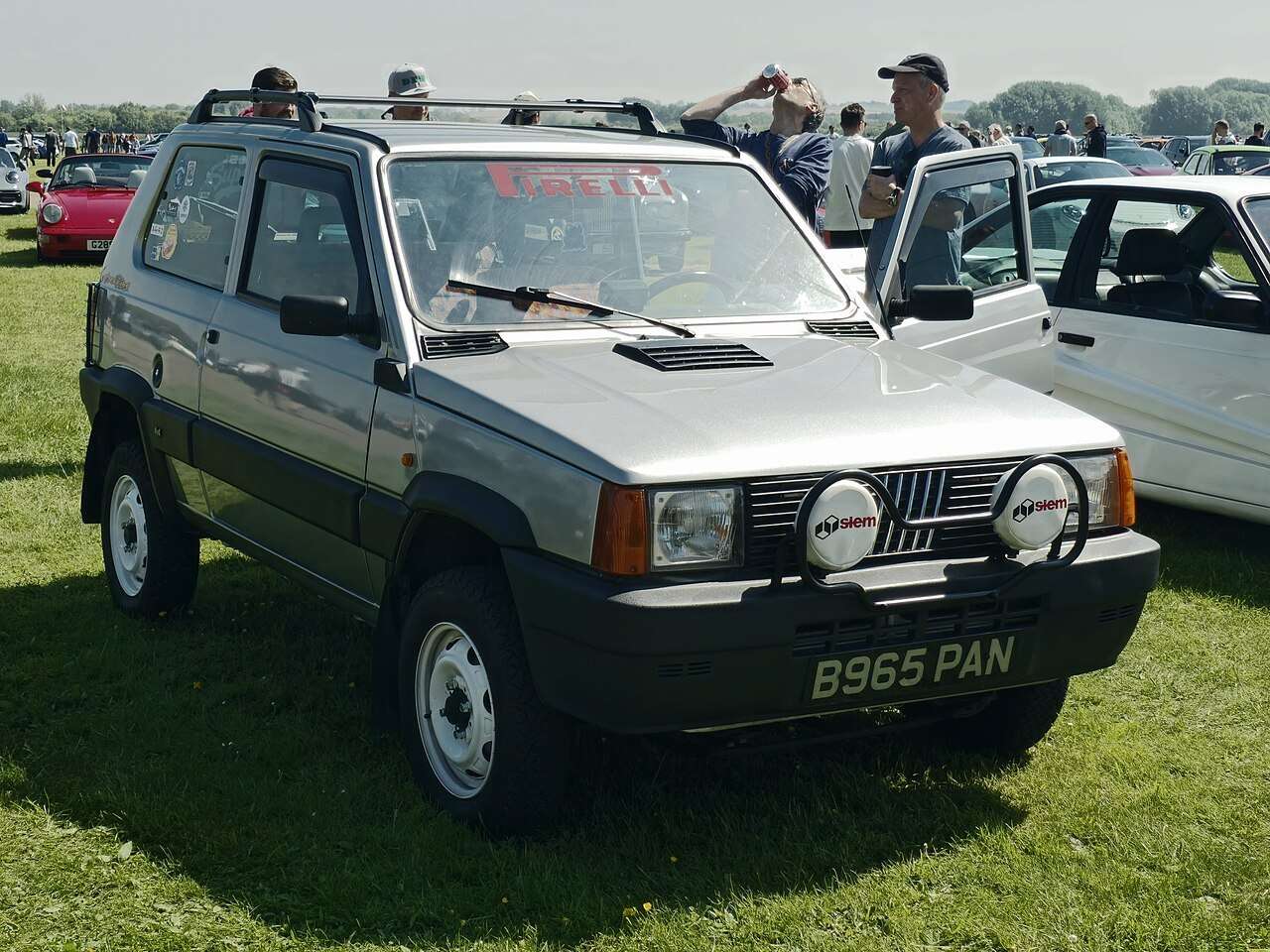
The first Panda 4×4 looked like a city car wearing hiking boots. The extra lever, Austrian hardware and exceptionally low first gear made it much more capable than its size suggested.
1. It arrived three years after the Panda
The Giugiaro-designed Panda debuted in 1980. Fiat added the 4×4 in 1983, taking the basic body of a practical city car into territory normally left to much bigger vehicles.
2. The four-wheel drive came with Austrian know-how
Fiat called on Steyr-Puch to help develop the drivetrain. The Austrian company had experience with compact off-road engineering, and the Panda needed a system that could work in a tiny, affordable car.
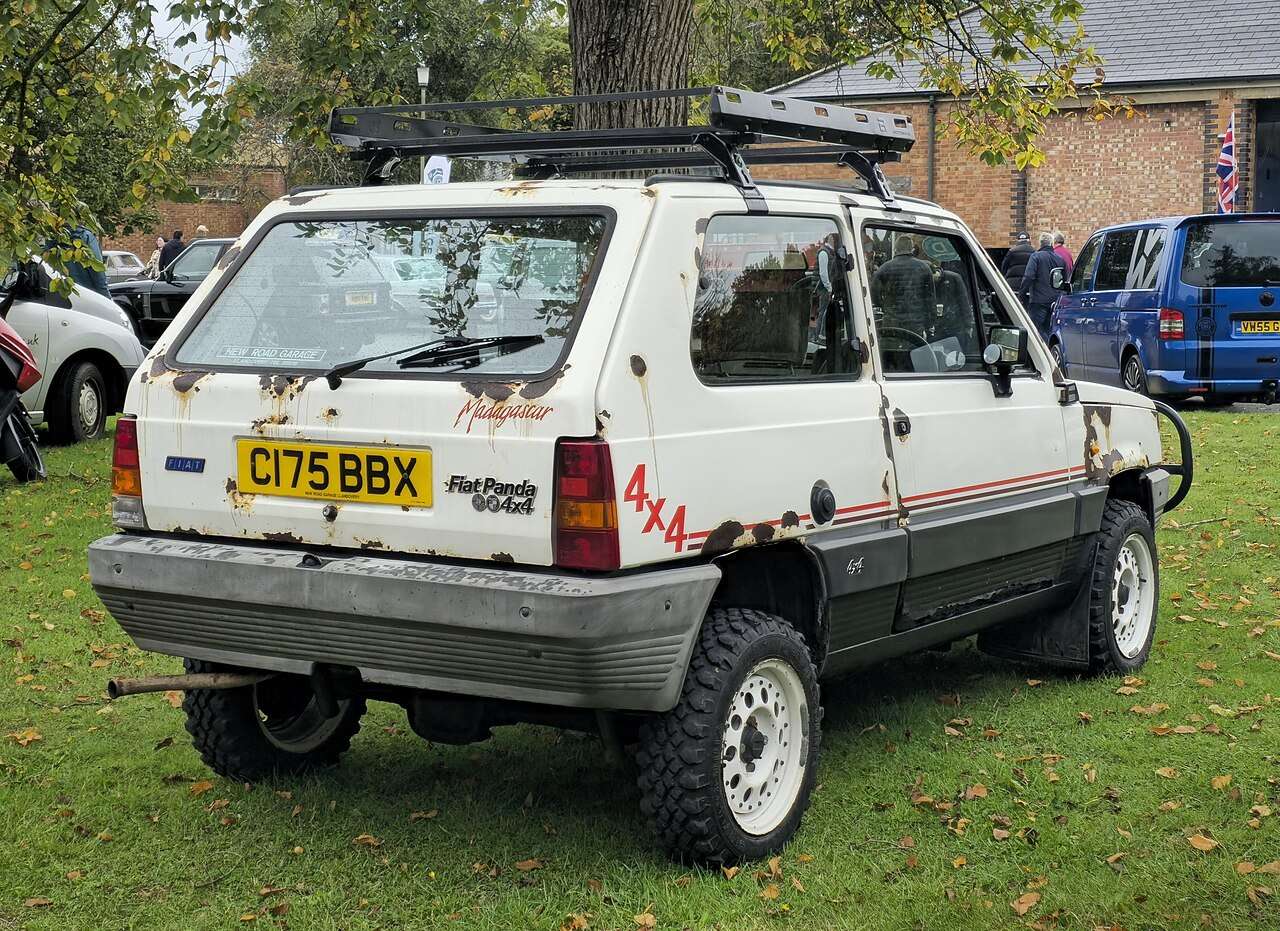
3. There was a separate lever
Pulling the lever on the transmission tunnel engaged the rear wheels. On a firm road the normal mode was front-wheel drive. This was a simple mechanical system a driver actively chose to use.
4. There was no centre differential
With both axles engaged, they could no longer turn at different average speeds through a corner. Fiat recommended using four-wheel drive on low-grip surfaces where the tyres could slip enough to accommodate that difference.
Love cars you don’t see every day?
Get forgotten cars, surprising motoring stories and the most interesting finds from Unusual Cars by email.
Free to join. No spam. Unsubscribe whenever you like. See our Privacy Policy.
5. First gear stood in for low range
The gearbox’s low first ratio helped with steep pulls and slow progress. A separately selectable low-range transfer box was unnecessary for what Fiat wanted the little car to do.
6. The first engine was under a litre
The original displaced 965 cc and made a quoted 48 hp. Later first-generation cars got bigger engines, reaching 1,108 cc in the last versions. The early low power figure makes the expedition stories all the more striking.
7. The trim names tell their own story
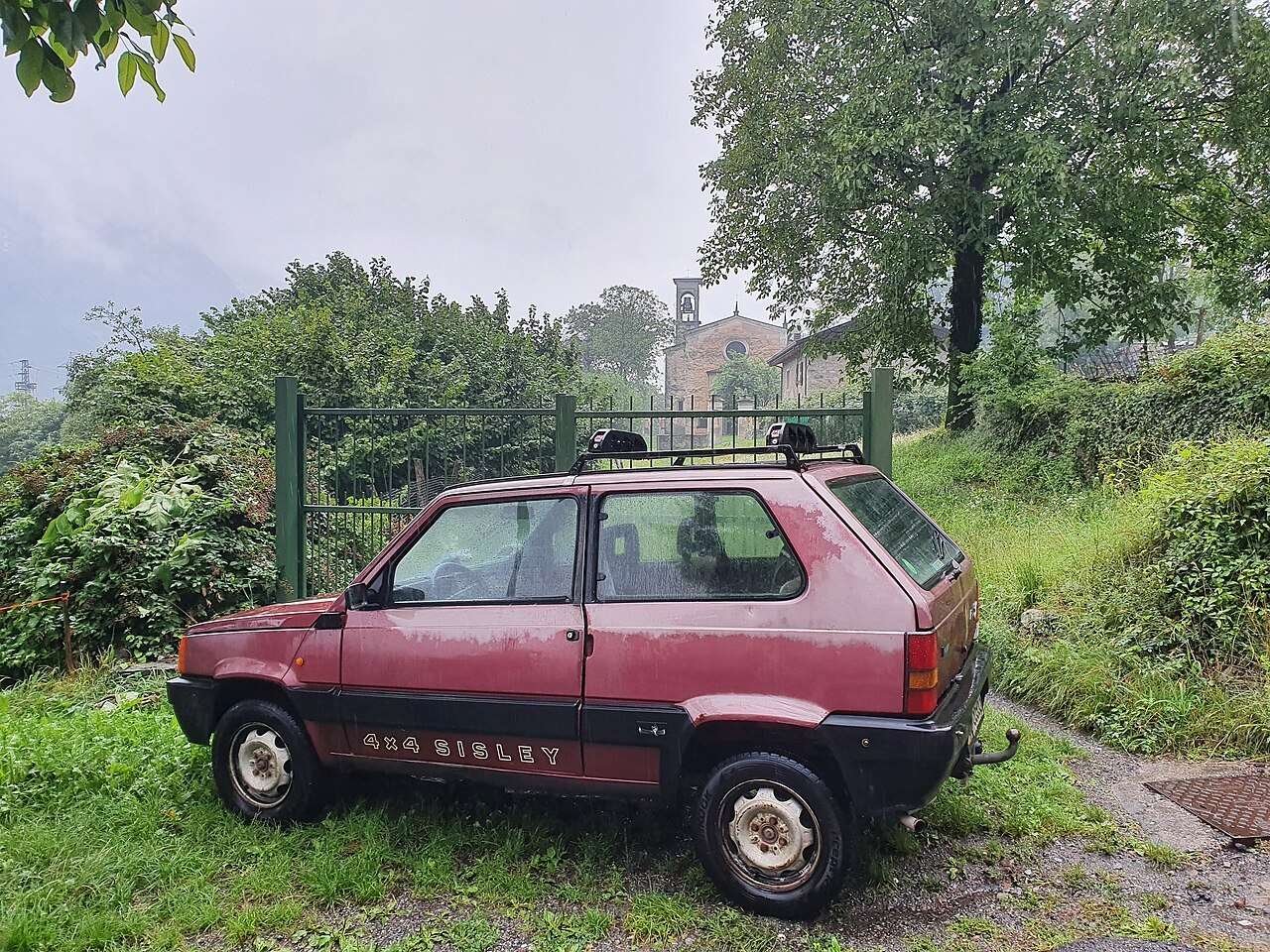
Trekking, Country Club and Sisley all picked up on the car’s outdoors appeal. Fiat even offered an inclinometer on the Country Club to tell the occupants how far the car was leaning.
8. Fifty Pandas tackled an African trip
Fiat’s archive records 50 examples joining a 1985 adventure that set out from Rome and continued through Tunis to Abidjan. It was a promoted expedition, but the route went far beyond the little car’s urban origins.
9. Three followed the Silk Road
A separate Marco Polo expedition took three Panda 4×4s and an Iveco support vehicle from Venice to Beijing in 1985. The most interesting question is what the crew could carry and repair along the way in such a small car.
10. The city-car shape was part of the advantage
Small dimensions were useful on a narrow track, and modest weight helped where a heavier vehicle might sink. The Panda kept the qualities that made it useful in town and found a second use for them far outside it.
Meet a later enthusiast Panda, the 100HP.
Explore more 10 Things articles
Browse the Unusual Cars 10 Things hub.
Sources and further reading
- Fiat Heritage, Panda 4×4 anniversary and specification history
- Quattroruote, original July 1983 road test
Featured image: First-generation Fiat Panda 4×4. Photo by Calreyn88 via Wikimedia Commons (CC BY-SA 4.0, resized).
Join the Unusual Cars Club
Get more forgotten performance cars, surprising motoring stories and new 10 Things articles by email.
Free to join. No spam. Unsubscribe whenever you like. See our Privacy Policy.