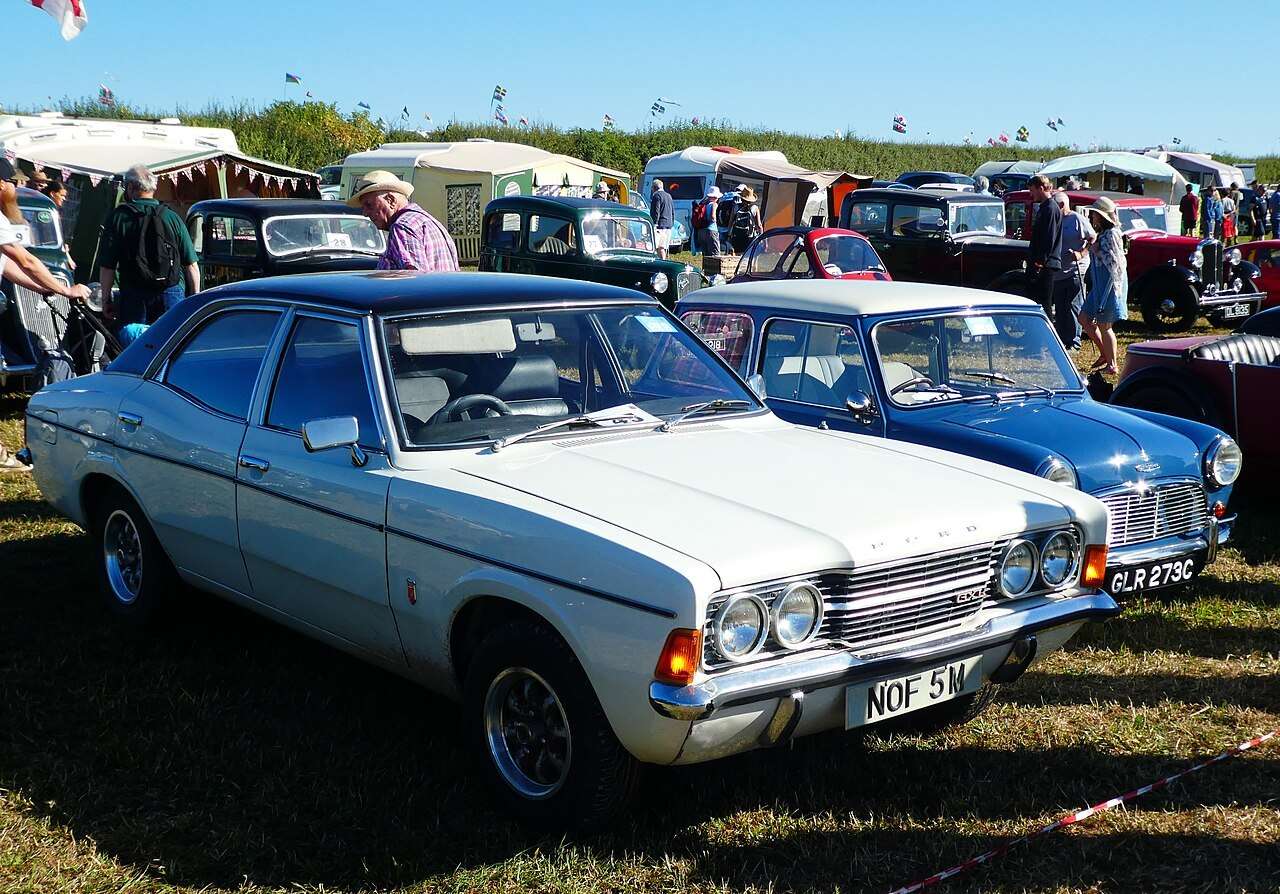
A glance at the side of a Mk3 Cortina takes you straight back to the 1970s. The 2000 GXL put the biggest launch engine and the showiest trim into a shape Britain knew from every company car park.
1. The launch range climbed a long way
Ford’s 1970 Mk3 range ran from the 1300 to the two-litre GXL. That spread let one familiar body serve buyers with very different budgets and expectations.
2. The press put it next to the 1600E
Motor Sport’s launch report saw the two-litre GXL as the successor to the 1600E. That reflects its place in the line-up. The Mk3 package changed considerably from the Mk2 underneath as well as visually.

3. The two-litre was an overhead-cam engine
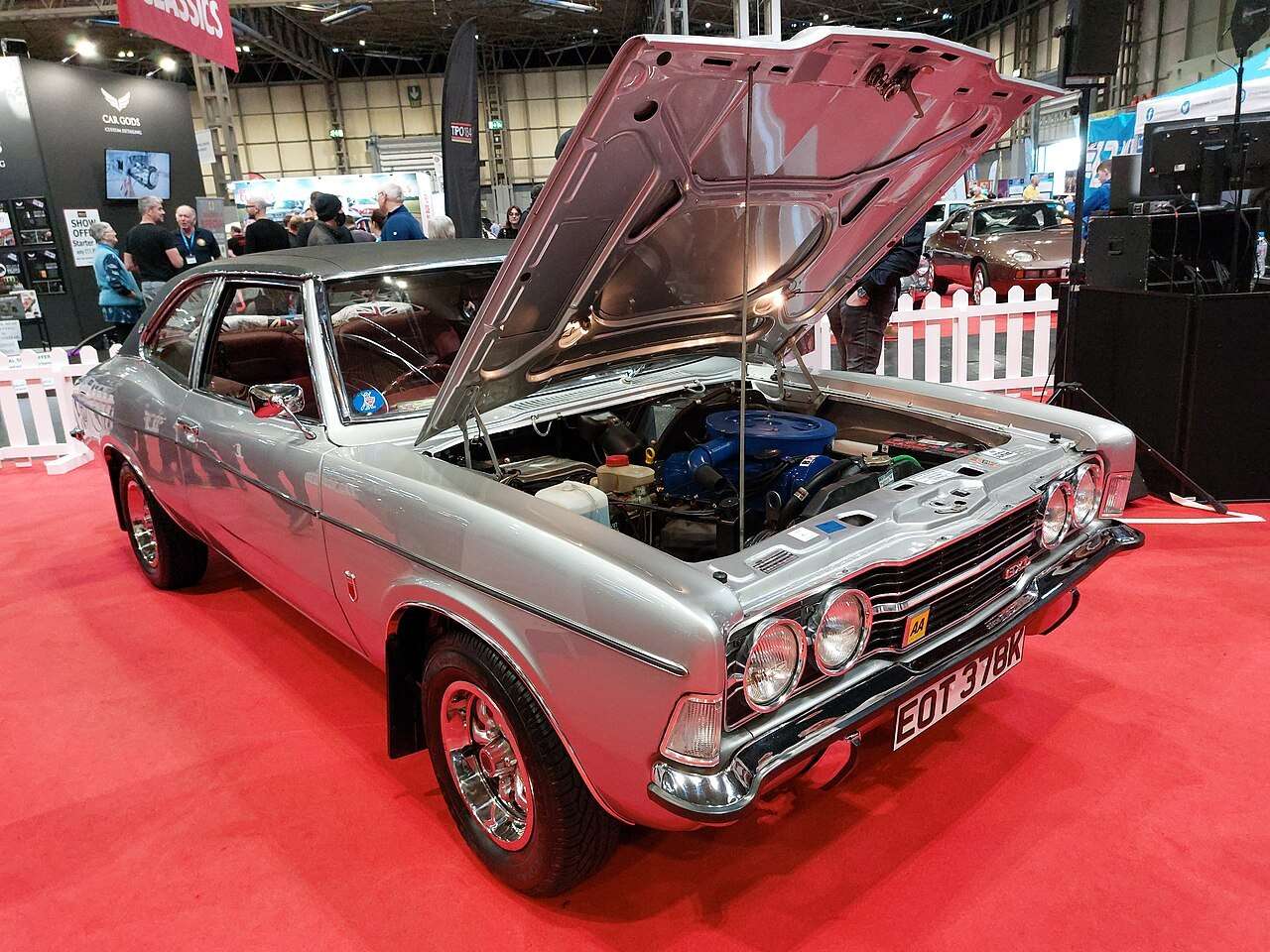
The new two-litre four belonged to Ford’s overhead-cam family, commonly called the Pinto. The launch range also contained familiar smaller crossflow engines. An early Mk3 badge therefore tells you less about the hardware than you might think.
4. The profile is the signature
The waist swells over the rear wheels, giving the side its famous Coke-bottle look. Period photographs show how much the curves changed the impression of a company saloon without making it any less recognisable as a Ford.
Love cars you don’t see every day?
Get forgotten cars, surprising motoring stories and the most interesting finds from Unusual Cars by email.
Free to join. No spam. Unsubscribe whenever you like. See our Privacy Policy.
5. The GXL had its own face
Twin round lamps on each side gave the GXL an immediate visual identity. A period picture showing the front and flank together explains most of its current appeal before the specifications enter the conversation.
6. The rear suspension changed generations
The Mk3 still drove its rear wheels via a live axle, but changed to a coil-sprung set-up. That is a more telling mechanical difference from the Mk2 than the badges alone suggest.
7. Ford let journalists try it at Lommel
Motor Sport drove the GXL at Ford’s Belgian test track and on public roads. Its account covers paved surfaces and fast road running, so it gives a better picture of the car’s intended use than the brochure alone.
8. Passengers gained room
The same period report found more rear legroom and singled out the reclining front seats for praise. The GXL was meant to feel like a step up even for the passengers who never touched the throttle.
9. The later Mk3 wore different flagship badges
Ford revised the Cortina during the generation, and the 2000E became the name attached to the later luxury flagship. The GXL belongs to the early chapter, which matters when choosing the correct photos.
10. Its styling and mechanics tell different stories
The curves looked new and flamboyant. Beneath them, the live rear axle and front-engine layout kept the car grounded in familiar Ford practice. That balance helped make the Cortina both ordinary and memorable.
See what happened when Jeff Uren fitted a V6 to the Cortina.
Explore more 10 Things articles
Browse the Unusual Cars 10 Things hub.
Sources and further reading
- Motor Sport, period Mk3 launch report and GXL test
- Ford Heritage Vault, period Cortina brochure archive
Featured image: Ford Cortina 2000 GXL showing the four round headlamps. Photo by andreboeni via Wikimedia Commons (CC BY 2.0, resized).
Join the Unusual Cars Club
Get more forgotten performance cars, surprising motoring stories and new 10 Things articles by email.
Free to join. No spam. Unsubscribe whenever you like. See our Privacy Policy.