The Mazda 626 4WS could steer its rear wheels in opposite directions depending on speed. In the late 1980s, you could buy that engineering in a family car with remarkably little to give the game away.
1. It arrived with the 1987 Capella redesign
Mazda introduced its new Capella, sold abroad as the 626, in 1987. The speed-sensitive system departed from the way most buyers understood steering. North American readers may know the first examples by their 1988 model year.
2. At parking speeds the rear wheels turned the other way
Below about 35 km/h, or 22 mph, the rear wheels could turn opposite the fronts. In a tight corner the two axles therefore pointed into the turn from different directions. The effect was a tighter path when manoeuvring.
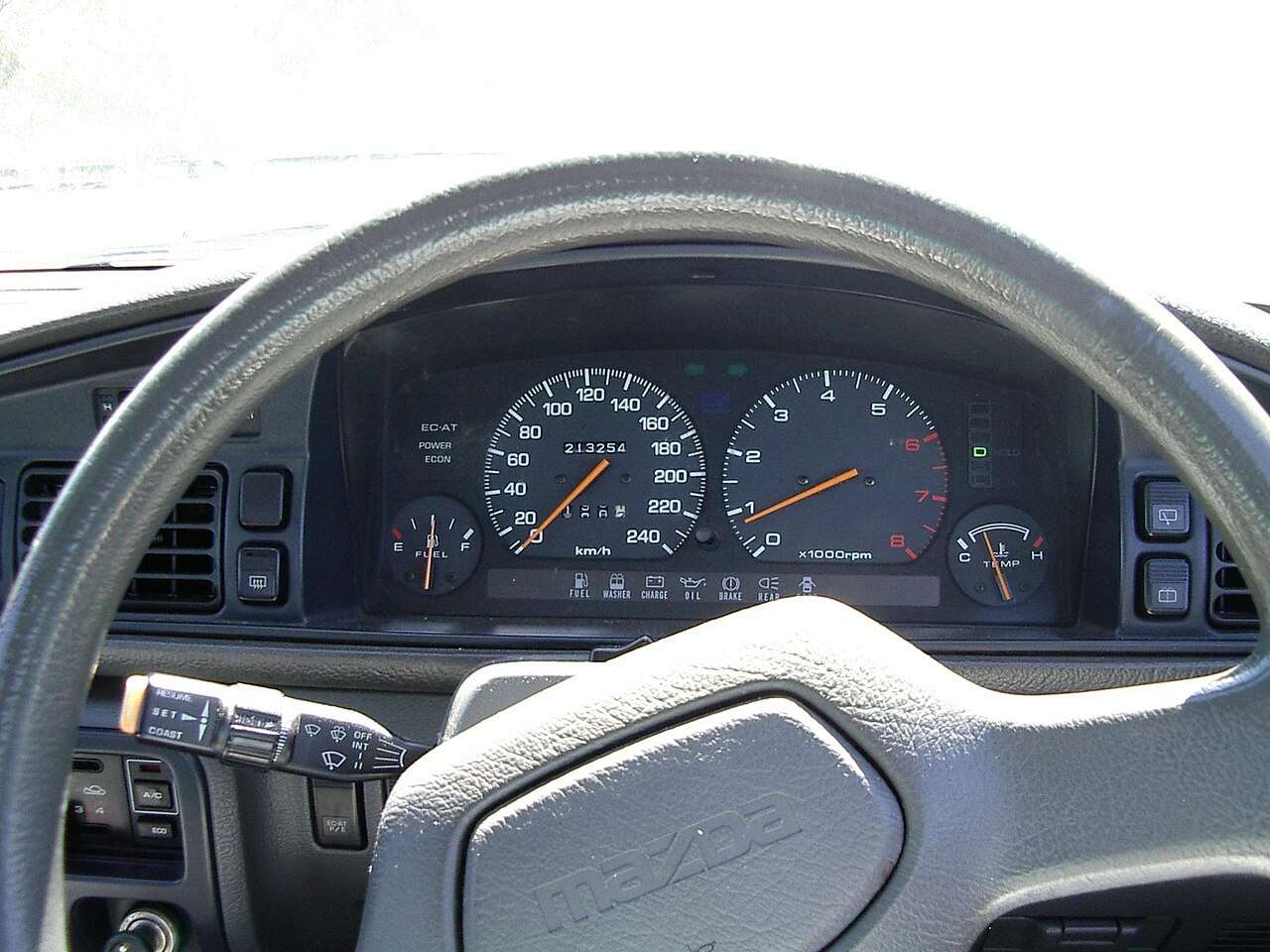
3. At higher speeds the rears could turn with the fronts
The faster regime used steering in the same direction at both axles. The intended benefit was a smoother response in changes of lane and direction. This is why a description of the system has to include the car’s speed.
4. There was a transition between the two behaviours
Mazda’s system passed through a neutral setting around the changeover. Think of the rear steering angle tapering to straight ahead before changing sign. There was no separate control for the driver to choose a parking or motorway mode.
Love cars you don’t see every day?
Get forgotten cars, surprising motoring stories and the most interesting finds from Unusual Cars by email.
Free to join. No spam. Unsubscribe whenever you like. See our Privacy Policy.
5. The movement was small enough to miss on camera
At low speeds, the period US test reports a maximum rear angle of about five degrees. That is much less dramatic than the lock at the front. A view along the rear tyre makes the movement easier to see.
6. Mazda’s system used electronics and hydraulics
The rear steering hardware used a hydraulic actuator with electronic control determining how it should respond. The car used road speed as an input. That was a substantial commitment compared with simply fitting wider tyres or changing a steering rack.
7. Honda reached a similar goal by different means
Car and Driver put the 626 alongside a Honda Prelude Si in its contemporary comparison. The Honda used a mechanical system that read the steering input differently. Their distinct behaviour shows why four-wheel steering describes a family of ideas.
8. The American comparison car was turbocharged
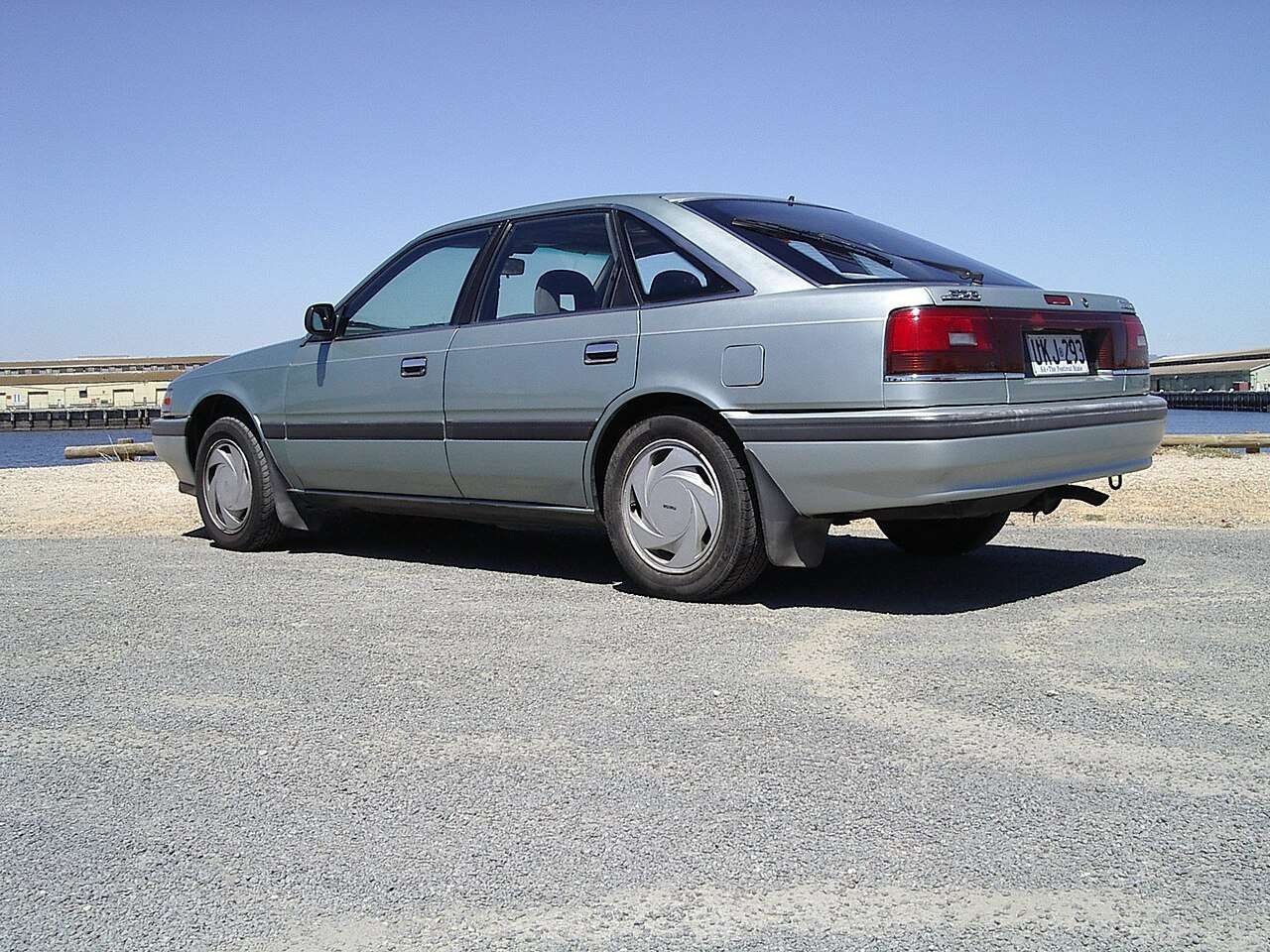
The US road test used the 626 Turbo. Mazda’s European literature also describes four-wheel steering, but the engines and body choices varied. The turbo four-door belongs to a specific market story, not every 626 with the system.
9. European literature included a 4WS hatchback
The Dutch-market 1987 brochure shows the feature in the 626 range, including hatchback availability. That makes the five-door a worthwhile part of the story. A brochure for one country should be read on its own terms before applying it to a UK import.
10. The experiments began before the showroom car
Mazda’s technical history traces development through projects such as the MX-03 show car. The production 626 is where shoppers could encounter the idea for themselves. The later MX-6 brought another Mazda implementation with a different low-speed range.
Explore more 10 Things articles
Browse the Unusual Cars 10 Things hub.
Sources and further reading
- Mazda technical history of four-wheel steering
- Mazda corporate product history
- Original 1987 Dutch Mazda 626 brochure
- Period Car and Driver four-wheel-steering comparison
Featured image: 1987 Mazda 626 2.0i-16V GT 4WS hatchback. Photo by Rutger van der Maar via Wikimedia Commons (CC BY 2.0, resized).
Join the Unusual Cars Club
Get more forgotten performance cars, surprising motoring stories and new 10 Things articles by email.
Free to join. No spam. Unsubscribe whenever you like. See our Privacy Policy.