The Mitsubishi Colt Cordia Turbo was a fastback with two gear levers and more turbo character than a family coupé had any right to possess. The early British car tells a particularly good story.
1. Britain knew it as a Colt
Autocar called its 1982 test car the Colt Cordia Turbo, reflecting Mitsubishi’s British branding at the time. The Japanese company’s archive puts the Cordia and Tredia launch in March 1982. The British test coincided with their UK Motor Show arrival that autumn.
2. The Cordia and Tredia shared a floorpan
Both had a 96.3-inch wheelbase according to Autocar. The Cordia used a coupé body with a liftback shape. Its Tredia sister used the same basic platform for a four-door saloon with a separate boot.
3. The second lever doubled the gear choices
The early UK test car used a four-speed manual with a separate high and low range. The little lever changed the final-drive ratio, effectively giving eight forward combinations. You could use it to keep the turbo closer to its useful rev range.
4. The turbo drew through a carburettor
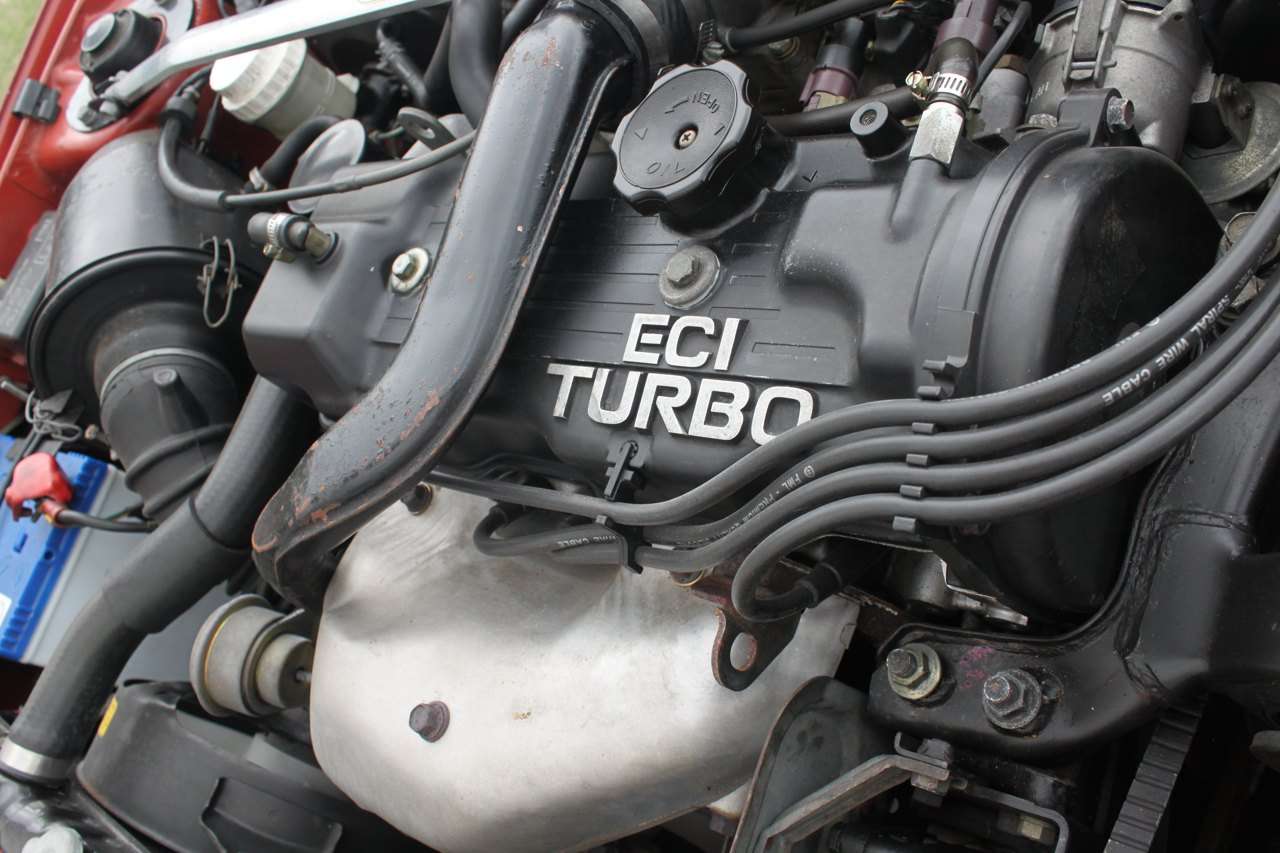
The early British 1.6 had a draw-through arrangement. The carburettor was upstream of the compressor, so the turbo drew in the fuel-air mixture. An injection badge in a photograph is a clue that you are looking at a different specification.
Love cars you don’t see every day?
Get forgotten cars, surprising motoring stories and the most interesting finds from Unusual Cars by email.
Free to join. No spam. Unsubscribe whenever you like. See our Privacy Policy.
5. It made 112 bhp in early UK form
Autocar’s figures were 112 bhp at 5,000 rpm and 125 lb ft at 3,500 rpm from 1,597 cc. Those figures apply to the early British car. Later and overseas Cordia Turbos had different engines and fuel systems.
6. Mitsubishi supplied the turbo as well as the car
The unit was a TC-04 from Mitsubishi Heavy Industries. Autocar reported a boost pressure around 8 psi on the car it tested. That puts a specific piece of hardware behind the graphics on the doors.
7. Its boost arrived with a distinct change of pace
The UK testers found it tractable at light throttle, but hard acceleration felt flat until roughly 3,500 rpm. Then the engine came alive. It is a period driving impression rather than something you can read from peak power alone.
8. The Cordia drove the front wheels from launch
Mitsubishi describes the original Cordia as front-engined and front-wheel drive. The engine sat transversely. That packaging made it a markedly different project from the rear-drive Starion, even though Mitsubishi sold both on the appeal of turbocharging.
9. There was a later turbo injection story
Mitsubishi’s overseas brochures show electronically controlled injection on later Cordia Turbos. The engine-bay lettering and the injection hardware are handy visual cues. They also explain why apparently contradictory specifications turn up online.
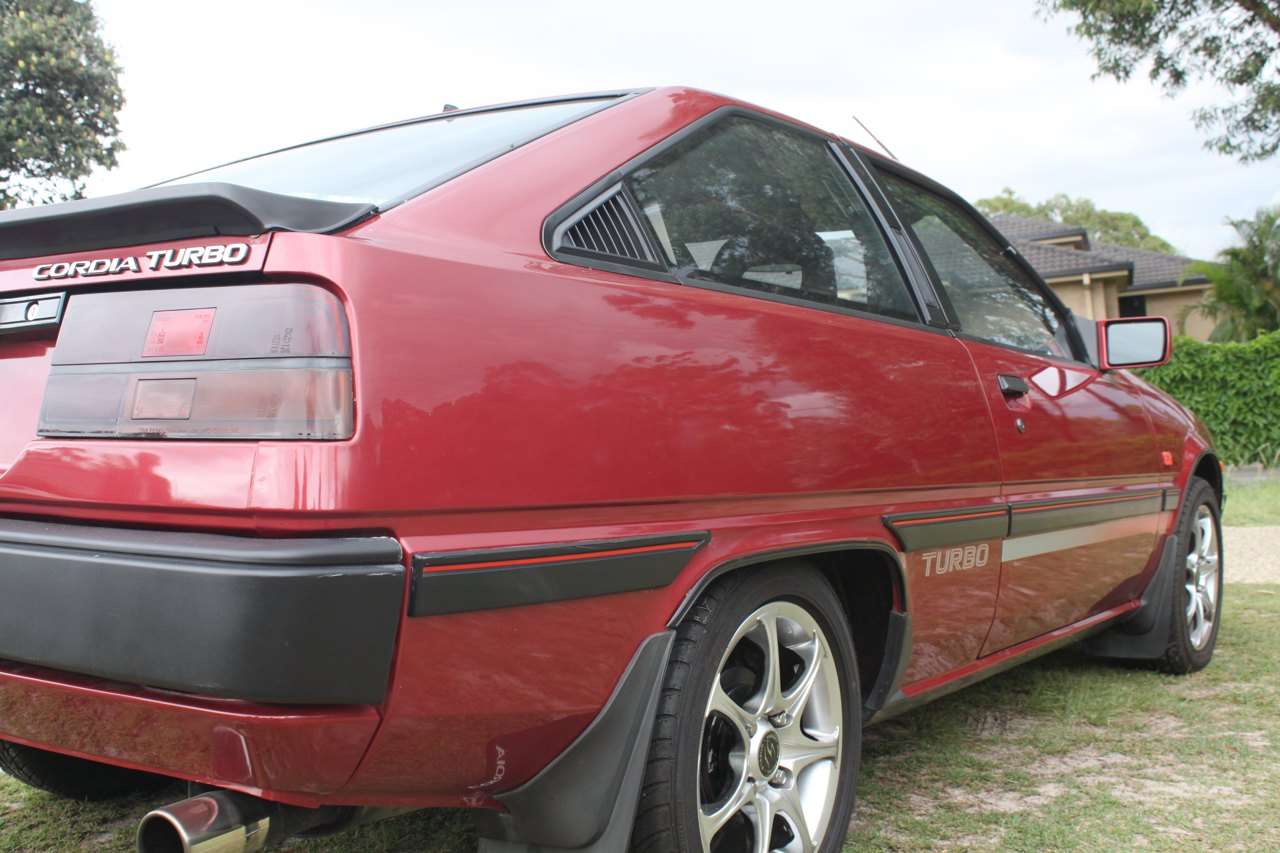
10. The graphics were part of the appeal
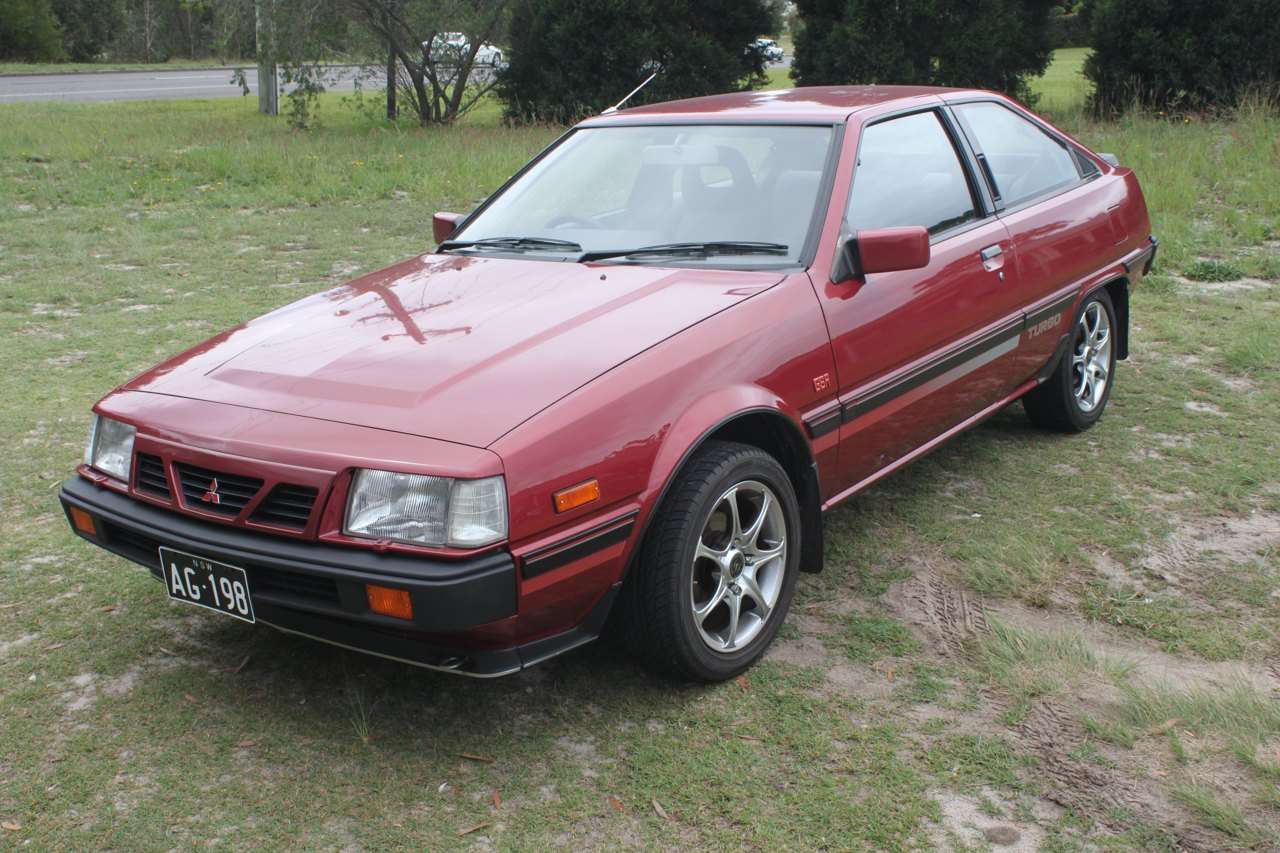
The early UK Turbo had bold lettering along its flanks, alloy wheels and a small central bonnet scoop. The shape alone was discreet by the standards of 1980s turbo coupés. The badges and stripes made sure nobody missed the point.
Read next: 10 Things You Probably Didn’t Know About the Mitsubishi Starion Turbo.
Explore more 10 Things articles
Browse the Unusual Cars 10 Things hub.
Sources and further reading
- Autocar UK road test, October 1982
- Mitsubishi model history
- Original 1985 Mitsubishi Cordia and Tredia brochure
Featured image: Australian-market 1985 Mitsubishi Cordia GSR Turbo. Photo by Jeremy from Sydney, Australia via Wikimedia Commons (CC BY 2.0, resized).
Join the Unusual Cars Club
Get more forgotten performance cars, surprising motoring stories and new 10 Things articles by email.
Free to join. No spam. Unsubscribe whenever you like. See our Privacy Policy.