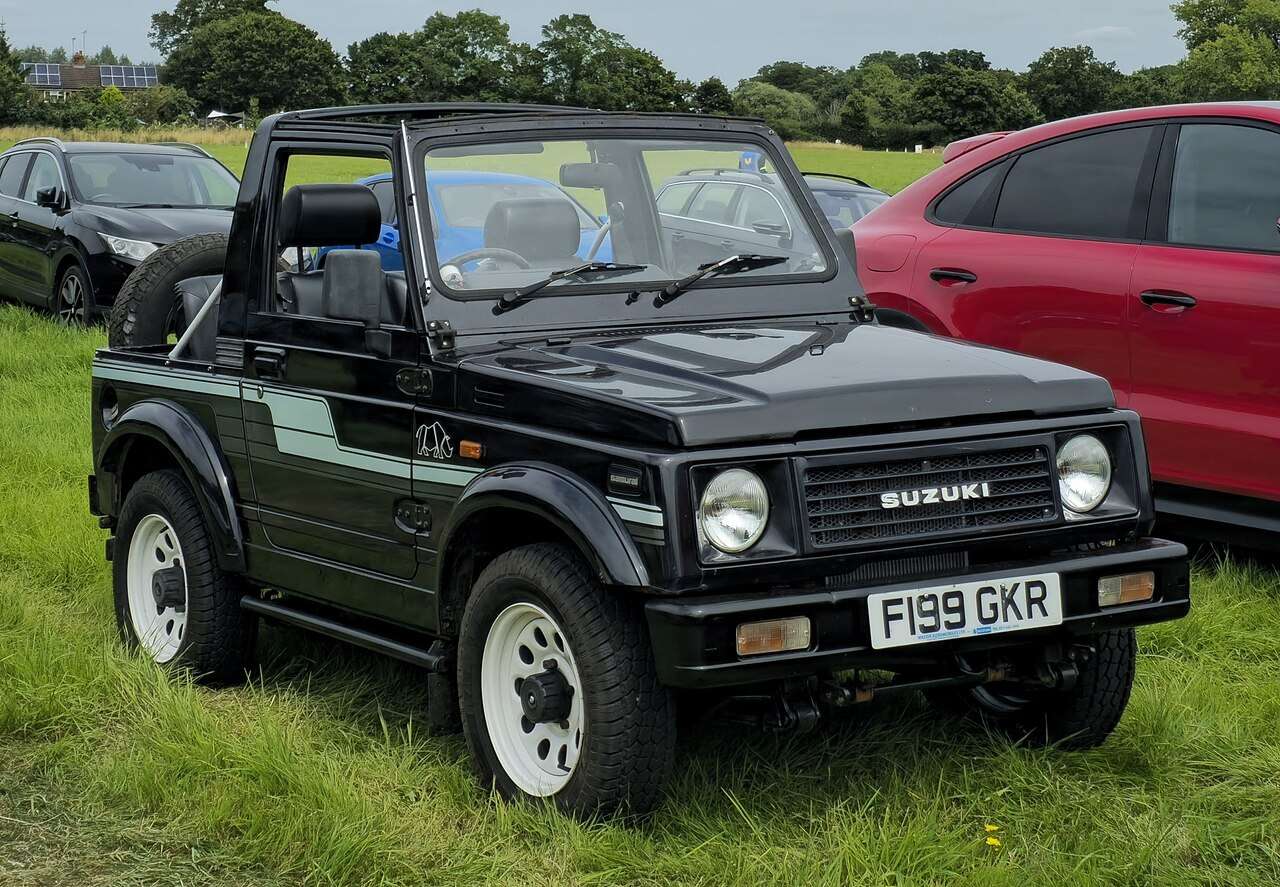
The Suzuki SJ packed low-range four-wheel drive into something you could tuck into a tiny parking space. Its British story runs from the pint-sized SJ410 to the wider-track Samurai.
1. The SJ410 had less than a litre
Its 970 cc four-cylinder was a big step for the Suzuki line, even though it sounds small by ordinary-car standards. In early UK specification it drove through a four-speed manual. You could buy a proper off-roader with a smaller engine than plenty of superminis.
2. The SJ413 brought a five-speed gearbox
The SJ413 added a 1.3-litre engine and a five-speed manual. Those changes mattered on the road as much as off it. The extra ratio gave the larger engine something useful to do between the lane and the motorway.
3. Samurai was more than another sticker
In the UK, the club distinguishes the later Samurai from the earlier SJ413 by details including its wider track. The wheelarch extensions are an outside clue. Naming varies abroad, so a Samurai badge in an American brochure does not date a UK example.
4. It had a real low range
A separate transfer box gave the SJ a choice of high and low ranges. Low range multiplies the wheel torque and lets the car creep with more control. The little short-wheelbase body made that gearing especially useful on uneven ground.
Love cars you don’t see every day?
Get forgotten cars, surprising motoring stories and the most interesting finds from Unusual Cars by email.
Free to join. No spam. Unsubscribe whenever you like. See our Privacy Policy.
5. It used a separate chassis
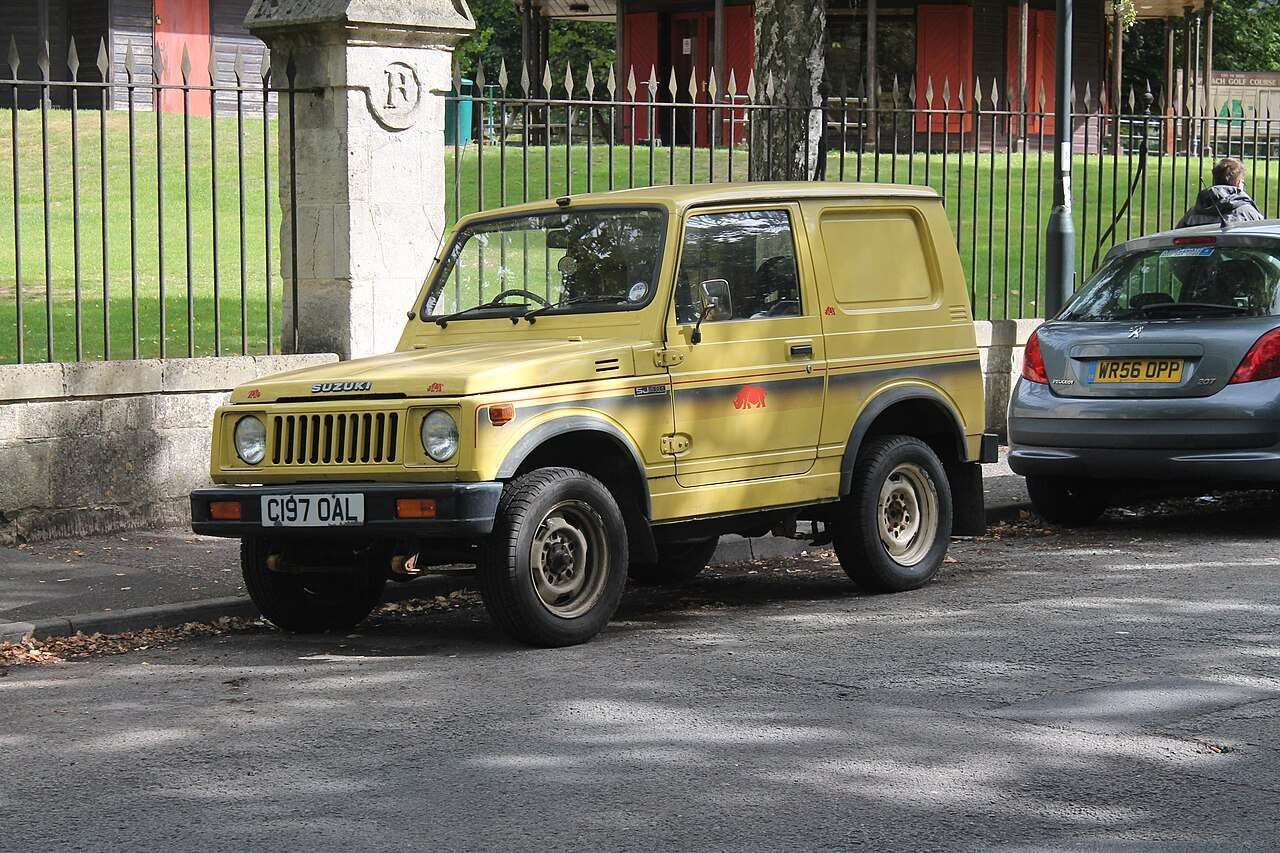
Suzuki kept the body and ladder frame as separate assemblies. The axles and leaf springs belong to a very different school of design from a modern small crossover. A side-on photo shows just how much of the car was arranged around compact dimensions and clearance.
6. You had to choose when to engage four-wheel drive
The SJ used a part-time system. With no centre differential to absorb the difference in distance between the front and rear axles, the four-wheel-drive setting was meant for loose or slippery surfaces. The ordinary road setting drove the rear wheels.
7. Hardtops and soft-tops told different stories
The removable fabric roof made sense for buyers who wanted an open runabout. The closed version gave a little 4×4 a more year-round role. Photos of the two bodies together are a good reminder of how different cars with the same basic hardware could look.
8. Santana added a Spanish chapter
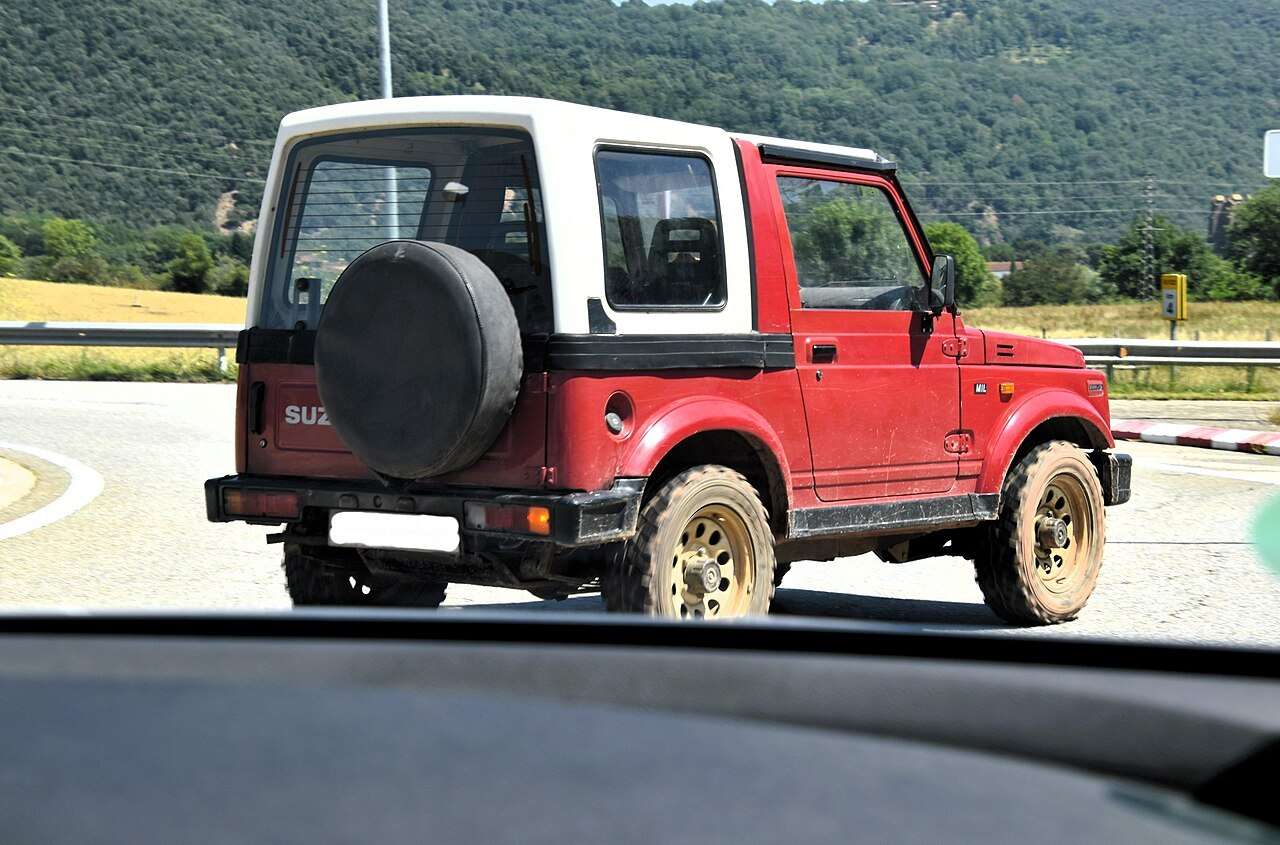
Santana built versions in Spain, and British owners can encounter both Japanese- and Spanish-built vehicles. Suzuki Club UK documents differences between them. The maker’s plate is a better starting point than assuming all parts interchange because the badges agree.
9. An SJ was still part of the Jimny family
Suzuki’s own history places the SJ410 and SJ413 in the second generation of the Jimny line. Other markets used names such as Sierra. Britain’s familiar SJ and Samurai names are part of the reason it can look like a separate family in old adverts.
10. The brakes changed as the range evolved
Suzuki Club UK records early UK SJ410s with drums at both ends, followed by cars with front discs. That detail is easy to miss when a specification sheet summarises the entire series. It is one reason to use the model and build details together.
Read about the Suzuki Ignis Sport.
Explore more 10 Things articles
Browse the Unusual Cars 10 Things hub.
Sources and further reading
- Suzuki factory history of the SJ generation
- Suzuki New Zealand’s 4×4 history
- Suzuki Club UK model and component guide
- Suzuki Club UK SJ history
Featured image: Black Suzuki Samurai in Britain. Photo by Calreyn88 via Wikimedia Commons (CC BY-SA 4.0, resized).
Join the Unusual Cars Club
Get more forgotten performance cars, surprising motoring stories and new 10 Things articles by email.
Free to join. No spam. Unsubscribe whenever you like. See our Privacy Policy.