A used electric Citigo can be a lovely way into electric motoring until someone plugs in a cheap engine reader and tells you there are no faults. There is no petrol engine in this car. The questions that matter are whether it will accept a charge, how it looks after its small twelve-volt supply, whether it recognises Park and what its battery electronics recorded. The socket under the dash looks familiar. What the scanner can do after you plug it in is what deserves your attention.
One electric Citigo put up for sale had several alarming entries in its fault memory, including an implausible traction-battery voltage. The same scan also had a tyre warning, a blower event and a low-voltage reading. They had very different histories. In another car a charging complaint led the owner to check whether the vehicle still recognised Park after switch-off. These are useful examples for anyone weighing the price of a Škoda-aware scanner against the cost of guessing what a used EV needs.
Make sure the tool supports the electric Citigo
This guide concerns the battery-electric Citigoᵉ iV, often written Citigo-e iV or simply Citigo electric. Our Citigo 1.0 MPI guide covers the petrol car. A product listing that groups the two under the word Citigo leaves a substantial question unanswered. So does a demonstration on a different electric Škoda. The important test is whether the specific software can identify this car and read the appropriate electric-drive, battery and charging equipment as well as the ordinary body and brake systems.
Ask to see the model selection screen and a sample scan. Useful evidence includes the actual controller names, their identifiers and a record of which ones replied. If the seller can only demonstrate engine speed, fuel trims and oxygen-sensor graphs, you have learned something important before opening your wallet. Equally, a small adapter can be useful if the software really understands this EV. Physical size and price tell you considerably less than the data you can retrieve and save on your particular car.
Reading a real pre-sale scan without writing off the battery
In a GoingElectric discussion about selling a Citigoᵉ iV, the owner shared a group of historical events from a car around five and a half years old. The report included 04112 with detail 004. A controller had lost communication with high-voltage battery charge management. The reader described the event as sporadic, recorded once at 48,228 km. That is evidence that a message was missing on a particular occasion. It does not demonstrate that the battery has permanently stopped communicating or that a replacement pack is required.

Look for two further pieces of information before assigning a price to that fault. Can an EV-capable reader communicate with the relevant controller now? Is there a current charging or driving symptom? A historical communication entry reported by a neighbouring controller is different from the battery controller reporting its own active internal fault. If the reader cannot reach the controller, establish exact coverage and vehicle state before interpreting the silence. A workshop with confirmed Citigo EV coverage can distinguish a tool limitation from a vehicle communication problem.
P0AF8 00 also appeared in the published scan, concerning an implausible battery-system voltage. Its status was sporadic and unconfirmed. Preserve that status together with the full text. There is no measured capacity, confirmed defective cell or repair outcome in that entry. For a buyer it is a reason to ask for a current report, a witnessed charge and, if warranted, a competent EV battery assessment. For a seller it is a reason to show the evidence in context instead of clearing the car to manufacture a tidy sales photograph.
What the recorded 8.950 volts tells you
The same car carried P0A8D 00 relating to the low-voltage supply. The associated snapshot recorded 8.950 V at terminal 30. That figure describes the twelve-volt side at the moment captured by that controller. It is not the voltage of the traction pack. It also isn’t a reading taken at the battery posts with a calibrated meter today. Its real value is that the workshop has a concrete low reading to investigate with a battery, connections and charging-system assessment appropriate to the car.
The small battery makes it possible for electronics to wake and communicate, even when the traction battery has plenty of energy. A low-voltage event can consequently have effects in more than one system. There is an easy mistake here. Once you have found a recorded low reading, it is tempting to use it to explain every other entry in a long scan. Check the individual dates and mileages. If the controller did not save a credible timestamp, leave the order uncertain. Two entries printed next to each other need not have happened on the same journey.
This gives you a useful way to compare estimates. A proposal to replace the auxiliary battery should come with a current assessment of that battery and its supply. A proposal to investigate the high-voltage system should explain which current symptom or confirmed event points there. You can reasonably authorise the cheaper initial tests without pretending that a fresh twelve-volt battery will cure an unrelated traction fault. If there is a current electric-drive warning, follow the handbook and have a qualified EV technician advise on moving the car.
A charging-current code and an ordinary evening at the plug
Another event in that report, P33DE 00, concerned a requested charging current above the permitted maximum. It was recorded twice, with a saved mileage of 43,381 km. That is thousands of kilometres earlier than the one-off communication loss. This is exactly why broad coverage and a detailed report matter. A summary that just counts “three high voltage errors” loses the chronology and encourages a buyer to imagine a single major failure. The individual events support several questions, each of which can be investigated separately.
For an actual repeat charging fault, note which equipment you used and the stage at which the session stopped. Did the car recognise the plug? Did the indicator change? Did the station register energy delivered? Was a departure timer or charging schedule enabled? Compare the car’s indicator with the charge-point record and your normal settings. Keep the unit with every number. Kilowatts describe a rate, kilowatt-hours describe energy delivered and an elapsed time alone tells you neither if the equipment never started delivering power.
The Citigoᵉ iV handbook charging section is useful alongside a scanner because it explains what the driver can observe at the car. Record colours and whether the indicator was lit steadily or flashing. Follow the handbook for disconnecting. Do not repeatedly try damaged charging equipment, use an improvised lead or force the connector. These simple observations are sufficient to give a qualified technician a head start without touching any high-voltage component.
The Citigo that could see the plug but lost Park
A different Citigo charging discussion describes a January 2020 car whose app said Park had not been selected. The owner reported an orange flashing indicator, and charging behaviour changed with ignition state. They found no stored gear-position fault. Another contributor reported that replacing a selector switch had cured their own vehicle. The discussion includes closely related cars, so that other repair cannot be assumed to identify the fault on every electric Citigo displaying the message.
Like our guides and unusual cars?
Get forgotten finds, useful motoring content and the most interesting car stuff from us by email.
Free to join. No spam. Unsubscribe whenever you like. See our privacy policy.
This is a strong example of why live data can be worth more than a longer list of code definitions. A controller may report a switch as being in a valid state that happens to disagree with reality. It has no obligation to set a broken-switch code if the signal looks electrically plausible. If supported, a specialist can compare requested gear, recognised Park and charging permission through the normal sequence of parking, switching off and plugging in. Record the exact stage at which the two descriptions cease to agree.
From the driver’s perspective the selector is in P. From the charge controller’s perspective it has to receive confirmation of that fact under the right conditions. A mismatch could involve the input, communication or interpretation of the signal. Buying a charger on the strength of the words “vehicle will not charge” would leave all those questions open. Equally, a story about a switch is no basis for ordering a whole selector. Ask what the car recognised before and after switch-off, and whether the workshop can reproduce the disagreement.
Secure the car normally and follow the parking instructions. The reported behaviour with ignition on is a diagnostic clue for a technician. It is no reason to leave the car energised as a workaround or interfere with an interlock. For an intermittent problem the most helpful thing you can bring is a short timeline and photographs of the normal indicators. If your reader loses communication when the car sleeps, note that limitation. A disappearing live-data screen is different from the vehicle itself reporting that it has lost Park.
Beyond charging: tyres, ventilation and the instrument panel
Return to the pre-sale scan and there are three much more everyday entries. C102D 00 recorded a tyre-pressure warning at 48,472 km. The distance is different again. Start by checking actual tyre pressures against the vehicle information and inspecting tyre condition. A scan can preserve when a warning was detected. It cannot find the nail or decide that a damaged tyre is safe. If the handbook calls for storing the pressures after correction, do that only once the physical issue has been checked and the tyres are correctly inflated.
04070 concerned a limitation of the blower regulator and appeared once at 42,184 km. Does the cabin fan work through its normal range today? Does demisting work when you need it? Test normal controls and report what happens. That is an entirely different investigation from a short electric range or a failed charge, even though a scanner prints everything in the same typeface. Someone buying an EV as cheap transport can still face ordinary ventilation repairs. Equipment that covers the cabin as well as the traction system earns its keep here.
An intermittent 01317 referred the reader to the instrument cluster’s fault memory. Treat this like a forwarding address. Read the named unit and look for an event matching the conditions. An instruction to consult another memory does not by itself condemn the cluster. Ask whether the handset can follow that trail. Some apps can display the first code but give you no route into the controller it names. In that situation a second reader with wider coverage can be better value than guessing at the cost of a dashboard repair.
Range anxiety versus battery evidence
The range estimate is a forecast based on use and conditions. A city car doing short winter journeys spends a relatively large part of its energy warming the cabin for each mile covered. A different route, outside temperature or heater setting can change the forecast without establishing deterioration. State of charge is another number again. A display that reads one hundred per cent is reporting the top of the available charging window, not a promise of any particular mileage or a measurement of the original battery capacity.
For a meaningful comparison, record starting and finishing percentages, journey length, temperature and how the car was used. If practical, compare similar routes at similar charge levels. Energy drawn from the wall can include charging losses and other loads. Do not convert a single public-charger receipt into a definitive battery health percentage. If a vehicle is being advertised on the strength of a health figure, ask who measured it, by what method, on what date and with what supporting documentation. Read-only live data can help you decide when to commission that test.
A tool may expose voltage and temperature readings for different parts of the battery. Check that it gives the units and explains the channels. A specialist needs to know the charge level, temperature and load at the time before drawing conclusions from a difference. A screenshot taken near empty on a cold day is a poor comparison with one taken after charging in summer. High-voltage inspection and isolation require appropriate qualifications. Owners can gain valuable evidence from the diagnostic socket without opening the pack or probing any orange cable.
AC charging and optional rapid charging at a viewing
Establish which charging options the particular car has. Check the inlet and original specification, including whether a CCS connection is fitted, before using a failed plan to rapid charge as evidence of a fault. A successful AC session tells you the car accepted AC under those conditions. It cannot establish that an optional DC rapid-charging function works. Equally, a successful short charge proves less than a session that continues normally. Ask the seller what kind of charging they use and whether they have observed interruptions with another known-good charge point.
For a pre-purchase inspection, obtain permission to save a read-only report and to witness ordinary charging. Check the cable condition, charging indicators, twelve-volt battery history, tyre pressures and heater operation. Compare the stored events with any relevant invoices and ask when the memory was last cleared. A clean report generated just after a reset is less informative than a dated history a seller can explain. If current battery warnings remain unexplained, price an independent EV assessment before making your decision about the car itself.
Choosing a scanner for this electric Škoda
The published iCarsoft VAWS V3 compatibility list for Škoda includes a Citigo model range, but that entry does not demonstrate support for this electric drivetrain. Ask the supplier to confirm Citigoᵉ iV by year and to show charging, battery, electric drive and ordinary chassis coverage. Can it retrieve historical status and freeze frames? Can it display selector recognition and charging permission if your ECU exposes those values? If the answer is that the tool fits every sixteen-pin socket, you still need the important part of the answer.
Ask how the reader exports a report as well. At a minimum you want the controller identity, complete code, status and stored conditions that the car makes available. For intermittent charging trouble, a screenshot of the original names and units can be far more valuable than a simplified verdict generated by an app. Compare the price with one good EV diagnostic appointment. If you want evidence for a single used purchase, the appointment can also buy you a technician’s interpretation and physical checks. If keeping the car, repeat access makes the calculation different.
The best test for this Citigo is whether the scanner helps you decide what to do on Monday morning. Can you explain that one event happened several thousand kilometres before another? Can you show that a charge was refused because Park was not recognised, or that this remains a question for the workshop? Can you send a report that separates a tyre warning from a traction-battery entry? When the answer is yes, the tool is doing something an empty engine-code screen could never do for this little electric car. Keep that dated first scan as your reference point for the years ahead.
Browse all Škoda diagnostic scanner guides
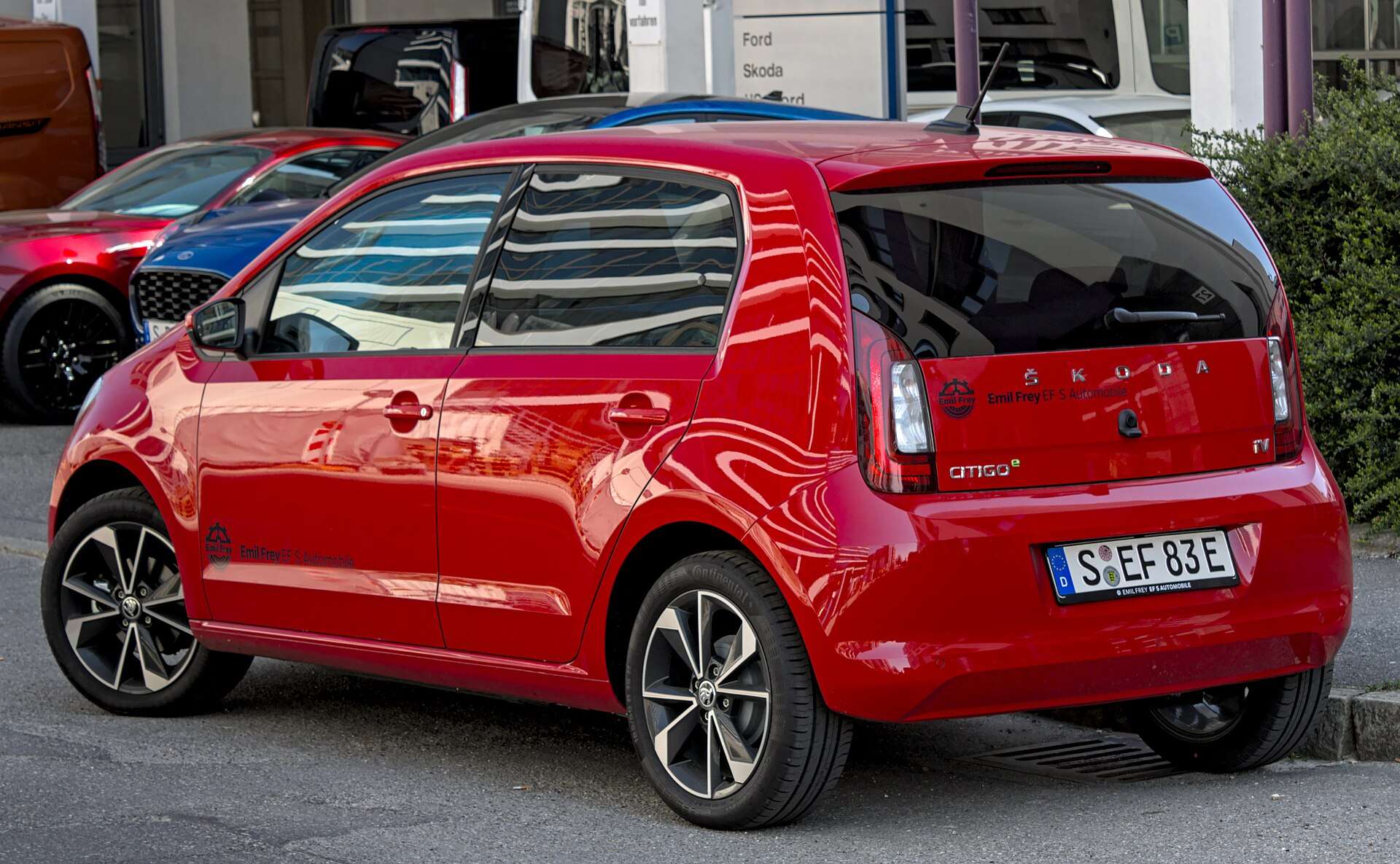
Photograph by Alexander Migl, via Wikimedia Commons, licensed under CC BY-SA 4.0.
Like our guides and unusual cars?
Get forgotten finds, useful motoring content and the most interesting car stuff from us by email.
Free to join. No spam. Unsubscribe whenever you like. See our privacy policy.