When a family electric car refuses to wake up, the large battery under the floor tends to get the blame. When it charges slowly, suspicion can move just as quickly to the expensive box on the wall. The Škoda Elroq gives you a good reason to pause before spending money at either end. It has a low-voltage electrical system that has to wake the car, separate AC and DC charging paths, and a battery controller that can quite legitimately limit power. Identifying which question to ask first can be worth more than the price of a scanner.
The tempting thing is to buy a reader that says OBD2, plug it in and expect the car to explain itself. A conventional engine reader is designed primarily around emissions information. There is no combustion engine in the Elroq. A sixteen-pin plug that happens to fit says nothing about access to charging permissions, battery temperature, climate equipment or driver assistance. This guide looks at what owners have actually encountered, what tools have demonstrated and how to decide whether buying one makes sense for your car.
Three purchases that do different jobs
For an Elroq, an adapter and app can be useful simply for viewing a few EV measurements. A diagnostic handset may additionally identify controllers and read their fault memories. A professional EV assessment may include a defined battery-health test and a report associated with the individual vehicle. Each purchase answers a different question. Someone interested in why rapid charging slowed on a winter journey may get useful evidence from a temperature reading. Someone buying a used Elroq on the strength of an advertised battery condition needs a documented assessment with a known method.
There is genuine Elroq-specific evidence for live measurements. A published Car Scanner demonstration on an Elroq 60 shows battery-related live data including temperatures and cell voltages. That is a much better starting point than a demonstration on an unrelated petrol Škoda. It still does not show that every adapter, phone, software revision and Elroq variant can retrieve every controller’s fault memory. Check what you want to see, what version was used in the demonstration and how results can be exported before comparing prices.

When plenty of traction charge still leaves a car that will not wake
In an Elroq owners’ discussion about a twelve-volt problem, a driver described a new car becoming unusable. The discussion included suggestions about both the ordinary battery and the high-voltage side. It is a good illustration of what the dashboard experience feels like, but a forum suggestion is not a measured diagnosis. The first practical question is whether the low-voltage electronics woke normally and whether the car reached its normal ready state. The percentage shown on the last successful drive answers neither question.
Note the sequence. Did the car unlock normally? Did the instruments light but display several warnings? Was the car plugged in overnight, and when was it last driven? Record what you saw before repeatedly interacting with it. Unlocking, opening doors and connecting diagnostic equipment can wake systems and change the condition the technician is trying to understand. An old snapshot of a low voltage, if available, belongs to a particular time and controller. A normal voltage now cannot recreate that earlier event or rule it out.
A sound diagnosis can include a proper auxiliary-battery test, examination of its connections, a check of charging behaviour and, where appropriate, investigation of what happens while the vehicle is parked. A consumer reader cannot substitute for each of those measurements. It can still save money if it shows that several units recorded supply trouble at a comparable mileage, or identifies one current event that returns independently. Keep entries in their original order with their own status. An app colouring five units red can make one shared event look like five separate failures.
There is an important counterexample in a German Elroq owner’s account. After low-voltage warnings the owner reported being told the high-voltage battery controller needed replacement at a specialist centre. It describes a reported diagnosis, not a confirmed cause for another owner with the same warning. The two stories are useful together. Ask what was actually tested before authorising an auxiliary battery, and what evidence specifically points to the high-voltage controller before accepting that much larger explanation. A warning naming one voltage system cannot settle the question by itself.
Type 2 charging, a working rapid charger and a misleading green light
Home charging normally uses AC through a Type 2 connection. The car’s onboard charging equipment converts that energy for the battery. On a DC rapid charger the equipment outside the car supplies DC, so a successful rapid session does not prove that every part of the onboard AC charging path works. Conversely, normal AC charging does not establish the behaviour of the car on a rapid charger. At a dealership or a used viewing, record which type you actually witnessed instead of writing simply “charging tested”.
An Elroq owner reported repeated interruptions during an overnight home charging window while public charging worked for them. The public charger type is important and should be recorded in any comparable case. There are at least three useful stages to observe at home: the car recognising the connection, the session starting and energy continuing to flow until the chosen target. A wallbox indicating connected can be correct while the car is waiting for its schedule. A car that accepted energy for twenty minutes has passed a different test from one that never started.
Write down the target percentage, actual starting percentage, vehicle timer and wallbox or energy-supplier schedule. With equipment in sound condition, an ordinary immediate session can help compare behaviour with the timed session. Change one user setting at a time and record what changed. If the car charges immediately but repeatedly misses a delayed start, the installer and dealer have a particular handover to investigate. Buying a new cable because an app says “finished” may add a second cable while leaving that handover entirely untouched.
The manufacturer’s scanner may be able to tell a technician whether a charge was requested, limited or interrupted. With a consumer tool, ask which of those actual channels are supported on the Elroq. Save the wallbox or network operator’s session ID separately from the vehicle DTCs. Numbers on a charge-point receipt may be station identifiers rather than fault codes. Never force a connector or continue using visibly damaged or overheating equipment. A photograph of the ordinary indications and an energy log are sufficient evidence to begin the investigation safely.
Is slow rapid charging a fault at all?
Škoda describes automatic and manual battery preconditioning on the Elroq. The purpose is to bring the battery towards a suitable temperature for rapid charging. The state of charge when you arrive, the temperature of the battery and the station’s available output all influence the session. Someone arriving with a cold, mostly full battery should not expect to reproduce the highest brochure figure simply because the dispenser has a large number painted on it.
Like our guides and unusual cars?
Get forgotten finds, useful motoring content and the most interesting car stuff from us by email.
Free to join. No spam. Unsubscribe whenever you like. See our privacy policy.
Write down the Elroq version, outside temperature, arrival percentage, whether battery preconditioning was used and the session’s actual power over time. A cold battery can remain cold after a short drive even when the cabin feels warm. If your reader exposes battery temperatures or a permitted charge-power value, retain the channel names and units. A station offering less than the car permits suggests a different line of enquiry from a car deliberately requesting less than the station can provide. Access to both sides is seldom complete, so identify any missing information.
Here is an example of how to read a receipt. If a station supplied 30 kWh over half an hour, the session averaged 60 kW. It need not have held that figure at any point for long, and it could have peaked considerably higher. A single photograph near the end may show much lower power as the car approaches its target. A graph of the session against state of charge is far more revealing. If comparable sessions are consistently poor under favourable conditions, that documented pattern makes a stronger warranty case than a comparison with another driver’s best-ever number.
Capacity, available energy and the Elroq 85 certificate
A published battery assessment for an individual Elroq 85 illustrates what a serious battery claim looks like. The document reports a capacity figure of 100 per cent for that car on its test date. It explicitly ties validity to the complete battery quick-test printout carrying the same vehicle identity and date. A buyer offered a cropped picture of a green bar should ask for the corresponding report. This is evidence of one result under one test method, not a benchmark every used Elroq must equal.
State of charge is a different percentage. An older battery and a new one can both reach their indicated full charge, just as differently sized containers can both be full. The distance estimate is different again. It reflects recent use and conditions, including heating, route and speed. A customer who is worried about reduced motorway range needs to distinguish those three quantities before paying for a capacity assessment. If the actual concern is that charging stops early, investigate the target and ending conditions first.
Cell-voltage data can be useful when interpreted by an EV specialist, particularly if the values vary consistently under comparable conditions. Include temperature, state of charge and whether the car was charging, parked or supplying power. Two values captured under different loads may not be comparable. A briefly reported difference cannot diagnose a bad module, and equal-looking values at rest cannot certify full capacity. An app’s estimated state of health, a documented quick test and a detailed controlled capacity measurement are different kinds of evidence. Ask which one accompanies the car’s selling price.
What B109E means in a climate controller
The OBDeleven catalogue entry for the 2025 Elroq gives B109E as an example associated with initial compressor commissioning. It describes a required first run that has not been completed. This is a supplier’s technical example, not a claim that either of the owners with charging trouble had this code. The entry uses generic wording even about an engine running. That is an excellent reason to verify the actual Elroq procedure and vehicle prerequisites with a qualified workshop before anyone acts on an app description.
The potential saving is easy to understand. Suppose cooling stopped straight after work on the climate control module. An entry saying commissioning is incomplete leads to a different first question from a verified electrical defect in a compressor or evidence of a refrigerant leak. Ask whether the technician can identify the installed climate unit, read its own event memory and confirm that the correct commissioning and function test were carried out. An engine-oriented reader offering no climate menu can provide none of that evidence.
Another term you may encounter in a VAG report is B201000, a missing basic setting in OBDeleven’s general code reference. It is a reference example rather than a documented Elroq owner fault here. The controller name gives the term meaning. The same broad description in a camera unit after windscreen work and in a comfort unit after replacement would lead to different checks. Never run a calibration solely because a web search returns an attractive-looking button. State, equipment and the applicable service procedure decide what the technician does next.
Assistance, brakes and the rest of an electric family car
An Elroq is still a family car with tyres, friction brakes, restraint equipment and driver assistance. A regenerative braking display showing energy recovery does not measure pad thickness or prove that the friction brakes are free. If there is a brake warning or abnormal pedal response, follow the handbook and arrange qualified attention. Save the relevant brake-controller fault if it is safe to do so. A scan of the traction battery is the wrong evidence for reassuring yourself about a physical braking complaint.
For assistance warnings, tell the garage what was unavailable and under what conditions. Note any recent windscreen or bumper work and whether the warning returned in clear weather. One camera obscured by spray is a different prospect from an installed system reporting a recurring fault after repair. A scanner showing the source and history can help a specialist choose between inspection, further diagnostics or a calibration procedure. A demonstration on the road by deliberately approaching an obstacle is never an appropriate owner test.
Which scanner is worth paying for?
Treat the approved affiliate link on this page as a product search. The older iCarsoft VAWS V3 Škoda vehicle list does not establish Elroq coverage. In particular, a retailer offering support for an Enyaq or a general EV battery icon has not answered the Elroq question. OBDeleven’s Škoda guidance also explains that security on newer models can limit access even when a tool communicates with the gateway. Obtain confirmation for the exact vehicle, device and software, and ask for a sample report showing which units actually replied.
If you mostly want battery temperature on journeys, ask for a live demonstration of that parameter on your version. If you want help with interrupted AC charging, ask for a stored fault and vehicle charging-state data. If you want to buy a used Elroq, compare the reader price with an independent EV inspection and a battery report tied to the vehicle. These are three different shopping lists. A simple adapter might do the first perfectly well, while a professional visit could be considerably better value for the third.
A useful check when buying a used Elroq
Before the viewing, find out which charge cable comes with the car and whether the seller can demonstrate normal AC charging. Ask for any battery report in advance so there is time to compare the date, vehicle and test method. At the car, note the actual state of charge when you see the range estimate. A photograph of a healthy-looking range taken months earlier is no replacement for seeing what the car and its equipment do today. Check normal cabin heating and cooling, parking assistance and the instrument warnings as separate items.
If the seller agrees to a read-only scan, keep the list of unreachable units as well as the list of faults. An unfamiliar app may display no trouble codes for a system it never interrogated. Ask the independent inspector to cover any important gaps before you commit. This turns the cost of the inspection into a defined purchase: real evidence about the particular vehicle and the functions that your own equipment could not establish.
Finally ask whether you can save files with the original channel descriptions, units and time of measurement. A car that wakes normally in the service bay is a frustrating prospect if its only evidence of trouble was on your phone four days earlier. Bring the saved report, the ordinary warning photograph and any charger receipts together. Tell the workshop what you have personally observed and which conclusions are still open. That is an achievable return on an Elroq scanner purchase, whether the eventual solution lies in a schedule, a twelve-volt supply, a professional repair or a perfectly normal charging curve.
Browse all Škoda diagnostic scanner guides
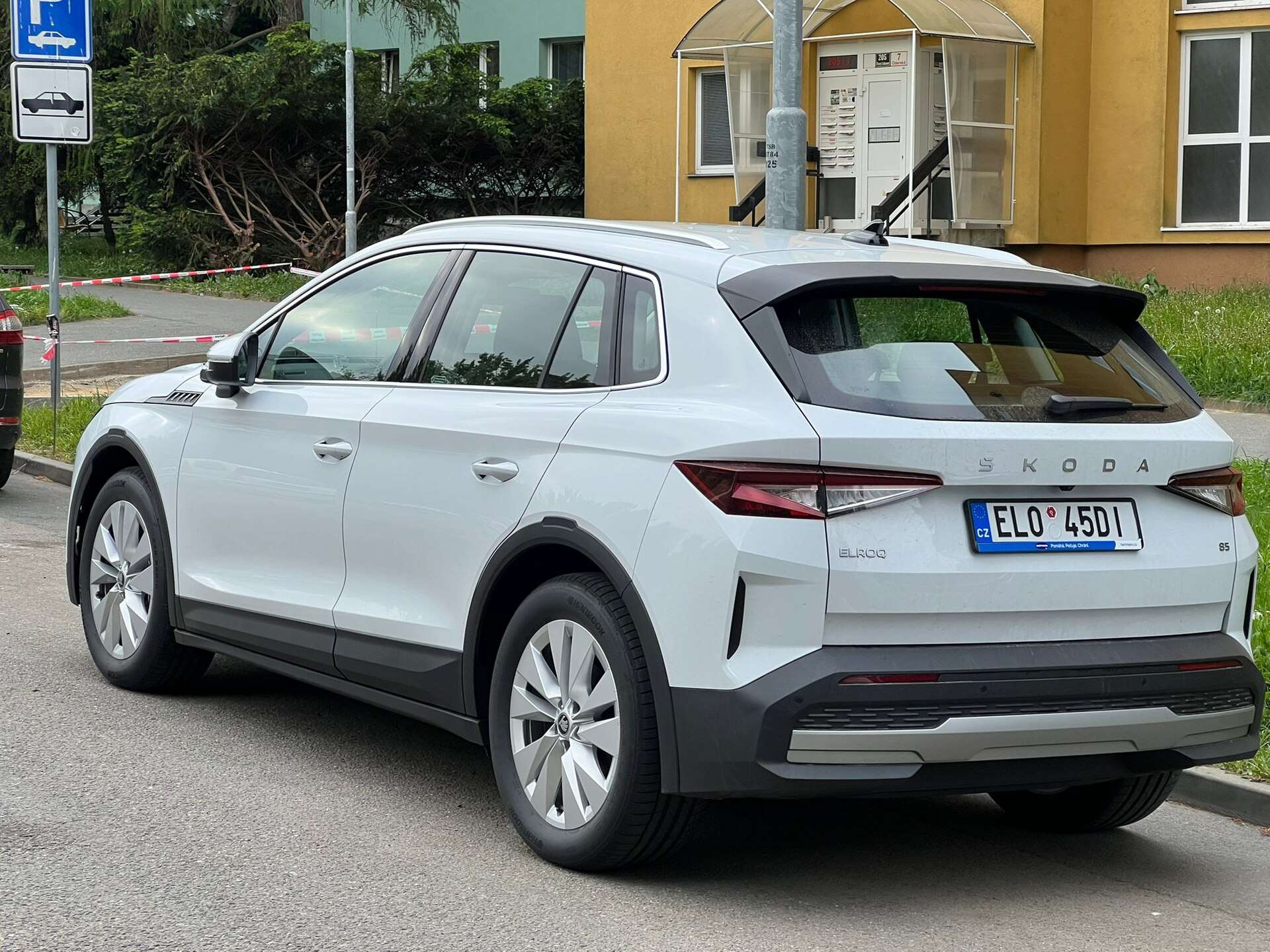
Photograph by Jakub5588, via Wikimedia Commons, licensed under CC BY-SA 4.0.
Like our guides and unusual cars?
Get forgotten finds, useful motoring content and the most interesting car stuff from us by email.
Free to join. No spam. Unsubscribe whenever you like. See our privacy policy.