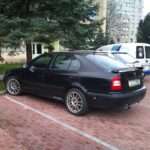
If you bought an Octavia vRS partly for the way it pulls out of a bend, how would you know whether the front differential was earning its keep? On dry tarmac an Octavia can feel quite normal with a fault stored in the electronics controlling the front axle. One owner learned about a pump problem during a routine service. An inexpensive reader plugged into the same car might have given a perfectly accurate answer to a completely different question: whether the engine had stored an emissions fault.
The petrol Mk3 vRS 230 and 245 offer an unusually good reason to buy diagnostics by vehicle specification. Engine performance, gearbox behaviour, brake intervention and, on the right versions, an electronically controlled front differential all affect what you feel through the steering wheel. A reader that reaches the relevant controllers can help you decide whether the first cheque should go to a tyre shop, a VAG specialist, a transmission repairer or nobody at all. Here is how to work that out without taking an expensive punt on the most interesting piece of hardware.
Identify the 230 or 245 before looking for a differential menu
Start with the original specification. The launch information for the RS 230 describes an electronically controlled front axle lock, usually called VAQ. Škoda also specifies VAQ for the later RS 245. There is an important wrinkle for UK used buyers. The original pre-facelift 230 special version and the facelift 245 are the obvious candidates. A later standard vRS advertised as a 230 need not have the same front differential. Check the build specification and the actual equipment, particularly if the engine has been remapped.
There are visual differences between generations and trim levels, but an advert photograph can only get you so far. The badge does not identify the controller; a claimed power figure from a rolling road tells you even less about the axle. Ask for the factory equipment record and corroborate it with a suitable scan or a specialist’s physical identification. If your car has the ordinary electronic traction functions without VAQ, it can still benefit from engine, ABS and transmission access. Our general Mk3 Octavia guide covers the wider family.

What the front axle lock actually does
Picture the two front wheels on different surfaces. The electronic brake systems can intervene when one starts to slip. On a VAQ-equipped car a controlled clutch assembly also influences how the front axle transmits torque between the wheels. Hydraulic pressure acts on the clutch pack under electronic control. This is a front-drive installation. Typing “Haldex pump Skoda” into a parts search can also bring up rear couplings for four-wheel-drive cars. A similarity in the underlying principle is a very poor reason to order a component for a different axle.
On a suitable VAG tool look for address 32, usually labelled differential locks. An independent VAQ specialist’s technical guide identifies that address and discusses the pump and its learned settings. Getting the identity of this controller is useful in its own right. If a handset has no differential menu, you have learned something about its coverage. If a known capable tool expects an installed controller and cannot communicate, you have a vehicle or communication question to investigate. Those two situations can look identical on a poorly designed app.
The third possibility is that the car never had a separate controller in the first place. This is why the first few minutes with the equipment list can save money. Find out which of these three situations applies before accepting a diagnosis of a dead differential. At a used-car viewing, ask the seller’s permission for a read-only scan and save the controller identification. Take a photograph of any relevant service invoice. The combination tells the next workshop more about the car than the seller’s recollection that someone serviced “the diff” a few years ago.
The service visit that uncovered a pump problem
In a BRISKODA vRS 230 discussion, an owner reported being underwhelmed with the car’s front differential. A service scan found a differential fault, and the dealer ordered a replacement clutch pump under warranty. The owner was understandably worried about whether driving in that state had damaged the clutch pack. The account establishes what the owner was told and what the dealer ordered. It gives neither the numeric code nor a strip-down demonstrating consequential damage. Both details matter when comparing that story with your car.
The specialist reference above discusses codes including C1112-07, C1112-04 and C1113-07 in the VAQ context. These are technical examples from the specialist, separate from the unnamed event on the owner’s service report. Preserve the suffix and the controller that recorded it. Searching just C1112 can produce descriptions from different manufacturers and systems. An owner gains more by taking the full report to a garage familiar with this exact front axle than by assuming any search result containing the word pump must apply.
Ask what the workshop knows about the electrical supply, pump response, hydraulic condition and service history. Ask whether the relevant pump learning procedure was required and completed after prior work. A controller accepting a command can show the electronics received it. Demonstrating that the system actually produced the expected response is a further step. The specialist can choose the correct procedure for the unit fitted. A reported pump issue is a good reason to investigate; it does not authorise an automatic leap to a whole differential, or establish that cleaning alone will cure it.
What evidence separates weak traction from an axle fault?
Start with the four things touching the road. Check tyre sizes, pressures and condition, including the inside edges. If the front tyres differ in make, wear or age, tell the technician what is actually fitted. A wet white line, low temperature or poor tyre can change front-end behaviour without leaving a code. A scanner cannot measure tread grip, detect every alignment error or see a damaged bush. On a powerful front-drive car these physical checks have an unusually direct bearing on the complaint.
Next ask what happened at the instruments. Was a traction symbol flashing briefly on a poor surface or did a warning stay lit on the following dry journey? Did the car lose engine power or just feel reluctant to pull through a bend? Does the steering pull when braking as well? Describing these distinctions while the experience is fresh gives a garage a much better problem to solve. Nobody needs to provoke wheelspin, disable stability control or drive aggressively to make a point. A safe controlled test is a workshop decision.
Where appropriate a technician can compare wheel-speed channels, steering information, engine torque requests and available differential data. The value lies in seeing the sequence. A wheel signal dropping out before a cascade of warnings is a different observation from four plausible wheel signals alongside a returning VAQ event. Keep speed, time and units with the data. A handheld reader refreshing one channel after another can appear to show a lag that is really a sampling artefact. For intermittent problems, selecting a few relevant channels often gives a more usable trace.
Like our guides and unusual cars?
Get forgotten finds, useful motoring content and the most interesting car stuff from us by email.
Free to join. No spam. Unsubscribe whenever you like. See our privacy policy.
Boost-control faults and the EPC warning
The engine side deserves equal attention. A Mk3 petrol vRS owner reported limp mode with P256300, P00AF00 and U041600. The post identifies the petrol Mk3, without specifying a 230 or 245 calibration. It is useful evidence about the family rather than a guarantee about a particular actuator on every version. P2563 concerns boost-control position feedback and P00AF concerns boost-control performance. The presence of both is more informative than the statement that a turbo fault showed up.
The control unit asks the boost mechanism to move and observes what happens. A signal that does not follow the expected range or behaviour has several possible explanations. Ask what a test established about the mechanism, position feedback, wiring and response to commands. An entire turbocharger can be a substantial purchase, particularly once labour and associated items are included. If that is the proposed repair, the invoice should explain why a less extensive cause was ruled out on the engine actually installed. A fault name alone is a weak reason to buy the largest assembly in the diagram.
And the U-code? Save it alongside the unit that recorded it and any original wording. It concerns invalid data associated with the stability-control system. A receiving unit can flag information supplied by another system while its own hardware is working correctly. A printout showing a communication-related entry and a boost event does not prove either caused the other. Timing, status and recurrence matter. Resist the urge to add a replacement ABS unit to a turbo estimate simply because the report contains a third line of text.
Requested boost, measured boost and a modified vRS
If a reader supports them, graph the pressure requested by the engine alongside the measured pressure under the same conditions. Note whether the display uses absolute pressure, which includes atmospheric pressure. A graph drawn relative to atmospheric pressure uses a different zero point. A technician can interpret either if the units and reference are clear. A cropped screenshot showing only a number and the word boost can be almost useless. Include engine speed and relevant load information, particularly if the original event occurred during a gear change.
On a modified Octavia, the software may request different behaviour from the factory calibration. Record changes openly, including intake or exhaust hardware, engine mapping and any transmission changes. The diagnostic principles remain useful, but workshop reference values and expected torque limits must match the car being tested. Save the original report before anyone changes software in an attempt to remove the symptom. Otherwise it can become impossible to distinguish a pre-existing fault from a change in the way the car now requests and monitors power.
A code-free engine can still have a problem that has not yet met the monitoring threshold. Conversely, an old stored boost event from before a documented repair need not explain an unrelated hesitation today. A garage can compare a repeat report and any safe, controlled log with the original conditions. If the EPC lamp is on with severe loss of power or the vehicle gives a stop instruction, follow the handbook and seek assistance. There is no diagnostic prize for completing a full-throttle run with a sick car.
Manual and DSG cars need different questions
The RS 245 launch documentation describes both a manual gearbox and an optional seven-speed DSG. Confirm what your particular 230 or 245 has before comparing service advice or buying a scanner for its transmission functions. A manual car has no DSG control unit for the tool to find. On an automatic, request the actual transmission identification and check that the seller’s coverage applies to it. Supporting an older six-speed DSG, or the seven-speed dry-clutch unit in a small Fabia, does not demonstrate equivalent access on this car.
When a DSG-equipped vRS hesitates, write down the indicated gear, whether the engine revved freely, whether drive was interrupted and whether the symptom occurred in reverse as well. Check the engine and transmission together. Torque reduction during a shift can change what appears on the engine trace. A misfire or boost limitation can equally make a change feel poor when the gearbox has selected the requested gear. If a workshop proposes clutch or control-unit work, ask how its data separated a transmission problem from an engine losing torque at the same moment.
For a manual car that feels weak in a higher gear, the relationship between road speed and engine speed can provide useful context. A scan cannot measure clutch friction directly or establish the condition of a flywheel. Tell the garage whether the engine speed rose disproportionately, whether the problem was confined to one gear and whether there was a noise. A mechanical inspection may be much better value than an expensive electronic reader for that specific complaint. The scanner remains useful for establishing whether an engine intervention or brake-system fault accompanied it.
Buying and maintaining a used 230 or 245
A helpful pre-purchase report has three elements. It identifies what is installed, records the event memory before any reset and agrees with the condition of the car in front of you. Look at the service invoices separately for the engine, gearbox where relevant and the front axle lock where fitted. A bill for transmission oil does not automatically document VAQ maintenance. Ask what unit was serviced and which parts and fluids were used. Establish the maintenance due for the VIN instead of applying a forum interval to every variant.
If the car has optional adaptive dampers, parking assistance or other costly accessories, check the scanner can interrogate the fitted controllers and try the normal controls. A mode changing on the screen only tells you that the driver’s selection was registered. It cannot prove that the damper is mechanically sound or that a hydraulic coupling is delivering torque. The inspection should include tyres, suspension, cooling system, brakes and body condition. Electronics add evidence to that physical inspection, particularly where a fault can remain unobtrusive on a short drive.
A buying test you can put to any scanner seller
Ask for a sample report from a VAQ-equipped Mk3. Can you see address 32 and its identity? Can you save a full differential fault with its suffix and status? Can you compare that with an engine freeze frame and ABS wheel-speed data on the same vehicle? The iCarsoft VAWS V3 Škoda coverage sheet identifies broad vehicle ranges. It is insufficient on its own to answer a question about differential-lock data or a specific DSG. Get those answers for the exact product and software before using the affiliate search to make a purchase.
A generic reader remains good value if all you need is an initial engine-emissions check. If you already own one, take its codes to the garage. For a vRS you intend to keep, paying more for repeatable access to the differential, brakes and transmission buys a stronger record of how the whole car behaves. For a single serious traction or transmission issue, a VAG specialist with a lift, the correct data and test equipment can deliver more certainty in an afternoon than weeks of guessing with a new handset.
Keep the before and after reports under the same registration and dated mileage. If a workshop changes the pump or carries out a learning procedure, save the job description with those files. When the car changes hands, the next owner can distinguish a properly investigated differential complaint from a vague assurance that all the warning lights have been turned off. That record is useful even if the problem never returns.
Our final question for the garage would be simple. What was observed on this car that justifies the proposed part, and how will we tell that the repair restored the function? An answer involving the correct controller, measured response, physical checks and a repeat verification is worth paying for. On a Mk3 vRS, a scanner earns its place when it helps you ask that question before agreeing to buy a pump, turbo or gearbox.
Browse all Škoda diagnostic scanner guides
Photograph by LSDSL, via Wikimedia Commons, licensed under CC BY-SA 4.0.
Like our guides and unusual cars?
Get forgotten finds, useful motoring content and the most interesting car stuff from us by email.
Free to join. No spam. Unsubscribe whenever you like. See our privacy policy.