UNUSUAL CARS MODEL GUIDE
The Twingo Renaultsport 133 was the smallest member of Renault’s modern performance-car family. Launched in Britain in September 2008, it used a naturally aspirated 1.6-litre engine, five-speed manual gearbox, wide tracks and substantial brakes in a short three-door body. Standard, Cup, Gordini and facelift cars offer different balances of comfort and focus, but every survivor needs careful checks for belt history, corrosion, water leaks and worn chassis parts.
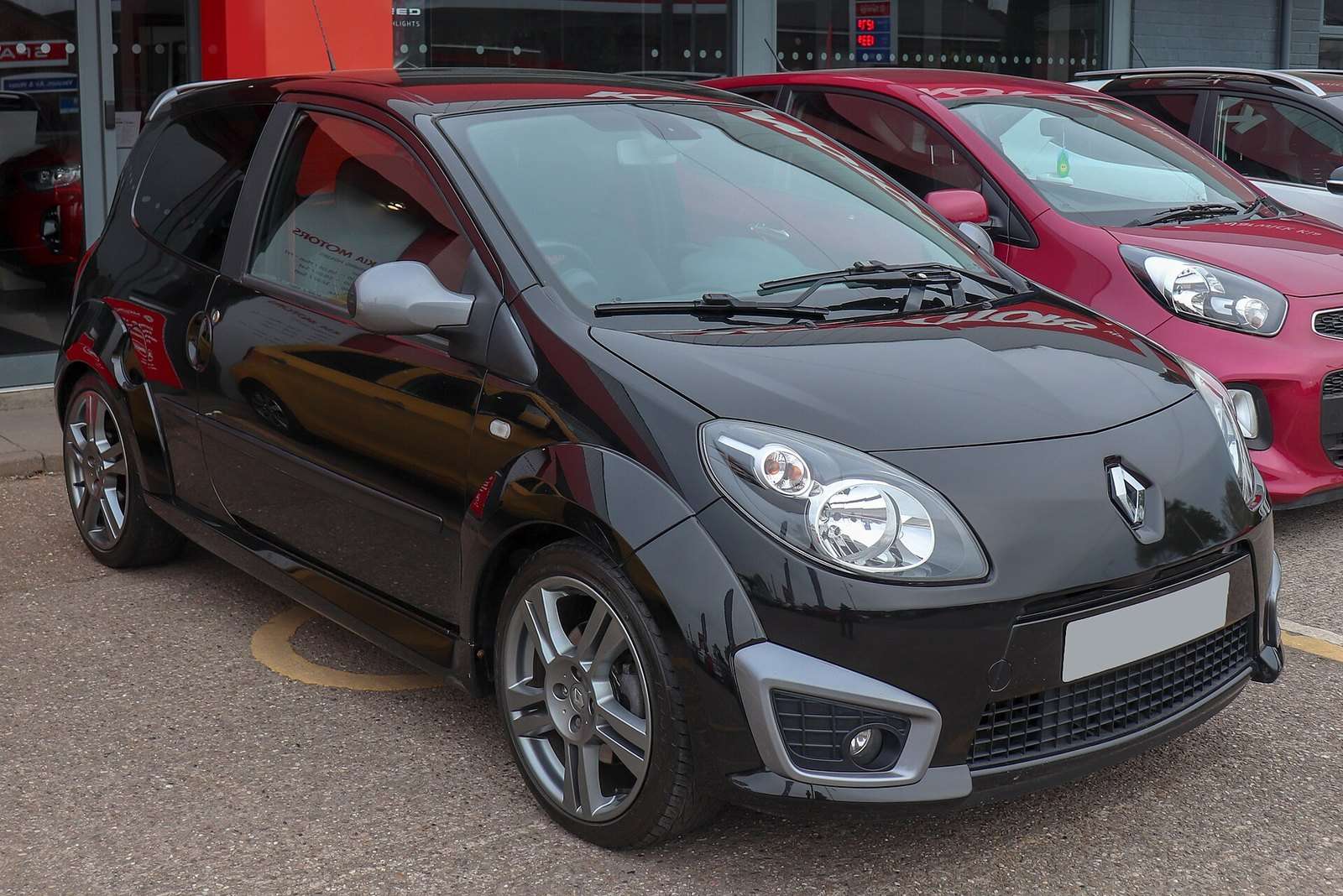
Featured image: 2008 Renault Twingo Renaultsport 133 front three-quarter view. Photograph by Vauxford, CC BY-SA 4.0, via Wikimedia Commons; locally hosted.
A smaller Renaultsport
Renault announced the Twingo Renaultsport 133 for the UK in August 2008 at £11,550, with sales beginning on 5 September. The K4M RS 1,598cc four-cylinder engine produced 133hp at 6,750rpm and 160Nm at 4,400rpm. A five-speed manual gearbox sent power to the front wheels; Renault quoted 0–62mph in 8.7 seconds and 125mph.
The body gained wider wings, specific bumpers, side skirts and a rear spoiler. The front and rear tracks were widened by roughly 60mm over the Twingo GT, while the braking system borrowed components from larger Renaults. Independently sliding rear seats preserved the ordinary Twingo’s useful cabin.

Standard chassis, Cup and Gordini
Renault offered standard and Cup chassis settings from launch. The Cup option lowered the car by 4mm, used springs approximately 10 per cent stiffer and fitted 17-inch wheels in place of the standard 16s. It is sharper but can be tiring on broken roads. Renault later sold a reduced-equipment Cup model as well as cars carrying the Cup chassis option.
The Gordini Renaultsport 133 added blue paint, white stripes and richer equipment rather than extra performance. Limited UK editions included the Silverstone GP. A 2012 facelift brought Renault’s revised front identity, but retained the same essential 133hp engine and manual drivetrain.
| Version | Main character |
|---|---|
| Standard 133 | 16-inch wheels and the more compliant chassis |
| Cup chassis | Lower, stiffer suspension and 17-inch wheels |
| Gordini 133 | Distinctive trim and high equipment level |
| Facelift 133 | 2012 front-end redesign with the familiar powertrain |
Love cars you don’t see every day?
Get forgotten cars, surprising motoring stories and the most interesting finds from Unusual Cars by email.
Free to join. No spam. Unsubscribe whenever you like. See our privacy policy.
Engine, belts and gearbox
The K4M needs evidence of cambelt and auxiliary-belt replacement according to age and mileage. Inspect invoices rather than relying on a handwritten note. Start the engine cold, listen for belt or pulley noise, check for misfires and confirm the temperature remains steady. Coil packs can cause rough running, while neglected oil or cooling systems are more serious.
The five-speed gearbox should select every ratio without baulking and the clutch should take up cleanly. Inspect engine mounts if the drivetrain moves or knocks on and off throttle. Modified exhausts and induction kits are common; good installations should not create warning lights, air leaks or excessive noise.

Chassis, steering and brakes
Test both low-speed manoeuvres and a rough road. The electric power steering should be consistent, with no warning lights or intermittent assistance. Listen for top-mount, ball-joint and anti-roll-bar-link knocks, then check dampers for leaks and springs for fractures. Cup cars must still feel controlled rather than crashy or unstable.
The 280mm ventilated front discs and 240mm rear discs give strong braking when healthy. Check calipers, pad wear, disc condition, brake pipes and handbrake operation. Uneven tyres are especially undesirable on a short-wheelbase car; verify sizes and inspect wheels for cracks or repairs.

Body, cabin and everyday faults
Inspect sills, jacking points, floor seams, rear spring areas, front subframe and metal hidden by the side skirts. Check for damp front carpets caused by water entering around the scuttle, and operate the tailgate release repeatedly. A rattling tailgate may need striker adjustment, while a failed release handle can suffer water ingress.
Test air conditioning, windows, central locking, key, radio and every dashboard display. Seat bolsters and steering wheels wear, and missing Renaultsport trim is expensive. Gordini stripes and upholstery should be genuine and in good condition. A standard, complete car is usually a better basis than a heavily modified example assembled from several specifications.

Buying checklist
Drive standard and Cup cars
The difference in ride quality is substantial, and the best choice depends on intended use.
Check beneath the side skirts
Exterior plastics can hide corrosion and poor lifting damage.
Verify belts and cooling from invoices
The little car is inexpensive only when major maintenance has not been postponed.
Sources
- Renault UK: original Twingo Renaultsport 133 launch and technical specification
- PistonHeads: Twingo RS133 used buying guide
- RAC Drive: facelift Twingo Renaultsport review
- evo: Twingo Renaultsport 133 review
- Parkers: second-generation Twingo used review
Continue the Renault story
Explore more French performance cars, sporting hatchbacks and unusual grand tourers in the complete Renault hub.
Frequently asked questions
When did the Twingo Renaultsport 133 go on sale in the UK?
UK sales began on 5 September 2008 after the car was announced in August.
What engine does the Twingo 133 use?
It uses a naturally aspirated 1,598cc K4M RS four-cylinder engine producing 133hp.
What is the difference between standard and Cup chassis?
The Cup set-up is 4mm lower, has stiffer springs and normally uses 17-inch wheels; the standard car uses 16-inch wheels and rides more compliantly.
Is the Gordini version faster?
No. The Gordini uses the same 133hp powertrain and concentrates on distinctive colours, stripes and equipment.
What common faults should be checked?
Important checks include cambelt history, coil packs, steering assistance, suspension wear, water in the footwells and tailgate-release operation.