
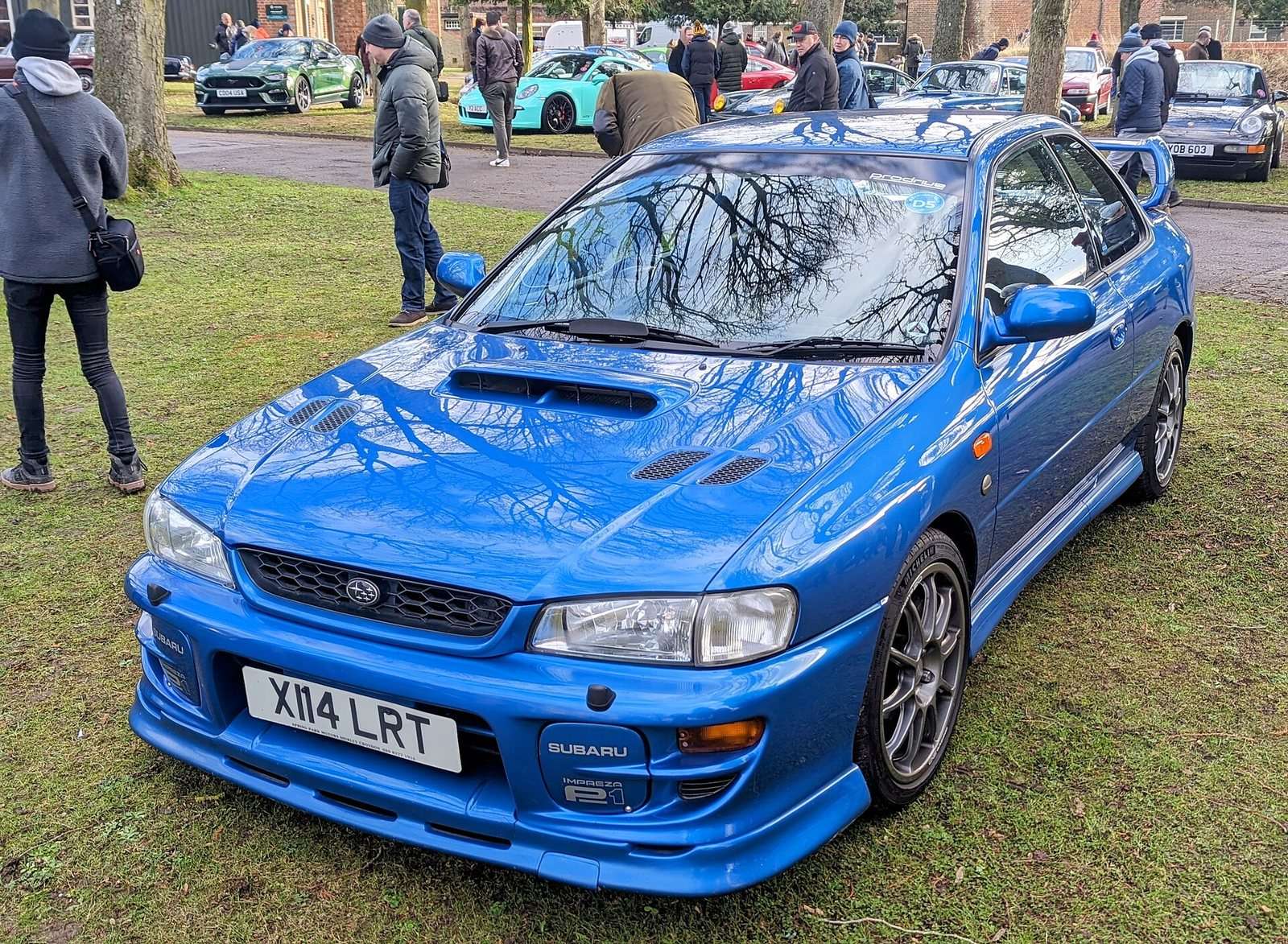
The Subaru Impreza P1 arrived when Britain’s enthusiasm for rally-bred Japanese performance cars was at fever pitch. It looked like an Impreza coupé with a few choice upgrades, but its story involved Prodrive, UK type approval and far more development than a simple special-edition badge suggested.
1. P1 stood for Prodrive One
The name was a very literal clue to the car’s origins. Prodrive—the Banbury company running Subaru’s World Rally Championship programme—developed the car for the British market, making the P1 one of the clearest road-car links to the team behind Colin McRae and Richard Burns.
2. It was created partly as Britain’s answer to grey imports
UK buyers already wanted the faster Japanese-market Impreza WRX STI coupés, but imported examples brought complications involving insurance, parts identification and specification. The P1 supplied that excitement as an officially approved UK model with a full Subaru warranty.
3. Its starting point was the Japanese STI Type R
The two-door shell and core mechanical package came from the Version 6 WRX STI Type R. Prodrive then recalibrated the car for British roads and high-speed European driving, rather than simply rebadging a Japanese-market import.
4. The planned production run doubled before deliveries began
Subaru initially announced 500 cars in October 1999. Demand was so strong that the allocation was doubled to 1,000, with customer deliveries beginning in March 2000. Even at twice the original volume, the P1 remained a genuinely scarce machine.
Love cars you don’t see every day?
Get forgotten cars, surprising motoring stories and the most interesting finds from Unusual Cars by email.
Free to join. No spam. Unsubscribe whenever you like. See our Privacy Policy.
5. Every production car wore Sonic Blue
Subaru kept the visual identity wonderfully simple: production P1s were painted Sonic Blue and sat on distinctive 17-inch OZ Racing wheels. Together with Peter Stevens’ bodywork changes, the single-colour policy made the car instantly recognisable.
6. Peter Stevens shaped more than one British performance icon
The P1’s front and rear styling was developed by Peter Stevens, whose résumé also includes the McLaren F1 and Lotus Esprit. The deeper bumpers, rear wing and cleaner details gave the Impreza coupé a purposeful shape without turning it into a caricature.
7. Its suspension was tuned for the roads buyers actually used
Japanese Type R settings could feel uncompromising on broken British tarmac. Prodrive revised the dampers, springs, geometry and ride height, aiming to retain the car’s extraordinary agility while improving stability and compliance on UK roads.
8. The official figures understated how dramatic it felt
The 1,994cc turbocharged flat-four was rated at 280 PS. Subaru quoted 0–60mph in about 4.8 seconds and a top speed above 150mph—performance that placed this compact four-seater in serious sports-car territory at the turn of the millennium.
9. It cost £31,495 when new
That was substantial money in 2000, but the P1 combined supercar-baiting acceleration, four-wheel-drive traction and everyday practicality. Its price also reflected the engineering, approval work and low-volume production behind it.
10. Originality now matters as much as history
Many P1s were modified when turbo Subarus were inexpensive performance cars. Cars retaining their correct OZ wheels, bodywork, interior and documented mechanical specification are now especially desirable, making careful identification increasingly important.
For the fuller story, specifications and buying points, read our Subaru Impreza P1 guide. You can also browse the Subaru archive or discover more surprises in the 10 Things hub.
Love cars you don’t see every day?
Get forgotten cars, surprising motoring stories and the most interesting finds from Unusual Cars by email.
Free to join. No spam. Unsubscribe whenever you like. See our Privacy Policy.