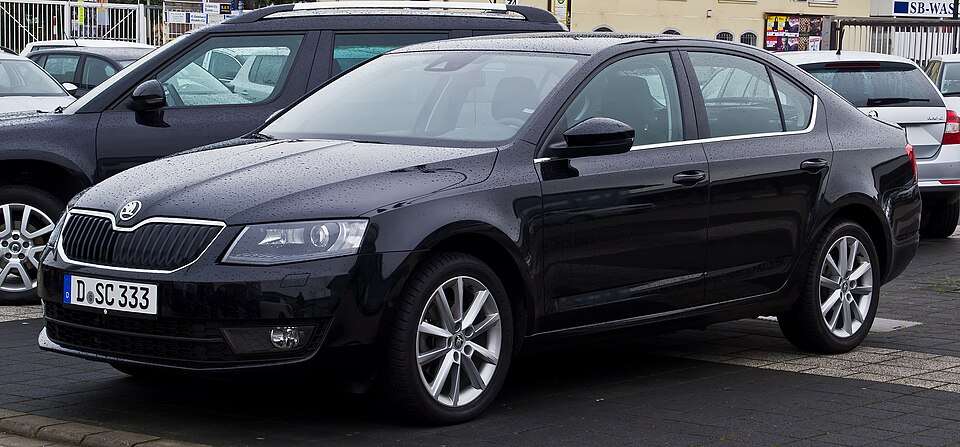
The ordinary Škoda Octavia Mk3 TDI is one of the most useful gaps in a buying-guide library: a roomy hatchback or Estate that people actually use for commuting, family trips and carrying work equipment. A careful purchase can make sense, but the cheapest diesel with an attractive monthly running-cost claim can also carry overdue belt, gearbox, brake and emissions work.
This guide covers the third-generation 5E Octavia with 1.6 and 2.0 TDI engines. Its focus is the ordinary road car, not a replacement for our vRS or Scout buying advice. Do not apply it to the original rear-drive Octavia, Mk1/Mk2 diesel specifications or the later Mk4. Establish the VIN, engine code, gearbox and front-wheel-drive/4×4 specification before choosing a service schedule or parts.
Buying verdict: for regular longer journeys, shortlist a sound 2.0 TDI with clear servicing and the transmission you actually prefer. A 1.6 can be a sensible economy choice when its performance suits the load and route. For mostly short cold trips, question the diesel purchase itself. Buy history and condition before trim, facelift styling or a low dashboard mileage.
1.6 TDI or 2.0 TDI, hatchback or Estate?
The 1.6 and 2.0 badges do not each identify one unchanging specification. Outputs, emissions equipment, gearboxes and available drivetrains changed during the generation. A 2017 registration is not enough to establish the facelift or a transmission revision; check the production information as well as the registration date.
Škoda’s February 2017 global press kit is a useful illustration. It lists 90 PS and 115 PS 1.6 diesels, with a seven-speed DSG alternative on the higher-output version. For the 150 PS 2.0 TDI it lists a six-speed manual, a six-speed DSG on front-wheel drive and a seven-speed DSG option on all-wheel drive. This is factory range context, not proof every combination was offered in every UK trim or year.
| Choice | Why consider it? | What changes the decision? |
|---|---|---|
| 1.6 TDI | An economy-minded everyday diesel when modest performance meets your needs. | Exact output, gearbox, real journey pattern, maintenance and performance with passengers/luggage. |
| 2.0 TDI | A useful starting point for loaded family use and longer trips. | Actual transmission, emissions equipment and the cost of outstanding work. |
| Manual | Direct control and a simpler buying conversation than an unidentified automatic. | Clutch, flywheel where fitted, bearings, selection and any oil leaks still matter. |
| DSG | Convenient in traffic and on long trips when healthy and correctly maintained. | Gearbox code, wet/dry-clutch type, service requirements, cold/hot behaviour and fault evidence. |
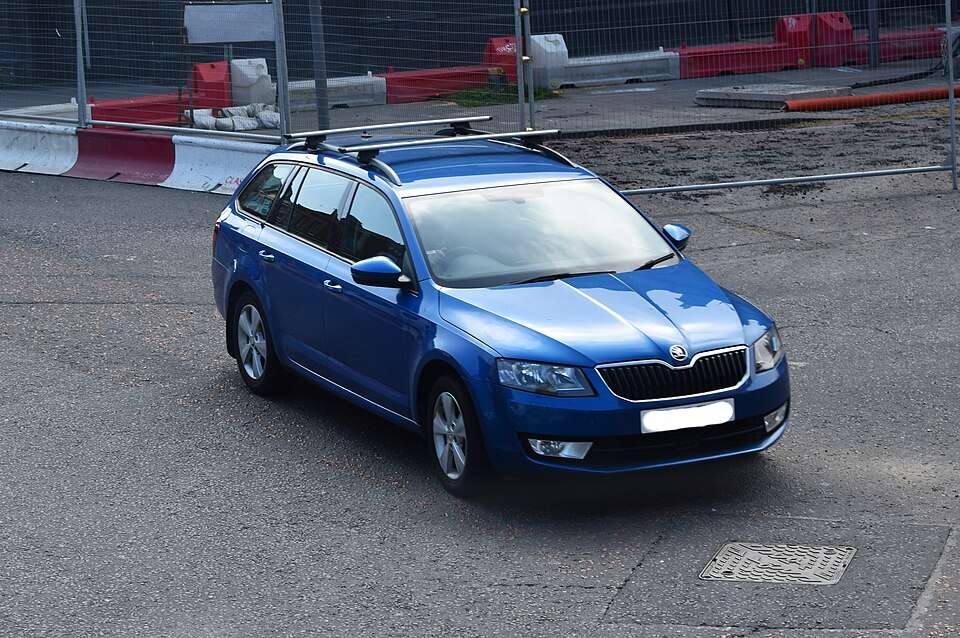
| Estate / Combi | A more versatile load area for bulky family or work equipment. | Load damage, water ingress, rear suspension condition and actual carrying/towing requirements. |
| 4×4 | Useful where your route and traction needs justify it. | Coupling servicing, tyre compatibility and additional drivetrain checks. |
For most buyers, standard wheels and a comfortable specification deserve consideration before expensive cosmetic trim. An SE-family car with a coherent service record may be better value than a heavily worn high-specification Estate. Check the equipment in the actual car: trim names and feature availability changed, and advertisements can be incomplete.
Why the body style matters
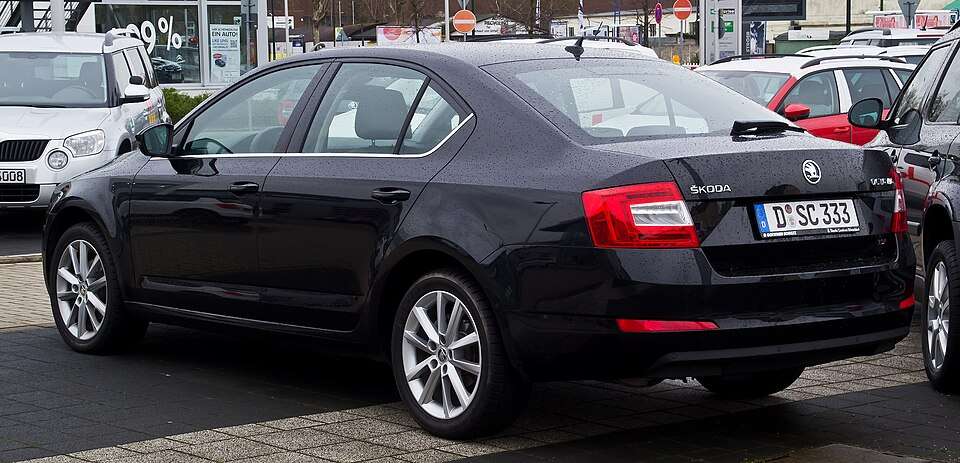
The hatchback is a liftback with a large opening; do not assume that its saloon-like shape means a small separate boot lid. Škoda’s facelift material quotes 590 litres for the hatchback and 610 litres for the Estate with the rear seats in use, rising to 1,580 and 1,740 litres respectively with seats folded. Those factory figures need a practical check with your own luggage, child seats or mobility equipment.
Check the load floor, side compartments, seat releases, parcel shelf or load cover and any fitted divider. Examine the rear seat backs and loading edge for the kind of use the car has had. A working car is not necessarily a bad one; hidden damage, missing equipment and a history that contradicts the seller’s story are the concerns.
UK prices: build a comparable shortlist
Use current advertisements filtered to the same generation, engine, gearbox and body. Ordinary TDI cars should not be priced against a vRS, and a Scout or 4×4 should not be treated as a front-wheel-drive Estate with an extra badge. A model-wide listing count is a supply indicator, not a valuation.
Compare mileage with the service chronology and actual wear. A motorway car with higher mileage and itemised maintenance can be a more coherent purchase than a low-mileage car with repeated short-trip emissions problems and missing invoices. Conversely, a large mileage does not automatically prove sympathetic use. The physical inspection must support the story.
Record the asking price, seller type, service evidence, tyres, brakes, belt status and transmission servicing for each shortlisted car. Set aside inspection and contingency money. If one car is cheaper because major maintenance is outstanding, compare the total after written quotations rather than only the windscreen price.
Use quotations to make an offer
A vague “cambelt done” statement should become an invoice showing the vehicle, date, mileage, kit and related work. A DSG invoice should name the gearbox service and correct products. If the seller cannot substantiate these claims, value the maintenance as unproven. Do not turn an undiagnosed gearbox warning into a small deduction based on the price of an oil kit.
Where the car has had an engine, turbocharger or emissions component replaced, ask why the work was required and what was done about the original cause. The invoice should establish the parts, installation and warranty; the car should then demonstrate normal operation. A replacement turbo without investigation of lubrication or contamination is an incomplete buying story.
Identity, previous use and body condition
Match the VIN and registration paperwork, check the seller’s authority to sell and obtain an appropriate provenance check. Read the MOT history as a sequence rather than celebrating one recent pass. Recurring suspension, tyre, brake or corrosion advisories can reveal work that has been repeatedly deferred.
Ask about taxi, private-hire, fleet, delivery or driving-school use. None is an automatic rejection, but each changes the questions about maintenance, clutch use, door/seat wear and mileage evidence. Compare invoice dates with recorded mileages. Investigate discrepancies rather than rationalising them from the cleanliness of the interior.
Inspect the shell in daylight, including sills, jacking areas, wheelarches, door edges, tailgate/boot area and accessible floors. Look for changes in paint finish, disturbed fasteners, poor seam work and inconsistent panel gaps. Arrange an underside inspection on proper equipment; covers and fresh underseal can hide leaks or repair quality.
Front-end work and windscreen replacement can affect fitted driver-assistance sensors. Check invoices for any required calibration and verify that the systems complete their normal self-checks. Optional assistance equipment is not evidence that the car was never damaged, and an MOT is not a detailed structural or electronic assessment.
TDI engine checks: cooling, starting and oil history
Insist on a genuinely cold start. Watch that warning lamps illuminate for their checks and extinguish appropriately, then listen for abnormal mechanical noise. Starting should be consistent; rough idle, persistent smoke, pronounced vibration or reluctance to start needs a diagnosis. Do not accept a seller’s assumption that it only needs a fuel filter.
Read oil-service invoices for the actual approval, filter and mileage/time pattern. The correct specification is more informative than “fully synthetic” or a viscosity alone. Check the cold level on level ground using the prescribed method and ask about top-ups. Overfilling, unexplained rising level or significant consumption warrants investigation.
Check coolant cold, look for staining around accessible housings, hoses and pump areas, and monitor temperature during the drive. Ask whether a water pump, thermostat or cooling assembly has been replaced and why. A stable gauge during a brief idle does not exclude a leak or temperature-control problem. Pressure testing and targeted investigation are preferable to adding sealant.
Under normal legal load, power delivery should be consistent without repeated limp mode or an alarming whistle, hiss or smoke. Fault codes, live pressure data, hose inspection and mechanical tests should establish whether a symptom comes from a boost leak, control issue, fuel system or turbocharger. A code naming a circuit is not proof that its most expensive component needs replacing.
Timing belt and water pump: verify the scope
Establish the engine code and obtain the applicable schedule from Škoda or a model-aware workshop. Do not copy a generic age rule from a service advert into a universal factory requirement. The JBS tariff cited below provides a useful fitted price reference for its EA288 belt/pump package, but the workshop’s introductory interval wording is not a VIN-specific maintenance instruction.
Ask whether the invoice covers the complete relevant belt kit, rollers/tensioners, pump, coolant and necessary fasteners. Clarify any pump design or auxiliary-drive differences before ordering. A clean visible auxiliary belt and a sticker on the engine cover are not equivalent to an itemised timing-drive invoice.
If there is no adequate evidence and work is due or uncertain, obtain a written fitted quote before buying and arrange it before relying on the car for a long trip. A visual inspection alone cannot establish the service life remaining in a belt. Do not run an engine with suspected timing failure simply to see whether the noise clears.
DPF, EGR and SCR: suitability before attempted fixes
A diesel is easier to justify when your routine includes regular journeys long enough to reach operating temperature. Low annual mileage alone is not the whole issue: a few long trips differ from many short cold starts. Discuss your use honestly before choosing a TDI for fuel economy.
Inspect for emissions warnings, repeated regeneration complaints, loss of power and signs of tampering. Have an appropriate scan made, recording faults and relevant live data before clearing anything. DPF loading information, pressure and temperature sensor operation and the wider running condition need interpretation together.
Where SCR/AdBlue is fitted, verify that the system operates normally and has no unresolved countdown. A top-up is not a universal cure for a sensor, dosing or control fault. Do not assume that every 1.6 or 2.0 across this generation has identical emissions equipment.
Check clean-air-zone eligibility using the actual registration and official tools for the places you travel. Budget around a legal, complete emissions system. A seller’s description of a delete as an “upgrade” is a reason for further legal/compliance and condition checks, not a substitute for a healthy standard car.
Love cars you don’t see every day?
Get forgotten cars, surprising motoring stories and the most interesting finds from Unusual Cars by email.
Free to join. No spam. Unsubscribe whenever you like. See our privacy policy.
Manual and DSG: identify before pricing
Manual gearbox, clutch and flywheel
Assess selection from cold, including reverse, then repeat the checks when fully warm. The clutch should take up consistently without pronounced shudder or slipping during normal acceleration. Listen for unusual noises at idle, when operating the pedal, during starting/stopping and on the move. Diagnose rather than declaring every vibration a flywheel failure.
On a candidate requiring clutch work, ask whether the fitted quote covers a flywheel where applicable, release components, seals, oil, fasteners, labour and VAT. A cheap three-piece kit advertisement cannot establish the final job. If the gearbox itself is noisy or selection remains difficult, a clutch replacement may not resolve it.
DSG is a family of transmissions
Seven forward ratios do not establish one gearbox type. Different Mk3 engine/drivetrain combinations use different DSG units; wet and dry clutch arrangements do not share a universal service package. Read the gearbox code and obtain the relevant schedule. Do not transfer a six-speed wet-DSG oil/filter invoice to a seven-speed dry-clutch car as proof that the correct job has been done.
Try gentle take-up, stop/start traffic, reverse and ordinary acceleration from cold, then repeat once fully warm. Delayed engagement, pronounced judder, repeated surging, slipping, transmission warnings or a loss of drive need specialist diagnosis. Do not buy on the assumption that a reset, adaptation or fluid change will necessarily fix an existing fault.
JBS publishes prices for identified DQ250 and DQ381 wet-DSG services. Those are useful budgeting examples only when the car has the matching unit and the workshop confirms the scope. Its general interval wording must not override the actual gearbox/build schedule. For a different unit, request that unit’s quote.

4×4 coupling, tyres and towing history
If considering a 4×4, inspect and scan the complete drivetrain rather than only the engine ECU. Ask for coupling and differential maintenance evidence, and have a specialist establish whether the rear drive works correctly. An absence of dashboard warnings is not a functional test. Confirm tyre sizes, compatibility and condition on all four wheels.
A towbar is a prompt to ask what the car has towed and how often. Check installation, wiring and relevant cooling/drivetrain history, then look for disproportionate clutch, brake and rear-suspension wear. Use the actual vehicle’s plated limits and your licence entitlement. A model name or another owner’s caravan setup does not establish the legal capacity of your candidate.
Suspension, steering and brakes
Check each tyre across its full width, including the inner edge, and inspect wheels for damage. Assess steering feel, tracking and vibration on a legal road test. Uneven wear may require geometry investigation and component repair; replacing the tyres alone can hide rather than solve the cause.
Listen for knocks, rattles and wheel-bearing noise over varied ordinary road surfaces. Have the workshop identify the rear-suspension layout and any adaptive-damper equipment before pricing parts. The factory range includes different chassis equipment; assuming every Estate uses the same rear parts can produce an unsuitable order.
Inspect discs, pads, hoses and accessible brake components. Check for pulling, judder and evidence of dragging. Clarify whether the quotation is per axle and which disc diameter/parts specification it covers. A parts advert naming Octavia Mk3 does not guarantee that it matches the car’s brake codes.
Optional DCC should operate without warnings and its dampers should be assessed as the correct equipment. A driving-mode button alone is not proof of adaptive dampers. A previous conversion to ordinary components should be investigated for suitability, insurance implications and the way electronic functions have been handled.
Interior, infotainment and water ingress
Inspect the cabin for dampness under accessible mats, around the boot floor and beneath load-area trim. Check headlining and roof equipment where fitted. Locate the source of any leak and assess resulting electrical or interior damage; a dry surface after cleaning does not show that the leak was repaired.
Operate climate control, every fan speed, heated equipment, windows, locks, seat adjustments and both keys. Test the screen, audio, navigation if fitted and smartphone connection with your own device. The 2017 factory material describes several infotainment systems, so replacement costs and functions should be established from the fitted unit.
Check parking sensors, camera, adaptive cruise and other installed assistance systems through normal safe operation. Ask about windscreen/front-end repairs and any required calibration. Do not deliberately trigger collision intervention during a test drive. A warning dismissed as dirty radar should disappear after a legitimate clean if that is genuinely the cause; persistent faults need diagnosis.
Compare pedal, wheel, seat and door wear with the mileage and previous-use story. Two working keys, complete load-area equipment and a clear service record have practical value. Missing accessories can often be replaced, but price them before using the remaining budget on cosmetic upgrades.
Sourced UK maintenance and fitted-cost references
These published references were checked in November 2026. They are not personalised quotes. JBS states that the prices below include VAT; confirm application, kit design and any additional work against the engine and gearbox codes. Its labour durations span its covered models rather than guaranteeing a time for your particular Octavia.
| Job | Parts and scope | Labour / fitted reference | Buying implication |
|---|---|---|---|
| EA288 1.6/2.0 TDI belt and water pump | JBS describes genuine kit, rollers/tensioners, replacement pump and fresh coolant. | £615 fitted including VAT; general workshop duration approximately 3½–7 hours across models. | Confirm engine/application and the applicable due date. A parts-only kit is a different purchase. |
| Identified DQ250 DSG service | Appropriate transmission oil/filter service, subject to workshop confirmation. | JBS £285 including VAT; its general gearbox-service duration is about 1–1½ hours. | Use only for a matching unit, not every DSG. |
| Identified DQ381 DSG service | Matching seven-speed wet-DSG service scope. | JBS £355 including VAT, with the same general duration qualification. | Confirm the car actually has DQ381. |
| Six-speed manual oil service | Correct oil and procedure for an eligible six-speed unit. | JBS advertises £150 including VAT. | Do not assume this covers a five-speed or repairs to a noisy gearbox. |
| Timing kit parts comparison | Compare belt/pump kits; an observed Gates-labelled kit was advertised at £126.77 before coupon. | Parts only, with application still to confirm. Labour is not included. | It is not the same proposition as a genuine-parts fitted workshop package. |
| Clutch, flywheel or emissions repair | Diagnose first and identify required components. | No universal fitted total is established by the cited menus. | Request itemised parts, labour, diagnostic time and VAT. |
For a qualifying car that genuinely needs both the advertised EA288 belt/pump package and the identified DQ250 service, those two published references total £900; with the cited DQ381 service, they total £970. Neither sum includes an engine service, tyres, brakes or unresolved faults. This is a worked scope comparison, not a promise that every Octavia needs those jobs immediately.
Keep parts, labour and fitted totals distinct. Do not add an eBay kit on top of a fitted package that already includes parts. Ask whether the garage accepts customer-supplied components and who covers labour if a supplied item fails. Check consumables, coolant, fasteners, disposal charges and VAT before comparing workshop quotes.
Octavia TDI eBay service-parts table
Affiliate disclosure: these searches use campaign 5339238906 and we may earn a commission from qualifying purchases. A search result or compatibility badge does not replace verification of the VIN, engine/gearbox code, OE number and required approval.
| Item | Fitment checks | eBay UK search |
|---|---|---|
| 1.6 TDI service kit | Correct engine/build, filter set, approved oil and quantity. | 1.6 TDI service kits |
| 2.0 TDI service kit | Correct oil approval and actual kit contents. | 2.0 TDI service kits |
| Belt/pump package | Engine code, pump design, tensioners/rollers and fasteners. | Timing kits and pumps |
| Fuel filter | Correct housing/filter type and replacement procedure. | Diesel fuel filters |
| Auxiliary drive | Engine and belt/tensioner application. | Auxiliary-drive parts |
| Alternator | Output, pulley, mounting, electrical connector and exchange deposit. | Alternators |
| Battery | Case, rating, stop/start technology and any adaptation requirement. | Batteries |
| Manual clutch/flywheel | Transmission identity and exact job scope. | Clutch and flywheel parts |
| DSG service items | Read gearbox code first; do not choose by seven speeds alone. | DSG service items |
| 4×4 service items | Actual coupling generation and approved fluid/procedure. | 4×4 service items |
| Discs and pads | Brake codes, axle and dimensions. | Brake parts |
| Cabin filter and wipers | Correct generation, body and dimensions. | Filters and wipers |
Hidden ownership costs
A low purchase price can be overtaken by four tyres, brake work, missing keys, air-conditioning investigation, worn suspension and overdue belt or gearbox servicing. For Estates, price missing load covers and damaged interior fittings. Adaptive dampers and additional drivetrain equipment can change replacement costs substantially.
Allow for the inspection, collection, recovery if needed and alternative transport during repairs. Read warranty exclusions before relying on a selling dealer’s headline cover. Diagnostics, wear, emissions components, modifications and pre-existing symptoms may be treated differently. Insure any modifications accurately, and do not let an economy claim hide your actual first-year cash requirement.
Octavia viewing and test-drive checklist
Before travelling
- Confirm Mk3/5E, engine code, output, transmission, drivetrain and body.
- Read provenance and MOT history, then request belt, oil-service and transmission invoices.
- Ask about previous taxi/fleet use, oil/coolant consumption, warning lights and major repairs.
- Establish local emissions-zone eligibility and whether your journeys suit a diesel.
- Arrange a cold start, fully warm drive, suitable scan and underside inspection.
At the car
Match identity and paperwork, inspect structure and repair quality, check cold fluids, tyres and dampness, and test both keys and equipment. Load your important family items. Watch the warning self-checks and listen to the first start before the engine is warmed or music is played.
Check clutch/DSG operation both cold and hot, sensible performance, straight tracking and consistent braking. Recheck for leaks and warnings afterwards. Ask the inspecting workshop to separate urgent faults from planned maintenance and cosmetic issues; obtain written estimates for the first two categories.
Buy or stop?
Proceed when the records, condition and independent assessment agree. Negotiate around diagnosed work with defined cost and scope. Pause for unresolved overheating, significant oil/coolant loss, transmission slip, serious structural repair concerns, identity discrepancies or emissions tampering. A warning that has just been cleared is not a demonstrated repair.
Frequently asked questions
Is a seven-speed DSG automatically the wet-clutch unit?
No. Identify the actual gearbox. The number of ratios alone does not tell you its service procedure or justify a particular oil/filter package.
Is the ordinary 2.0 TDI the same buying proposition as a vRS?
No. Compare the exact engine, drivetrain, chassis, brakes and use. Our dedicated vRS guide addresses that version separately.
Does the factory boot figure prove an Estate is right for me?
No. Test your own equipment and loading needs, including folded seats, floor arrangement and spare-wheel equipment.
Can I rely on a universal five-year belt rule?
Use the actual engine/build maintenance requirements and documented work. A service provider’s general introductory wording is not a vehicle-specific factory schedule.
Related buying advice
Use our Octavia vRS Mk3 guide for the performance model. The Scout guide covers a different derivative. Our Golf TDI guide provides a useful comparison, with each car’s actual specification still requiring verification.

Love cars you don’t see every day?
Get forgotten cars, surprising motoring stories and the most interesting finds from Unusual Cars by email.
Free to join. No spam. Unsubscribe whenever you like. See our privacy policy.