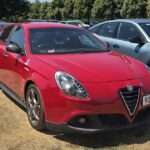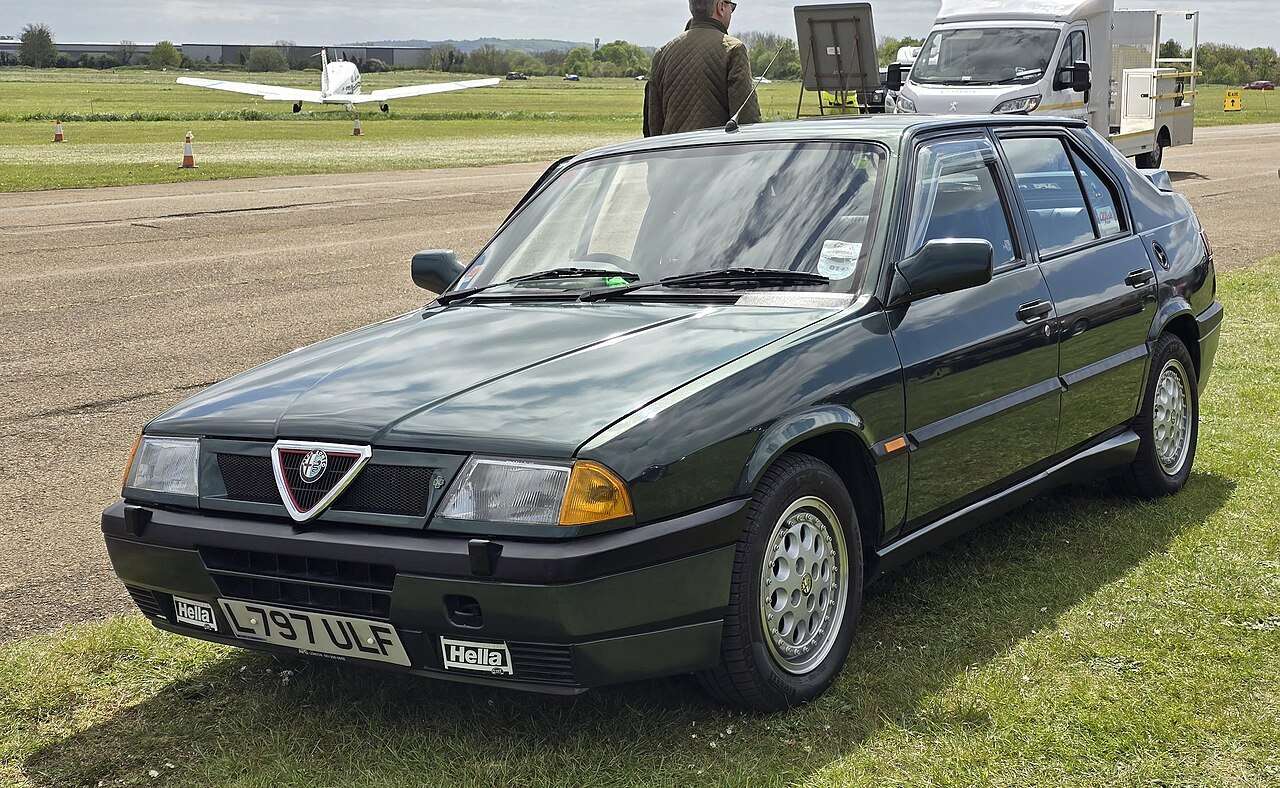
The 33 1.7 16V gave Alfa’s compact hatch a high-revving flat-four and a specification all its own. It is a good place to see how far Alfa developed the boxer idea after the Alfasud.
1. The 33 carried the boxer forward
The compact 33 took over much of the Alfasud’s role and retained the horizontally opposed engine layout. It also had a much more angular body, so the mechanical family resemblance was easier to hear than see.
2. The 16V belongs to the revised 33
The 1.7 16V appeared with the later 33 range. The badge is useful because Alfa also sold 1.7-litre cars with eight valves.
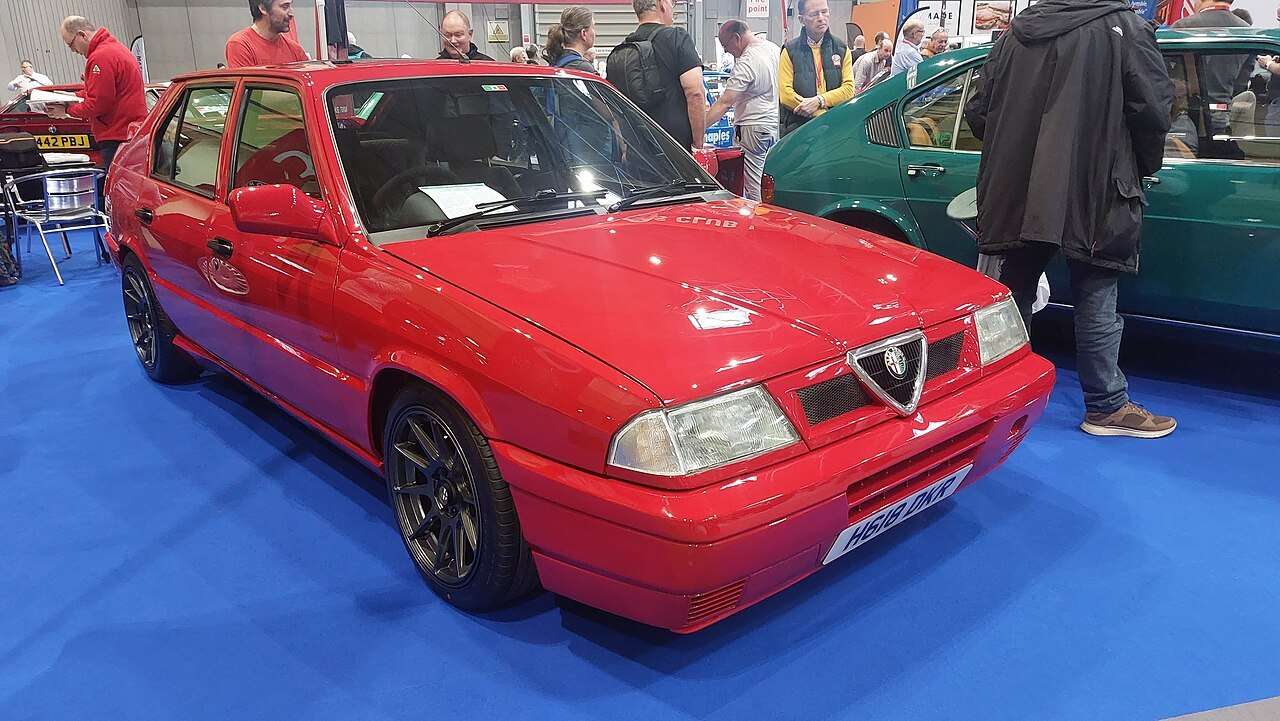
3. Its actual displacement was 1,712 cc
That is the figure in the FIA records. Searching for the capacity as well as the badge helps distinguish the 33’s 1.7 from other engines rounded to the same number.
4. There were four valves per cylinder
Alfa added multi-valve breathing to the flat-four. The result retained two opposing cylinder banks while giving the engine a markedly different top end from the eight-valve 1.7.
Love cars you don’t see every day?
Get forgotten cars, surprising motoring stories and the most interesting finds from Unusual Cars by email.
Free to join. No spam. Unsubscribe whenever you like. See our Privacy Policy.
5. It received FIA homologation in 1990
The FIA lists form 5413 for the Alfa 33 16V 1.7, effective 1 July 1990. Its road-car identification photographs are useful even if the competition paperwork is your only reference.
6. Front drive was the starting point
The familiar 16V hatch drove the front wheels. Alfa also developed four-wheel-drive variants, so all-wheel drive should be treated as a separate specification.
7. Permanent 4 became Q4 in some later material
Those labels identify part of the 33’s four-wheel-drive story. They are worth looking for when an advert only says 1.7 16V and leaves the transmission out of the description.
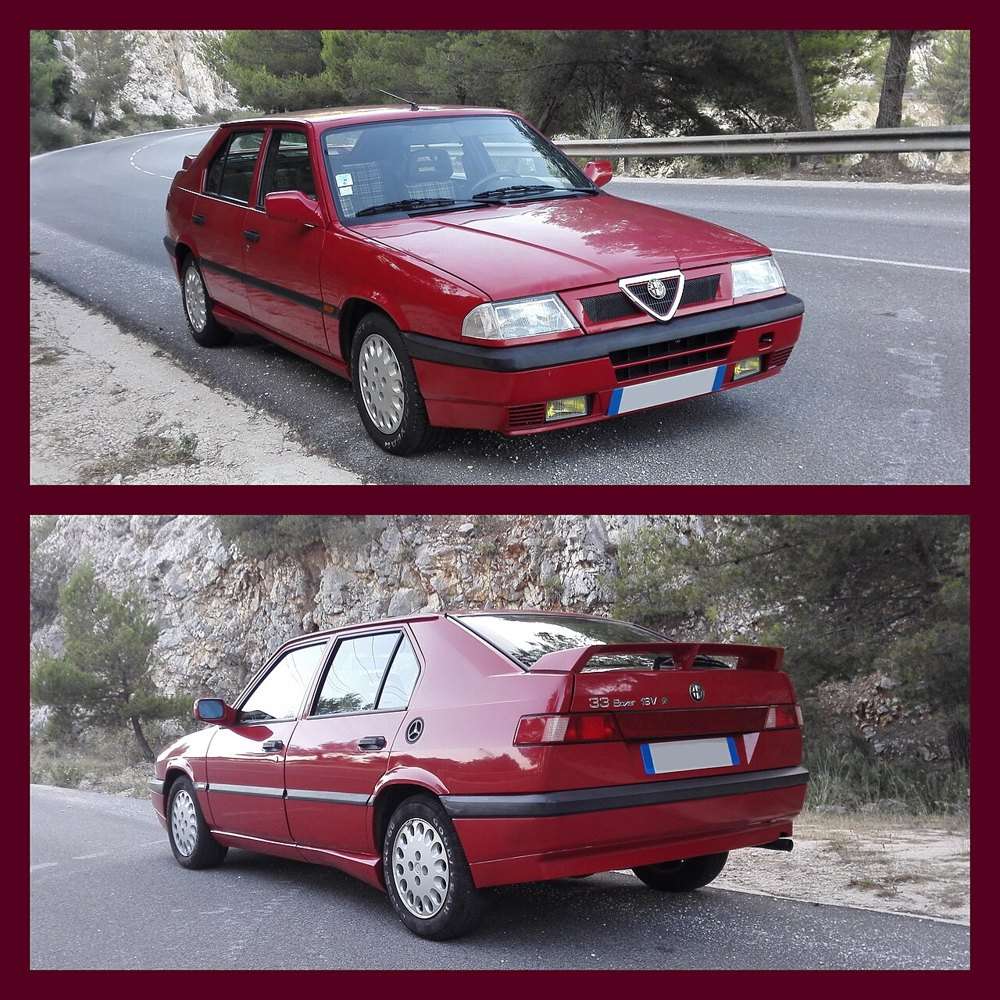
8. The brakes were part of the upgrade
The UK Alfa Romeo Owners Club identifies ventilated discs among the 16V changes. The stronger car was distinguished by more than its cylinder heads and badges.
9. There was a Sportwagon in the wider 33 family
The long-roof car gives the 33 range a different silhouette. Body style, engine and drivetrain are best checked separately before applying a hatchback’s specification to a wagon.
10. It grew up alongside the Arna
The Arna and 33 overlap in Alfa’s factory history, and both drew on the company’s boxer know-how. The 33 carried that engineering into a very different development programme.
10 Things You Probably Didn’t Know About the Nissan Cherry Europe and Alfa Romeo Arna.
Explore more 10 Things articles
Browse the Unusual Cars 10 Things hub.
Sources and further reading
- Alfa Romeo Owners Club 33 register
- FIA Alfa 33 16V 1.7 historic homologation entry
- Alfa Romeo 1983 company report
Featured image: 1993 Alfa Romeo 33 16V. Photo by Calreyn88 via Wikimedia Commons (CC0, resized).
Join the Unusual Cars Club
Get more forgotten performance cars, surprising motoring stories and new 10 Things articles by email.
Free to join. No spam. Unsubscribe whenever you like. See our Privacy Policy.