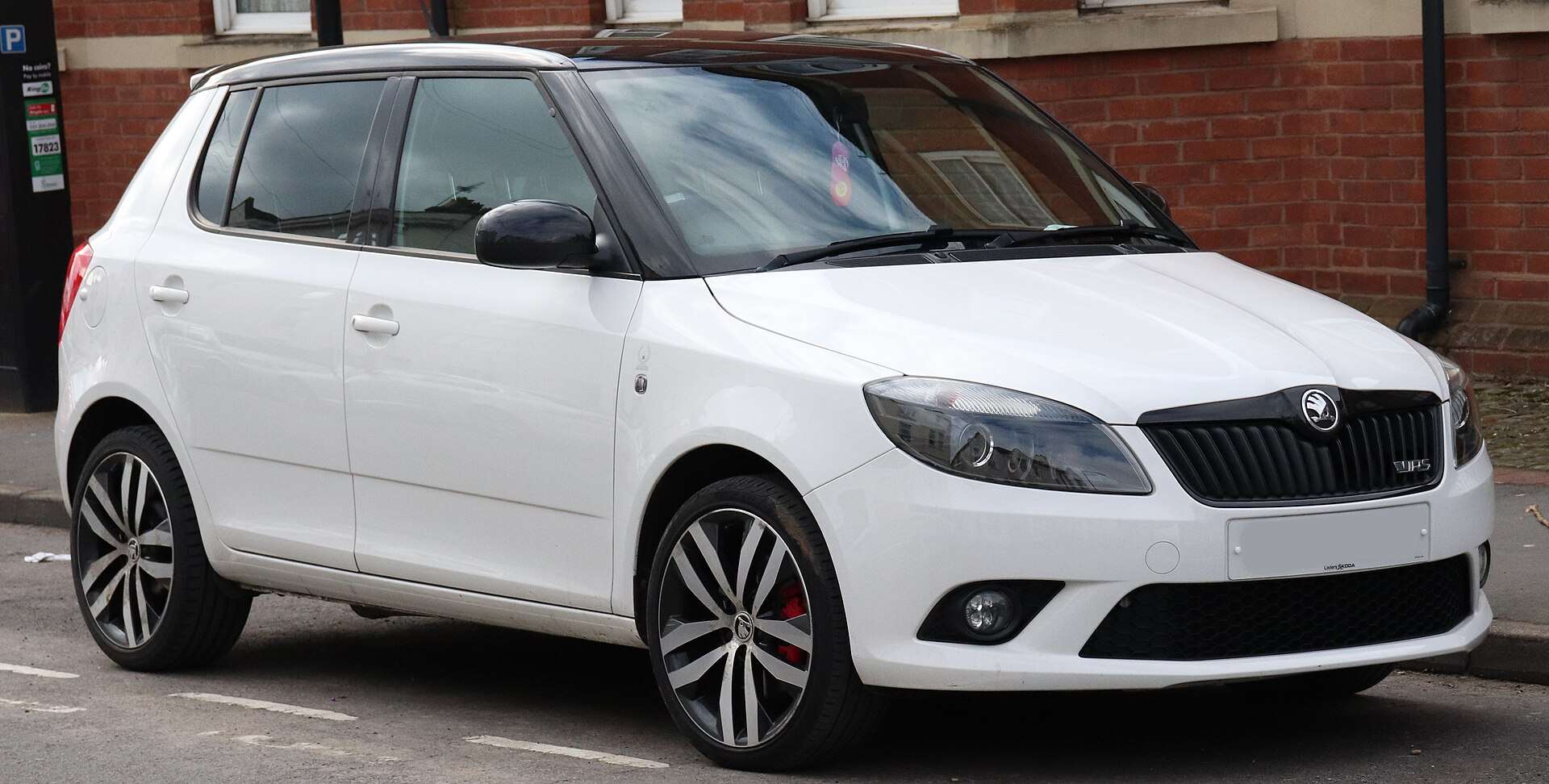
What would you do if a spanner started flashing where your Fabia normally shows its gear number? One owner of a 2014 vRS found a gearbox fault and was quoted £650 for a repair a couple of hundred miles away. Knowing which code the car had stored gave that owner a much better opening question than “How much is a gearbox?” It still left a rather important decision. What had actually been tested before someone proposed the repair?
That is the investment case for a proper scanner on this particular Fabia. The 1.4 TSI vRS combines a supercharger, a turbocharger and a seven-speed double-clutch gearbox in a small hatch or estate. A stumble as you pull away can originate on either side of the connection between engine and wheels. A reader that speaks both languages gives you a fighting chance of paying the right specialist for the right investigation. You can make good use of it even if you never intend to take the engine covers off.
Which Fabia vRS are we talking about?
This is the second-generation petrol vRS sold in the UK around 2010–2014. The earlier vRS diesel is quite a different proposition. Škoda’s period UK Fabia vRS brochure describes the twincharged engine and seven-speed DSG. Give a scanner supplier the actual engine, gearbox and build details. A listing for the ordinary Fabia of the same year can cover engine emissions without demonstrating access to the functions an enthusiast is paying extra for. For the rest of the range see our Fabia Mk2 scanner guide.
Start by describing what you physically see. A service reminder is different from a symbol flashing in the gear display. A steadily illuminated engine lamp is different again. Photograph the instruments with the car safely parked, note the mileage and record whether reverse and forward drive engaged normally. If drive drops out or the car behaves unpredictably, arrange recovery or garage advice. There is little to gain by attempting a long drive to a cheaper repairer before anyone has established that the journey is sensible.
The flashing spanner and P17BF00
In the 2014 Fabia vRS gearbox report, the owner retrieved P17BF00. A published DQ200 diagnostic reference describes P17BF as hydraulic-pump overload protection. The gearbox relies on its control and hydraulic assembly, usually called the mechatronic unit, to operate the transmission. The event tells a specialist to investigate how that system builds and maintains pressure. It does not specify which internal part is responsible, the condition of the friction clutches or what will be found on dismantling.

That historical £650 was an owner’s reported quote. We do not know from the account what that price included or whether the work cured the car. Imagine asking two repairers for current quotes. One prices an exchange assembly and the other quotes for investigating the original one. Before comparing the totals, ask whether each includes diagnosis, removal, any required commissioning and verification on the car. Ask what they will do if measured pressure is satisfactory but the fault recurs. You are much more likely to obtain comparable answers with the original transmission report attached.
A basic reader might show a powertrain code or a transmission-related message. Its ability to open the DSG controller itself is a separate question. A suitable tool should identify the unit, show the full event and preserve any related entries. Ask what pressure data it offers on this particular DQ200. A workshop can compare the pressure reported with the control request and pump behaviour where available, then assess the supply and physical system. A number without its units, vehicle state or specified range is a poor basis for ordering anything.
Another complication from the very same forum member
In an earlier Fabia vRS shudder discussion, the same username described rough idle, an occasional dip of the rev counter and a stutter at light throttle. The engine lamp eventually appeared and their scanner showed P0106. This describes an implausible manifold-pressure or barometric-pressure signal in this context. A generic reader can be quite helpful here. Crucially, the owner had described symptoms while idling as well as while driving, which gives a workshop a productive starting point outside the gearbox.
The accounts appeared months apart. They do not establish that the engine event and the gearbox event shared a cause, or even that every subsequent symptom belonged to the same repair. This is precisely why it pays to keep records over the life of a car. A used vRS can develop two different problems that its driver describes with the word shudder. An old invoice for gearbox work or a previous diagnosis of a misfire can colour the next conversation far more than the new evidence warrants.
P0106 deserves a little thought before buying a pressure sensor. The controller assesses whether the signal makes sense under the prevailing conditions. A damaged connection, an issue with the pressure source or an engine behaving unexpectedly can all complicate that assessment. Preserve the freeze frame and tell the garage if the complaint began immediately after work near the intake or ignition equipment. Several causes were debated in the discussion. The code and the rev-counter observation are the evidence to pass on, without adopting a stranger’s proposed repair as your own diagnosis.
How to make a pressure trace intelligible
Start with the name and units of the channel. Manifold absolute pressure is referenced to a vacuum. A boost gauge may display pressure above the surrounding atmosphere instead. With the engine stationary and the manifold at atmospheric pressure, these two displays can give very different numbers while both are correct. A reader that labels a graph merely “boost” makes comparisons unnecessarily difficult. Keep the label and scale in your export, especially if you are asking somebody who was not present to assess the result.
On the vRS, charging the intake involves both a mechanically driven supercharger and an exhaust-driven turbocharger. The transition between their contributions changes with engine operation. A sound at one speed and a flat spot at another do not identify either unit by themselves. If supported, record requested and actual pressure with engine speed, load and throttle position. A workshop can decide whether those channels and any available control information match what the engine should have been doing. There is no advantage in demanding maximum boost on a public road to gather an example.
One particularly useful distinction is between a demand that falls and an actual pressure that fails to follow a steady demand. In the first case the engine may deliberately have reduced the torque it wants. In the second, the technician has reason to investigate how the system responds to a request. Neither pattern identifies the failed part on its own. Align the time axes before comparing two plots. Two screenshots taken several seconds apart in a rapidly changing acceleration event can make an entirely healthy response look late.
Misfire, rough idle and the cost of buying four of everything
If the scanner records a cylinder-specific misfire such as P0301, it identifies the cylinder on which a misfire was detected. It cannot tell you by itself that the coil on cylinder one failed. The Ross-Tech P0301 reference lists several lines of investigation. This is an illustrative engine code rather than an extra entry claimed for the P0106 car. Individual cylinder counters, if the ECU and tool expose them, are especially useful when the fault appears briefly during a cold start and the engine runs smoothly by the appointment.
Like our guides and unusual cars?
Get forgotten finds, useful motoring content and the most interesting car stuff from us by email.
Free to join. No spam. Unsubscribe whenever you like. See our privacy policy.
Record whether the engine actually shook while the car stood still, whether the exhaust note changed and which cylinders accumulated events over the same interval. Note recent plugs, coils or other work, including the date and mileage. A new part on an invoice gives a technician a lead about what has been disturbed. It does not prove that part is correct or that the new symptom has the same cause. If a proposed repair involves replacing several components, ask what evidence points to them collectively rather than to one cylinder or a shared supply.
There is a physical side to this, too. If the car uses oil, keep a measured record of how much was added and over what distance, following the handbook’s method. A scanner cannot measure ring sealing, confirm compression or tell you where oil has gone. A proper mechanical test can become better value than another round of plugs if the same cylinder repeatedly misfires. Conversely, spending heavily on an engine investigation just because this model has a reputation is premature. Let your car’s repeatable symptoms and test results determine the direction.
Reading the gearbox without resetting its history
A seller may describe a transmission as having been “reset” or “relearned”. Ask precisely what was done and why. Reading and saving a fault takes a snapshot of history. Clearing the memory removes some of that history. Performing a basic setting actively changes how the unit learns or operates under specified conditions. Those are different jobs. If the current complaint is a repeat loss of drive, an unaltered record of what the DSG experienced is worth considerably more to a specialist than a fresh screen full of green ticks.
For a slow manoeuvring complaint, note whether it occurs in reverse, forward or both, on level ground or a slope, cold or hot. Record which gear the display indicated and whether the engine flared without a corresponding increase in road speed. These ordinary observations are valuable on a dual-clutch car. They help the garage decide whether to examine clutch engagement, hydraulic control or engine torque delivery. Resist the temptation to reproduce a severe fault on a hill. The specialist can choose a controlled and safe way to collect moving data.
A dual-clutch gearbox uses friction clutches and has a hydraulic control system. Money spent repairing one does not automatically address wear in the other. A report that shows pressure-related events is a good reason to ask for a pressure diagnosis. A clutch judder with no pressure events may need a different assessment. Ask how the garage will check engagement after any repair and which conditions it needs the car to be in. Agree on an outcome you can recognise when collecting it, such as reliable selection from cold followed by normal operation at temperature.
When the car cuts power because a wheel lost grip
A quick front-wheel-drive hatch on a wet surface can bring the stability system into the story. A brief traction intervention accompanied by the appropriate dash indication feels quite different when you know what the car was doing. If an ABS or stability warning persists, read the brake controller and record the full entry. Compare wheel-speed channels if supported, using a technician for any moving test. An implausible signal from a corner can affect more than one function that relies on knowing how fast the car is travelling.
A code naming a wheel gives the garage a location to investigate. The signal depends on the sensor, its target and the electrical path back to the controller. Also inspect actual tyre condition, pressures and sizes. A graph cannot show a damaged sidewall or establish that a replacement tyre is suitable. When explaining a hesitation, mention the road surface and the warning indication as well as what the gearbox did. That single detail may save a technician a considerable time chasing a torque interruption that the traction system requested legitimately.
Before buying a used vRS
Ask permission for a read-only scan and keep the report in its original form. Start with engine, transmission and brakes, followed by the other fitted modules. Note the mileage at which each event was recorded if the tool supplies it. Check that the engine and gearbox identities make sense for the vehicle and ask about modifications. Software changes and non-standard intake equipment can affect how a specialist interprets a pressure trace. They are useful background even if the seller believes the car is now entirely standard.
Compare the scan with a cold start and the service records. An engine that was already warmed up when you arrived may be perfectly sound, but you have lost the opportunity to observe its behaviour from cold. A DSG that selects drive in a car park has passed one simple test. It has not demonstrated every change under all conditions. At the other extreme, a historical code from before documented repairs is not a verdict on today’s car. Ask the seller to account for its date and let an independent specialist assess unresolved evidence.
Choosing the reader and making the cost comparison
Look for a tool that can identify the DQ200, read Škoda engine and ABS electronics, retain the full code and export useful measured values. The iCarsoft VAWS V3 compatibility sheet is a starting point for the Fabia model range. A model name alone does not guarantee access to a particular pressure channel, basic setting or software version. Use the affiliate search to find the product, then ask the seller to demonstrate the specific job. A VAG specialist with appropriate diagnostic equipment is a sensible comparison when the car already has an active transmission fault.
Here is a fair question to put to two scanner sellers. If this Fabia stored P17BF00 in the transmission and P0106 in the engine, would your report show the source of each code, the conditions stored with it and which was current? Could I send the report to a garage without lending it the handset? Ask as well whether the functions you need require an ongoing subscription. That is a better purchasing test than counting service icons, most of which a home owner may never have reason to open.
For a one-off problem, paying a specialist buys interpretation and physical testing alongside access to the car. For somebody keeping a vRS for several years, owning the reader means you can catch a transient event on a Sunday morning and still go to the right specialist on Monday. Its value increases if another garage maintains the engine and the gearbox goes to a transmission specialist. Each can see what the other system recorded without relying on a recollection of which warning flashed months earlier.
At collection, keep the job sheet, the original scan and any after-repair report together. Make a note of the mileage and which symptom was reproduced. A workshop may legitimately need more than one drive cycle before it can say a monitor has run again. If the original complaint took weeks to appear, say so when assessing the result. A dated account of a successful repair becomes part of the car’s value to you, especially when the next warning feels familiar but has a completely different cause.
For the owner facing that flashing spanner, the most economical first move is to send the gearbox specialist the complete record and ask what can be established before the car travels. For the owner facing rough idle, the better starting point is the engine freeze frame and the recent work history. Making those two appointments for the right reasons is a practical return on the price of a scanner.
Browse all Škoda diagnostic scanner guides
Photograph by Vauxford, via Wikimedia Commons, licensed under CC BY-SA 4.0.
Like our guides and unusual cars?
Get forgotten finds, useful motoring content and the most interesting car stuff from us by email.
Free to join. No spam. Unsubscribe whenever you like. See our privacy policy.