Six journeys. That was roughly how long it took an airbag warning to reappear after a dealer cleared it on one fourth-generation Superb. The car had covered only about 8,000 miles. Later, a replacement sensor appeared to have succeeded through about twelve test journeys, yet the lamp came back again. It is easy to see why an owner might want a scanner even when the repairs are being dealt with under warranty. Being able to say exactly what returned, when it happened and whether it was the same event can change the next appointment.
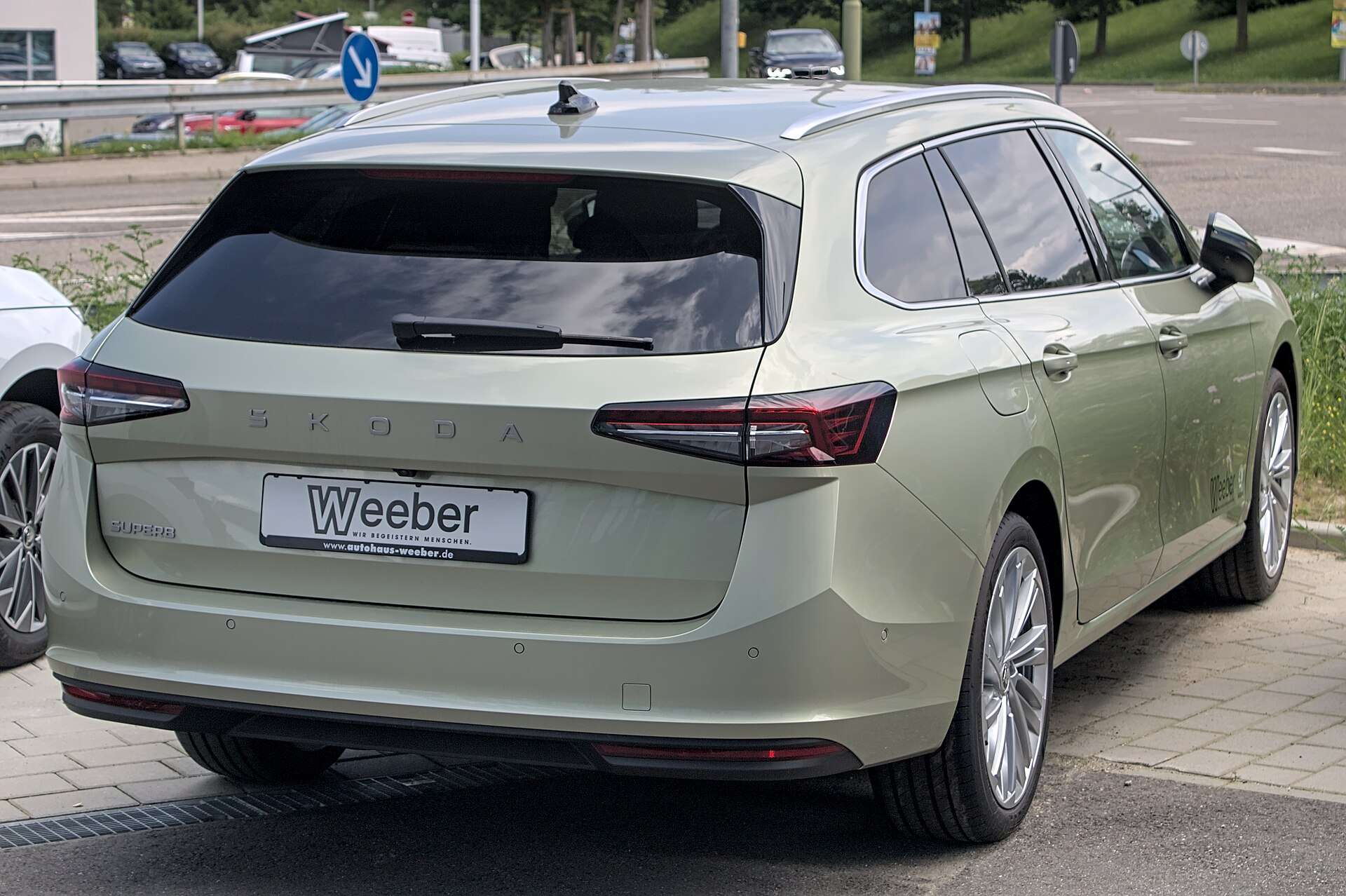
This guide is for the Superb Mk4, type NZ, introduced to UK buyers in 2024. It covers how to choose a reader for the car as a whole, from a petrol or diesel engine warning to the assistance systems, cabin electronics and electrified drivetrains. If your Superb is the earlier type 3V, start with our Mk3 Superb guide. And check that an advert saying “Superb IV” means the fourth generation. The similar-looking iV badge on an older Superb identifies a plug-in hybrid, which has caused plenty of confusion in parts and scanner searches.
What has changed for the person buying a scanner?
Škoda’s fourth-generation Superb press kit sets out the range. There are conventional petrol and diesel versions, a 1.5 mild hybrid and a new plug-in hybrid drive. Powertrain, equipment and market affect the electronics you should expect to find. A diesel owner may want exhaust and gearbox data. A mild-hybrid owner may want a record of what happened when the car woke after several days parked. Someone buying the plug-in may need to distinguish AC charging behaviour from what happens on DC equipment.
The age of the platform matters just as much as the powertrain. OBDeleven’s own Škoda coverage advice says security measures on newer vehicles from 2024 can restrict advanced access, including full scans on affected cars, even when the tool can communicate with the gateway. That gateway is the unit through which other parts of the network can be reached. Connecting to it is a useful first step. It does not establish that every control unit behind it supplied a readable report. Ask for the specific results on an NZ before you spend the extra money.

The recurring airbag warning and the missing detail
In the September 2024 Superb owner’s account, the driver was told the event concerned a crash sensor. The actual numeric code was not supplied. The owner described several workshop interventions, including moving sensors for comparison and later replacing a bumper sensor. The warning returned. What matters to another owner is the information missing between those visits. Did the very same controller identify the same sensor, with the same failure detail, on every occasion? A lit airbag symbol cannot answer that question.
A scan with confirmed restraint-system coverage may allow you to retain the original wording and the exact control unit before delivery to the dealer. Ask for a copy of the garage’s own diagnostic record if your tool cannot read it. An event reporting interrupted communication and one reporting a signal outside its expected range could look identical from the driver’s seat. Once you have the two reports, ask whether the fault moved with the component the technician tested or remained associated with its original position. That distinction is worth more than another unsuccessful reset.
The restraint system is safety equipment. Take an active warning seriously, follow the handbook and arrange qualified attention. Keep home work to documenting the warning and obtaining a read-only report when appropriate. Do not probe, unplug or swap restraint components, attempt to clear crash data or use an empty engine-code screen to infer that the airbags are available. An owner can make an important contribution to diagnosis without touching a connector. The simple diary of how many normal journeys elapsed was among the most valuable details in the published case.
A flat twelve-volt battery on a mild-hybrid Superb
In a separate Superb battery discharge discussion, one contributor specifically identified a model-year 2024 1.5 TSI mild hybrid. They reported the ordinary battery had been replaced after the car was found flat, and they also described an issue with seat functions during warranty investigation. The thread contains contributions from several people and questions about different generations. It would be a mistake to present another contributor’s software update as the proven cure for this particular mild hybrid. The verified detail is the owner’s combination of symptoms and workshop history.
A twelve-volt battery can lose charge because its capacity has fallen, because it is not being replenished adequately or because something continues to draw current when the car is parked. The same warning is possible in all three situations. Ask the workshop how it tested the battery and its supply, how long the car had been parked and whether it checked the car after its systems had time to settle. A reader can show voltage observed by a controller, sometimes alongside a stored event. It cannot reconstruct a night’s current draw from one healthy reading at lunchtime.
There is a practical catch with home diagnosis. Opening a door, unlocking the car, interacting with equipment or leaving a scan running can wake systems that would otherwise go to sleep. If the complaint is a parked discharge, write down when you last used the car, when it was unlocked and what you saw before connecting anything. Let the technician choose a proper undisturbed measurement. Repeatedly opening the car every few minutes to check whether it is asleep changes the very condition you want to investigate.
For an electrified version, distinguish the ordinary low-voltage supply from the mild-hybrid or traction system in the booking note. “Hybrid battery flat” can describe a guess rather than a finding. Include the actual message, whether the car reached its usual ready state and any scan entries shared across several units. If a new twelve-volt battery is proposed, ask how its specification, condition and charging behaviour were checked and what will establish that the original cause has been removed. A battery invoice documents the work, while a repeat test documents the result.
What a diesel or petrol engine reader still does well
On an engine warning, a generic EOBD reader can provide a useful first report. Take P0087 as an example. It means the monitored fuel rail or system pressure was too low. The P0087 code reference describes that distinction. This is a worked engine-code example, separate from the owner reports above. It describes the condition observed, without identifying a failed high-pressure pump. Save the original entry and its freeze frame. Engine speed, load and temperature may show whether the event occurred trying to start the engine or under demand, two conditions a technician approaches differently.
An enhanced system can add engine-specific values such as pressure request and measured pressure where supported. Imagine the request remaining steady and the measured value falling away. Now imagine the request and measurement dropping together during an intervention. Identical-looking numbers in a single snapshot could come from either sequence. A short synchronised trace is often more helpful than a screen packed with unrelated channels. Testing fuel delivery or high-pressure components is workshop work; you can provide the context without opening a fuel line.
Like our guides and unusual cars?
Get forgotten finds, useful motoring content and the most interesting car stuff from us by email.
Free to join. No spam. Unsubscribe whenever you like. See our privacy policy.
A TDI adds particulate-filter monitoring. If the driver sees a filter warning, ask the garage what the engine actually recorded, whether the pressure measurement was credible and what the loading and regeneration history show on that engine. A service menu labelled DPF does not establish the cause of a restriction or make a forced regeneration appropriate. Look for a report that retains the values, units and test conditions. The technician can decide whether the next job is a sensor check, engine investigation or filter assessment before anybody commits to an expensive clean.
What an air-conditioning code can save you
There is a more unusual example in the OBDeleven catalogue entry for the 2024 Superb. B109E refers to the air-conditioning compressor’s first run not having been performed. In plain English, the climate electronics may be waiting for a commissioning step after certain work. This is a documented tool example. It is not a fault attributed to the airbag or battery cases, and the catalogue entry on its own does not prove that every 2024 Superb supports that app or needs that procedure.
Suppose the cooling stopped immediately after a control module was replaced. The fact that it worked before the job and that the climate unit now has a commissioning-related entry is a meaningful lead. Ask whether the correct unit was identified and its prescribed setup completed. Contrast that with cooling fading gradually during otherwise normal service. The workshop may reasonably want to test the refrigerant circuit, sensor values and compressor permissions. Two cars can blow equally warm air and deserve very different first estimates.
A generic engine scan leaves much of this conversation out. A Škoda-capable tool should tell you whether it reached climate control and what fault detail it received. Ask for the stored conditions and whether the car is requesting compressor operation. Physical refrigerant work and commissioning should follow the procedure for the precise drivetrain. The best saving may be avoiding the cost of replacing a compressor before anyone has established whether the car has even permitted it to run. A successful reset message alone is not a cooling performance test.
A new windscreen, a camera warning and the cost of calibration
The Mk4’s driver-assistance electronics offer a particularly concrete way to compare tool claims. A Hella Gutmann front-camera coverage list names the Superb NZ from 2024 and specifies a security-management prerequisite for the workshop equipment. It also distinguishes static and dynamic calibration capability. This is evidence about a professional system and specified equipment. It cannot be carried across to a handheld reader simply because both products list Škoda on the box.
If an assistance warning starts after glass or body work, record precisely which feature is unavailable and when. Was the warning present as soon as the car was collected? Does it occur only with an obscured screen or in clear conditions as well? Obtain the bodyshop or glass fitter’s job sheet and any calibration record. A camera physically mounted correctly, one awaiting a required procedure and one reporting missing data from another system are different diagnostic questions. Ask the technician which applies to the fitted system and how they established that.
Do not adjust a radar or camera bracket or try to provoke an automatic stop to evaluate the repair. Assume the indicated assistance is unavailable and follow the vehicle’s instructions. A compatible scanner’s owner-level value is identifying the reporting system and collecting evidence before the fault disappears. Calibration needs the right equipment and vehicle conditions. If the workshop charges for it, request the before and after result and a description of what required the procedure. Those records are useful if another warning appears after the next windscreen replacement.
Software, infotainment and the occasional blank screen
A blank screen is inconvenient in a car with so many functions in the centre display. It can also conceal useful distinctions. Did the instruments remain visible? Could you hear the radio, adjust the fan or use a physical control? Was it a specific phone connection that stopped, or did the vehicle’s own menus disappear? Take a photograph while parked, record the time since start-up and tell the garage whether the screen recovered on its own. A reset immediately after the first symptom can wipe out an opportunity to observe its pattern.
A manufacturer-aware scan can identify responding modules and their software versions where access permits it. A changed version is useful evidence that an update was carried out. It does not establish that the update addressed every symptom or that an older vehicle with similar behaviour needs the same software. The dealer can check applicable actions against the individual VIN. Keep its job sheet together with the scan and record the date of the first recurrence, if any. That makes a return appointment much easier to distinguish from an entirely new complaint.
For a plug-in Superb, specify the charging test
The fourth-generation plug-in has capabilities that differ from the previous 1.4 iV, including DC charging as described by Škoda. A successful AC session and a successful DC session exercise different parts of the charging chain. If the owner reports failure on one type, state which type and where it happened. Include the starting percentage, charge limit, timing settings, energy delivered and whether the session failed before it began or ended early. An app reporting the car was connected is a smaller claim than a bill showing energy actually delivered.
If a retailer says its scanner covers the Superb hybrid, ask for a report from the current plug-in and the charging or battery unit you need. If the actual car is the mild hybrid, a plug-in charging menu is irrelevant to your complaint. Leave high-voltage work to a qualified technician. A reader that can identify both vehicle configuration and controller state has already helped prevent an expensive misunderstanding, even when it cannot carry out the eventual repair. That discriminating ability is a better reason to pay a premium than a long feature list.
What to buy, and when to use the warranty instead
The iCarsoft VAWS V3 Škoda model list is an older coverage sheet and cannot establish Mk4 NZ support. Use the affiliate search as a starting point, then ask for confirmation in writing for your precise build and software. Give the seller three jobs to demonstrate: read the full restraint-system entry, identify the assistance controller, and export low-voltage event detail if the car stored it. Add engine or charging measurements to match the drivetrain. An answer limited to clearing the engine lamp leaves most of the reason for buying the tool unanswered.
For a relatively new car already booked in under warranty, ask the dealer for its report first. It may provide more useful information than buying a handset to investigate one fault. For a car you intend to keep beyond warranty, collecting time-stamped evidence at home can save repeat appointments, especially when the warning comes back only after several normal journeys. Compare how easily readers export a file, whether you retain access without an active subscription and how the supplier handles changes to security and model coverage.
For a family sharing the Superb, keep the report somewhere both drivers can reach it. A short description from the driver who actually saw the message is worth keeping alongside the fault memory, particularly when the other driver takes the vehicle to the appointment.
Before collection, agree what would constitute a verified repair of the original complaint. For the repeated airbag warning, the history is measured in journeys. For battery discharge, the comparison is time parked and behaviour on wake-up. For assistance or climate faults, the relevant evidence may be a calibration record or a successful functional check. These distinctions turn a vague request to “check the electrics” into a job you and the workshop can both recognise as complete. That is where a scanner can earn its place in a Mk4 Superb owner’s toolkit.
Browse all Škoda diagnostic scanner guides
Photograph by Alexander-93, via Wikimedia Commons, licensed under CC BY-SA 4.0.
Like our guides and unusual cars?
Get forgotten finds, useful motoring content and the most interesting car stuff from us by email.
Free to join. No spam. Unsubscribe whenever you like. See our privacy policy.