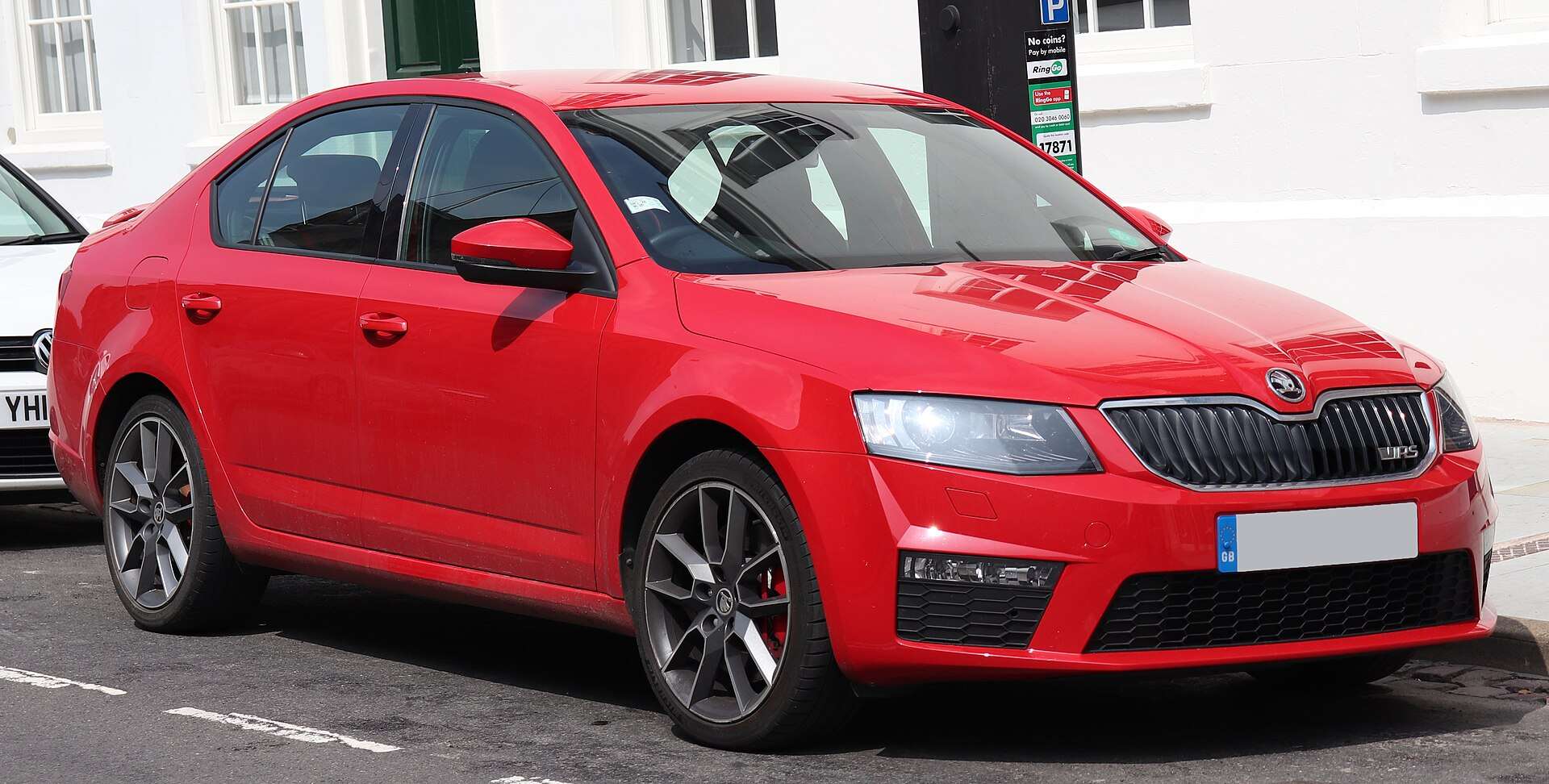
If your diesel Octavia vRS still pulls cleanly but the engine light comes on, would you agree to a new particulate filter? One Mk3 owner had just that combination of a warning light and apparently normal performance. The car had recorded three faults. Two were intermittent pressure-sensor faults. The one that actually switched on the light concerned a different part of the emissions system. That detail makes quite a difference when somebody is about to spend your money.
A basic OBD2 reader can certainly be useful on the 184 PS diesel. A Škoda-aware scanner earns its keep when you need to know which test failed, under what conditions, or what the gearbox and brakes recorded at the same time. Think of it as an investment in the next decision. You might still pay a specialist for diagnosis, but you can book the right investigation, bring evidence of a fault that comes and goes, and ask what supports the proposed repair. Here is how that works on the third-generation Octavia vRS TDI.
Identify the TDI 184 before choosing a scanner
Start with the car in front of you. The Mk3 diesel vRS has a 2.0-litre common-rail engine rated at 135 kW, usually described in the UK as the TDI 184. A report might identify the engine as CUNA, as in the first case below. Another car may have a different engine code. Take yours from the vehicle data or engine controller identification. Save the gearbox identification and note whether the car drives two or four wheels. These details are worth more to a tool supplier than the registration year on its own.
For example, Škoda’s 2016 technical sheet for the four-wheel-drive RS specifies a six-speed DSG with wet clutches and 380 Nm of engine torque. That sheet describes a particular configuration. A front-wheel-drive manual owner has no reason to pay extra for rear coupling tests, while somebody buying a 4×4 DSG has two expensive systems to ask a scanner vendor about. Check which car a supplier used to demonstrate its coverage, particularly if an online listing groups several Octavia generations under one heading. Škoda Octavia RS 4×4 technical specifications.
The body shape is less important here than the powertrain. Hatch and estate owners can use the same questions when they share the relevant engine and controller. Readers comparing the different versions before buying will find the model history and ownership checks in our Mk3 Octavia vRS buying guide. For an earlier diesel, our Mk2 TDI 170 guide covers the PD and common-rail cars. The Mk3 vRS 230 and 245 guide covers the petrol cars and their different diagnostic priorities.

P0470, P2452 and P2000 on one CUNA engine
In a facelift Octavia vRS diesel owner’s VCDS report, the engine controller identified itself as CUNA. It recorded P0470 against exhaust pressure sensor 1, P2452 against the particulate-filter differential-pressure sensor circuit and P2000 against the bank-one NOx catalyst or trap. What matters most is one line beneath each entry. Both pressure faults were intermittent and unconfirmed. P2000 was confirmed and had requested the warning lamp. The car was driving normally when the owner asked for advice.
It helps to translate the three observations into workshop questions. Was the first pressure signal trustworthy? Was there an electrical interruption in the circuit used to measure pressure difference across the filter? And when the engine evaluated its NOx trap, why did the result fall below the expected efficiency? The report does not establish that all three arose on the same journey or that one caused the other two. Ordering a DPF because the printout contains the words particulate filter would leave all three questions unanswered.
There was more to read in the freeze frame attached to the confirmed fault. The engine was running at 1,559 rpm, road speed was 55 km/h and coolant temperature was 91°C. A freeze frame is a snapshot of the conditions a controller preserved when it recognised a problem. Here it places the recorded event in a moving, warmed-up car. An idle check outside the garage the next morning may give useful baseline information, but it cannot establish how the NOx monitor behaved in those earlier conditions.
The owner later reported clearing the codes and covering another 400–500 km without the light returning. That is the published outcome. There is no confirmed sensor, filter or catalyst replacement in the account. If it were your car, keep the first report and compare it with the next scan. Which monitors have completed since the clear? Is either pressure fault now pending again? A quiet dashboard has much more meaning when you know the system has had an opportunity to run the test that previously failed.
What a pressure reading can tell you about the DPF
Think of trying to breathe through a filter. The pressure needed to push air through depends both on the restriction and on how much air is flowing. Exhaust pressure behaves similarly. A DPF pressure reading taken at warm idle and one taken under load can be different on a healthy car. A useful log therefore includes engine speed or load, differential pressure with its units, and the circumstances of the reading. With that context a technician can compare like with like and decide whether a physical test is justified.
P2452 makes the electrical side especially important. The Ross-Tech P2452 reference lists the fuse, wiring, connector and pressure sensor among the checks for the relevant circuit. It does not identify the failed component on the featured Octavia. A technician can verify the correct sensor for the engine, examine its pressure connections and compare the scan reading with a known input. If the circuit is unreliable, using its output as the main argument for a replacement DPF risks charging the owner for the measuring error as well as for the filter.
An owner can make the evidence clearer without disconnecting anything. Record the engine-off reading with ignition on if the tool supports it, then save a reading at a settled idle. Note whether the engine is cold or warm and whether regeneration is active. At rest with no exhaust flow, a substantial sustained pressure difference merits checking the baseline. Exact limits depend on the fitted system. A display that says zero in every condition also warrants investigation, particularly if the app gives no indication that the channel is supported.
Check the units before sharing a screenshot. A kilopascal equals ten millibars. Someone comparing a value of five on one device with fifty on another may be looking at exactly the same pressure. Also distinguish differential pressure from an absolute exhaust-pressure reading. One measures a difference between two points, the other uses a different reference. Similar names in a long app menu can make a comparison look convincing even when you have selected the wrong channel. Keep the original labels in the file you send to the garage.
When two apps show the same impossible readings
A second Mk3 TDI vRS owner’s account illustrates a different problem. Two diagnostic applications showed negative soot values, exhaust temperatures stuck at zero and a differential-pressure figure that varied widely while the engine state appeared unchanged. It would have been easy to interpret the reported ash figure alone as a reason to buy a filter. Taken together, the readings raised a more useful question: could the owner trust the information the engine computer was supplying to either app?
Like our guides and unusual cars?
Get forgotten finds, useful motoring content and the most interesting car stuff from us by email.
Free to join. No spam. Unsubscribe whenever you like. See our privacy policy.
The follow-up changes how this case should be read. After a workshop inspection, the owner reported that the EGR had been deleted, the DPF was suspected of having been hollowed out, and the ECU software had been altered. The condition of the filter was described as probable. The owner did not publish a physical inspection proving every detail or a repair outcome for the transmission. Two apps agreeing is hardly independent confirmation of a healthy exhaust when both are asking the same controller for its version of events.
For a buyer, the practical lesson is to look for relationships. On a fully warm drive, have the exhaust temperature channels responded to the engine warming up? Has the distance since regeneration advanced plausibly? Does the pressure move with exhaust flow? An unsupported channel, an unsuitable profile or a fault can all produce odd data. None of those observations alone proves somebody has changed the software. A combination that contradicts the physical operation of the car gives you a reason to pause and commission an independent inspection.
The money decision here is different from the first owner’s. On the first car, a saved scan and follow-up monitoring made sense because performance was normal and the warning stayed out for the reported period. On the second car, a workshop needed to establish what equipment and software were actually present before standard filter calculations could be trusted. If you are viewing a used vRS and the seller cannot account for those discrepancies, a specialist inspection before purchase is more informative than trying another app on the forecourt.
Which DSG fault should you take seriously first?
That second report also listed intermittent P072C00 and P072D00 for being stuck in first and second gear, further entries for other gears, and P174A00 and P174E00 concerning valve electrical faults in the two transmission sections. A standard engine-only scan would leave out much of that story. The owner did not establish that six gears had mechanically failed. A full report allows a transmission specialist to ask when the faults occurred, which ones remain active and how the gearbox actually behaves now.
Suppose a DSG-equipped vRS hesitates when you pull away. Did engine speed rise while road speed barely changed, did the engine itself stop responding, or did the traction light flash? Did it happen during a shift or with the gear already engaged? Write down what you noticed. If the box has selected the expected gear and the engine has deliberately reduced torque, the driver can feel a pause that resembles a missed shift. Engine and transmission information gathered together can justify a very different first hour of diagnosis.
On a suitable tool, look for transmission identification, fault status, supply information and supported readings such as selected gear and oil temperature. A garage may also compare input and output speed or actuator data during an appropriate test. An occasional speed difference during clutch engagement needs interpretation in the context of the manoeuvre. Ask which observation points to a clutch, wiring issue or hydraulic problem. Erasing adaptations changes learned settings and loses part of the original picture. It is a poor opening move when the fault itself has yet to be established.
What the rear coupling and ABS add on a 4×4
A diesel vRS 4×4 can develop engine torque and shift gears while the rear axle contributes less than expected. Start by verifying that the scanner reached the AWD controller and identifying it in the report. A blank box in the generic engine menu tells you nothing about rear assistance. If the vehicle is front-wheel drive, the absence of this controller is entirely expected. Distinguishing equipment the car lacks from equipment the tool failed to reach is one reason to keep a healthy baseline scan.
The brake controller can add a second piece of evidence. Individual wheel speeds may show whether one corner repeatedly disagrees with the other three. The generic vehicle-speed figure usually shown in the engine menu cannot localise that discrepancy. If an AWD-equipped car has begun to spin its front tyres on a familiar loose surface, note tyre sizes, pressures, recent wheel or bearing work and any stored ABS or coupling faults. Leave any attempt to provoke a loss of grip out of the investigation. A specialist can test the system under controlled conditions.
When a scanner reaches the limit of what it can measure
A third owner described a 2016 CUNA vRS bought at about 145,000 miles. Engine warnings, limp mode and repeated oil top-ups led to investigations. The owner reported a bill of around £3,000 covering several exhaust temperature and pressure sensors, the EGR cooler and the DPF. A missing gasket near the turbo was reported to have allowed oil to escape. That figure is one person’s account of a sequence of repairs. It does not establish that the parts were unnecessary or predict the bill on another TDI 184. The 2016 vRS owner’s repair account.
This is a good reason to keep two records. For the emissions complaint, save fault status, temperatures, pressure and regeneration history. For oil loss, record the amount actually added, the odometer reading and the conditions under which the level was checked, following the handbook. A scanner cannot see oil escaping at a gasket. Nor does an occasional top-up by itself prove internal engine wear. A workshop that can match a measured oil loss to a physical source has stronger grounds for a repair than one relying on a general reputation for oil consumption.
If a garage quotes for a DPF, ask what it found. Was the filter physically restricted under a documented test, was there a problem with its condition, or was the conclusion based mainly on a calculated quantity? Soot can be burnt during regeneration. Ash remains and accumulates over time. A pressure sensor or temperature fault can complicate how the engine manages regeneration. A forced regeneration involves high temperatures and defined preconditions. Leave that decision to the technician who can verify the loading, sensor data and procedure for your engine.
What to buy and what to save on the first scan
For a single engine light, start with the information your existing reader can retrieve. Can it show pending and confirmed codes, a freeze frame and readiness status? For a TDI 184 you intend to keep, ask a supplier to demonstrate a vehicle-wide report and named diesel measurements on the correct engine. Prioritise DPF differential pressure, soot estimates, exhaust temperatures and regeneration status. Add the transmission on DSG cars and the AWD controller on four-wheel-drive cars. The iCarsoft VAWS V3 product and coverage page is a starting point for checking the particular model, software and year before buying.
One inexpensive test of a new reader is to export a short report and open it on another device. Can you still tell which module supplied the measurement, what units it used and whether the fault was intermittent or current? Does a graph survive export, or do you need to save a screenshot while the car is connected? Discovering that on a healthy Sunday morning is much better than finding out after a rare warning has disappeared. Name the file with the date and mileage so a garage can match it to an invoice later.
For a car you are viewing, ask permission to read the fault memories before and after an ordinary accompanied drive. Leave them intact. If the seller presents a clean printout, compare its date with the latest work and check whether the car has since completed the relevant emissions tests. A recent battery interruption or a repair can explain an incomplete monitor. It is a prompt for a question, not proof of a concealed fault. A dated second report after normal use is more persuasive than another press of the clear button.
If there is a repair quotation on the table, ask the technician to complete one sentence: the car recorded this fault, we tested this part under these conditions, and this result justifies replacing it. On one Octavia that might mean investigating an intermittent pressure circuit and waiting for a monitor to complete. On another it might mean a transmission test, a physical check of the exhaust or tracing an oil leak. Those very different outcomes are what give a Škoda-specific reader its value on the vRS diesel. It helps you spend money on the fault your car actually has.
Browse all Škoda diagnostic scanner guides
2015 Octavia vRS 2.0 TDI photographed by Vauxford. Original photograph on Wikimedia Commons, CC BY-SA 4.0.
Like our guides and unusual cars?
Get forgotten finds, useful motoring content and the most interesting car stuff from us by email.
Free to join. No spam. Unsubscribe whenever you like. See our privacy policy.