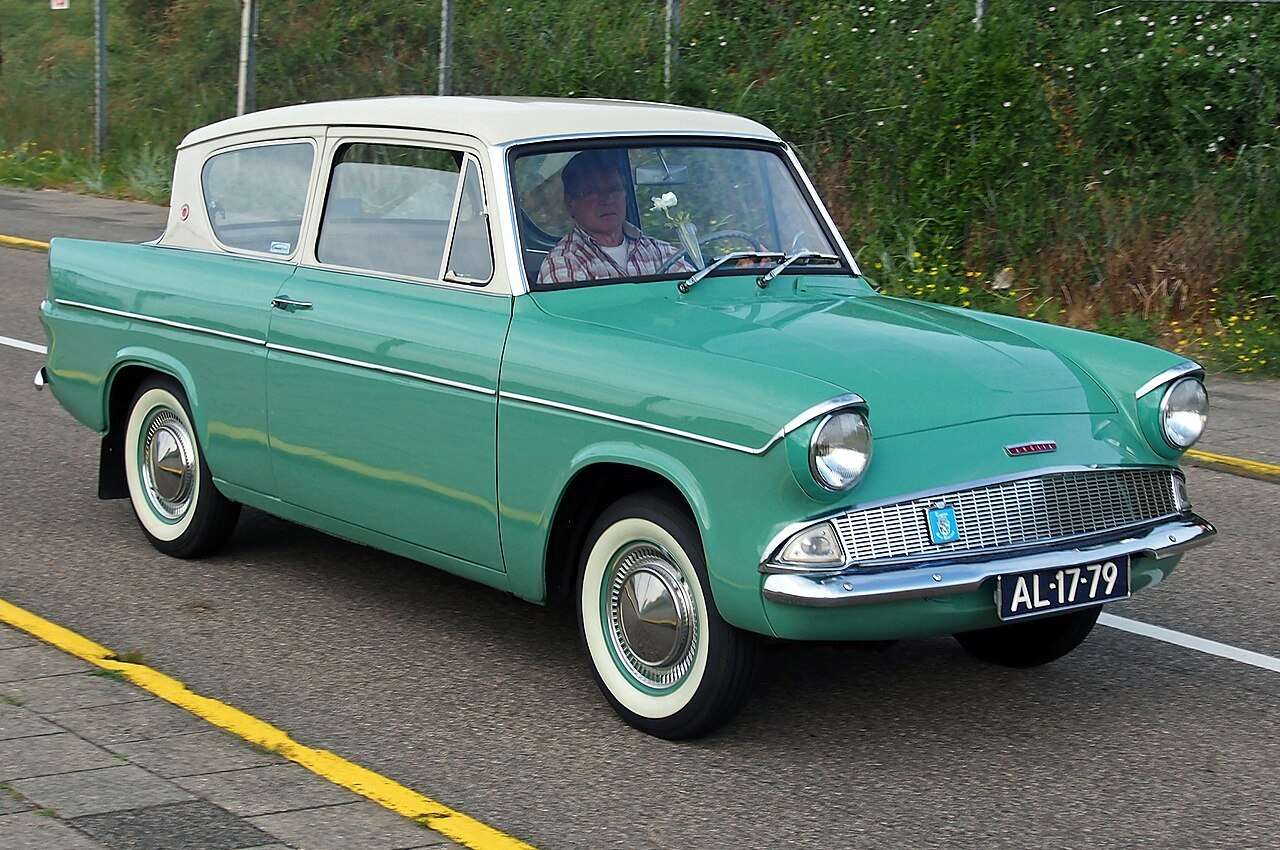
Ford’s small saloon of 1959 is instantly recognisable from its rear window. The engine, the commercial versions and an Italian redesign make the Anglia 105E worth a closer look.
1. It arrived right at the end of September
Ford launched the 105E in Britain on 30 September 1959. Its low nose, small fins and distinctive glass gave it a very different silhouette from the outgoing 100E family. The Anglia name on the boot carried over from a much older-looking Ford.
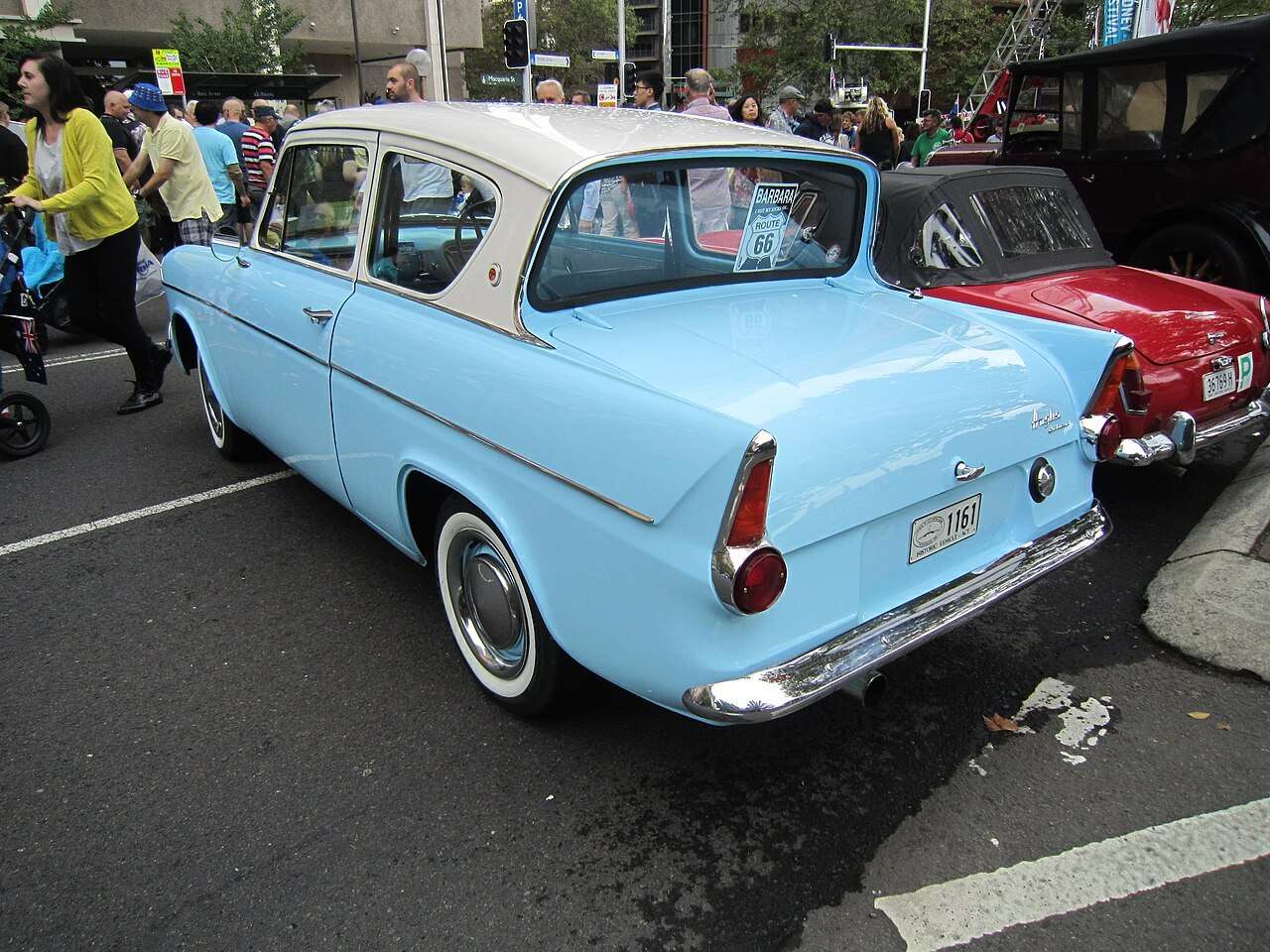
2. The rear window sloped forwards
The roof extended rearwards over the top of the glass, leaving more headroom for back-seat passengers. It also gave the car a profile you could pick out from across a car park. The Owners’ Club records Ford’s claim that the angle helped the glass stay clear in bad weather.
3. Its 997cc engine introduced the Kent family
The overhead-valve four had a 997cc capacity. Its short stroke and compact design were a substantial departure from the old side-valve approach. The 105E was the first home for the engine family that enthusiasts now call the Kent.
4. The Super had a different model code
The 1200 Anglia Super used the 1,198cc engine and is commonly identified by its 123E code. It had its own trim details as well as the bigger engine. A car advertised loosely as a 105E can therefore belong to a wider Anglia family than the number suggests.
Love cars you don’t see every day?
Get forgotten cars, surprising motoring stories and the most interesting finds from Unusual Cars by email.
Free to join. No spam. Unsubscribe whenever you like. See our Privacy Policy.
5. The estate got a conventional rear window
Ford added a factory estate in 1961. It shared the little saloon’s front-end character but had a taller, more useful load area and different rear glass. For an owner who needed more room, that was a factory answer with no coachbuilder required.
6. The vans had their own identities
Ford’s 307E and 309E van codes identify commercial derivatives associated with the smaller and larger engines respectively. They had their own period literature and their own job to do. A panel van is an Anglia relative even if the famous saloon window is nowhere to be seen.
7. Europe got a Sportsman with the spare outside
The Owners’ Club documents a European Sportsman derivative with its spare wheel carried externally at the back. It echoed the look of an American continental kit on a much smaller Ford. It is an especially rewarding detail to spot in a period photograph.
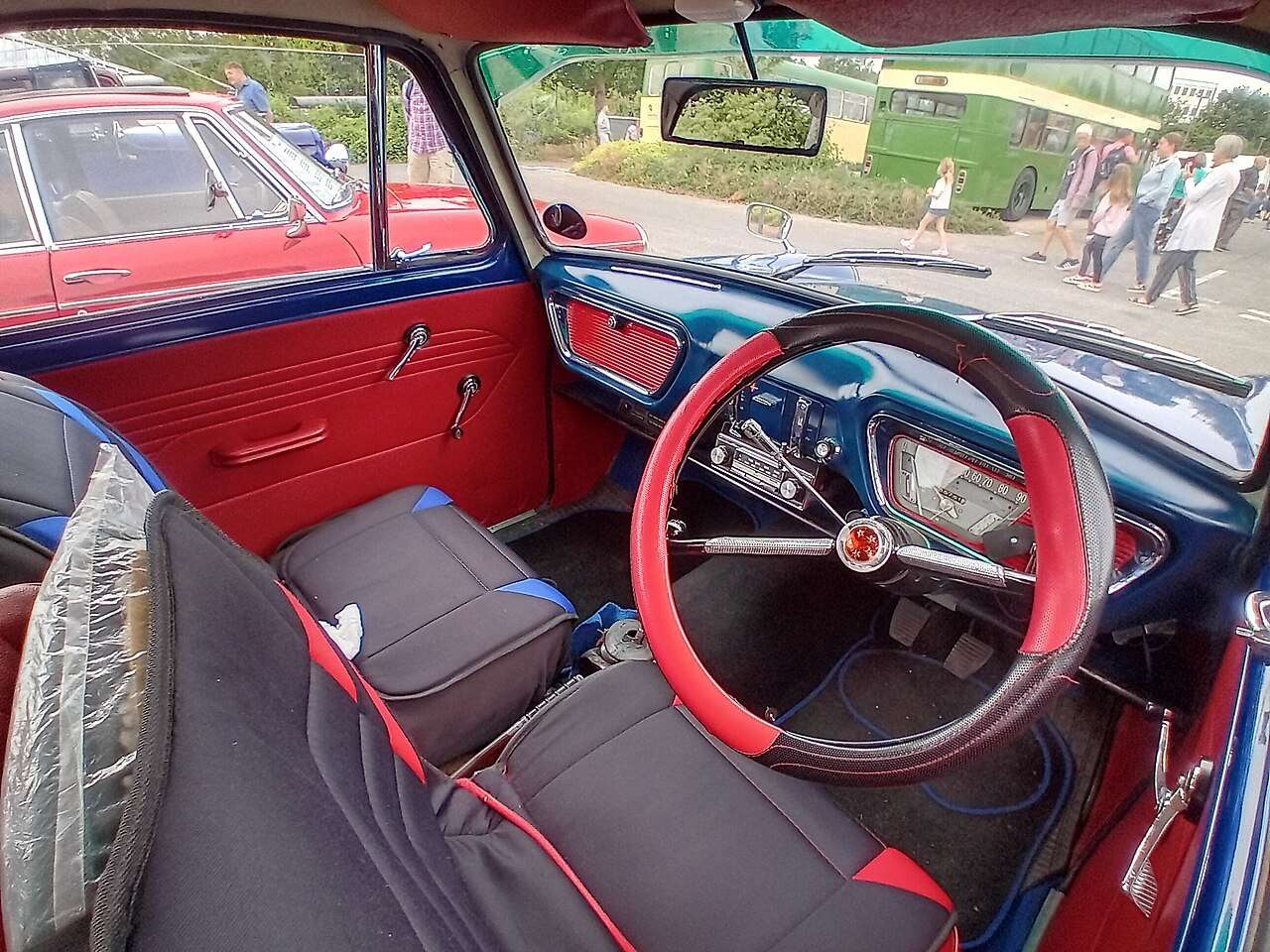
8. Ford of Italy reversed the famous window
The Anglia Torino restyled the saloon with conventionally sloping rear glass. Ford of Italy changed much more than the window, which explains why the car can be hard to recognise at first glance. The Anglia underneath was familiar to British motorists even when the roofline wasn’t.
9. An Anglia ran for seven days at Montlhéry
In 1962 Tony and Michael Brookes led a record team at the French circuit using an Anglia equipped with Ford’s performance kit. The Franschhoek Motor Museum records six international class records over the run. More than six decades later, that is still a wild thing to imagine doing in a 997cc family Ford.
10. The Escort took over in 1968
Anglia production ended in November 1967 and the Mk1 Escort arrived the following January. That puts the 105E at an important point in Ford’s small-car history. Its eye-catching roofline never had to carry over for the mechanical story to continue.
Read about the Mk1 Ford Focus RS.
Explore more 10 Things articles
Browse the Unusual Cars 10 Things hub.
Sources and further reading
- Ford Anglia 105E Owners’ Club model history
- Ford’s original Anglia handbooks
- Ford’s period Anglia brochures
- Franschhoek Motor Museum’s Anglia collection and record-run history
Featured image: A two-tone 1960 Ford Anglia 105E. Photo by Alf van Beem via Wikimedia Commons (CC0, resized).
Join the Unusual Cars Club
Get more forgotten performance cars, surprising motoring stories and new 10 Things articles by email.
Free to join. No spam. Unsubscribe whenever you like. See our Privacy Policy.