Rare & Forgotten Cars guide
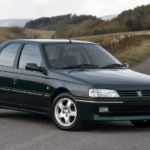
The Peugeot 405 Mi16 combined a high-revving 16-valve engine, front-wheel drive and one of the finest sporting saloon chassis of the late 1980s. It looked restrained beside many homologation specials, yet offered serious performance without surrendering four-door practicality.
Why was the Peugeot 405 Mi16 important?
The 405 arrived in 1987 and won the 1988 European Car of the Year award. Its Pininfarina-designed shape, low weight, compliant ride and precise handling gave Peugeot a convincing replacement for the 305. The Mi16 placed a twin-cam, four-valve-per-cylinder engine at the top of that practical range.
In concept it rivalled cars such as the Vauxhall Cavalier GSi 2000 16v, Ford Sierra performance derivatives and Volkswagen Jetta or Passat sporting models. The Mi16’s appeal was not based on a huge engine or conspicuous bodywork: it was the combination of revs, steering response, balance and everyday usefulness.
Peugeot 405 Mi16 versions
Phase 1 1.9
The original European Mi16 used the 1,905cc XU9J4 twin-cam engine. Non-catalyst versions are commonly quoted at 160PS, while emissions equipment and market specification could reduce output.
Phase 2 2.0
The 1992 facelift brought a revised body and interior plus the cast-iron-block 1,998cc XU10J4. It produced approximately 155PS but delivered its performance differently.
Mi16x4 and T16
The Mi16x4 added permanent four-wheel drive and self-levelling rear suspension. The later turbocharged T16 sat above both and should not be confused with a standard Mi16.
1.9 Mi16 versus 2.0 Mi16
| Feature | 1.9-litre Phase 1 | 2.0-litre Phase 2 |
|---|---|---|
| Engine family | XU9J4 | XU10J4 |
| Capacity | 1,905cc | 1,998cc |
| Construction | Alloy cylinder block | Cast-iron cylinder block |
| Typical European output | Up to 160PS without a catalyst; specification varies | Approximately 155PS |
| Styling | Original 405 body and early dashboard | Facelift front, rear, dashboard and trim |
| Character | Lighter-feeling and especially eager at high revs | More mature facelift car with broader everyday usability |
Neither capacity alone proves identity. Cars have been engine-swapped, converted or assembled using parts from several 405s. Check the VIN, engine code, body details, registration history and invoices together.
Engine, gearbox and performance
The original 1.9-litre engine used Bosch Motronic management, twin overhead camshafts and four valves per cylinder. Contemporary European specifications quoted 160PS at 6,500rpm. Period acceleration figures vary by test method and market, but approximately eight seconds to 100km/h and a maximum near 220km/h placed it firmly among serious sports saloons.
A five-speed manual gearbox drove the front wheels. The engine rewarded revs more than effortless low-speed torque, and the light 405 structure helped it feel alert. Facelift 2.0-litre cars lost a little of the original specification’s delicacy but remain genuine Mi16s rather than inferior substitutes.
What is an Mi16 like to drive?
The Mi16’s reputation rests on more than its engine. Peugeot tuned the 405 to combine body control with supple suspension, communicative steering and a willingness to change direction. It could cover poor roads quickly without relying on extremely stiff springs or oversized tyres.
Condition transforms the experience. Old dampers, worn rear-arm bearings, incorrect tyres, tired bushes or poor alignment can make a good design feel vague or unstable. A well-sorted standard car is the reference point before assuming that harder suspension will improve it.
How to identify a genuine Peugeot 405 Mi16
- Match the VIN and registration record to the engine and body specification.
- Confirm XU9J4 or XU10J4 engine identity rather than relying on a red-painted cam cover.
- Check Mi16 bumpers, side mouldings, spoiler, wheels, badging and interior against the correct model year.
- Look for the appropriate sports seats, instruments and trim, noting that market equipment varied.
- Inspect the floor and rear suspension: a standard Mi16 is front-wheel drive and does not have the x4 transmission or hydraulic rear system.
- Ask a Peugeot specialist or owners’ club to review unusual or contradictory details.
Peugeot 405 Mi16 common problems
Timing belt and engine history
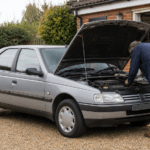
Demand dated evidence for the timing belt, tensioners and water pump. Start the engine cold and check for oil-pressure concerns, smoke, misfires, leaks and abnormal valvetrain or bottom-end noise. Regular oil changes matter on every XU engine.
Cooling system
Inspect the radiator, hoses, fans, thermostat, water pump and coolant condition. Allow the car to reach operating temperature. Evidence of repeated overheating deserves investigation rather than reassurance from a short test drive.
Oil surge and hard use
Mi16 engines have often been transplanted into lighter Peugeots or used on track. Ask how the car has been driven and whether any lubrication modifications were competently engineered. A standard-looking car may still have a hard competition history.
Gearbox and clutch
Test every ratio from cold and hot. Listen for bearing noise and check for worn synchromesh, clutch slip, judder or a vague linkage. Oil leaks and a poorly supported engine can contribute to further problems.
Rear axle and suspension
Rear trailing-arm bearing wear can reveal itself through abnormal wheel lean, noise or poor handling. Inspect dampers, bushes, ball joints, steering components and wheel bearings, then check that the car sits squarely.
Corrosion and accident damage
Inspect sills, jacking points, floor edges, rear chassis areas, suspension mountings, boot floor, wheelarches, windscreen surround and engine-bay seams. The 405 can resist rust better than some contemporaries, but serious corrosion or old crash repairs can compromise its light structure.
ABS, electrics and interior
Early anti-lock braking equipment, rear-lamp connections, heater controls, sunroof, central locking, windows and instruments all need testing. Missing Mi16 seats, trim and exterior pieces can be harder to solve than ordinary service items.
Peugeot 405 Mi16 buying checklist
- Verify identity: match VIN, engine code, body phase and paperwork.
- Start from cold: assess oil pressure, smoke, idle and warning lamps.
- Prove belt maintenance: invoices matter more than assurances.
- Test the cooling system: confirm stable temperature and fan operation.
- Inspect the structure underneath: include suspension and axle mountings.
- Check the rear wheels: unwanted lean may indicate trailing-arm bearing wear.
- Drive every gear: listen for transmission and clutch problems.
- Test all equipment: especially ABS, heater, lights and electrical accessories.
- Inventory original parts: trim and model-specific pieces affect restoration cost.
- Buy condition and history: a complete, sorted car is usually cheaper than reconstructing a neglected example.
Frequently asked questions
Is every Peugeot 405 Mi16 four-wheel drive?
No. The standard Mi16 is front-wheel drive. The Mi16x4 is the separate permanent-four-wheel-drive derivative.
Which Mi16 engine is preferable?
The 1.9 is prized for its light alloy block and rev-hungry character; the 2.0 belongs to the more developed facelift car. Condition, originality and maintenance matter more than choosing by capacity alone.
Is the Peugeot 405 T16 an Mi16?
The T16 is a later turbocharged, four-wheel-drive flagship. It shares the 405 performance lineage but has distinct engine, drivetrain and specification.
Are Mi16 parts difficult to find?
Some routine XU and 405 service parts remain available, but original trim, engine-management components and model-specific body or interior pieces can be scarce.
Can an Mi16 still be used regularly?
A structurally sound, properly maintained example can be usable, but age, parts supply, security and rarity make preventative maintenance essential.
Research note: specifications were checked against period Peugeot literature and contemporary road tests. Output and equipment varied by market, emissions specification and model year; an individual car should be verified from its VIN and physical components.