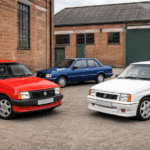
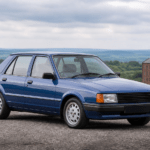
The Vauxhall Nova saloon is now a far less familiar sight than the hatchback. Its separate boot, simple engines and unassuming appearance make an original survivor interesting in its own right—not merely a future conversion shell.
Nova saloon history
Vauxhall offered two- and four-door saloons alongside Nova hatchbacks. They shared the front-wheel-drive platform and much of the mechanical range but used a distinct rear body. Many were inexpensive daily transport, and others later became popular sleeper or motorsport projects.
What to inspect
- Sills, floors, inner wings, front suspension mounts and battery area.
- Rear arches, boot floor, rear panel and fuel-filler surround.
- Evidence of accident damage, overspray, filler or poor welding.
- Cold starting, cooling fan, oil and coolant condition and timing-belt history.
- Wheel bearings, steering joints, driveshafts, brakes and age of the tyres.
- Door cards, parcel shelf, seats, dashboard, glass and saloon-specific exterior parts.
Preserve or modify?
A structurally sound, complete saloon may now be rarer than a converted car. Reversible improvements and careful recommissioning preserve options. Before cutting a shell, consider the availability of better-documented projects and the difficulty of replacing original saloon trim later.
The 50,000-mile Expression originally featured
This page began with a 1993 Nova 1.2 Expression saloon advertised in 2025 with approximately 50,000 miles. The seller described original etched glass, recent suspension work and a quiet-running engine, while disclosing an ageing wheel bearing, front-end clunk, handbrake adjustment, inoperative blowers and attention needed at a rear arch.
Those details illustrate the correct way to assess a survivor: minor mechanical faults are usually manageable, but corrosion should be investigated before purchase. The advert is expired and is retained only as a historical case study.
Frequently asked questions
Did Vauxhall sell a Nova saloon?
Yes, in two- and four-door forms.
Are saloon body parts easy to find?
Some mechanical components are shared, but rear body, glass and trim items can be significantly harder to source.
Is an original 1.2 worth preserving?
A complete, structurally sound example deserves careful consideration because ordinary survivors have become scarce.