
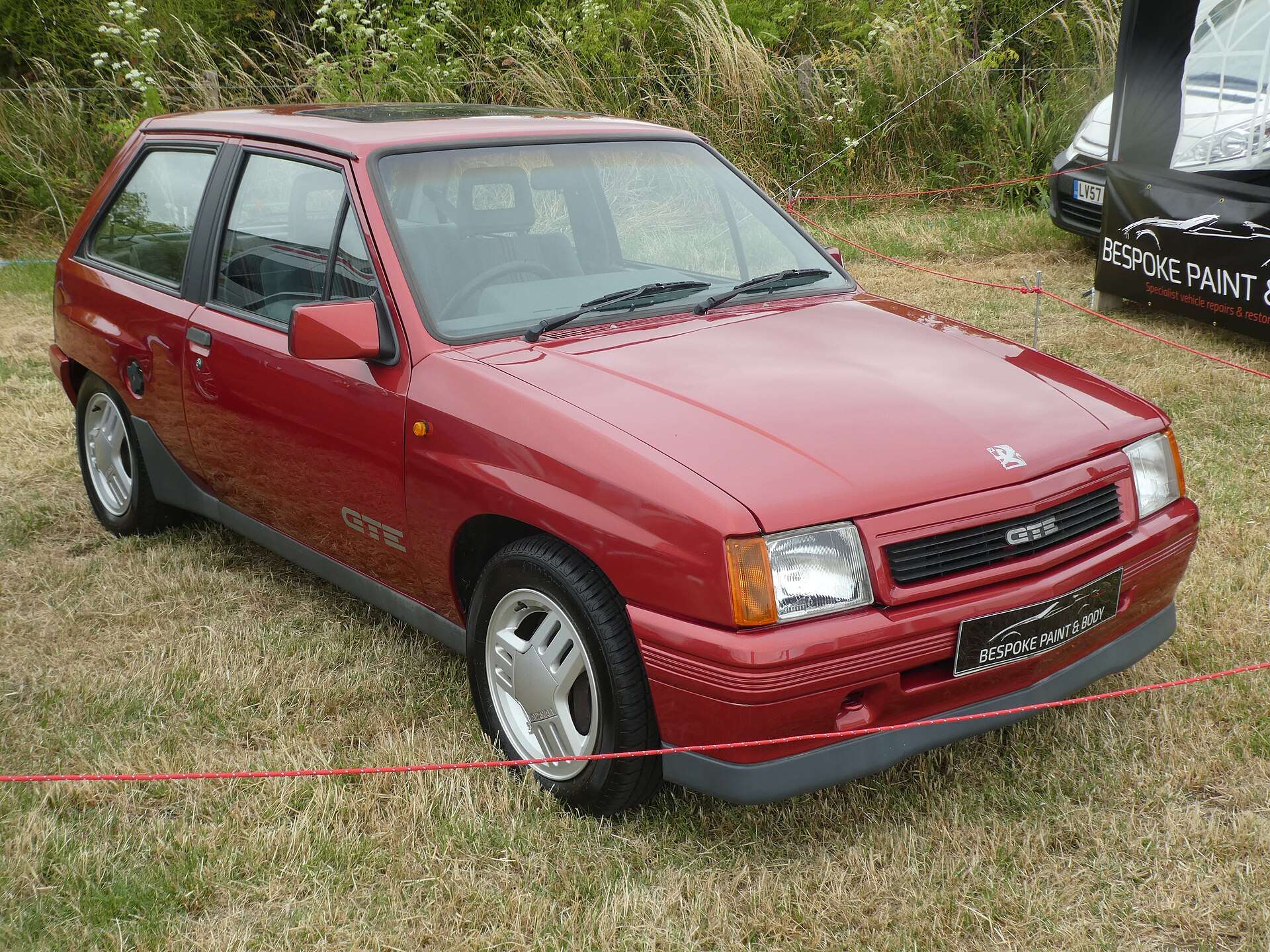
The Vauxhall Nova GTE and GSi condensed the best parts of the late-1980s hot hatch into a tiny, lightweight package. Their performance figures look modest today, but the numbers only make sense when you remember how little the Nova weighed.

1. It was called Corsa almost everywhere else
The small hatchback launched in continental Europe as the Opel Corsa A in 1982. Britain received it as the Vauxhall Nova, a separate name that lasted until the second-generation Corsa arrived here in 1993.
2. The GTE did not arrive until 1987
The Nova was already established before the flagship GTE joined the range. Its fuel-injected 1.6-litre engine produced about 100 bhp, enough to transform the lightweight shell.
3. It weighed only 876 kg
Vauxhall quoted an 876 kg kerb weight for the GTE. That gave it a power-to-weight ratio and immediacy that a much heavier modern hatchback would struggle to recreate with the same output.
4. Its 117 mph maximum was serious performance
A top speed of roughly 117 mph put the little Vauxhall firmly into hot-hatch territory. The close-ratio five-speed gearbox helped keep the naturally aspirated engine working hard.
Love cars you don’t see every day?
Get forgotten cars, surprising motoring stories and the most interesting finds from Unusual Cars by email.
Free to join. No spam. Unsubscribe whenever you like. See our Privacy Policy.
5. The chassis was more than lowered suspension
Vauxhall added anti-roll bars, uprated spring and damper settings, vented front discs and low-profile tyres. The changes made the GTE a complete performance derivative rather than simply a Nova with a larger engine.

6. GTE became GSi during the 1990 facelift
The performance Nova was renamed GSi when the range received its final major facelift. The new badge aligned it with Opel’s European naming and arrived with smoother bumpers, altered trim and an updated dashboard.
7. The later engine was tuned for cleaner emissions
Depending on market and emissions equipment, later GSi versions could differ slightly in output and engine management. The essential recipe stayed the same: a responsive injected 1.6 in a very light three-door body.
8. Motorsport made stripped Novas a familiar sight
The strong shell, simple mechanical layout and low cost made the Nova popular in rallying, autocross and one-make competition. Countless road cars were later converted for motorsport, reducing the pool of standard survivors.

9. Britain bought more than half a million Novas
The Nova became a major success rather than a niche model, with more than 500,000 sold in the UK. That popularity helped the GTE and GSi become cultural reference points for a generation of young drivers.
10. Standard cars are now the unusual ones
Rust, theft, accidents and years of inexpensive modifications claimed many examples. Period body kits, engine swaps and competition conversions mean an unaltered GTE or GSi with its original trim is now genuinely scarce.
Love cars you don’t see every day?
Get forgotten cars, surprising motoring stories and the most interesting finds from Unusual Cars by email.
Free to join. No spam. Unsubscribe whenever you like. See our Privacy Policy.
More Vauxhall performance cars
Read 10 things about the Mk1 Astra GTE or visit the Vauxhall archive.
Sources
For more about this car, read our Vauxhall Nova guide.