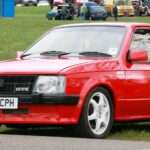
The Mk1 Vauxhall Astra GTE arrived late, shouted loudly and disappeared almost as quickly. With crisp styling, an injected 1.8-litre engine and its famously colour-coded white outfit, it gave British buyers a convincing alternative to the Golf GTI and Escort XR3i. Yet the original GTE lasted for barely more than a year before the curvier Mk2 replaced it.
That short life left behind far more stories than surviving cars. Here are ten things you probably didn’t know about Vauxhall’s first official hot hatch.
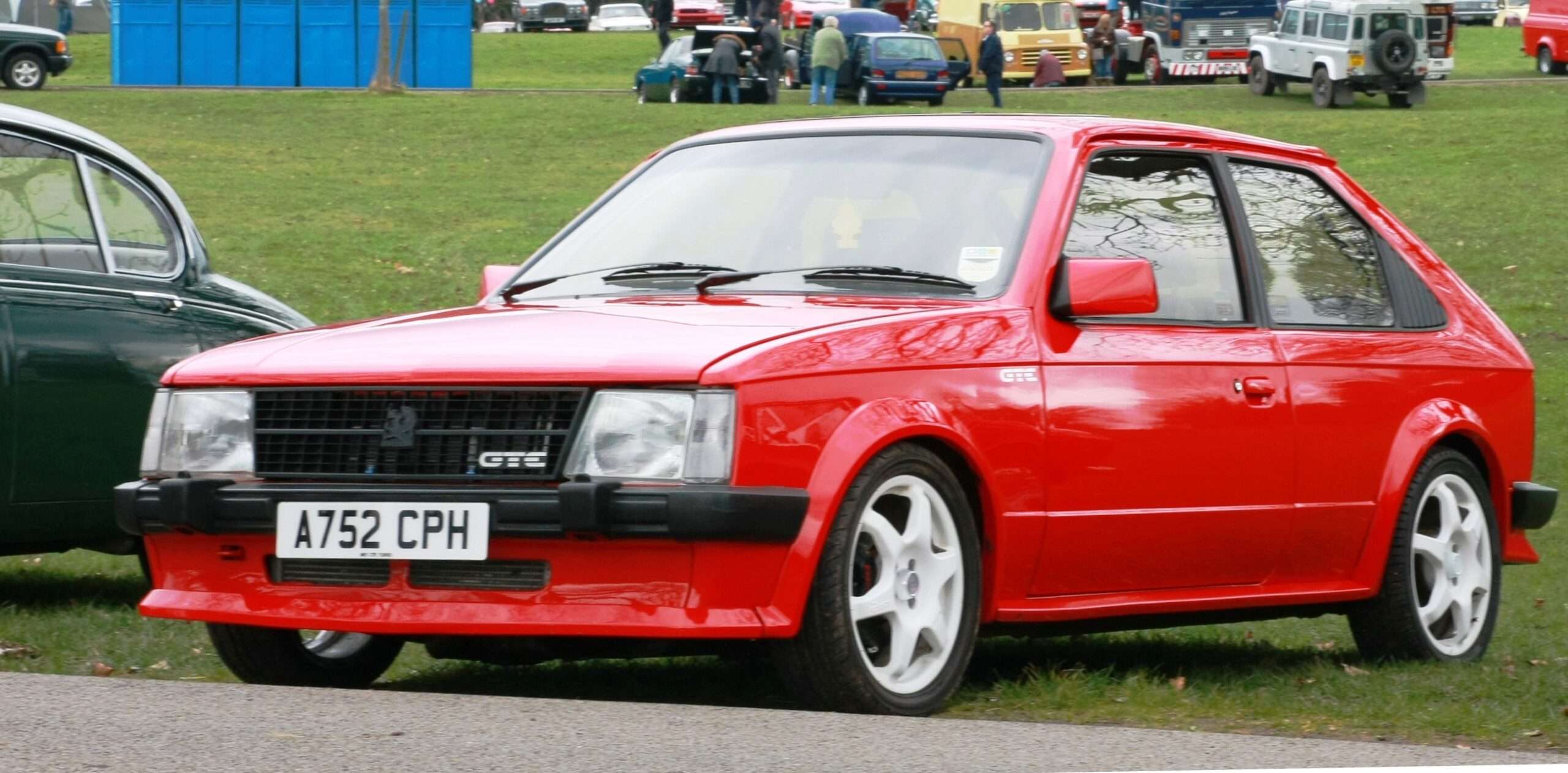
1. It was Vauxhall’s first official hot hatch
Vauxhall itself describes the Mk1 GTE as its first official hot hatch. The ordinary front-wheel-drive Astra had already proved light and capable, but the GTE finally gave it the engine, suspension and image needed to confront the Golf GTI properly. It also began a line of quick Astras that would eventually include the GTE 16V, GSi, Turbo and VXR.
2. It arrived with very little time left
The GTE appeared in 1983, but the Mk2 Astra was ready to replace the original model in 1984. That gave the angular Mk1 flagship a remarkably short showroom life—roughly eighteen months by most accounts. Its successor became far better known, while the original GTE’s brief production run helped make an unmodified survivor a genuinely unusual sight.
3. Its engine had already lived in a Cavalier
The injected 1.8-litre engine was not created solely for the GTE. The same 115bhp “Family Two” unit had already appeared in sporting Cavalier models. In the much lighter Astra it was transformed: Vauxhall quoted 115bhp per tonne and a 115mph maximum speed. It is difficult to imagine a neater set of numbers for an early-1980s performance-car advert.
4. The white wheels were a factory decision
A white Mk1 GTE did not acquire its monochrome look from an enthusiastic later owner. Vauxhall colour-coded the bumpers, wheelarch extensions, skirts, mirror covers and even the alloy wheels. Period accounts credit it as an early—possibly the first—UK production car to take colour coding quite so far. Red, black and silver cars existed, but only white received the complete head-to-toe treatment.
5. On the Continent, it answered to another name
The Astra was closely related to the Opel Kadett D sold elsewhere in Europe, so many overseas buyers knew the same basic hot hatch as the Opel Kadett GTE. The continental range was broader too, including a five-door GTE. Britain’s Vauxhall version concentrated on the three-door body that supplied the shape most UK enthusiasts now remember.
6. It mixed Recaros with wind-up windows
The cabin captured the GTE’s character perfectly. Supportive Recaro seats, a sports steering wheel and extra instruments made it feel purposeful, but the underlying Astra remained refreshingly simple. Wind-up windows sat alongside a push-button radio/cassette and an electrically extending aerial. It was special without pretending to be luxurious—a very different formula from many modern performance hatchbacks.
7. The quickest gearbox came later
Not every Mk1 GTE has exactly the same character. Vauxhall fitted later cars with closer gearbox ratios, improving the way the engine’s performance could be used. It is an easily overlooked running change because the headline output remained the same, but it shows that development continued even though the Mk1 GTE had only a very short life ahead of it.
8. Contemporary testers thought the chassis was the real star
The GTE was not simply an ordinary Astra with a larger engine. Revised springs and dampers, wider low-profile tyres and ventilated front brakes sharpened the package. A period Car & Car Conversions test praised the huge cornering loads it could generate while still turning in predictably. That balance helped the Astra challenge cars with much more established performance reputations.
9. Motorsport recognised it just as production ended
The FIA homologated the Vauxhall Astra 1.8 GTE in Group N on 2 January 1984 under homologation number 5190. Group N was intended for production-based cars with tightly controlled modifications. The striking part is the timing: international competition paperwork arrived during the final year of the Mk1 road car, and its homologation remained valid until the beginning of 1990.
10. Its most famous advertising line was wonderfully cheeky
Vauxhall promoted the GTE with the line “Nought to Naughty Naughty in 8.5 sec.” It is unmistakably from the 1980s, but it also tells us how the car was positioned: quick, youthful and slightly rebellious rather than remotely sensible. The slogan survived in enthusiasts’ memories almost as well as the white wheels—and is now arguably better known than many of the car’s technical details.
Keep exploring Vauxhall’s performance cars
Read the complete Vauxhall Astra GTE buying and history guide, then visit the Rare & Performance Vauxhalls hub. You can also continue with the Vauxhall Nova, Cavalier Turbo 4×4 and Calibra Turbo guides.
Sources and further reading
- Vauxhall/Stellantis Heritage: Astra GTE Mk1
- FIA Historic Database: Vauxhall Astra 1.8 GTE
- evo retrospective road test
- Honest John Classics: Mk1 Astra GTE
Love cars you don’t see every day?
Get forgotten cars, surprising motoring stories and the most interesting finds from Unusual Cars by email.
Free to join. No spam. Unsubscribe whenever you like. See our Privacy Policy.
~ 589 pop up button (collapsed) Open save panel, Secondary Actions: Expand
+ 598 text 10 Things You Probably Didn’t Know About the Mk1 Vauxhall Astra GTE – Unusual Cars UK