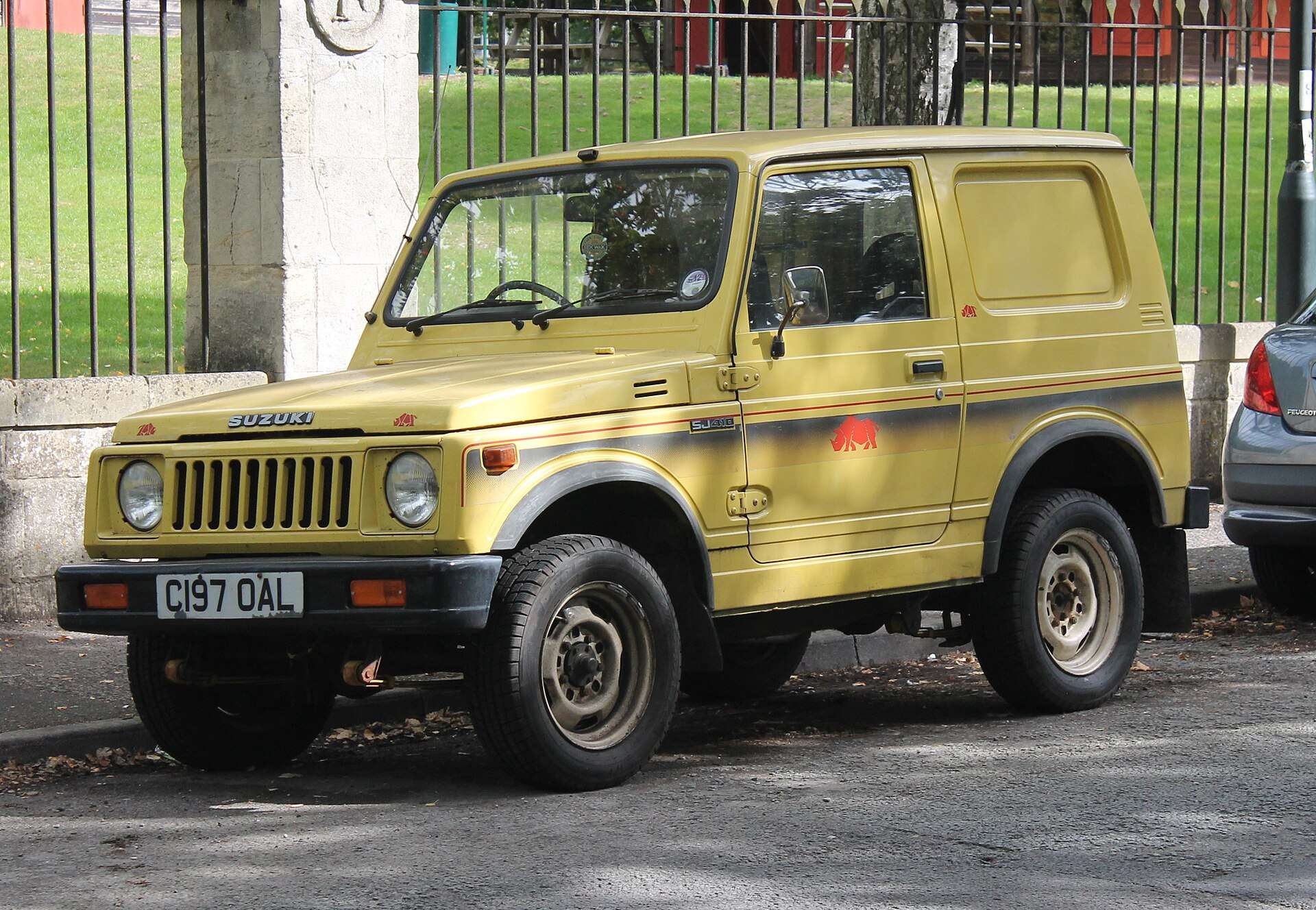
UNUSUAL CARS MODEL GUIDE
The Suzuki Jimny lineage is a half-century of compact, lightweight four-wheel drives: the second-generation SJ410 arrived in 1981, the 1.3-litre SJ413 followed in 1984, the Samurai name became familiar in export markets, and the coil-sprung third-generation Jimny arrived in 1998. Their appeal comes from simple mechanicals, narrow dimensions and genuine low-range off-road ability rather than luxury or motorway refinement.
Quick answer: buy the soundest, least abused chassis you can find. SJ models are charming and extremely capable but rust-prone and often modified; the later Jimny is easier to live with yet still needs careful checks for chassis corrosion, steering vibration, worn kingpin bearings and poor-quality suspension lifts.
How the small Suzuki 4×4 evolved
Suzuki entered the small four-wheel-drive market in 1970 with the first Jimny. The 1981 SJ410 broadened the idea with a 1.0-litre four-cylinder engine, leaf springs and selectable four-wheel drive. The SJ413 added a 1.3-litre engine in 1984 and helped the model spread to more than 100 countries. Names differed by market, with Samurai becoming especially prominent outside Japan.

The 1998 Jimny was a major redesign rather than an abandonment of the formula. It retained a separate ladder frame, rigid axles and part-time four-wheel drive, but coil springs improved axle movement and road comfort. The boxier fourth generation arrived in 2018 and made the original concept fashionable again.
| Generation | Period | Key features |
|---|---|---|
| SJ410 | From 1981 | 1.0-litre engine, leaf springs, ladder frame and low-range four-wheel drive. |
| SJ413 / Samurai | From 1984 | 1.3-litre engine, wider export reach and many body styles. |
| Third-generation Jimny | 1998–2018 | Coil springs, rigid axles and more everyday refinement. |
| Fourth-generation Jimny | From 2018 | Modern safety equipment wrapped around the traditional ladder-frame layout. |
Love cars you don’t see every day?
Get forgotten cars, surprising motoring stories and the most interesting finds from Unusual Cars by email.
Free to join. No spam. Unsubscribe whenever you like. See our privacy policy.
Why it works off road
Low mass and compact dimensions let the Suzuki follow narrow tracks where a larger vehicle struggles. A two-speed transfer case supplies low gearing, while live axles keep the wheels moving over uneven ground. The short wheelbase improves breakover angle, although it also produces a choppy ride and demands respect on slippery surfaces.
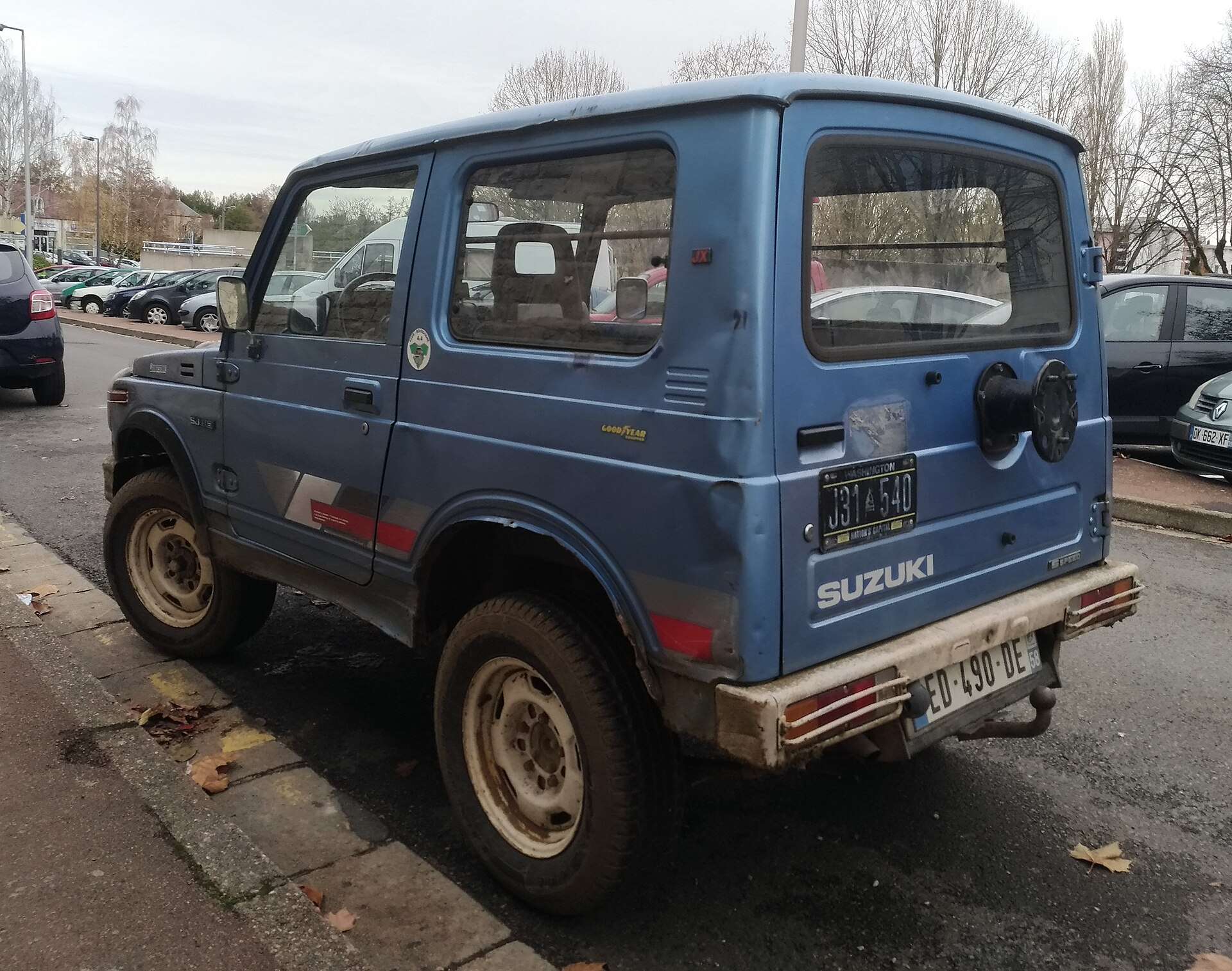
Tyres make an enormous difference. Aggressive mud tyres can improve traction but also increase steering effort, noise and stress on wheel bearings and driveline components. An apparently heroic off-road build may be much less satisfying than a carefully maintained standard car.
Chassis, body and corrosion
Inspect the complete ladder frame, not only the visible outer rails. Check body mounts, suspension hangers, crossmembers, shock mounts, fuel-tank supports and the sections around the transfer case. On the body, examine sills, floor, inner wings, wheelarches, rear corners, door bottoms and windscreen surround. Mud can hide corrosion from casual view.

Fresh underseal is not evidence of sound metal. Ask to see the structure on a lift and look for patch repairs, crushed sections and mismatched chassis numbers. Poorly repaired accident damage can affect steering geometry and transfer-case alignment.
Engine and transmission checks
Start from cold and check for smoke, rattles, coolant loss and oil leaks. Early carburettor cars need clean fuel systems and correct adjustment; later injected Jimnys should idle steadily and show no warning lights. Cooling systems are easily neglected on low-mileage hobby cars.

Engage high and low range on a loose surface and confirm that four-wheel drive selects and releases cleanly. Listen for transfer-case, gearbox and differential noise, inspect propshaft joints and check freewheeling hubs where fitted. Wind-up on dry tarmac indicates misuse of part-time four-wheel drive.
Steering, suspension and modifications
Later Jimnys can develop steering shimmy through worn kingpin bearings, wheel bearings, bushes, tyres or poor alignment. Leaf-sprung SJ models need checks for cracked leaves, worn shackles and tired dampers. Any lift kit should have a known maker, correct geometry and evidence of professional installation.

Verify wheel offset, brake hoses, propshaft angles and bump-stop clearance. Oversized wheels and badly engineered suspension changes can make the vehicle less reliable and less safe. A standard or lightly upgraded example is usually the best basis for mixed road and trail use.
Sources and further reading
Continue the Suzuki story
Few small four-wheel drives have remained so faithful to their original purpose. Explore the Suzuki hub, the SC100 guide, the Cappuccino guide.
Frequently asked questions
Are Suzuki SJ410, SJ413 and Samurai models all Jimnys?
They belong to the second-generation Jimny family, although export names and specifications varied by market.
Does a Suzuki Jimny have permanent four-wheel drive?
Most classic and later Jimnys use selectable part-time four-wheel drive with low range, so four-wheel drive should not be used on dry high-grip roads.
What is the biggest buying risk?
Structural corrosion in the ladder frame and body is the most important risk, followed by poorly engineered off-road modifications.
Why does a Jimny steering wheel wobble?
Worn kingpin or wheel bearings, bushes, damaged wheels, tyres or incorrect alignment can all contribute, so diagnosis should cover the complete front axle.
Is a modified Jimny worth buying?
A documented, professionally engineered modification can be useful, but many lifts and oversized-wheel conversions reduce reliability and road manners. Standard cars are easier to assess.