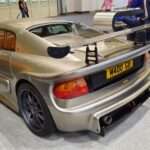
UK history and buying guide · Noble M12 GTO, GTO-3 and GTO-3R
The Noble M12 is the car that established Noble as a credible British supercar maker. Light, compact and intensely focused, it combined a steel spaceframe and composite body with twin-turbo Ford V6 power. The result delivered extraordinary real-world pace without the mass, complexity or badge premium of contemporary exotica.
M12 model history
The early M12 GTO used a 2.5-litre twin-turbo Ford Duratec V6 and five-speed manual gearbox. The later GTO-3 adopted a 3.0-litre version with more power and a stronger six-speed transmission. The GTO-3R added a more aggressive specification, distinctive body details, a limited-slip differential and closer-ratio gearing. Cars were built around a steel spaceframe with glassfibre body panels; body and chassis work was undertaken in South Africa before final assembly in England.
| Version | Engine | Power | Gearbox |
|---|---|---|---|
| M12 GTO | 2.5 twin-turbo V6 | About 310 bhp | Five-speed manual |
| M12 GTO-3 | 3.0 twin-turbo V6 | About 352 bhp | Six-speed manual |
| M12 GTO-3R | 3.0 twin-turbo V6 | About 352 bhp | Six-speed manual, LSD |
Quoted performance varies by source and version, but the GTO-3R weighs around 1,080 kg, can reach 60 mph in roughly 3.7 seconds and has a claimed top speed near 185 mph. There is no ABS or stability control: tyres, geometry and driver inputs are critical.
Why the M12 feels special
The driving position is low, the steering is unassisted and richly communicative, and the turbocharged V6 gives the car a remarkable power-to-weight ratio. The ride can be surprisingly compliant on the road, yet the chassis is precise enough for circuit work. Cabin plastics and donor-car switches are functional rather than glamorous, but that simplicity is part of the car’s appeal.
Common Noble M12 problems
Chassis corrosion and crash damage
Inspect the powder-coated spaceframe, suspension mounting points, floor edges and areas hidden behind panels. Chips in the coating can allow corrosion to develop. A geometry check is valuable because poorly repaired accident damage may not be obvious from the composite body. Examine panel gaps, paint colour and the underside for signs of previous work.
Engine, oil control and turbo system
A healthy Duratec V6 should start cleanly without smoke or persistent rattles. Early cars used on circuit can suffer oil surge, so ask whether an appropriate baffled or track-day sump was fitted. Check turbo hoses, intercooler connections, wastegate operation and evidence of overboost. Modifications are common; require invoices and evidence that mapping, fuelling and cooling were addressed together.
Cooling, wiring and fuel delivery
Heat can harden or damage wiring insulation in the engine bay. Inspect connectors, earths and fuse or relay boxes for moisture and poor contacts. Fuel pumps, their wiring and aged hoses need careful checking. Verify that both cooling fans operate, the temperature remains stable in traffic and there are no signs of past overheating.
ECU and early-car updates
Specialists often recommend replacing the earliest Magneti Marelli management with the later MBE arrangement. Confirm exactly what is fitted and who mapped it. On 2.5-litre cars, the five-speed transmission is generally regarded as less robust than the later six-speed unit, particularly when power has been increased.
Bodywork, glass and water entry
Look for microblistering, stress cracks, stone damage and poor paint repairs. The windscreen and bespoke trim can be expensive or slow to source. Check door and window seals, footwells and the floor for damp; resealing work should be documented.
Brakes, suspension and tyres
Uneven tyre wear may indicate poor geometry or worn components. Inspect dampers for leakage, bushes and ball joints for play, and brakes for corrosion or imbalance caused by storage. A set of matching, correctly rated tyres of sensible age is essential on a car without electronic stability aids.
Servicing and running one in Britain
An annual specialist service is advisable even when mileage is low. Engine oil, brake fluid and age-sensitive hoses deserve time-based attention. Check the availability of a Noble specialist before purchase and obtain a written inspection covering chassis condition, compression or leak-down if necessary, ECU calibration and geometry.
Insurance will usually be through a specialist or agreed-value policy. A tracker, secure storage and limited mileage may be requested. Keep every invoice: documented upgrades from recognised Noble specialists can be desirable, while anonymous tuning can reduce confidence and value.
Noble M12 buying checklist
- Inspect the complete spaceframe and verify chassis alignment.
- Confirm variant identity, original specification and upgrade history.
- Check oil-control measures if the car has seen track use.
- Test cooling fans, fuel delivery, ECU operation and all electrics.
- Look for microblisters, water entry and heat-damaged wiring.
- Insist on matched tyres, correct geometry and a specialist road test.
Frequently asked questions
Which Noble M12 is best?
The GTO-3R is the most sought-after factory development, but a well-maintained GTO or GTO-3 can be a better purchase than a neglected or heavily modified 3R.
Is the Noble M12 reliable?
The Ford-based engine can be durable, but installation-specific cooling, wiring, turbo and fuel-system issues make specialist maintenance essential. Reliability depends heavily on preparation and modification quality.
Can an M12 be used on track?
Yes, but confirm sump specification, cooling, brake condition, tyres and geometry first. Track use should be followed by appropriate inspection and fluid servicing.
Research sources
Research was cross-checked against Noble Cars, Autocar’s M12 buying guide, evo and specialist ownership guidance. Always verify an individual car with a recognised Noble specialist.