Not every barn-find car should be stripped, repainted and returned to factory-new appearance. Original paint, worn trim, period repairs and small signs of long ownership can carry information that disappears during restoration. Equally, preservation must never become an excuse to leave corrosion spreading or safety-critical systems unusable.
Preservation, conservation, repair and restoration are different
Preservation
Caring for the vehicle in its present state and preventing further loss. It prioritises storage, gentle cleaning, documentation and continued protection.
Conservation
Stabilising original material without unnecessarily changing it: arresting corrosion, supporting fragile trim or protecting a surviving finish.
Repair
Making a system operate safely and reliably again. Repair can be sympathetic, but its primary purpose is function rather than returning an earlier appearance.
Restoration
Replacing or recreating damaged and missing areas to represent the vehicle at a chosen point in its history. This is more interventionist than conservation.
Recommissioning
Returning a stored car to safe operation through inspection, fluids, fuel, brakes, tyres, electrics and controlled testing without necessarily changing its appearance.
Modification
Changing specification, performance or design. It may suit the owner, but it is a separate decision from preserving or restoring historic character.
Use the principle of minimum necessary intervention
The Fédération Internationale des Véhicules Anciens (FIVA) Charter of Turin distinguishes preservation, conservation, restoration and repair. It encourages respect for historic substance, documentation of work and reversible interventions where possible. Those principles are valuable even when a car is not rare enough for a museum.
Minimum intervention does not mean doing nothing. Active rust, wet interiors, leaking fluids and failing supports continue to destroy material. Thoughtful conservation can involve considerable skilled work while leaving the car looking recognisably old.
Document before deciding
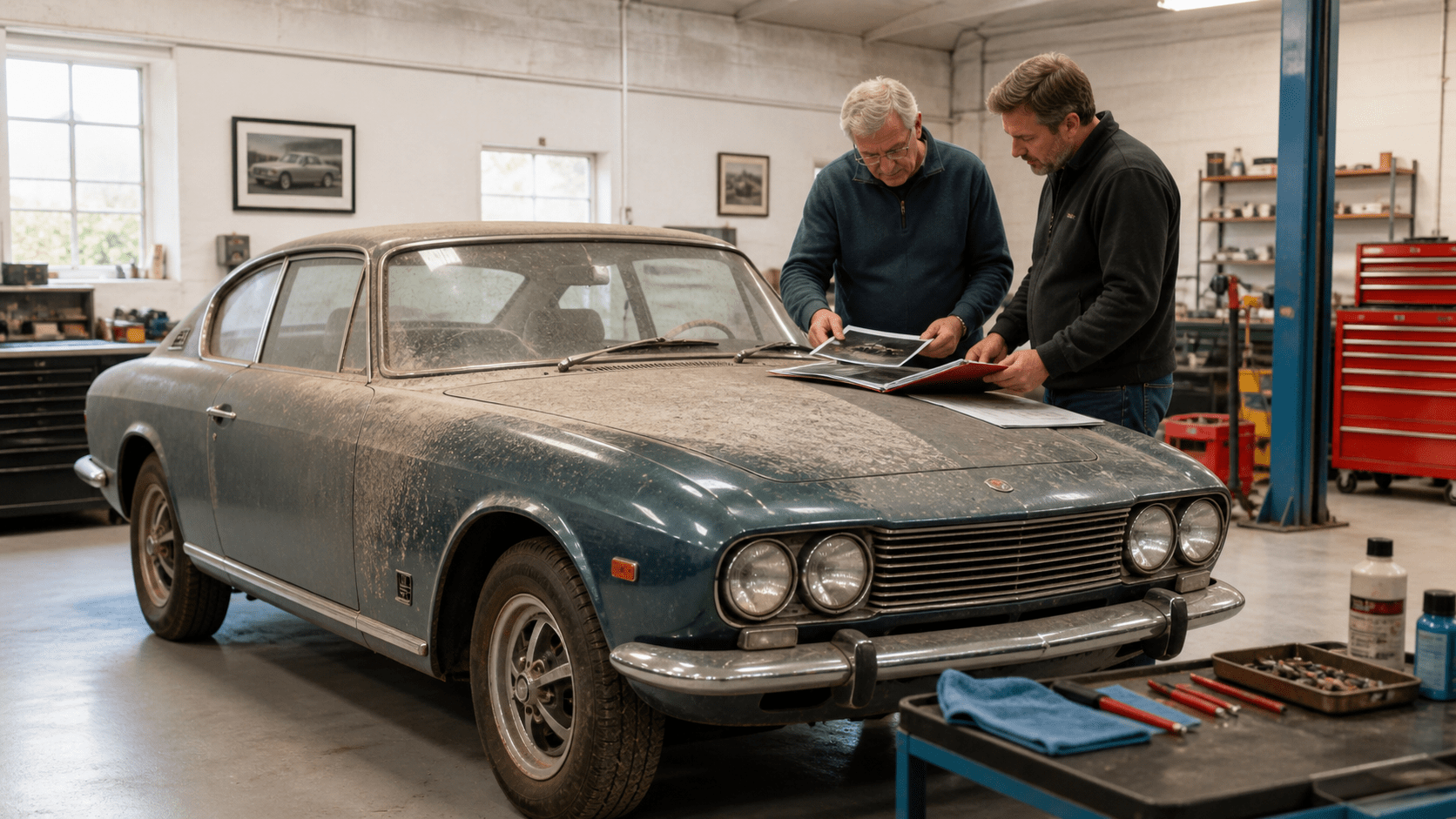
Record the car as found before washing, polishing, removing stickers or emptying the interior. Photograph all sides, paint defects, badges, glass markings, trim, fasteners, engine bay, boot, underside, tools, documents and loose components. Preserve old photographs, invoices, logbooks, competition records and correspondence.
Establish what is original, what was changed during the vehicle’s working life and what was altered much later. A period accessory, repaint or carefully executed old repair can be part of the car’s history rather than a defect to erase.
Assess significance—not just market value
A car can be important because of rarity, technical design, ownership, competition use, local history, unusually complete specification or exceptional survival. It can also matter simply because it provides reliable evidence of how a particular model was manufactured and used.
Market value is relevant to the restoration budget, but price alone should not determine the treatment. An ordinary family car with untouched factory finishes may reveal more history than a valuable model already restored several times.
Judge whether deterioration is stable
Faded paint and worn upholstery may be stable; blistering seams, wet carpets, powdering leather and delaminating materials are not. Inspect the storage environment and identify the cause before treating the symptom. Drying a building, improving ventilation or isolating the car from a damp floor can save more original material than cosmetic work.
- Paint: distinguish dirt and oxidation from active corrosion, lifting layers, exposed steel and failed previous repairs.
- Structure: stabilise corrosion that threatens strength or spreads between seams; use the rust inspection guide.
- Interior: address water entry, mould, pests and fragile stitching before cleaning aggressively.
- Chrome and trim: test gentle cleaning in a concealed area and avoid removing surviving finishes merely for uniformity.
- Mechanical systems: preserve original housings and identification where possible while renewing internal or perishable parts needed for safe operation.
Separate safety work from cosmetic restoration
Brakes, steering, tyres, fuel lines, structural mounting points, lighting and visibility must suit the intended use. Replacing unsafe consumables does not mean the whole vehicle needs restoration. Original external appearance can coexist with rebuilt brakes, a cleaned fuel system and carefully renewed hoses.
Keep removed original components where practical, label them and record why they were replaced. Choose parts and finishes that are compatible, discreet and reversible where possible. Avoid artificial ageing that pretends new work is original.
Choose the right route
| Route | Best suited to | Main risk |
|---|---|---|
| Preserve as found | Historically important, complete cars whose condition can be stabilised and whose main value is evidence rather than regular road use. | Confusing neglect with authenticity and allowing active deterioration to continue. |
| Conserve and display | Fragile or rare vehicles that should remain largely original but require professional stabilisation and controlled storage. | Undertaking specialist treatments without the knowledge or environment to maintain them. |
| Sympathetic recommissioning | Complete, structurally viable cars intended for careful use while retaining paint, trim and period character. | Prioritising appearance over hidden safety systems or using incompatible modern products. |
| Targeted restoration | Cars with localised structural, mechanical or cosmetic damage where most original material remains serviceable. | Creating a patchwork of mismatched finishes or allowing a small repair to expand without a plan. |
| Full restoration | Incomplete, severely deteriorated or previously altered vehicles whose safe return requires extensive dismantling and reconstruction. | Erasing evidence, exceeding value and replacing more original material than necessary. |
When patina is worth retaining
Patina is believable age created through use and care: softened paint, worn controls, old decals, minor dents and repair marks. It becomes meaningful when it belongs to a documented vehicle and remains stable enough to protect.
Rust holes, failed filler, mould and unsafe upholstery are deterioration, not automatically desirable patina. Nor should a recently distressed finish be confused with an original surface. Preserve evidence because it is authentic—not because “barn find” style is fashionable.
When full restoration is justified
A full restoration may be appropriate when corrosion threatens most of the structure, the finish has already been lost, important systems are incomplete, earlier work is unsafe or the vehicle cannot be conserved for its intended use. It can also be justified when reconstruction is the only credible route to saving a rare car.
Define the target date and specification before dismantling. Research colours, materials, fasteners, production changes and period photographs. Photograph and label everything, retain samples and create a written decision record. Without that discipline, “factory original” can become a collection of modern assumptions.
Consider UK registration and historic-vehicle rules
Cosmetic conservation is not the same as a structural or specification change. GOV.UK’s current historic-vehicle eligibility guidance explains that vehicles more than 40 years old may be MOT-exempt only when the relevant conditions are met, including the substantial-change rules. Exemption never removes the owner’s responsibility to keep the vehicle roadworthy.
DVLA must be told about changes that affect V5C information, such as an engine replacement. Consult current substantial-change guidance and seek marque or registration expertise before major structural or technical alteration.
Budget preservation properly
Preservation is not necessarily the cheap route. Specialist cleaning, paint stabilisation, trim conservation, careful mechanical rebuilding, controlled storage and documentation can cost more per hour than conventional replacement. The result is less visually dramatic but may retain far more of the car.
Price each route using the Unusual Cars restoration-cost guide. Include storage and future maintenance: a conserved vehicle requires an environment that prevents the same deterioration returning.
Preserve or restore: decision checklist
Significance and evidence
- Vehicle photographed before cleaning
- Identity, specification and history researched
- Original and later-period features distinguished
- Rare or significant status assessed by a specialist
- Documents, samples and loose parts retained
Condition and use
- Active deterioration identified
- Structure professionally assessed where needed
- Storage environment corrected
- Intended display or road use defined
- Safety work separated from cosmetic preference
Treatment plan
- Preservation, conservation, recommissioning or restoration route selected
- Every irreversible change justified
- Compatible and reversible treatments chosen where possible
- Removed original parts labelled and stored
- Work photographed and documented
- Registration and V5C implications checked
- Complete budget and future storage included
Inspect the vehicle, calculate each treatment route and plan safe recommissioning before changing original material.
Inspection checklistBarn-find costsRecommissioningBarn Finds hub