Lancia Delta S4 guide
How Lancia combined a supercharger, turbocharger, mid-engine layout and four-wheel drive—plus Stradale differences, rally history and buying checks.
What made the Delta S4 so unusual?
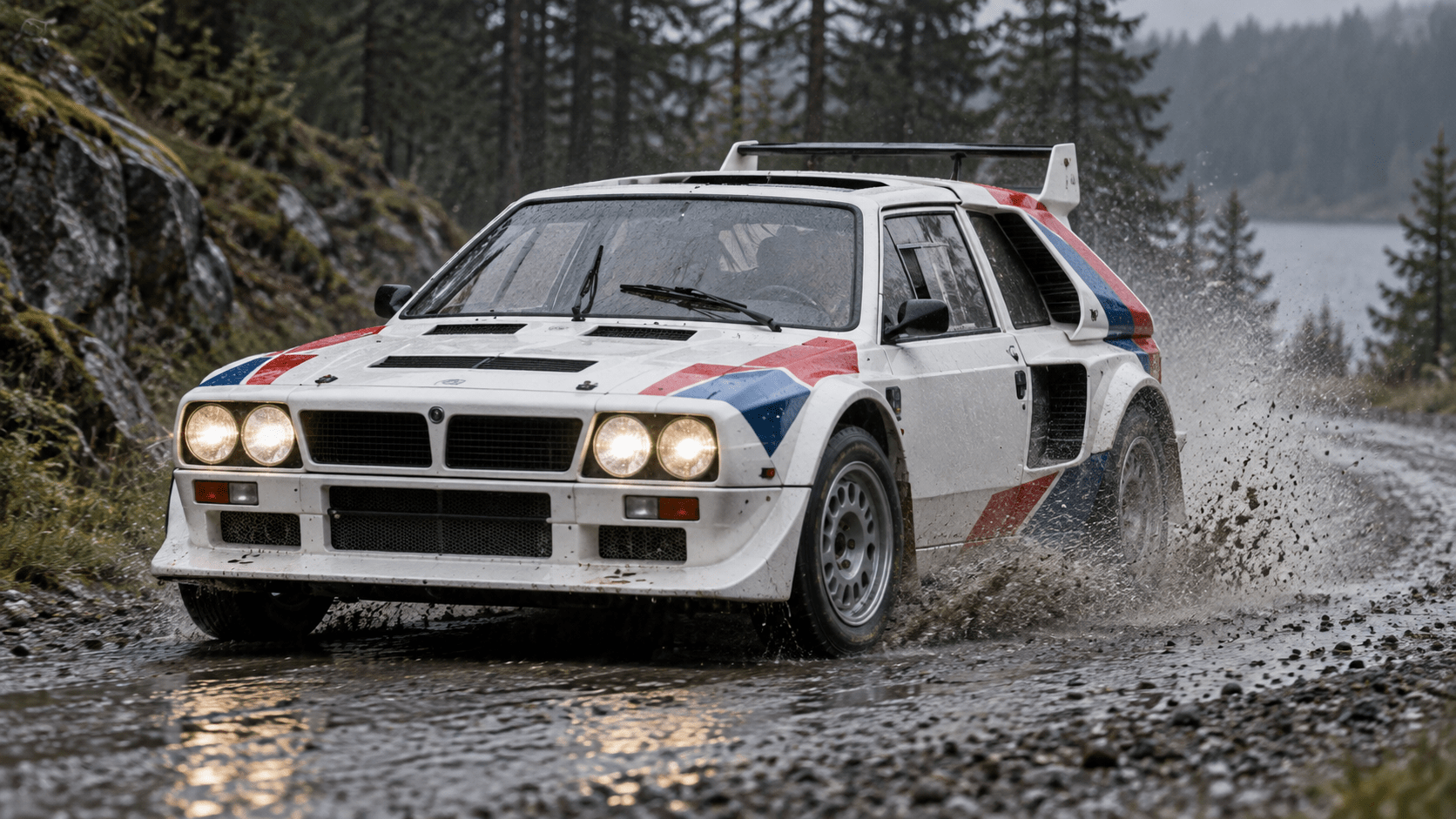
The S4 was not a normal Delta converted into a rally car. Its recognisable hatchback outline gave Lancia a showroom connection, but the mechanical package was designed specifically for top-level competition. The engine sat behind the occupants, the chassis was a welded steel tube-frame and the body used lightweight composite panels.
Its defining feature was twincharging. A mechanically driven supercharger supported response at lower engine speeds, while a large exhaust-driven turbocharger supplied greater airflow at higher speeds. The goal was to combine immediacy with the high output available from turbocharging—an ambitious answer to Group B’s rapid development race.
Lancia Delta S4 specifications
| Feature | Delta S4 Stradale | Group B competition car |
|---|---|---|
| Engine | 1,759cc, four cylinders, twin overhead camshafts and four valves per cylinder | Same fundamental capacity and architecture, extensively developed |
| Induction | Supercharger plus turbocharger | Twincharged for response and high-rpm airflow |
| Quoted power | About 250hp in Lancia heritage material | Approximately 500hp; specification varied |
| Layout | Mid-engine, permanent four-wheel drive | Mid-engine, four-wheel drive with competition transmission |
| Construction | Tubular steel structure with composite panels | Spaceframe and Kevlar/carbon-fibre honeycomb panels |
| Homologation | 200 Stradale cars stated by Lancia | FIA Group B number B-276 |
Lancia’s 2025 heritage account quotes more than 500hp, 966kg and a 250km/h maximum speed for the competition car. Those figures describe a particular historical specification, not every surviving S4. Works cars evolved quickly, and later rebuilds may differ substantially.
How Delta S4 twincharging worked
Low engine speed
The crank-driven Volumex supercharger forced air into the engine immediately, improving response before the larger turbocharger was fully effective.
Rising boost
As exhaust energy increased, the turbocharger contributed more airflow. Valves and bypass arrangements managed the transition between the two devices.
High engine speed
The turbocharger became the main source of boost, supporting the airflow required for the engine’s remarkable competition output.
Twincharging did not make the system simple or perfectly linear. It added heat, plumbing, controls and maintenance demands. In a competition programme, however, the potential benefit was a broader usable power band than a large turbocharger could provide alone.
From Lancia 037 to Delta S4
The Lancia 037 had demonstrated the value of low weight, a mid-mounted engine and supercharged response. It also showed the limitation of rear-wheel drive once Audi and Peugeot established the traction advantage of four driven wheels. Development of the S4 began under the Abarth project code SE038 as Lancia’s clean-sheet response.
The S4 retained a mid-engine layout but changed almost every fundamental element. Its engine, transmission, chassis and body structure were newly conceived. The result carried the Delta name without sharing the ordinary front-engined production car’s architecture.
Competition debut and major results
The S4’s competitive baptism came at the Rally Colline di Romagna in July 1985, where Markku Alén and Ilkka Kivimäki won decisively. Its World Rally Championship debut followed at the RAC Rally in Britain. Henri Toivonen and Neil Wilson won, giving the car an extraordinary first WRC result.
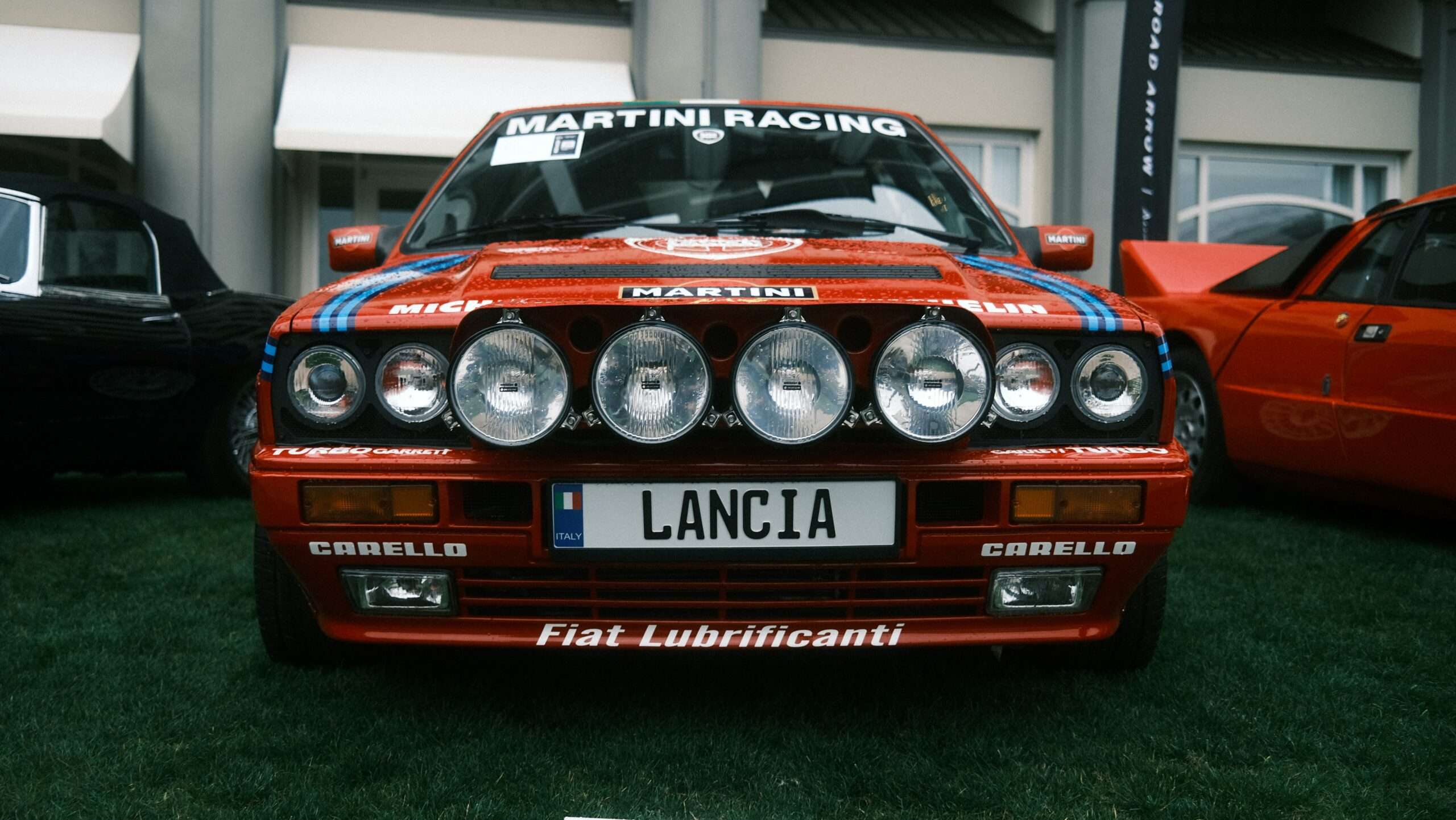
Toivonen won the 1986 Monte Carlo Rally, while the S4 remained a championship contender throughout the final Group B season. Markku Alén was initially declared drivers’ champion after the Sanremo Rally results were included, but the FIA later annulled that event. Peugeot’s Juha Kankkunen therefore became 1986 world champion. Any retelling of the S4 story should acknowledge that controversy rather than simply assigning the title to Lancia.
The 1986 Tour de Corse tragedy
Henri Toivonen and co-driver Sergio Cresto died when their Delta S4 left the road and burned during the 1986 Tour de Corse. The accident followed other fatal incidents involving Group B and intensified the urgent safety debate. The FIA ended Group B as rallying’s top category after the 1986 season.
Delta S4 Stradale versus competition car
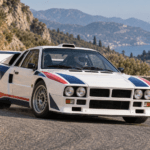
Lancia produced 200 Stradale cars between 1985 and 1986 to meet the Group B homologation requirement. The road car retained the special spaceframe construction, mid-mounted twincharged engine and four-wheel drive, but used a substantially milder tune and road equipment. Lancia quotes about 250hp for the Stradale compared with nearly 500hp for the rally version.
A genuine Stradale is therefore not merely a cosmetic homologation model. It shares the competition car’s fundamental concept and is exceptionally rare. Precisely because values are high, identity, originality and restoration records demand expert scrutiny.
How to identify a genuine Delta S4
Identity
Check chassis markings, plates and registration records together. Do not accept a famous livery or competition number as proof.
Construction
Confirm the welded tubular structure, composite panel construction and correct mid-engine arrangement.
Mechanical specification
Record the engine, supercharger, turbocharger, gearbox, centre and axle differentials, suspension and braking equipment.
History
Match claimed events with entry lists, results, photographs, invoices and continuous ownership evidence.
Delta S4 buying and ownership checks
Spaceframe and composite body
Inspect the tube-frame for corrosion, fatigue, accident deformation and replacement sections. Composite panels may conceal repairs or poor mounting alignment. A competition car may have been rebuilt repeatedly; the work must be reconciled with its claimed identity.
Twincharged engine
Establish the exact build specification and maintenance intervals. Check cold starting, oil pressure, cooling, fuel delivery, supercharger condition, turbocharger wear, boost-control hardware and evidence of detonation or excessive heat.
Four-wheel-drive system
Investigate the gearbox, centre differential, final drives, shafts and joints for noise, leakage and wear. Confirm ratios and torque distribution rather than assuming all S4s are identical.
Specialist support and spares
Correct components are scarce and valuable. Before purchase, identify the specialist who will maintain the car, the provenance of reproduced parts and the spares included with it.
Replicas and S4-style competition cars
Some replicas begin with a production Delta shell; others use bespoke frames and mid-mounted engines. Their engineering quality varies enormously. A well-built recreation can be an exciting competition or demonstration car, but it should have its own identity and must not borrow the provenance of a works S4.
Ask who designed and built the chassis, what engine and drivetrain are fitted, when it was constructed, how it was registered and which events accept it. Describe it accurately as a replica, recreation or silhouette car according to its construction.
Frequently asked questions
What does S4 mean?
Lancia heritage material describes “S” as referring to supercharging and “4” to four-wheel drive.
Is a Delta S4 the same as a Delta Integrale?
No. The S4 is a mid-engined tubular-spaceframe Group B car. The later Delta HF 4WD and Integrale were front-engined production-based Group A developments.
How many Delta S4 Stradales were built?
Lancia states that 200 road cars were produced between 1985 and 1986 for homologation.
How powerful was the rally car?
Lancia’s heritage account quotes more than 500hp for a competition specification. Output varied during development, so chassis-specific evidence is more useful than one headline figure.
Did the Delta S4 win the World Rally Championship?
It won major rallies and contested the 1986 titles, but Peugeot won the manufacturers’ championship and Juha Kankkunen won the drivers’ championship after the Sanremo result was annulled.
Research basis: Lancia/Stellantis Heritage material and the FIA Historic Database entry for Delta S4 homologation B-276. Individual Stradale, rally and recreated cars vary; verify chassis-specific claims independently.