The Alfa Romeo Montreal looks like an Italian supercar, yet its history is stranger and more interesting than that label suggests. It began as an unnamed dream car for a Canadian world exhibition, acquired a road-going V8 related to Alfa’s Tipo 33 racing programme and entered production at a moment when the grand-tourer market was changing rapidly.
Born at Expo 67
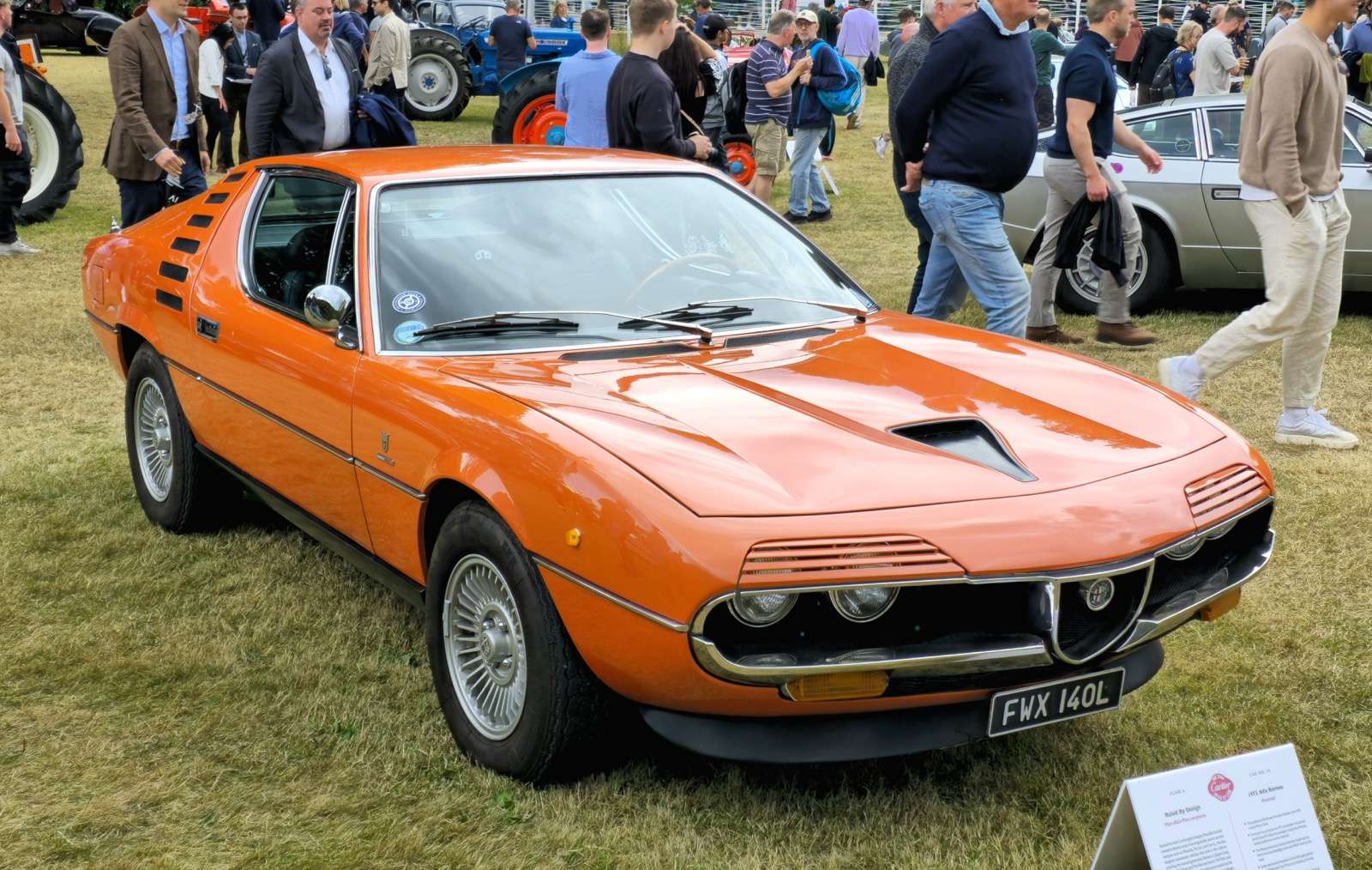
Canada commissioned Alfa Romeo to provide two concept cars for Expo 67 in Montreal. Bertone built them on Giulia Sprint GT running gear, with Marcello Gandini responsible for the shape. They had no model name, but public enthusiasm was strong enough that “Montreal” became the natural identity when Alfa developed a production version.
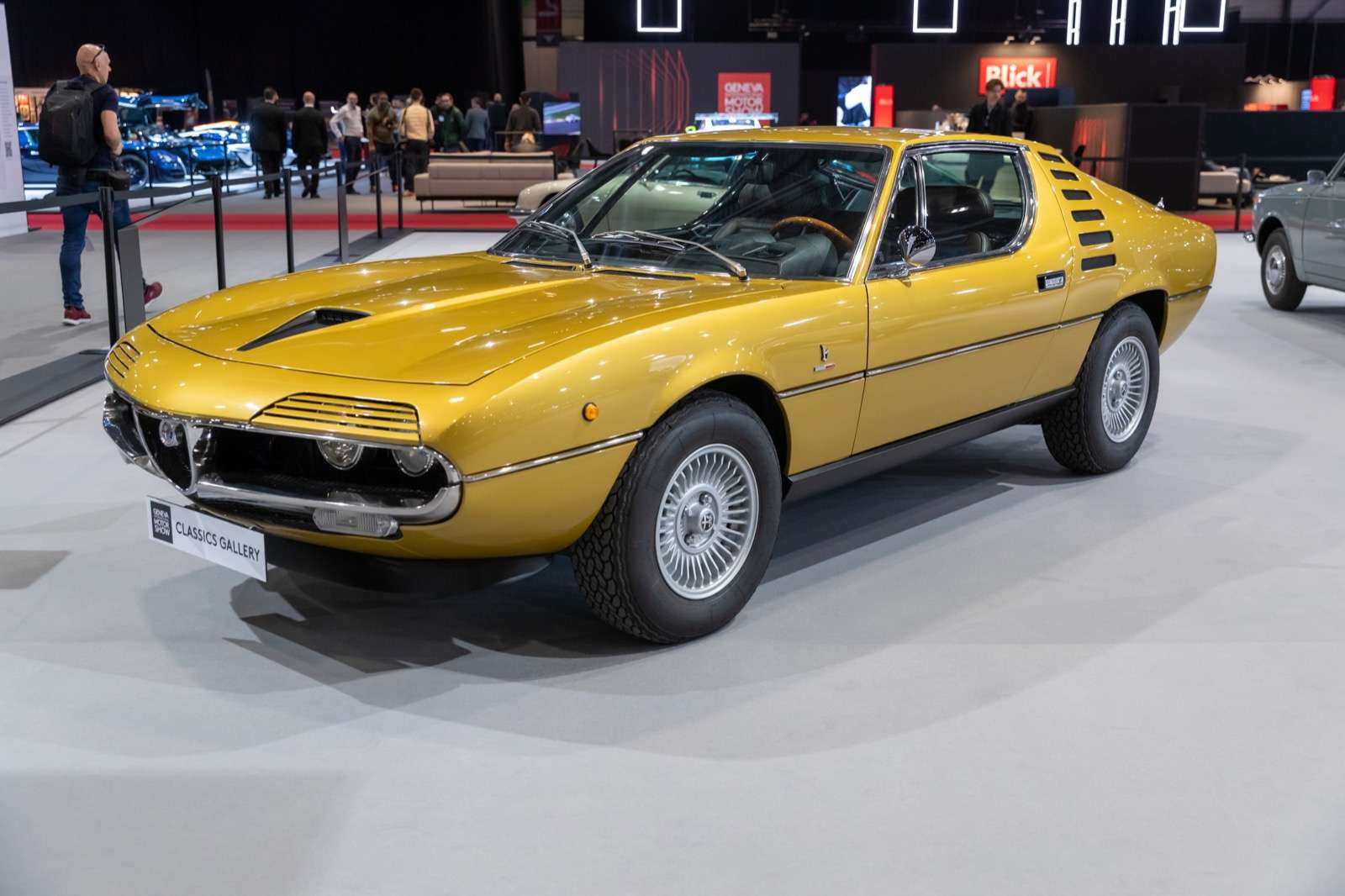
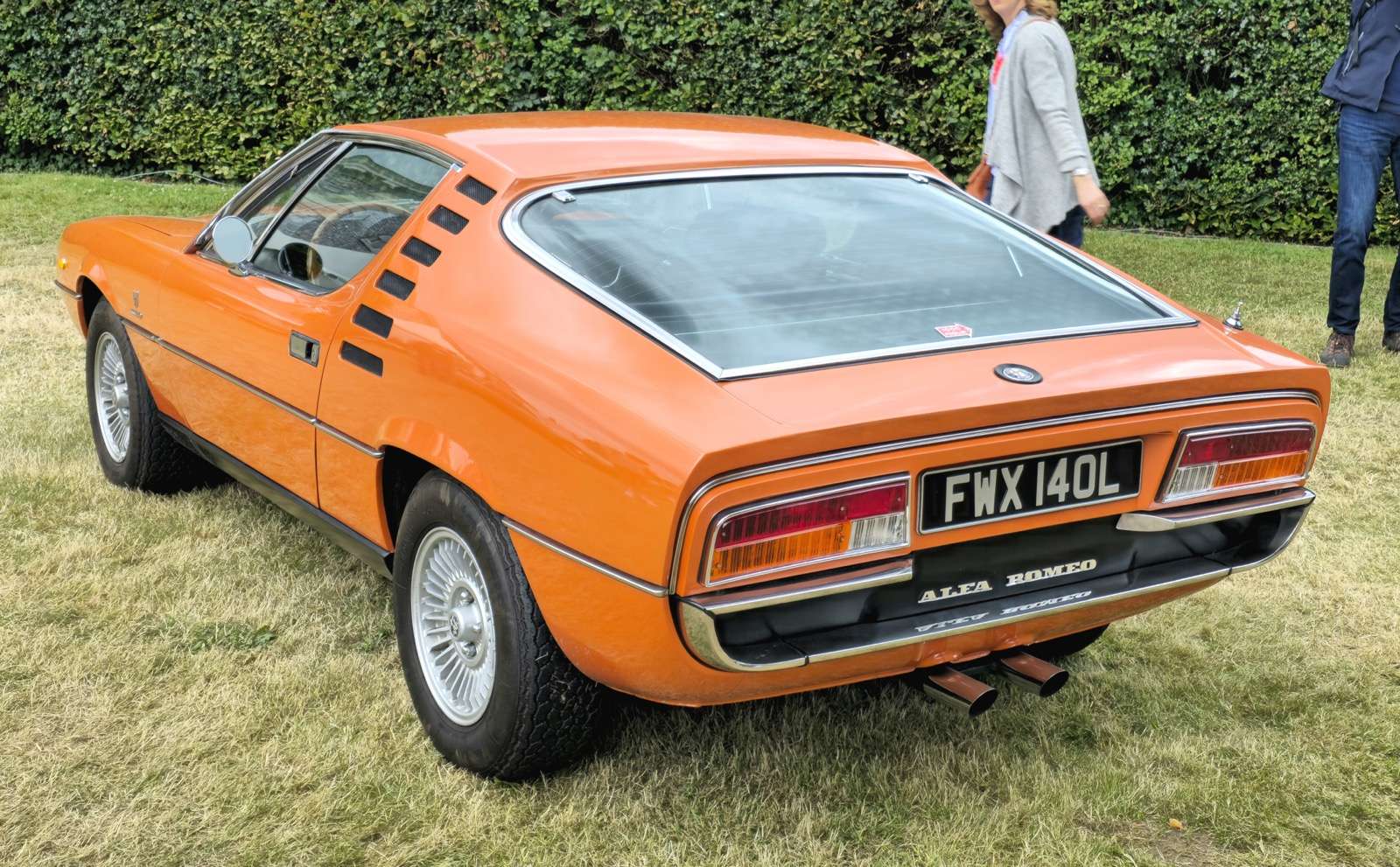
The road car was unveiled at the 1970 Geneva Motor Show. Gandini retained the dramatic proportions, louvred headlamp covers, six slats behind each door and glassy fastback tail, but underneath it was substantially different. The chassis drew on the 105-series coupé family, while the engine transformed its character.
A racing-derived V8 for the road
The production Montreal used a 2,593cc 90-degree V8 with dry-sump lubrication, Spica mechanical fuel injection and four chain-driven camshafts. Its architecture was related to the two-litre V8 used by the Tipo 33 sports racer, but capacity, tune and road manners were adapted for grand touring. Output was quoted at about 200 PS, sent through a five-speed ZF manual gearbox.
Contemporary figures put top speed near 137 mph and 0–60 mph in roughly seven seconds. More important is the way the power is delivered: the short-stroke V8 thrives on revs, while the gearbox and limited-slip differential make the Montreal feel purposeful rather than soft.

Beautiful, complex and compromised
The Montreal mixed exotic power with familiar suspension: double wishbones and coil springs at the front, a live rear axle located by trailing arms and a central T-bar. That kept the car serviceable, but reviewers noted body roll and brakes that could be overworked when the V8’s performance was fully used. It was a fast GT rather than a mid-engined sports car.
Production continued until 1977, although unsold cars lingered in some markets. The commonly cited total is approximately 3,925 production cars. The oil crisis, a high price and complexity limited demand, but scarcity now gives the Montreal the significance it struggled to achieve when new.
Love cars you don’t see every day?
Get forgotten cars, surprising motoring stories and the most interesting finds from Unusual Cars by email.
Free to join. No spam. Unsubscribe whenever you like. See our privacy policy.
Why the Montreal deserves its reputation
Few production cars unite so many strands of Alfa Romeo history. The body represents Gandini and Bertone at their most recognisable; the engine connects road cars to the Tipo 33; and the mechanical layout belongs to the company’s classic front-engine, rear-drive period.
It also rewards accuracy. The slats behind the doors are cabin vents, not engine intakes. The headlamp “eyelids” retract as the lights switch on. The car was not simply the Expo concept put into production, and its V8 was not a racing engine transplanted unchanged. The Montreal is fascinating because Alfa turned a show-car idea into a usable, if demanding, grand tourer.
Alfa Romeo Montreal FAQs
Why is it called the Montreal?
Its design originated with two Alfa Romeo concept cars displayed at Expo 67 in Montreal. The exhibition location supplied the name later used for the production model.
Who designed the Alfa Romeo Montreal?
Marcello Gandini designed it for Bertone. He was also responsible for several of the era’s most celebrated Italian performance cars.
Is the Montreal’s V8 a racing engine?
It is related to the Tipo 33 sports-racing V8, but enlarged to 2.6 litres and substantially adapted for road use, longevity and drivability.
How fast is an Alfa Montreal?
Period figures place top speed around 137 mph, with 0–60 mph in approximately seven seconds depending on test conditions.
How many Alfa Montreals were built?
The accepted figure is about 3,925 production cars. Records and definitions can vary slightly, so it is safest treated as an approximate total.
Research sources
History and specifications were cross-checked against Alfa Romeo heritage material and contemporary production records; image licences are linked in each caption.
Continue the Alfa Romeo story
Visit the Rare & Performance Alfa Romeos hub, then explore the SZ and RZ or the classic 2000 GTV.