UNUSUAL CARS MODEL GUIDE
Featured image: Rudolf Stricker, Public domain, via Wikimedia Commons; locally hosted.
The Suzuki Liana was a tall, practical family car whose name stood for “Life In A New Age”. Launched in 2001 and sold in Britain as a five-door hatchback and four-door saloon, it combined a roomy cabin with compact exterior dimensions. The Liana became far more famous as Top Gear’s first “reasonably priced car”, but the ordinary road model deserves to be remembered on its own merits.
Quick answer: the Liana is spacious, simple and generally durable rather than exciting. The 1.6 petrol is the most familiar UK choice, while the Sport adds visual equipment without becoming a true hot hatch. Buy for corrosion-free structure, a quiet drivetrain, complete service history and working electrics.
A practical Suzuki for a new century
Suzuki introduced the Liana in 2001 between the smaller Ignis and larger family cars. Its roofline and upright seating created strong passenger space without a long body. Contemporary UK tests noted the generous cabin, easy access and useful luggage area, even if the steering and ride were less polished than the European class leaders.

The original 1.6-litre petrol produced just over 100 bhp and could be paired with a five-speed manual or four-speed automatic. A saloon broadened the range, and a diesel appeared later in Europe. Equipment and engine details varied by year, so the registration document and chassis number should guide parts ordering.
| UK-market version | Character | Buying focus |
|---|---|---|
| 1.6 hatchback | Roomy, upright and straightforward | Gearbox, suspension wear, corrosion and electrical equipment |
| 1.6 automatic | Relaxed but less economical | Fluid condition, shift quality and cooling history |
| Liana Sport | Body styling and extra equipment with about 105 bhp | Complete Sport trim, alloy wheels and accident repairs |
| Saloon | Conventional boot and rarer UK body style | Rear structure, boot seals and model-specific panels |
Love cars you don’t see every day?
Get forgotten cars, surprising motoring stories and the most interesting finds from Unusual Cars by email.
Free to join. No spam. Unsubscribe whenever you like. See our privacy policy.
The Liana Sport
The Liana Sport used the 1.6-litre engine in a roughly 105 bhp specification and added spoilers, side skirts, alloy wheels and a stronger equipment list. It looked more purposeful, but it was not engineered as a rival to focused hot hatchbacks. That distinction is useful when assessing a car: originality and completeness matter more than claims of performance rarity.

Sport-specific exterior pieces can be difficult to source. Check every skirt and bumper attachment, compare panel gaps and inspect alloy wheels for impact damage. A modified exhaust or lowered suspension does not necessarily improve the car.
The Top Gear connection
A Liana served as the first car in Top Gear’s “Star in a Reasonably Priced Car” feature during the programme’s early modern series. That television role gave the model recognition far beyond its sales performance. The track car’s celebrity should not be confused with a special production version: ordinary customer cars used the same practical family-car concept sold through Suzuki dealers.
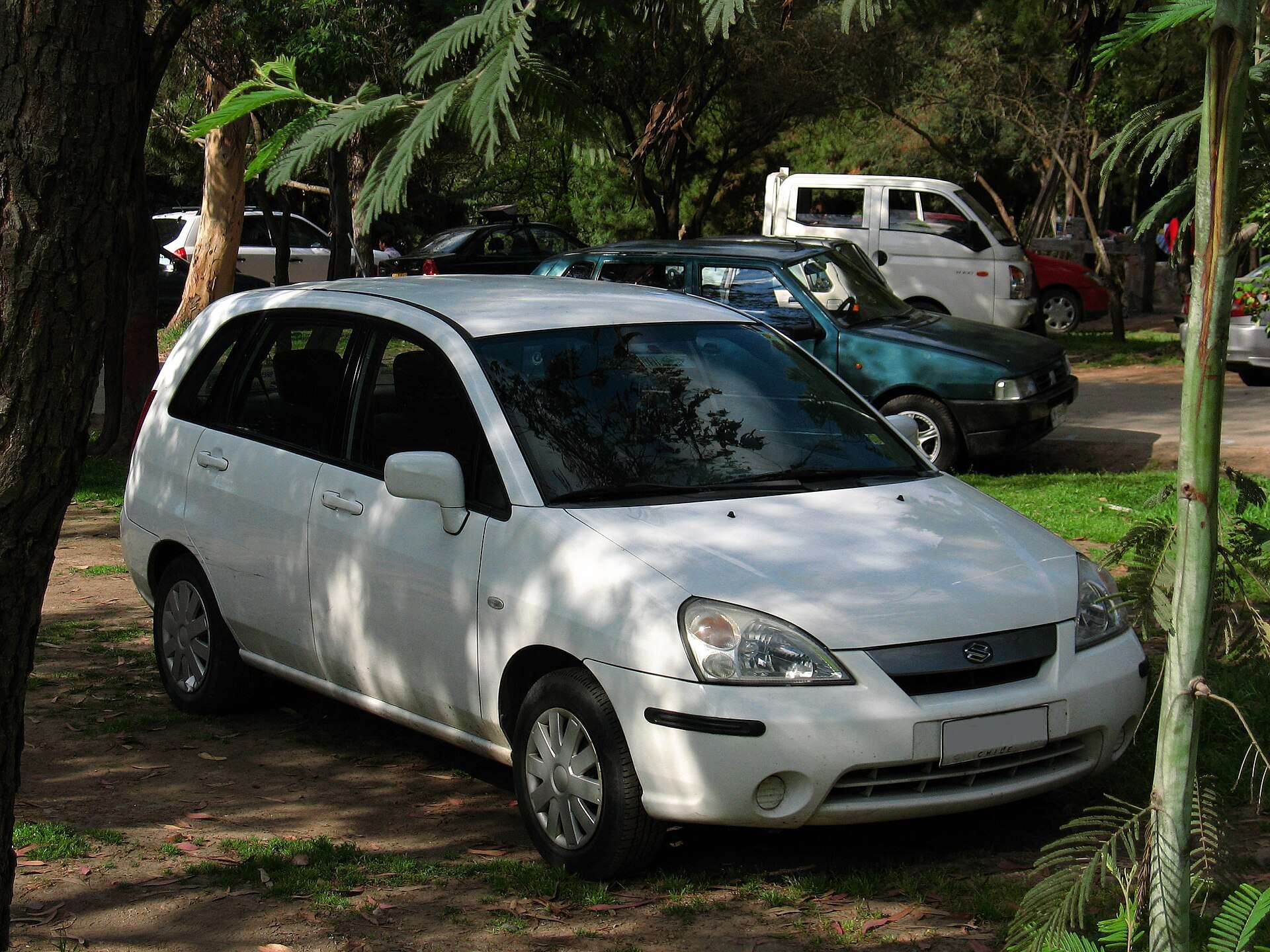
The association now adds nostalgia, especially for viewers who remember the programme, but condition remains decisive. A neglected car does not become collectible merely because the badge recalls a television segment.
Engine, transmission and cooling
Start from cold and listen for chain, bearing or exhaust noise. The petrol engine should idle evenly and pull without hesitation. Check oil level, coolant colour, radiator condition and evidence of leaks. Ageing ignition components, oxygen sensors and intake leaks can cause poor running, so investigate warning lights rather than accepting them as normal.
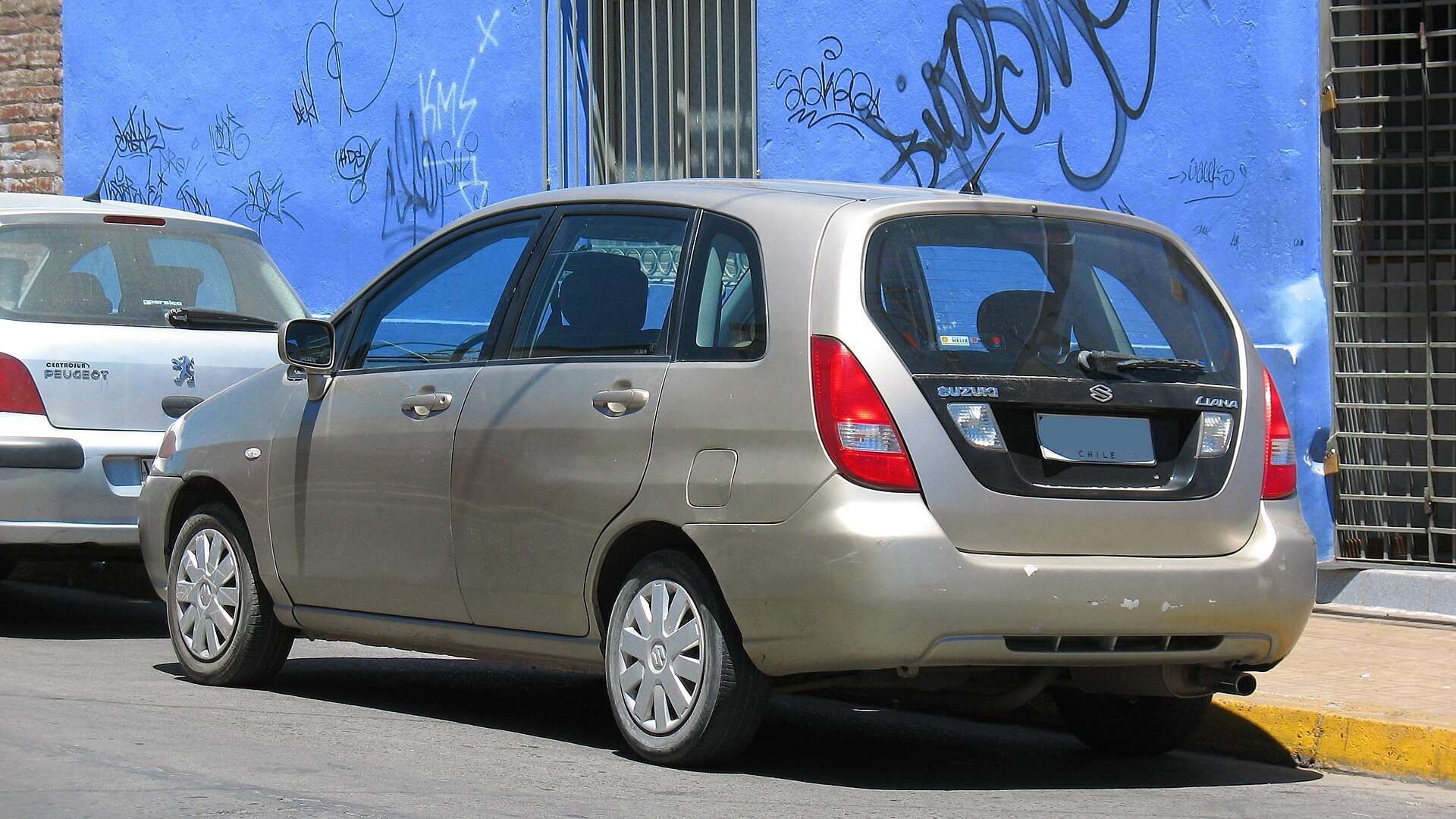
The manual gearbox should select smoothly when cold and hot, with no clutch slip or driveshaft vibration. Automatic cars need prompt engagement, steady shifts and clean fluid. Confirm that any four-wheel-drive import really matches the seller’s description, because most familiar UK cars were front-wheel drive and parts differ by specification.
Body, cabin and chassis checks
Inspect sills, jacking points, rear arches, floor edges, subframes, brake pipes and suspension mounting areas. Look inside the boot and beneath the carpets for damp. A high roof and large glass area make accident alignment easy to judge: uneven gaps, wind noise and mismatched paint require explanation.

Test the digital instruments used on early cars, electric windows, locks, ventilation, air conditioning and audio equipment. Seat fabric and interior plastics are durable but replacement trim is not plentiful. A complete, clean cabin is a meaningful advantage.
Ride, steering and brakes
On the road, the Liana should feel stable and predictable. Knocks can come from drop links, bushes, top mounts or worn dampers; a humming sound that changes with speed may indicate wheel bearings. Check tyre wear for alignment problems and make sure the brakes operate evenly without a pulsing pedal.
Is a Suzuki Liana worth preserving?
The Liana represents a type of ordinary Japanese family car that has vanished rapidly through attrition. It offers more usable space than its footprint suggests, and a good example can still serve as practical transport. The Sport and tidy saloons have extra rarity interest, while the Top Gear link gives the whole range a cultural hook that few modest family hatchbacks possess.
Sources and further reading
- The AA: July 2001 Suzuki Liana road test
- Suzuki: Liana Sport technical information
- Suzuki annual report: European Liana diesel context
Continue the Suzuki story
The Liana shows how Suzuki applied its space-efficient thinking to a conventional family car—and then gained unexpected television fame. Explore the Suzuki hub, the Ignis Sport guide, the Swift Sport guide.
Frequently asked questions
What does Suzuki Liana mean?
Suzuki said Liana stood for “Life In A New Age”, reflecting the model’s practical, space-efficient early-2000s design.
Was the Suzuki Liana sold in the UK?
Yes. Suzuki officially sold the Liana in Britain in hatchback and saloon forms, with the 1.6-litre petrol among the best-known versions.
Was the Liana the Top Gear reasonably priced car?
Yes. A Suzuki Liana was the first car used in the modern Top Gear “Star in a Reasonably Priced Car” feature.
Is the Suzuki Liana Sport a hot hatch?
Not in the usual sense. It added styling and equipment and used a roughly 105 bhp 1.6-litre engine, but remained a practical family car rather than a focused performance model.
What should be checked before buying a Liana?
Check corrosion, service history, cooling, engine warning lights, gearbox or automatic operation, suspension noises, brakes, tyre wear, digital instruments and all electrical equipment.