UNUSUAL CARS MODEL GUIDE
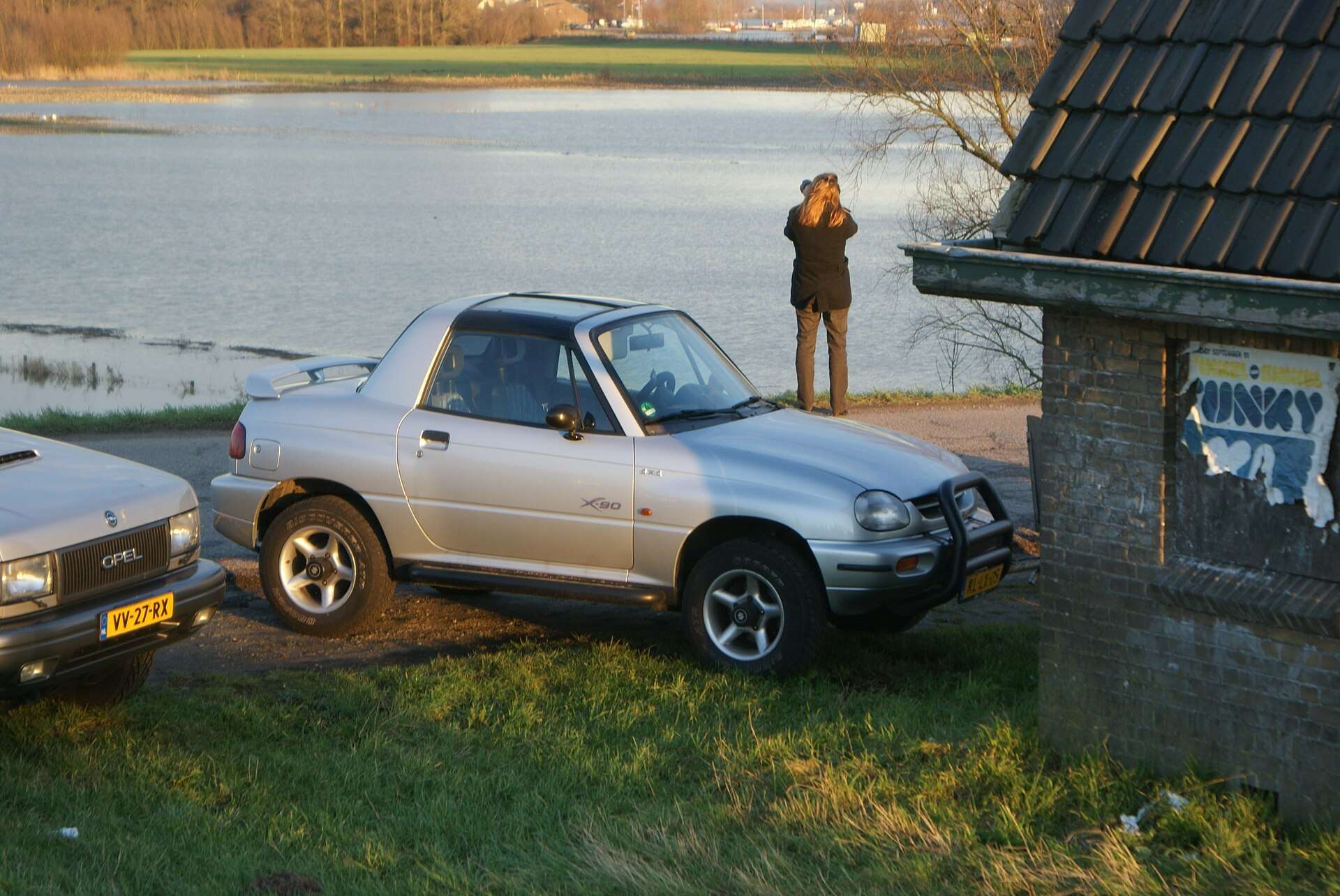
Featured image: Rutger van der Maar, CC BY 2.0, via Wikimedia Commons; locally hosted.
The Suzuki X-90 was the sort of car only the 1990s could have produced: a two-seat, two-door mini-SUV with a separate chassis, selectable four-wheel drive, a removable glass T-bar roof and a conventional boot. It reached the UK in 1996, looked unlike anything else in Suzuki showrooms and disappeared after a brief sales life.
Quick answer: the X-90 is best understood as a compact leisure coupé built with Vitara hardware. Its rarity, cheerful styling and genuinely unusual layout make it collectible, but structural corrosion, neglected four-wheel-drive components, missing roof panels and scarce trim can turn an inexpensive example into a difficult restoration.
What was the Suzuki X-90?
Suzuki first showed the X-90 as a concept in the early 1990s and put it into production for the middle of the decade. The production car combined the short-wheelbase Vitara platform with a rounded two-seat body. A 1.6-litre, 16-valve petrol engine sat longitudinally, with five-speed manual and four-speed automatic transmissions offered in different markets.
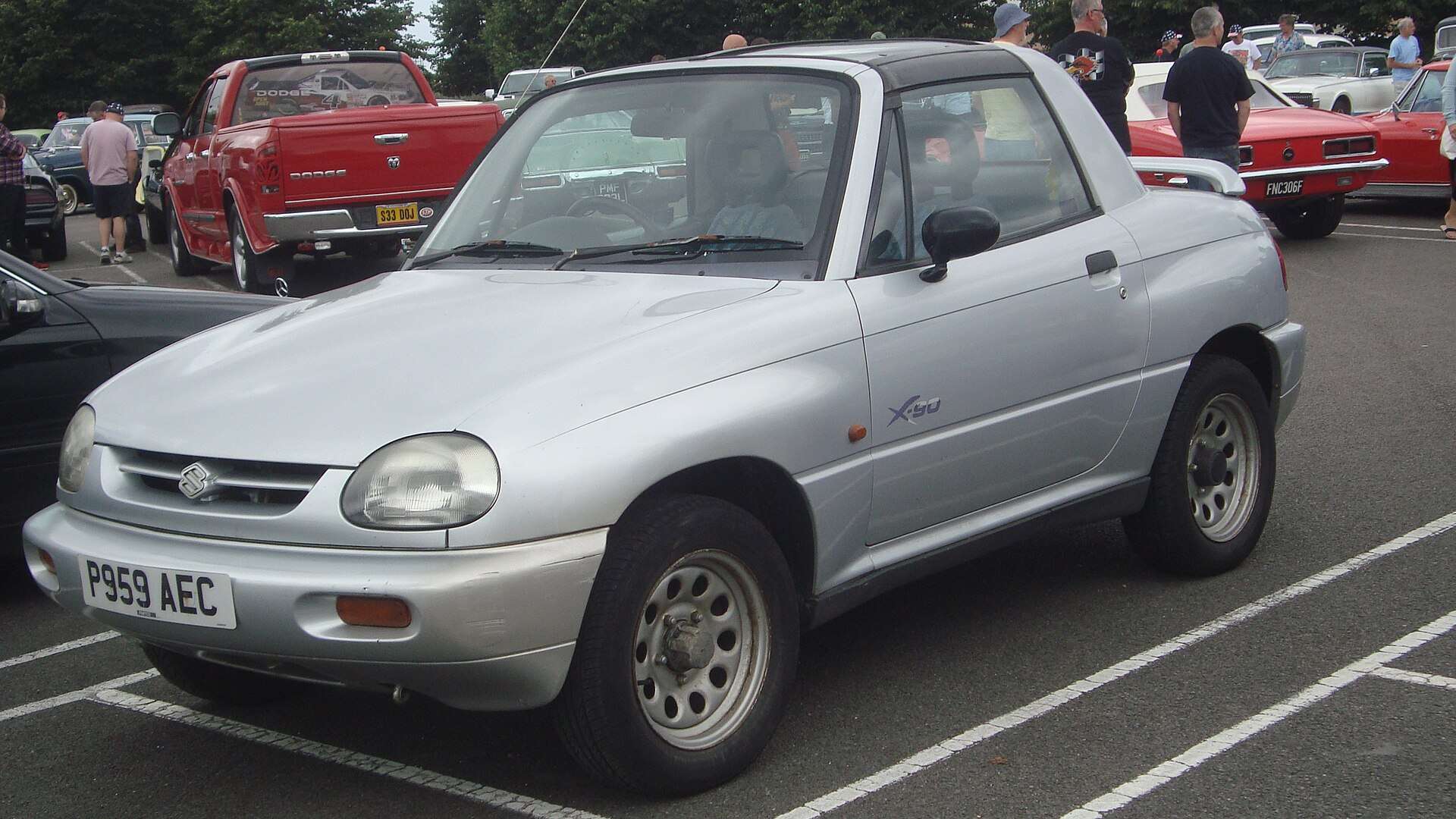
UK buyers were offered a car with selectable four-wheel drive and low range. In normal road use it drove the rear wheels, with the front axle engaged when additional traction was needed. That makes the X-90 mechanically more serious than its playful appearance suggests, although its road-biased tyres, modest ground clearance and small boot were aimed at recreation rather than hard commercial work.
| UK-market outline | Detail |
|---|---|
| Engine | 1,590cc 16-valve petrol four-cylinder |
| Output | About 97 PS, depending on rating convention |
| Transmission | Five-speed manual or four-speed automatic |
| Driveline | Rear-wheel drive with selectable four-wheel drive and low range |
| Body | Two-seat coupé with removable glass roof panels and separate boot |
Love cars you don’t see every day?
Get forgotten cars, surprising motoring stories and the most interesting finds from Unusual Cars by email.
Free to join. No spam. Unsubscribe whenever you like. See our privacy policy.
Why it was so unusual
The X-90 arrived when manufacturers were experimenting with lifestyle 4x4s, yet even by those standards it occupied a tiny niche. It had none of the rear-seat practicality of a Vitara and little of the luggage space expected from a conventional sports coupé. In exchange it offered high seating, compact dimensions and open-air motoring without the fabric roof of a convertible.
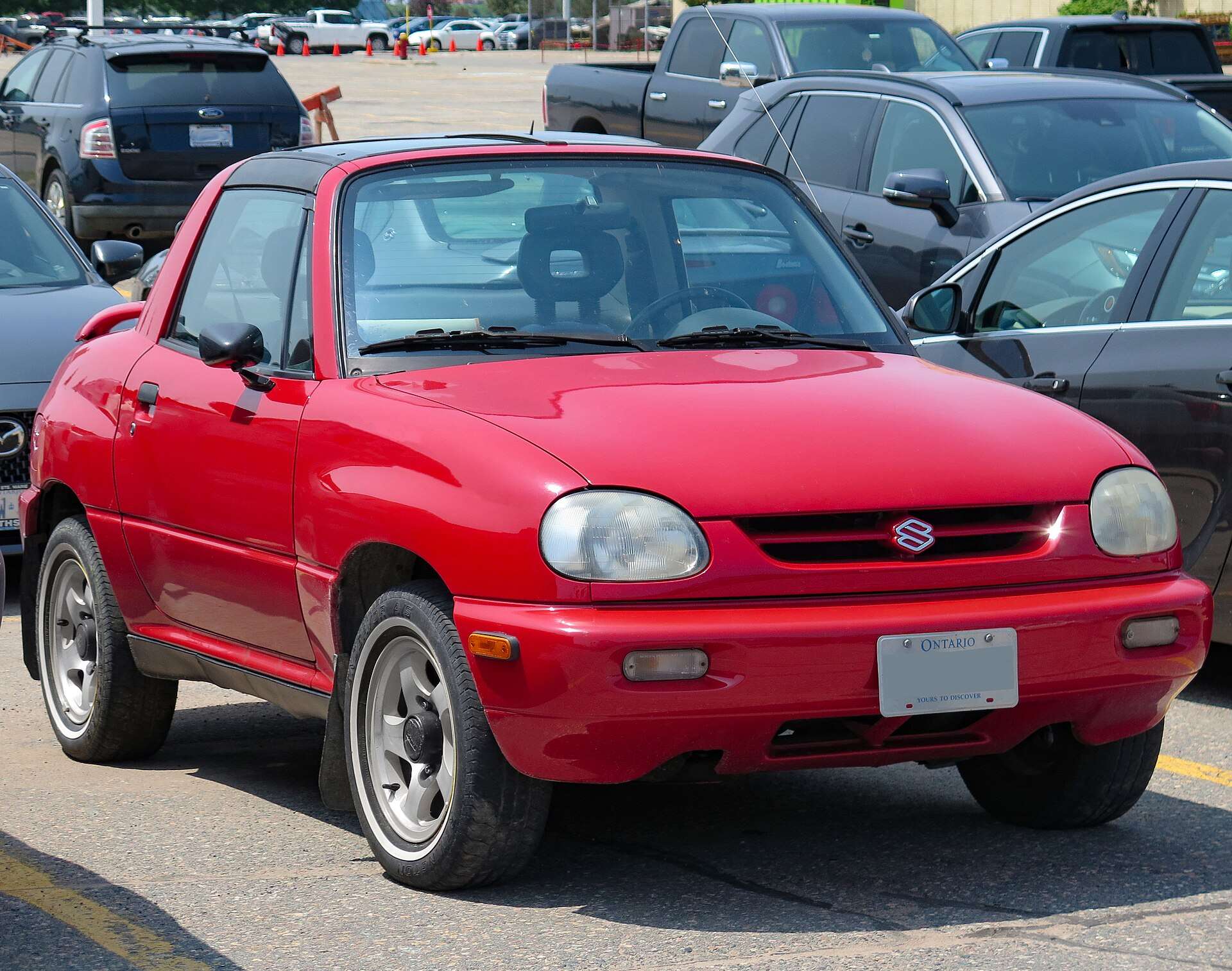
Contemporary road tests often struggled to classify it. That confused identity limited new-car demand, but it is now the principal reason the model attracts attention. An original X-90 is instantly recognisable, mechanically straightforward and far rarer on British roads than most small 1990s coupés.
Engine, gearbox and four-wheel drive
Start the engine from cold and listen for persistent rattles, exhaust leaks and accessory-bearing noise. Check oil and coolant condition and confirm that the cooling fan cuts in. The 1.6-litre engine should pull cleanly rather than misfire or hesitate. Service history matters because low annual mileage can disguise long periods of inactivity.
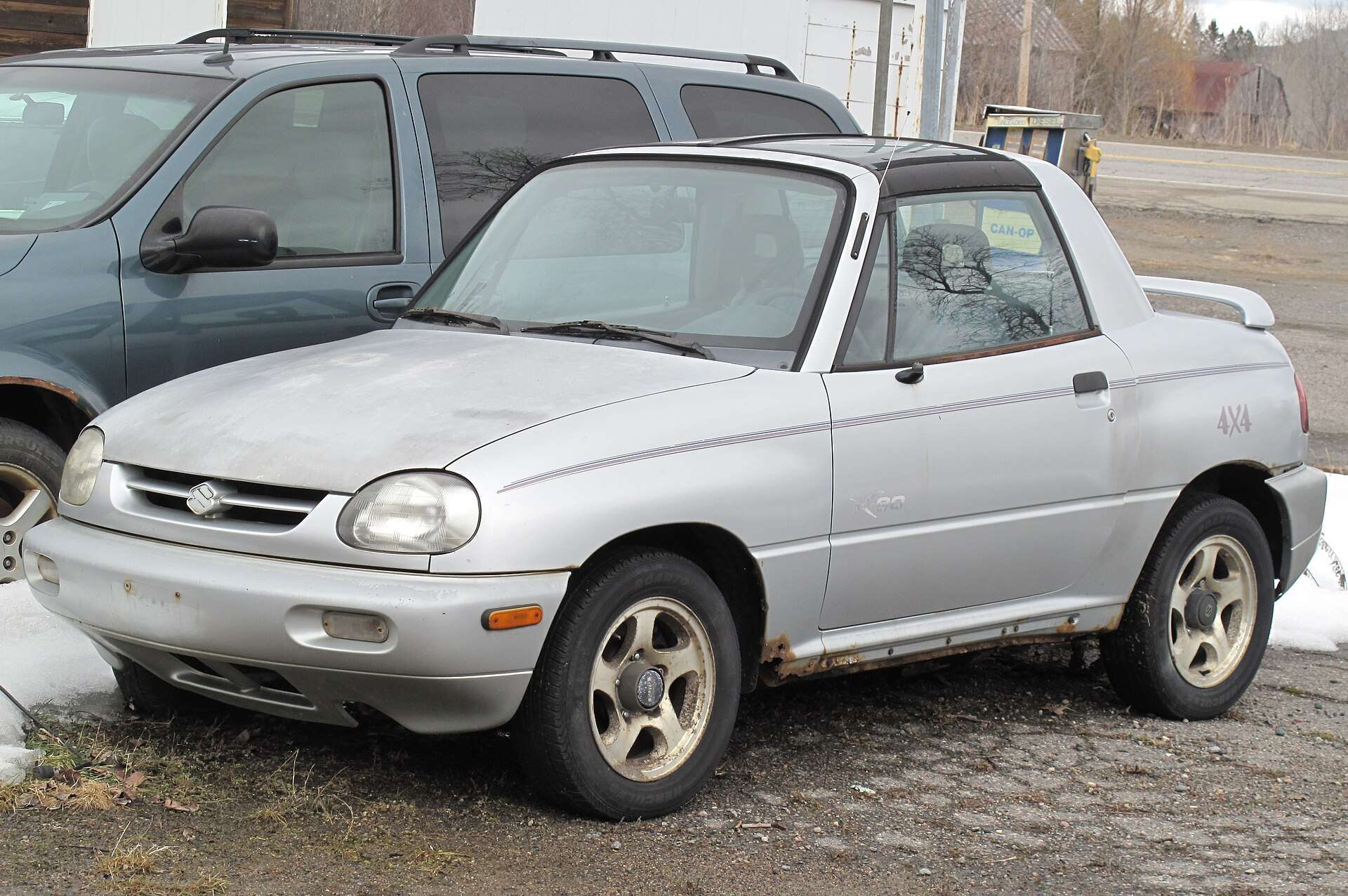
A manual gearbox should select every ratio without crunching and the clutch should take up smoothly. An automatic needs clean fluid, prompt engagement and consistent shifts. Test high and low four-wheel-drive ranges on a loose surface. Do not engage four-wheel drive on dry, high-grip tarmac: transmission wind-up can damage tyres and driveline components.
Rust and body inspection
The separate chassis is the most important inspection area. Check rails, crossmembers, suspension mounts, body mounts, outriggers and the area around the fuel tank. Mud and road salt can remain trapped in seams. Fresh black coating deserves a careful look because it may hide repairs rather than prove preservation.
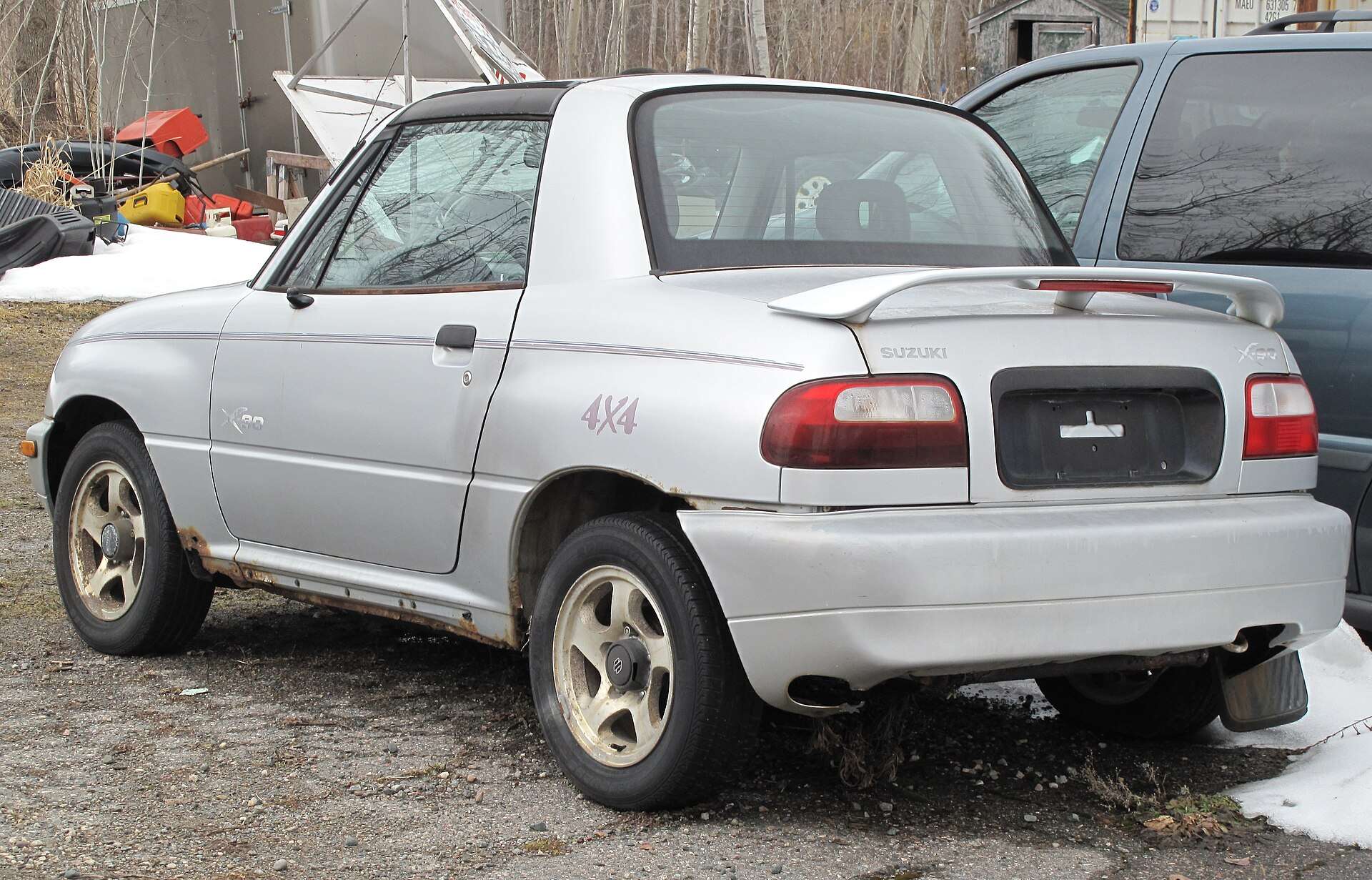
On the body, inspect sills, floor edges, wheelarches, inner wings, boot floor and screen surround. Check panel gaps and paint finish for accident repairs. X-90-specific bumpers, lights, glass and interior pieces are much harder to replace than routine mechanical parts shared with other Suzukis.
Roof, cabin and water leaks
Both glass roof panels should be present, correctly labelled for position and free from cracks. Inspect seals, catches, storage bags and drains, then lift carpets to find damp or corrosion. Water entering around the roof can damage trim and create electrical faults. Confirm that windows, central locking, instruments, heater and ventilation all work.
The boot is separate from the passenger compartment and small by SUV standards. Its hinges, lock, seals and floor need checking. Original seat fabric and plastic trim add value because model-specific cabin pieces are scarce.
Suspension, steering and brakes
Look for tired bushes, worn ball joints, leaking dampers and noisy wheel bearings. The car should track consistently and stop without pulling. Oversized wheels and extreme suspension changes can spoil its steering and increase loads on older components. A standard example on quality tyres usually presents the X-90 at its best.
Which X-90 should you buy?
Choose structural condition and completeness before colour or gearbox. A sound, original car with both roof panels, working four-wheel drive and a documented cooling system is preferable to a freshly painted project. Specialists familiar with early Vitara mechanicals can help, but X-90 body and trim availability must be considered before taking on restoration work.
Sources and further reading
- Hagerty UK: Suzuki X-90 history and period context
- Suzuki: global automobile history
- Suzuki X-90 international sales brochure
Continue the Suzuki story
The X-90 is one of Suzuki’s boldest attempts to combine serious small-4×4 engineering with a playful road car. Explore the Suzuki hub, the first-generation Vitara guide, the Cappuccino guide.
Frequently asked questions
Was the Suzuki X-90 sold in the UK?
Yes. The X-90 was officially offered in Britain from 1996, although sales were limited and surviving cars are now uncommon.
Is the Suzuki X-90 a Vitara underneath?
It uses closely related short-wheelbase Vitara chassis and drivetrain engineering, but has its own two-seat coupé body and model-specific trim.
Does the Suzuki X-90 have four-wheel drive?
UK-market cars used selectable part-time four-wheel drive with low range. It normally drives the rear wheels and should use four-wheel drive only on suitable loose surfaces.
Can the X-90 roof be removed?
Yes. It has two removable glass roof panels forming a T-bar arrangement. Their condition, seals, catches and storage equipment should be checked carefully.
What is the biggest Suzuki X-90 buying risk?
Structural corrosion in the separate chassis and body is the most serious risk, followed by missing model-specific trim, roof leaks and neglected four-wheel-drive components.