UNUSUAL CARS MODEL GUIDE
The Aston Martin Vulcan was the company’s most extreme customer car when it appeared at the 2015 Geneva motor show. It was not homologated for a racing championship and it was not conceived as a road car. Instead, Aston Martin combined a carbon-fibre structure, a naturally aspirated 7.0-litre V12 and competition-derived running gear with a factory-supported driver programme for just 24 owners.
Quick answer: Aston Martin built 24 Vulcans, with customer deliveries completed during 2016. The front-mid-mounted 7.0-litre V12 produces 820 bhp in its highest setting and drives the rear wheels through a six-speed Xtrac sequential gearbox. The car is track-only in original specification. Condition assessment must include the carbon structure, aerodynamic surfaces, engine hours, gearbox and clutch records, braking system, safety equipment and the availability of factory or specialist support.
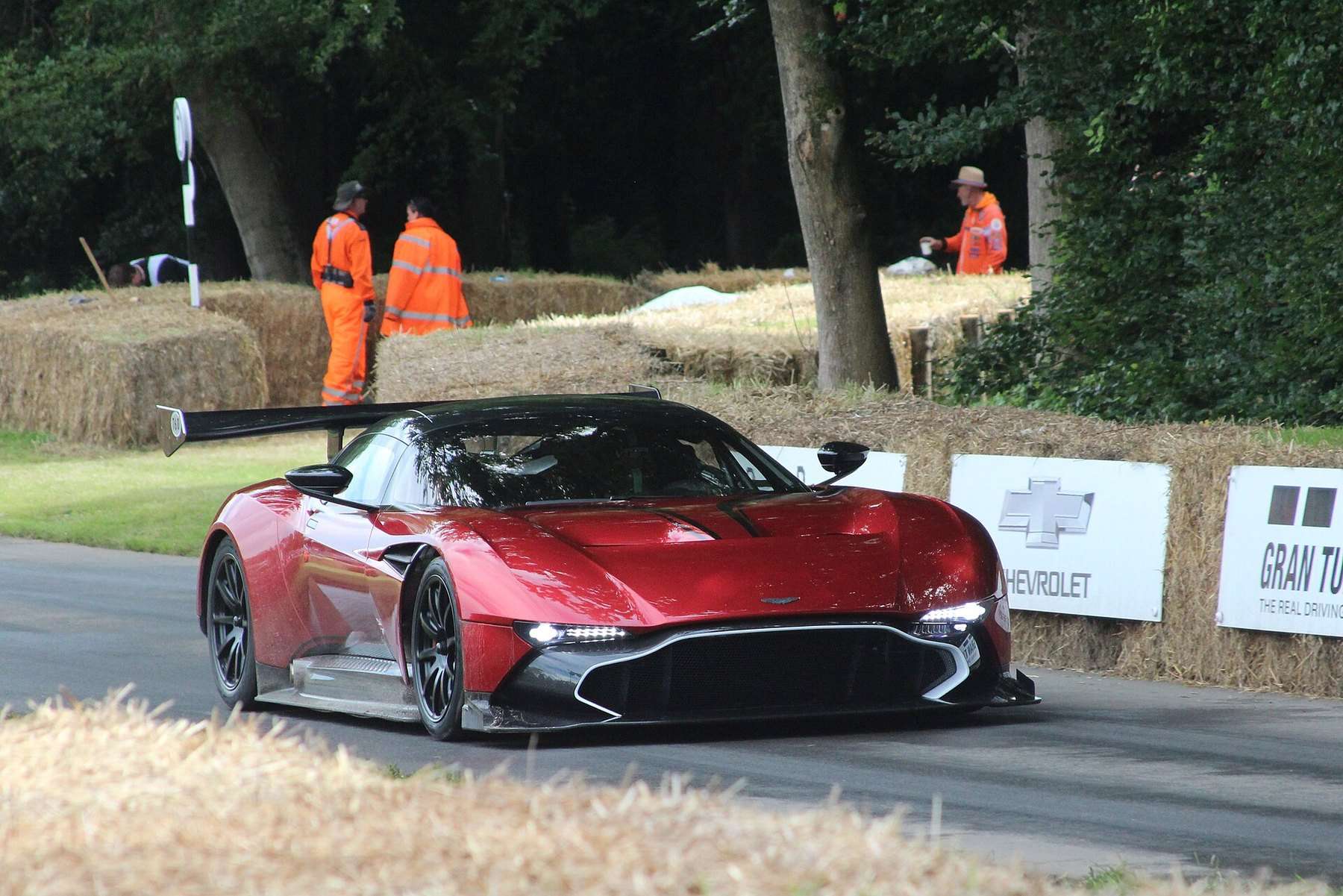
Featured image: Red Aston Martin Vulcan at Supercar Fest. Photograph by MrWalkr, CC BY-SA 4.0, via Wikimedia Commons; locally hosted.
Why Aston Martin created the Vulcan
The Vulcan followed the One-77 but pursued a very different purpose. Aston Martin wanted a car that could exceed the performance of its contemporary GT racers without being constrained by road regulations or a competition rulebook. Design director Marek Reichman’s team wrapped the mechanical package in a huge front-engined shape with side-exit exhausts, a deep splitter and a fixed rear wing.
Every customer entered a structured ownership programme rather than simply receiving a key. Works drivers, including Darren Turner, helped owners develop through simulator work, tuition and progressive track running. That support explains why the car has adjustable power, traction control, dampers and anti-roll bars: it was intended to grow with its driver.

Carbon chassis, V12 and specifications
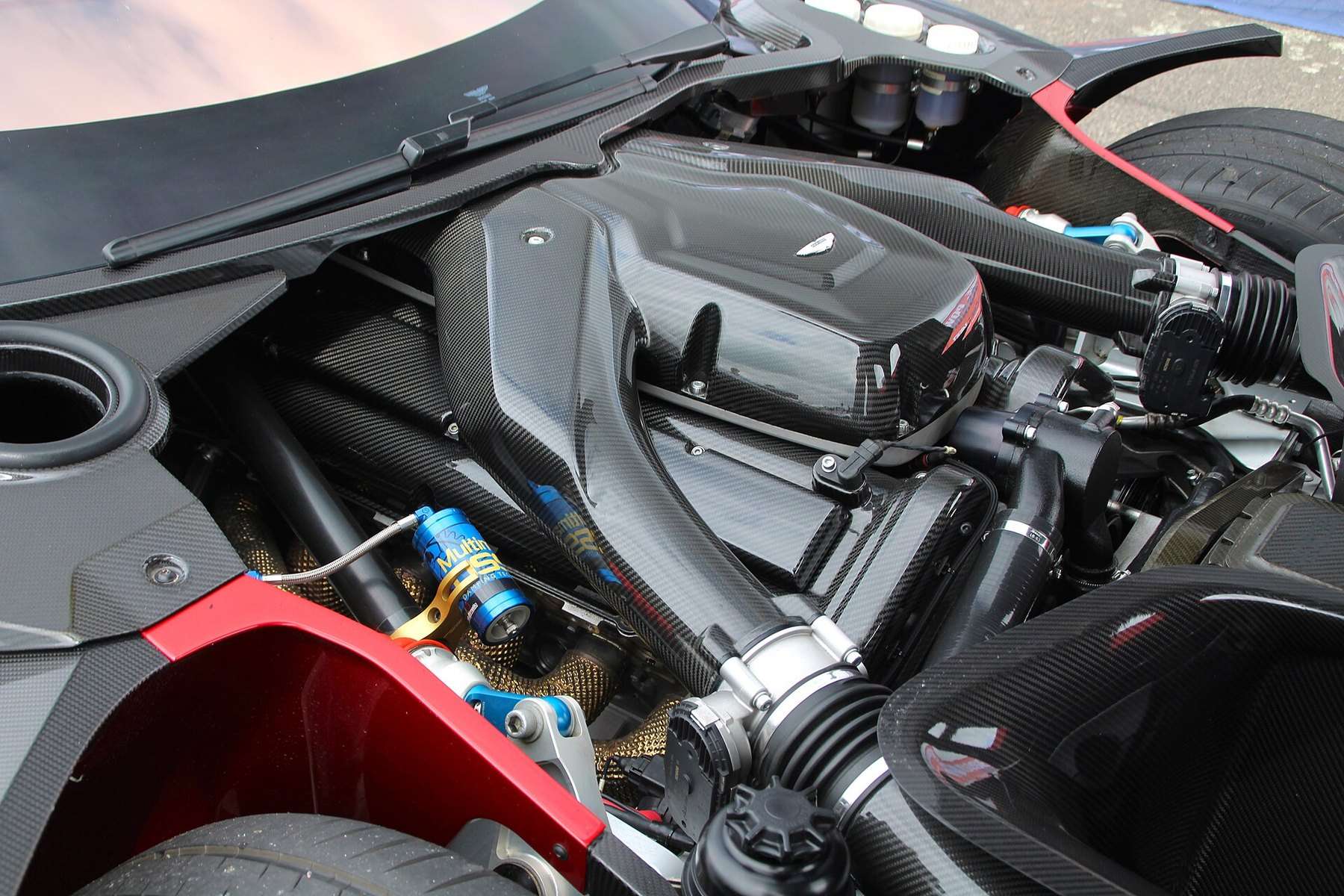
The Vulcan uses a heavily developed carbon-fibre monocoque related to the One-77 architecture. Its dry-sump 7.0-litre V12 was developed with Aston Martin Racing and is mounted behind the front axle. Three power settings allow roughly 550, 675 and the full 820 bhp, while the six-speed Xtrac sequential transaxle is operated by paddles.
| Item | Vulcan specification |
|---|---|
| Production | 24 cars |
| Engine | 7.0-litre naturally aspirated V12 |
| Maximum output | 820 bhp |
| Transmission | Six-speed Xtrac sequential |
| Quoted mass | About 1,350 kg |
Pushrod suspension, adjustable dampers, a magnesium torque tube, carbon propeller shaft and Brembo carbon-ceramic brakes underline that this is a purpose-built track machine rather than a stripped road model.
Love cars you don’t see every day?
Get forgotten cars, surprising motoring stories and the most interesting finds from Unusual Cars by email.
Free to join. No spam. Unsubscribe whenever you like. See our privacy policy.
Aerodynamics and the AMR Pro package
The original car generates substantial downforce through its flat floor, diffuser, splitter and rear wing. In 2017 Aston Martin offered the AMR Pro upgrade to existing owners. It added louvres above the front wheels, dive planes, a larger front splitter arrangement and a dual-plane rear wing with additional Gurney flaps.
The upgrade also reduced engine-cover mass and shortened the gearbox ratios. Aston Martin stated that the changes increased total downforce and moved the aerodynamic balance closer to the centre of the car, improving response without changing the engine’s headline output. Documentation should establish whether an upgraded car retains its original components.

What the Vulcan is like on circuit
The long bonnet and rearward seating position make the Vulcan feel physically large, but aerodynamic grip builds rapidly with speed. The power modes and variable traction control allow a driver to approach its limits progressively. Carbon-ceramic brakes and a sequential gearbox demand correct temperatures and technique, while the adjustable chassis means setup records matter.
Unlike a homologated racing car, a Vulcan has no natural competition class or routine race calendar. Its use is normally confined to private track days, demonstrations and manufacturer-supported events. Transport, circuit noise limits, trained support staff and suitable spares therefore form part of every outing.
Inspection, servicing and safety equipment
Begin with the chassis identity, factory build file and a complete record of running hours. Inspect the carbon tub and bonded structures for impact evidence, repaired laminate, damaged mounting points and deterioration around fasteners. The splitter, floor, diffuser and wing are vulnerable during loading and kerb strikes.
Engine leak-down data, oil analysis, cooling-system records and any life-limited component schedule should be reviewed by a specialist. Check the Xtrac gearbox, clutch, differential, driveshafts, wheel bearings, dampers and brake discs. Harnesses, fire system, seat, fuel equipment and extinguishers may require replacement or recertification even when the car has covered little distance.

Buying and owning one of 24
A Vulcan purchase is closer to acquiring a competition programme than a conventional collector car. Establish where the car can be maintained, whether diagnostic equipment and parts support are available, and who will transport and run it. A static museum example may need extensive recommissioning before safe circuit use.
Original colour, options, delivery equipment and AMR Pro status influence identity, but condition and documentation are more important than odometer mileage. The strongest example combines an undamaged structure, transparent running records, current safety equipment and a credible plan for continuing technical support.

Sources and further reading
- Aston Martin Media: Vulcan history and specifications
- Aston Martin: Vulcan AMR Pro
- evo: Aston Martin Vulcan track review
- Aston Martin Heritage Trust
Continue the Aston Martin story
The Vulcan pushed Aston Martin beyond road-car and racing-category conventions into a factory-supported track programme. Explore the complete Aston Martin hub. Read the One-77 guide. Explore the V12 Vantage family.
Frequently asked questions
How many Aston Martin Vulcans were built?
Aston Martin built 24 Vulcans, with customer deliveries completed during 2016.
Is the Aston Martin Vulcan road legal?
The Vulcan was supplied as a track-only car and was not road homologated in its original specification.
What engine does the Vulcan use?
It uses a naturally aspirated 7.0-litre V12 producing up to 820 bhp.
What did the AMR Pro upgrade change?
It added more aggressive aerodynamic components, revised balance, lighter engine-cover construction and shorter gearing.
What is the most important buying check?
A carbon-structure inspection and complete record of engine, gearbox, safety-equipment and track-running hours are essential.