UNUSUAL CARS MODEL GUIDE
The Bentley 4½ Litre and its supercharged “Blower” derivative sit at the centre of the Bentley Boys story, but they are not the same car. The standard 4½ Litre was a durable sporting Bentley and a Le Mans winner; the Blower was Tim Birkin’s dramatic supercharged development, built against W.O. Bentley’s preference for more capacity.
Quick answer: 720 standard 4½ Litres and 54 supercharged cars were produced. With values and historical importance this high, verify chassis, engine, body and competition history against factory and club records before any mechanical judgement.
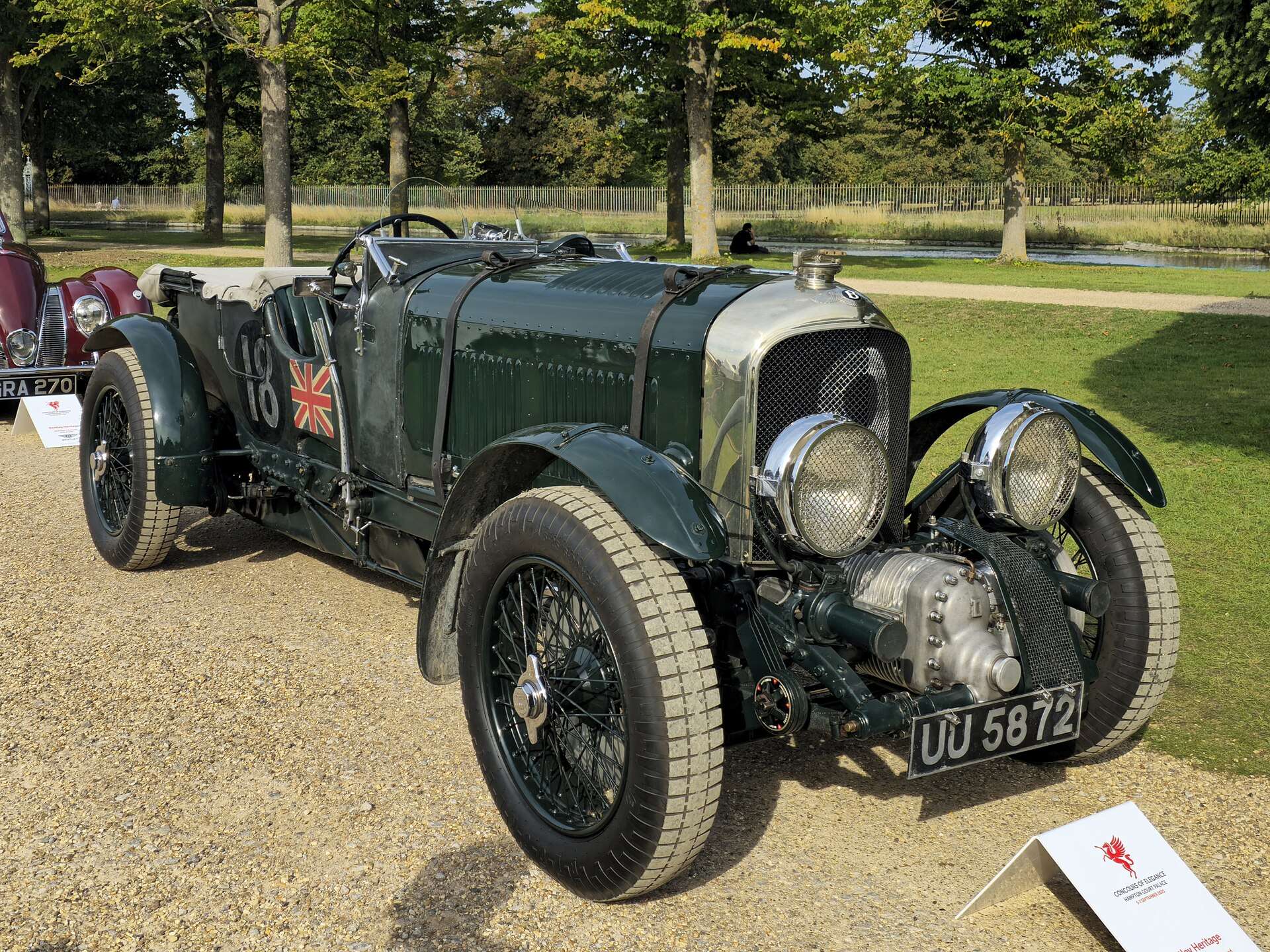
Featured image: green 1929 Bentley 4½ Litre Blower Vanden Plas tourer. Photograph by Calreyn88, CC BY-SA 4.0, via Wikimedia Commons; locally hosted.
The 4½ Litre foundation
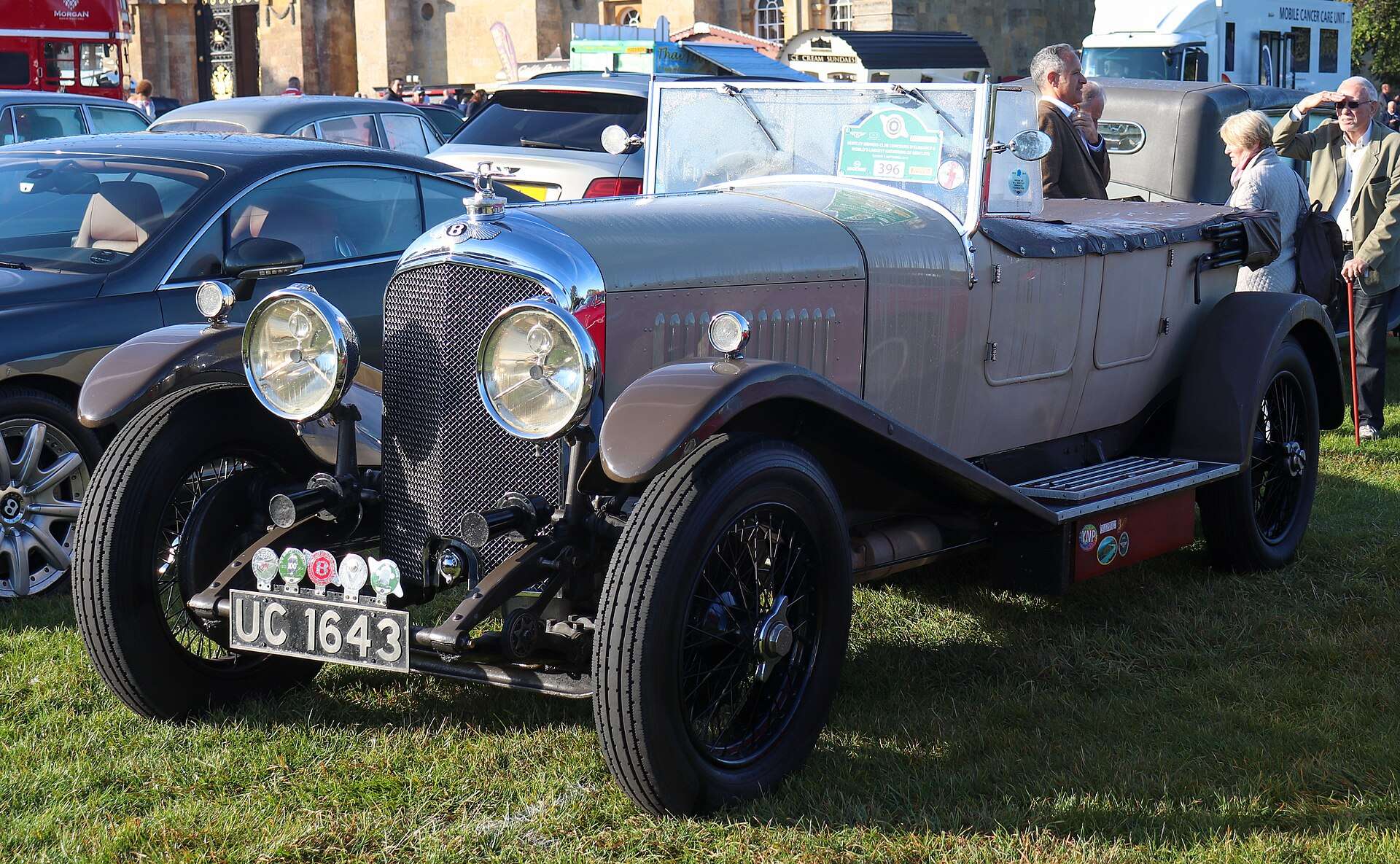
Bentley introduced the 4½ Litre in 1927 by combining the established four-cylinder chassis concept with a larger 4,398cc engine. Four valves per cylinder, twin spark plugs and an overhead camshaft reflected W.O. Bentley’s belief in strong, understressed engineering. In standard form it delivered roughly 110bhp, with competition tuning raising output.
A works 4½ Litre won the 1928 Le Mans 24 Hours in the hands of Woolf Barnato and Bernard Rubin. The achievement reinforced the model’s reputation for speed through endurance rather than sheer peak power. Coachbuilders supplied open tourers, saloons and bespoke bodies, so surviving cars vary widely in shape and weight.
Why Birkin built the Blower
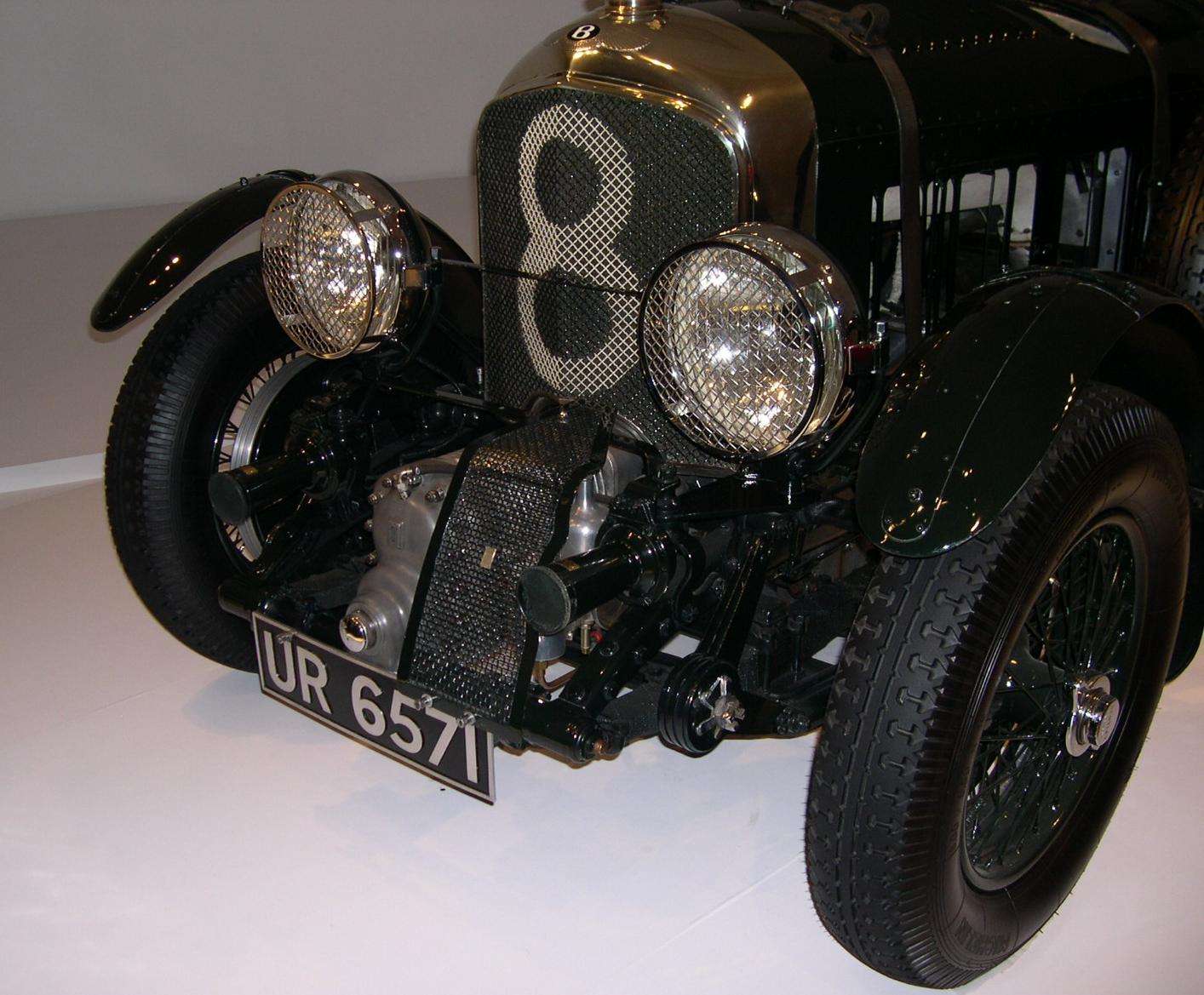
Sir Henry “Tim” Birkin believed supercharging would keep Bentley competitive. W.O. Bentley disliked forcing the intake and preferred the naturally aspirated Speed Six, but Birkin secured backing from Dorothy Paget and worked with Amherst Villiers. The Roots-type supercharger was mounted prominently ahead of the radiator, becoming the car’s visual signature.
Production of 50 road cars homologated the design, while four further competition cars formed Birkin’s team. Bentley’s heritage records quote 175bhp for road-going Blowers and about 240bhp for the team cars. They did not win Le Mans, but Birkin’s 1930 duel with Rudolf Caracciola’s Mercedes helped break the German car and cleared the path for Bentley’s Speed Six victory.

Key figures
| Version | Production | Typical output | Character |
|---|---|---|---|
| 4½ Litre | 720 | About 110bhp in standard tune | Naturally aspirated sporting Bentley; 1928 Le Mans winner |
| Road-going Blower | 50 | About 175bhp | Supercharged homologation cars built from 1929 to 1931 |
| Team Blower | 4 | About 240bhp | Birkin competition cars, including Bentley’s UU5872 |
Figures vary with body, tune and later competition development. The description of any particular car must come from its build record and current mechanical specification, not a generic model table.
Love cars you don’t see every day?
Get forgotten cars, surprising motoring stories and the most interesting finds from Unusual Cars by email.
Free to join. No spam. Unsubscribe whenever you like. See our privacy policy.
Identity, originality and replicas
Period Bentleys were repaired, rebodied, upgraded and raced, sometimes repeatedly. Begin with the stamped chassis, engine, axle, gearbox and body numbers, then compare them with Bentley factory records, the Bentley Drivers Club and recognised marque specialists. Establish whether the body is original, period replacement, later recreation or a modern replica and ensure the sale description reflects that history.
A reconstructed car can still be enjoyable and significant, but it is not equivalent to one of the 54 original supercharged Bentleys. Continuation cars built by Bentley’s Mulliner division form another clearly documented category. Independent provenance research is essential before discussing value.

Chassis, body and mechanical inspection
Inspect the separate chassis for corrosion, cracks, distortion and historic repairs, especially around spring and cross-member mounts. Aluminium panels over timber framing can conceal electrolytic corrosion, loose joints and old accident damage. Doors, bonnet and scuttle should fit consistently without pretending that a hand-built 1920s tourer should resemble a modern car.
Oil pressure, coolant temperature and bearing noise matter more than cosmetic shine. Check magnetos or ignition, carburation, oil and water pumps, clutch, crash gearbox, rear axle, steering box, kingpins, springs, dampers, cable-operated brakes, wheels and tyres. A Blower adds the supercharger, drive, manifolds and carburettor installation, all of which need model-specific knowledge.

Driving and stewardship
A sorted 4½ Litre is physical but coherent: steering loads build naturally, the gearbox rewards double-declutching and the brakes demand anticipation. The Blower adds torque, noise and heat rather than modern smoothness. Poor starting, overheating, vibration or wandering should not be dismissed as age without expert assessment.
These cars require regular exercise, lubrication and adjustment by people who understand vintage Bentleys. Keep a detailed record of every replacement and retain removed historic parts. Stewardship protects not only reliability but the evidence future owners will use to understand the car.

Sources and further reading
- Bentley Heritage Collection: 1929 Team Blower UU5872
- Bentley Heritage Collection: 1930 demonstrator Blower GH6951
- Bentley: Blower Continuation Series engineering
- Bentley Motors: history and heritage
Continue the Bentley story
Explore the complete Bentley hub. Continue with the Bentley R-Type Continental and Bentley Turbo R.
Frequently asked questions
How many Bentley 4½ Litres were built?
Bentley records 720 naturally aspirated 4½ Litre cars.
How many original Blower Bentleys were made?
Fifty road cars and four competition cars, for 54 original supercharged examples.
Did the Blower Bentley win Le Mans?
No. The standard 4½ Litre won in 1928, while Birkin’s Blowers became famous in competition without winning Le Mans.
Why is the supercharger mounted in front?
Amherst Villiers’ installation placed the Roots-type supercharger ahead of the radiator and drove it from the crankshaft.
What is the most important buying check?
Independent verification of chassis, engine, body, specification and history, followed by a vintage-Bentley specialist inspection.