UNUSUAL CARS MODEL GUIDE
The Bentley T-Series was Bentley’s first monocoque production car. Introduced in 1965 alongside the Rolls-Royce Silver Shadow, it brought independent suspension, self-levelling, four-wheel disc brakes and a much more compact body while retaining the 6.2-litre—and later 6.75-litre—Crewe V8.
Quick answer: the T1 and T2 are rewarding, usable classics when their structure, high-pressure hydraulics, cooling and suspension are healthy. Corrosion and deferred specialist maintenance matter far more than cosmetic polish.
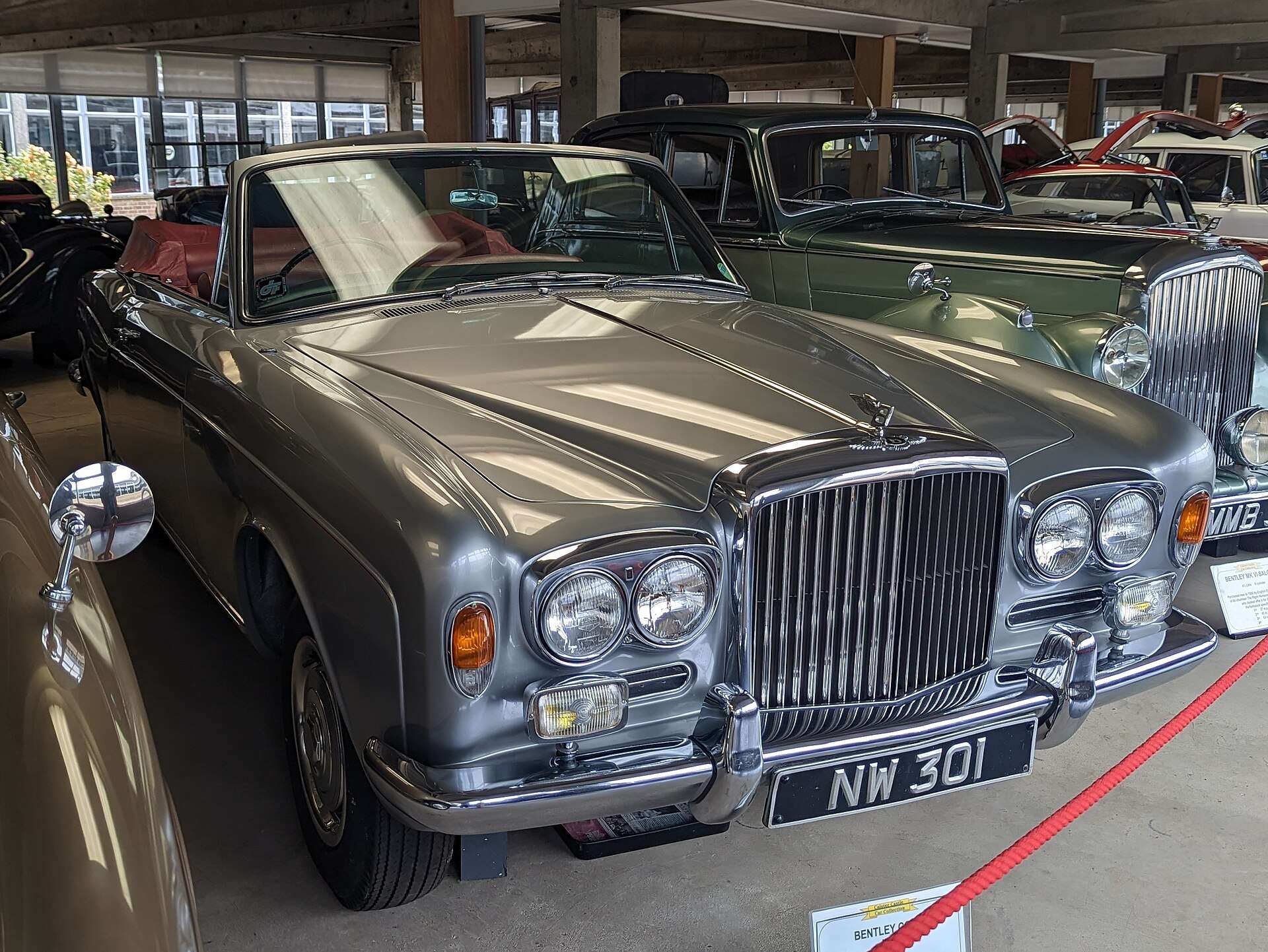
Featured image: silver early Bentley T-Series saloon. Photograph by MrWalkr, CC BY-SA 4.0, via Wikimedia Commons; locally hosted.
A modern Bentley for the 1960s
The T-Series replaced the separate-chassis S3 with a welded steel monocoque that was lower, shorter and roomier inside. Independent suspension at all four wheels, automatic ride-height control and disc brakes dramatically modernised the driving experience. The Bentley was mechanically close to the Silver Shadow but used a different grille, badges and detail trim.
Early cars used the 6,230cc V8; capacity rose to 6,750cc in 1970. Bentley officially described power as adequate, although its heritage coupé is now listed at 220bhp. Most cars used a three-speed automatic, with right-hand-drive production firmly aimed at British luxury buyers.

T1, T2 and coachbuilt bodies
| Version | Years | Main distinctions |
|---|---|---|
| T1 | 1965–1977 | Original body; 6.2-litre V8, then 6.75 litres from 1970 |
| T2 | 1977–1980 | Rack-and-pinion steering, revised suspension, improved ventilation and a front air dam |
| Two-door saloon | Limited production | Coachbuilt coupé-style body, principally by Mulliner Park Ward |
| Corniche | Related derivative | Two-door saloon and convertible body; Bentley name adopted later |
Bentley records 2,336 T-Series cars across three main body styles, including just 98 two-door saloons. Exact chassis records are important because cars have sometimes acquired later grilles or trim.

Love cars you don’t see every day?
Get forgotten cars, surprising motoring stories and the most interesting finds from Unusual Cars by email.
Free to join. No spam. Unsubscribe whenever you like. See our privacy policy.
Hydraulics are the central buying check
Two engine-driven pumps pressurise separate braking circuits and the self-levelling suspension. Warning lamps should extinguish promptly, the brake pedal should feel firm and the rear should maintain its height. Old accumulators, leaking pumps or valves, corroded pipework and contaminated fluid are safety-critical faults, not bargaining details.
Ask for dated invoices showing fluid changes, sphere or accumulator work and correct specialist attention. A car that merely stops during a brief test drive has not passed a hydraulic assessment.

Corrosion, suspension and cooling
Inspect sills, jacking points, floors, wheelarches, lower wings, door bottoms, screen surrounds, boot floor and suspension mounts. Repairs must preserve the strength of the monocoque. Thick paint or underseal can hide expensive structural work.
The V8 itself is durable, but neglected coolant causes internal corrosion and overheating. Check radiator, water pump, hoses, core plugs, fan and heater system, then confirm stable temperature on a long drive. Worn bushes, ball joints, dampers, steering components and rear levelling make a good car feel vague.

Cabin and ownership
Test electric seats and windows, instruments, heating and ventilation, air conditioning where fitted and every lamp. Veneer, leather and Wilton carpet can be restored, but correct work is expensive. Water leaks around screens and door seals can damage both trim and structure.
A T-Series works best when used regularly and maintained by a Rolls-Royce and Bentley specialist. Obtain an underside inspection, hydraulic pressure test, cooling assessment and compression or leak-down evidence if engine condition is uncertain.

Sources and further reading
- Bentley Heritage Collection: 1968 T-Series Mulliner coupé
- Bentley: T-Series anniversary history
- Hagerty UK: Bentley T1 valuation reference
Continue the Bentley story
Explore the complete Bentley hub. Continue with the Bentley R-Type Continental and Bentley Turbo R.
Frequently asked questions
What is the difference between Bentley T1 and T2?
The 1977 T2 added rack-and-pinion steering, revised suspension, improved ventilation and a front air dam.
What engine does the Bentley T-Series use?
A naturally aspirated Crewe V8: 6.2 litres initially and 6.75 litres from 1970.
Is the T-Series the same as a Rolls-Royce Silver Shadow?
They share their basic body and mechanical design, but the Bentley has its own grille, badging, trim and identity.
How many Bentley T-Series cars were built?
Bentley records 2,336 across the principal body styles.
What are the most important buying checks?
Structural corrosion, high-pressure brakes and self-levelling, cooling, suspension, steering, gearbox, electrics and complete specialist history.