UNUSUAL CARS MODEL GUIDE
The Ferrari F50 was conceived as a Formula One car adapted for the road: a naturally aspirated V12 bolted directly into a carbon-fibre monocoque as a stressed structural member, push-rod suspension and a removable roof. Presented at Geneva in 1995, it replaced the F40’s turbocharged drama with a more direct mechanical connection to Ferrari’s contemporary racing technology.
Quick answer: Ferrari built 349 F50s, all left-hand drive. Before buying, establish factory identity and continuous history, then inspect the carbon tub, accident repairs, engine mounting points, fuel system, six-speed gearbox, clutch, suspension, brakes, magnesium wheels, removable roof and model-specific trim with an experienced marque specialist.
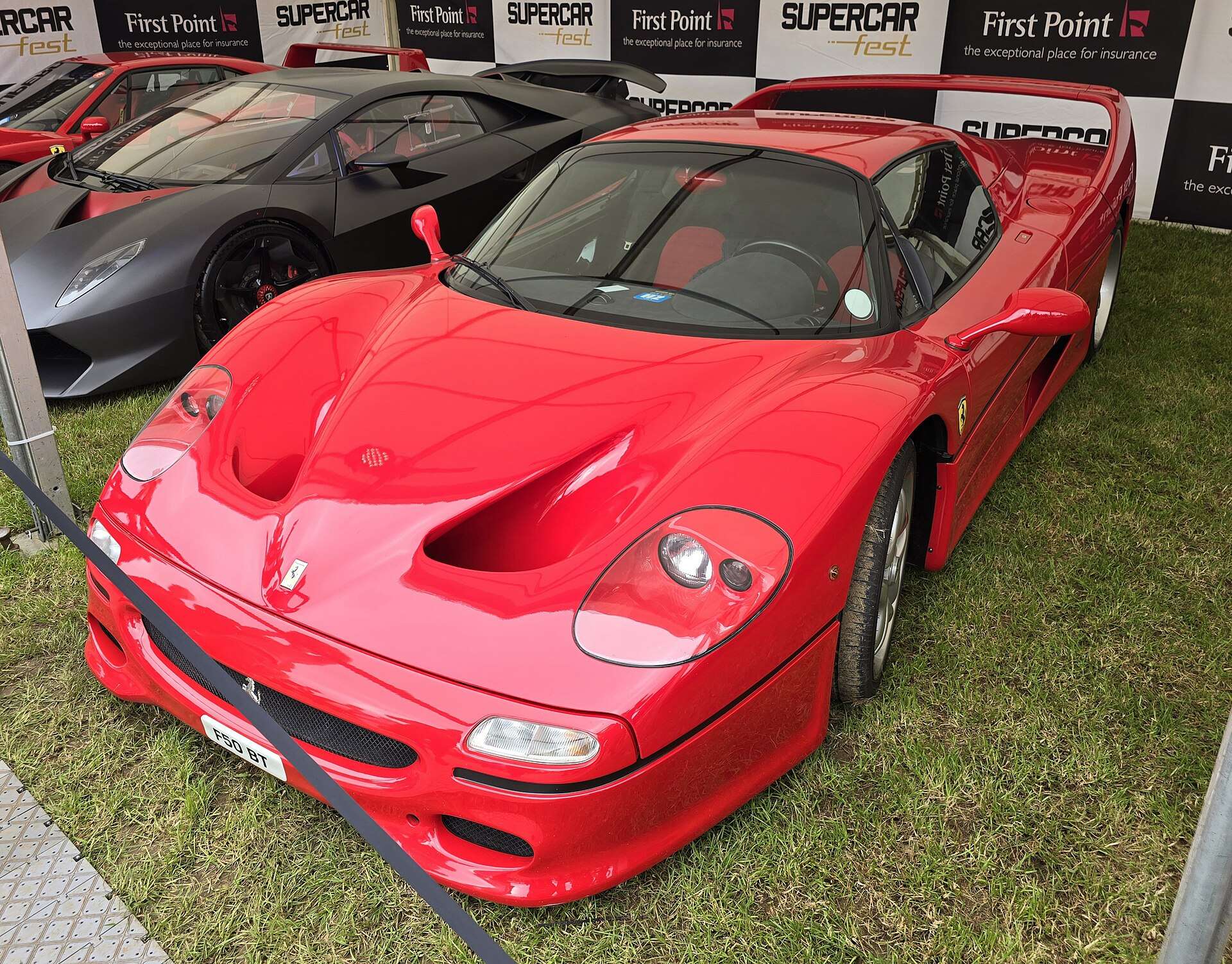
Featured image: red Ferrari F50 front three-quarter. Photograph by Calreyn88, CC BY-SA 4.0, via Wikimedia Commons; locally hosted.
A road car built around an F1 idea
The 4.7-litre V12 descended from the architecture of Ferrari’s 1990 Formula One engine, although it was enlarged, detuned and re-engineered for road use. Unlike most supercars, the engine and gearbox form part of the rear structure. The suspension attaches to the powertrain assembly, transmitting sound and vibration directly into the carbon passenger cell.
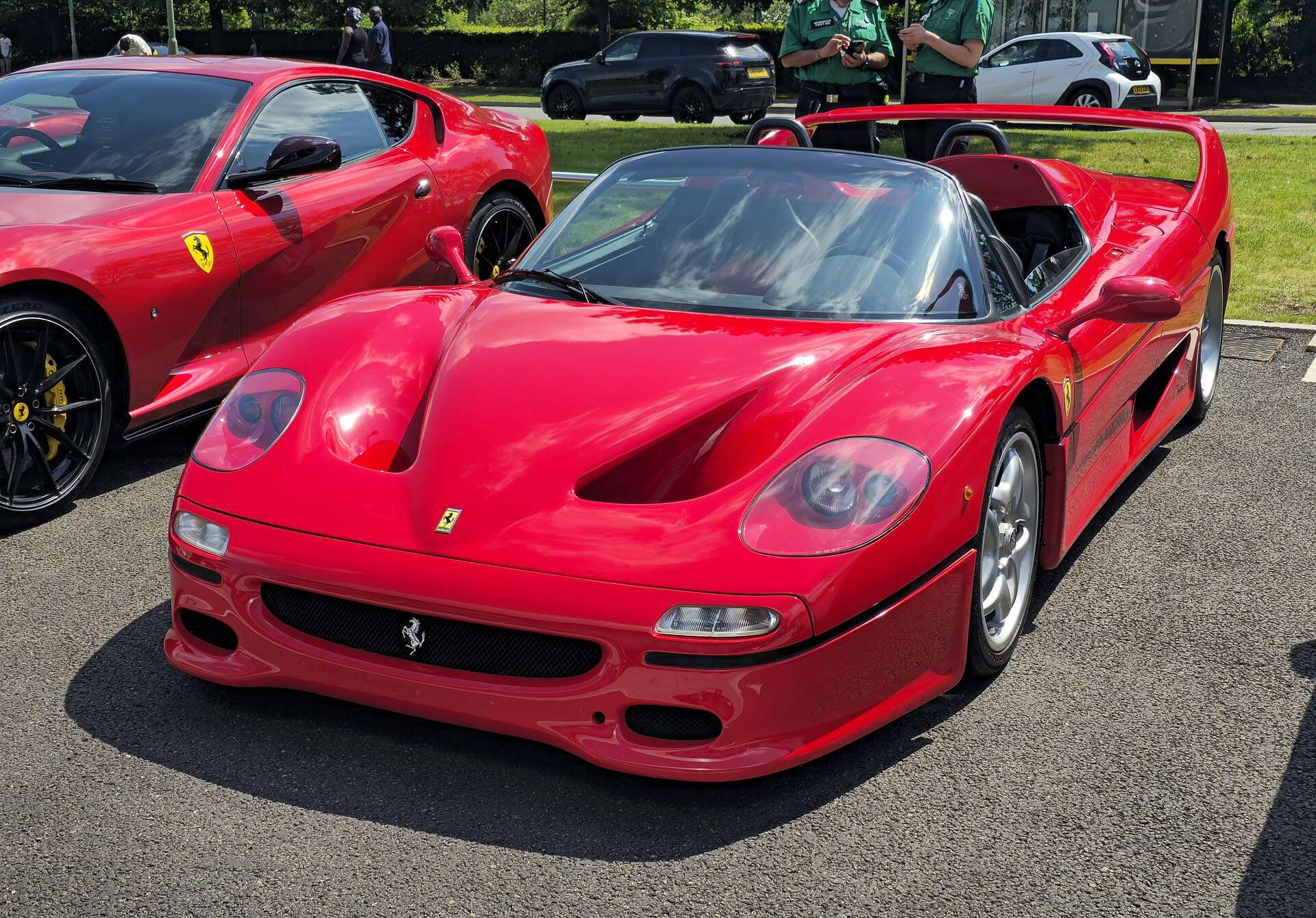
Pininfarina’s body manages cooling and downforce without disguising the central engineering. The removable hard roof converts the car into an open barchetta, while a fabric emergency top provides limited weather protection. There is no power steering and no ABS. Ferrari deliberately limited production to 349 cars—described by the company as one fewer than expected demand.
Specifications and character
| Specification | Ferrari F50 |
|---|---|
| Engine | 4,698cc 65-degree naturally aspirated V12 |
| Power | 520CV at 8,500rpm |
| Transmission | Six-speed manual |
| Dry weight | 1,230kg |
| 0–100km/h | 3.87 seconds |
| Maximum speed | 325km/h |
The five-valve-per-cylinder V12 develops its performance through revs rather than turbo boost. Unassisted steering and conventional brakes demand greater driver effort than later hypercars. The car’s highly rigid connection between powertrain and tub also produces the vibration and mechanical noise that owners regard as central to the experience.

Love cars you don’t see every day?
Get forgotten cars, surprising motoring stories and the most interesting finds from Unusual Cars by email.
Free to join. No spam. Unsubscribe whenever you like. See our privacy policy.
F50 GT
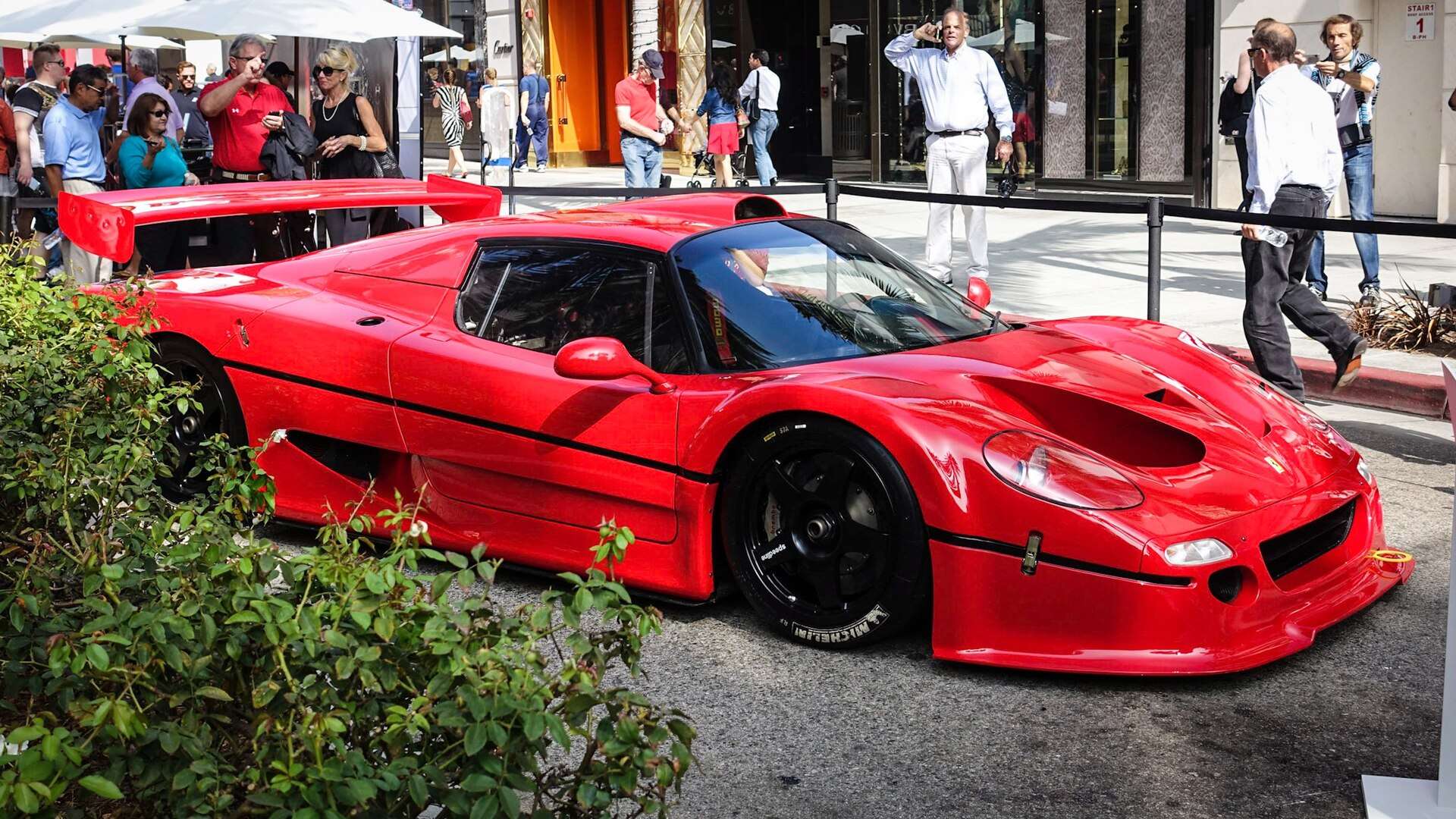
Ferrari developed the F50 GT as a competition derivative with revised aerodynamics, a fixed roof, sequential transmission and a much more powerful engine. The racing programme was cancelled before the car entered a full championship, leaving only a tiny number of genuine factory GT chassis. Their appearance has inspired road-car conversions, so documentation is essential before any modified F50 is described as a GT.
The road car was itself supplied with a removable hardtop, a fabric emergency roof, luggage, tools and model-specific documentation. Missing roof components or original accessories can be extremely difficult to replace. The configuration recorded by Ferrari should agree with the car rather than with a later restoration or colour change.
Carbon structure and accident history
The carbon monocoque is the inspection priority. Look for impact damage, repaired weave, disturbed bonding, altered mounting points, heat damage and evidence of incorrect lifting. Body panels can be refinished convincingly while the underlying tub or engine support remains compromised. Specialist measurement and documentary photographs of previous repairs are valuable.
Check the engine-to-tub and gearbox attachment points because the powertrain carries structural loads. Rubber, seals, fuel components and suspension joints age even on static display cars. Ferrari Classiche certification supports authenticity, but it should accompany—not replace—a current structural, mechanical and diagnostic inspection.

Engine, gearbox and running gear
Start from cold and listen for abnormal valvetrain, bearing or timing noise. Verify oil pressure, stable temperatures and clean running through the rev range. Inspect the dry-sump system, cooling circuits, fuel tanks, pumps and lines. Long storage can be more damaging than sympathetic use, particularly where fuel and rubber components have exceeded their service life.
The clutch and six-speed manual gearbox should be assessed for slip, release, synchromesh and differential noise. Push-rod dampers, spherical joints, wheel bearings and steering components require expert examination. Measure brake condition and inspect the magnesium wheels for corrosion and cracks. Correct tyres are safety-critical and should be judged by specification and age, not tread alone.


Sources and further reading
- Ferrari: F50 Legacy Tour technical history
- Ferrari: F50 GT technical archive
- Ferrari: flagship-car lineage
- Ferrari Owners’ Club GB buying-guide resources
Continue the Ferrari story
Explore the complete Ferrari hub. Continue with the Ferrari F40 and Ferrari 288 GTO.
Frequently asked questions
How many Ferrari F50s were built?
Ferrari built 349 road cars, one fewer than the company’s forecast demand.
Is the Ferrari F50 engine really from Formula One?
Its 4.7-litre road V12 was developed from the architecture of Ferrari’s 1990 Formula One engine, but substantially revised for road use.
Does the Ferrari F50 have a removable roof?
Yes. The hard panel can be removed, and the car was supplied with a limited-use fabric emergency roof.
Does the F50 have ABS or power steering?
No. Ferrari fitted neither anti-lock braking nor power-assisted steering to the road car.
What should be checked before buying an F50?
Inspect identity, provenance, carbon tub, structural engine mounts, accident repairs, fuel system, V12, gearbox, suspension, brakes, magnesium wheels, roof and accessories.