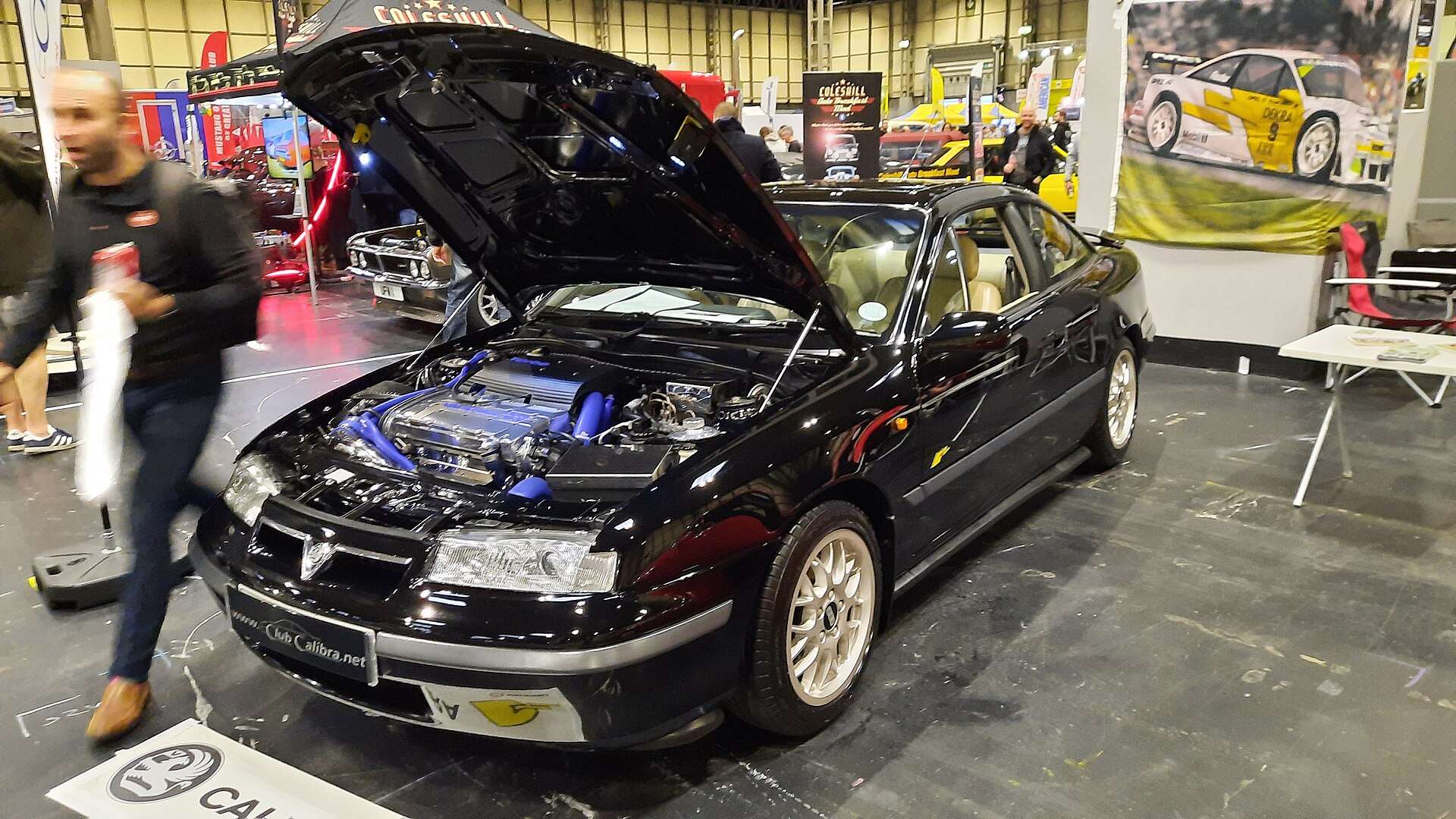
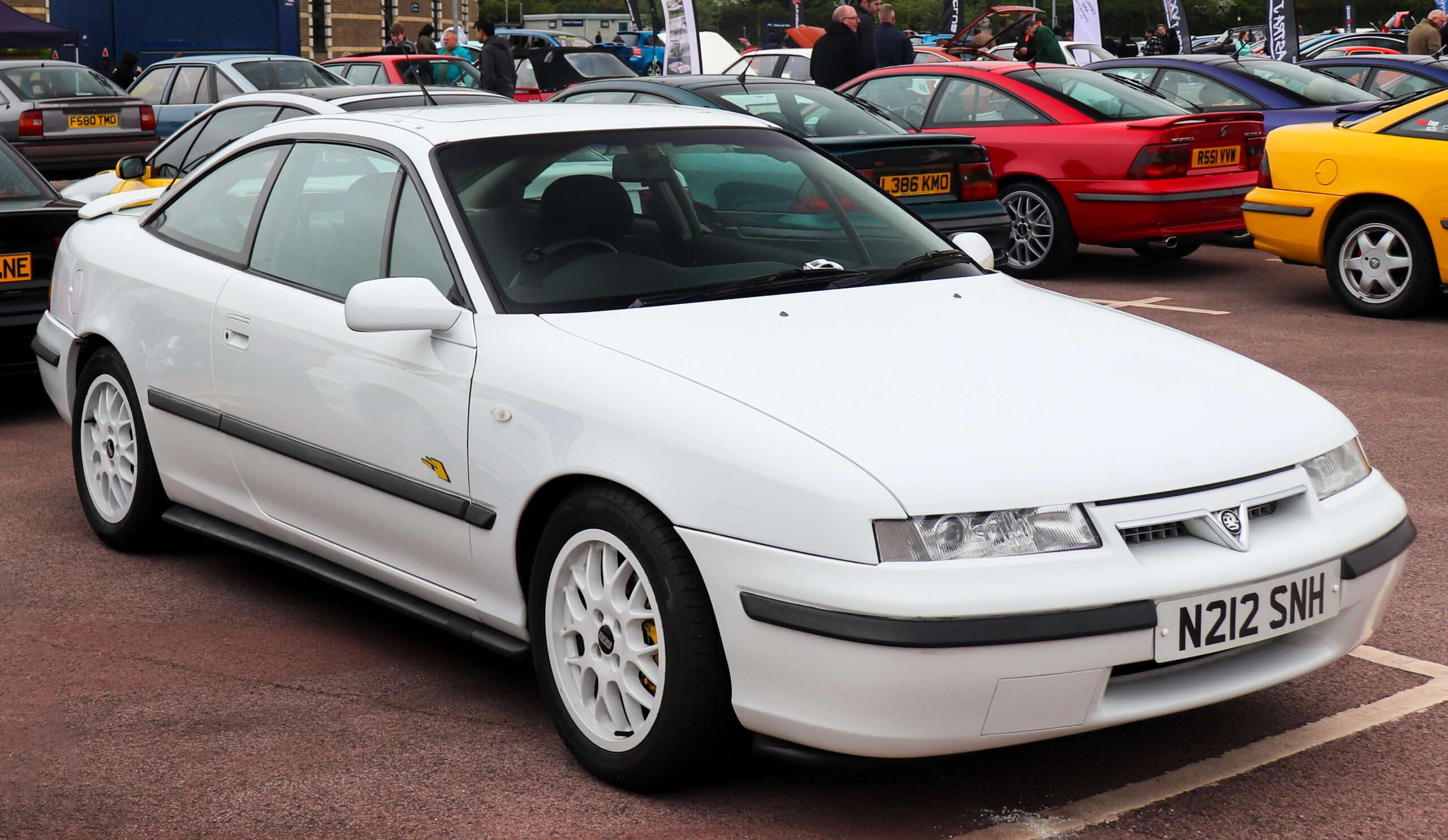
The Vauxhall Calibra Turbo 4×4 looked almost too elegant to be a serious performance car. Beneath its wind-cheating coupé body, however, sat a 204PS turbo engine, six-speed gearbox and an intelligent four-wheel-drive system. These ten facts reveal how advanced—and how demanding—the flagship Calibra really was.
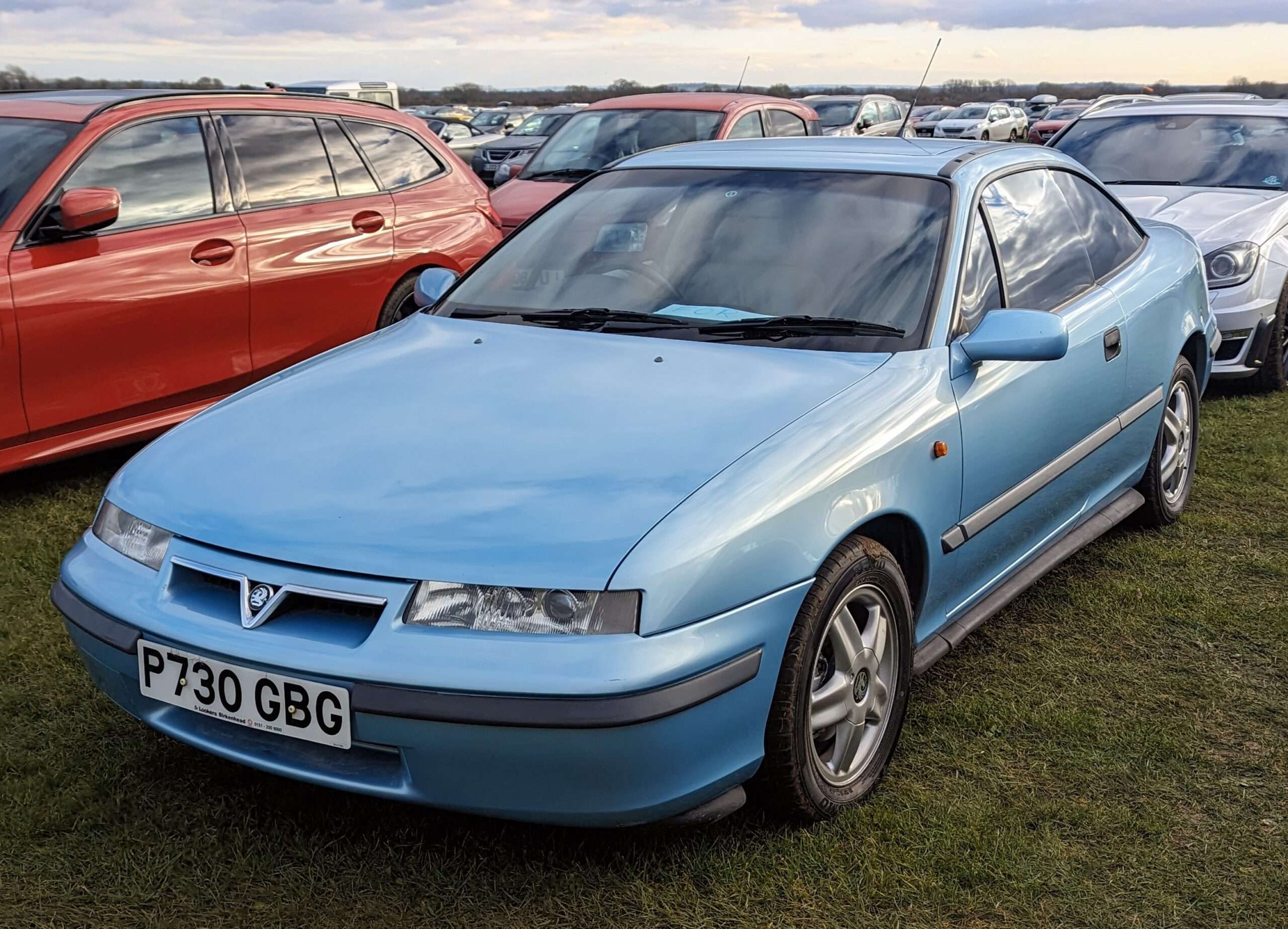
1. Its shape came from the same designer as the original GT
Opel design chief Erhard Schnell led the team responsible for the Calibra, just as he had shaped the Opel GT decades earlier. Unveiled at the 1989 Frankfurt motor show, the new coupé turned humble Vectra underpinnings into something low, smooth and instantly recognisable.
2. The famous 0.26 drag figure needs context
The original Calibra achieved a remarkable drag coefficient of 0.26, making it one of the most aerodynamic production cars of its era. But that headline applied to optimised versions with narrow tyres and carefully controlled details. The Turbo’s wider rubber, cooling needs and spoilers meant buyers should not assume every Calibra matched the exact record figure.
3. The Turbo arrived after the ordinary range
The Calibra went into production in 1990, while the Turbo 4×4 appeared in 1992 after its 1991 presentation. By then the elegant coupé was familiar; adding the C20LET engine and four driven wheels transformed it from stylish cruiser into a genuine performance flagship.
4. Its turbocharger and exhaust manifold were integrated
Rather than hanging a separate turbo from a conventional manifold, Opel integrated the turbine housing and exhaust manifold into a compact assembly. It reduced volume between the exhaust ports and turbine and helped response, while the 1,998cc 16-valve C20LET delivered 204PS and 280Nm.
Love cars you don’t see every day?
Get forgotten cars, surprising motoring stories and the most interesting finds from Unusual Cars by email.
Free to join. No spam. Unsubscribe whenever you like. See our Privacy Policy.
5. Six gears were unusual in a family-based coupé
The F28 six-speed manual gearbox gave the Calibra Turbo a specification associated with much more exotic machinery. Close intermediate ratios kept the engine on boost, while the long top gear helped relaxed high-speed cruising. It was a major technical talking point when many rivals still offered five speeds.
6. Its four-wheel drive actively varied torque
The system did more than maintain a fixed front-to-rear split. Opel said rear torque could vary from roughly 15 to 60 per cent in normal operation, with even more available in extreme conditions. Under braking, the rear axle was decoupled so the anti-lock braking system could work without fighting the driveline.
7. It offered Porsche pace for far less money
Official figures of 0–100km/h in 6.8 seconds and 245km/h—about 152mph—put the Calibra Turbo close to contemporary Porsche 968 performance. That comparison formed part of its appeal: a practical four-seat coupé could deliver serious speed without an exotic-car purchase price.
8. Matching tyres are mechanically important
Small differences in rolling circumference between front and rear tyres can make the transfer system work continuously, generating heat and wear. Correct, evenly worn tyres of matching make and specification are therefore not a cosmetic nicety; they are vital to the health of an expensive and increasingly difficult-to-source four-wheel-drive system.
9. The championship-winning racer was not a tuned road Turbo
Calibra won the 1996 International Touring Car Championship, but the four-wheel-drive V6 racing car was a purpose-built machine. It should not be described as a competition version of the C20LET road car: the silhouette linked them, while engine, chassis and drivetrain belonged to an entirely different world.
10. Total Calibra production was substantial
By the time production ended in 1997, 238,647 Calibras had been built. The Turbo 4×4 formed only a small, costly part of that total, and attrition has made standard examples scarce. That contrast—familiar body, rare flagship mechanicals—is a large part of today’s appeal.
The Calibra Turbo 4×4 deserves to be remembered as more than a handsome 1990s coupé. It combined aerodynamics, boost, six gears and adaptive all-wheel drive in a package that was years ahead of most showroom Vauxhalls.
Love cars you don’t see every day?
Get forgotten cars, surprising motoring stories and the most interesting finds from Unusual Cars by email.
Free to join. No spam. Unsubscribe whenever you like. See our Privacy Policy.
Research sources: Opel/Stellantis heritage releases on the Calibra and four-wheel-drive system; Unusual Cars UK Calibra Turbo 4×4 guide.