UNUSUAL CARS MODEL GUIDE
The Hyundai Terracan 2.9 CRDi was a traditional body-on-frame 4×4 launched into a market that was rapidly moving towards softer road-biased SUVs. With low-range gearing, a strong diesel engine and a 2,800kg braked towing capacity, it became a quiet favourite among caravan and horsebox owners.
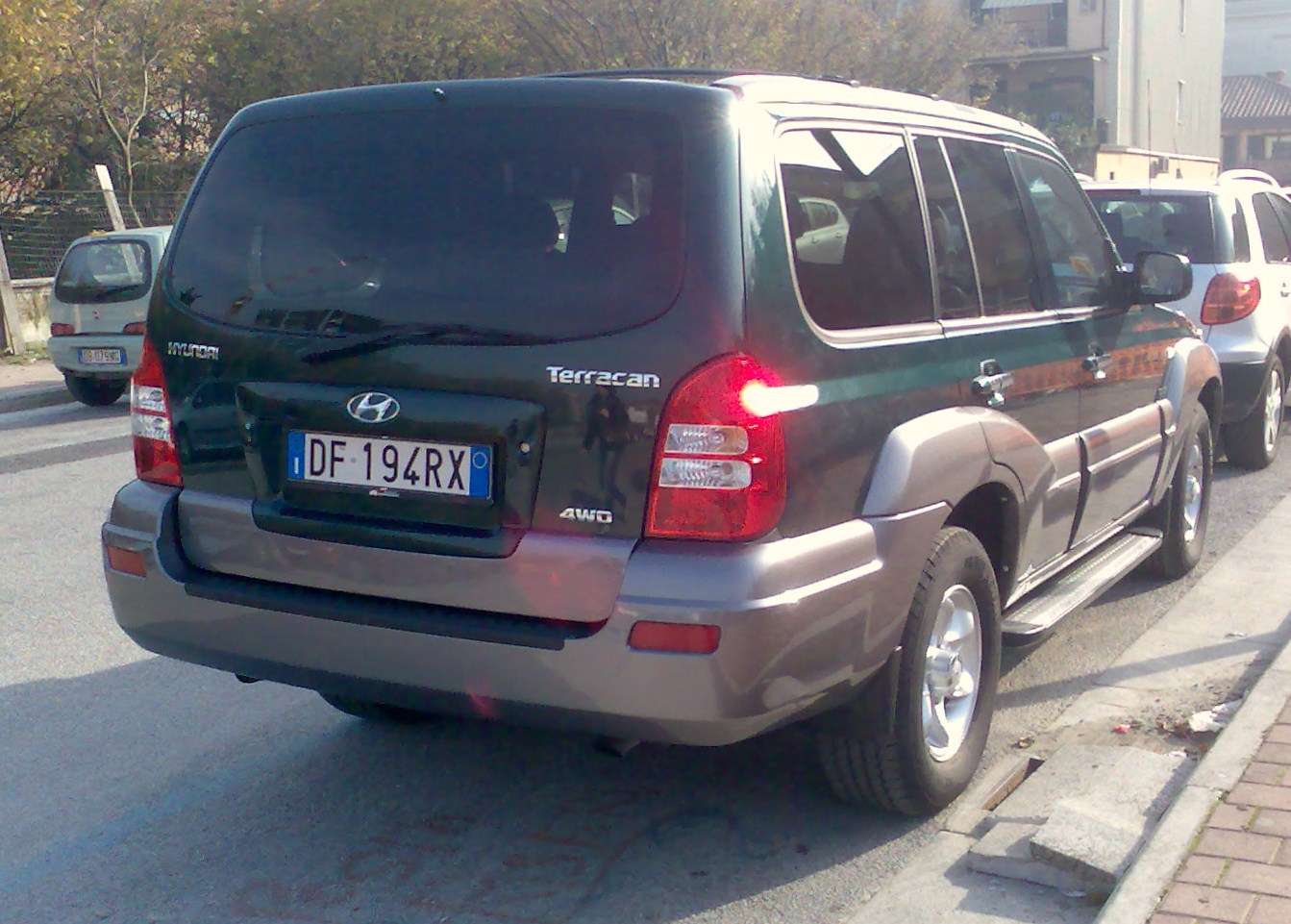
Featured image: Hyundai Terracan. Photograph by Corvettec6r, Public domain; locally hosted and resized.
A deliberately old-school 4×4
Unlike the Santa Fe, the Terracan used a separate ladder-frame chassis, a rigid rear axle and selectable four-wheel drive with low range. That architecture made it heavy and less car-like on tarmac, but well suited to towing and rough tracks. Hyundai developed the vehicle at its Namyang research centre and had already sold it elsewhere before the British launch.
The UK range was unusually simple: a five-door body, the 2.9-litre diesel and a choice of equipment level and gearbox. Other markets received petrol engines, but contemporary UK sources indicate that British sales centred on the turbodiesel.

The 2.9 CRDi engine
The four-cylinder common-rail diesel initially appeared with around 148 bhp before later high-power versions reached 161 bhp. The 2006 UK brochure quotes 343 Nm from 1,750 to 3,000 rpm, exactly where a towing vehicle needs its strength. Five-speed manual and four-speed automatic transmissions were offered.
| Specification | Late UK Terracan 2.9 CRTD |
|---|---|
| Engine | 2,902cc DOHC common-rail turbodiesel four |
| Power | 161 bhp at 3,800 rpm |
| Torque | 343 Nm at 1,750–3,000 rpm |
| Transmission | Five-speed manual or four-speed automatic |
| 0–62 mph | 13.0 seconds manual; 13.4 automatic |
| Braked towing limit | 2,800kg |

Facelift and equipment
A facelift refreshed the nose and detail trim while later engines gained more power. CDX specification brought the equipment buyers expected in an upmarket tow car, including leather upholstery, air conditioning, alloy wheels and useful electrical conveniences. Even so, the cabin materials and steering feel remained workmanlike.
That honesty is part of the appeal. The Terracan was cheaper than a Discovery or Land Cruiser and less fashionable, yet capable of carrying a family and a substantial trailer. It now occupies the same territory as other once-common working 4×4s: good survivors are valued, but neglected examples can be expensive to rescue.
Love cars you don’t see every day?
Get forgotten cars, surprising motoring stories and the most interesting finds from Unusual Cars by email.
Free to join. No spam. Unsubscribe whenever you like. See our privacy policy.
Hyundai Terracan buying guide
Chassis and corrosion
Inspect the ladder frame, body mounts, suspension brackets, brake pipes, fuel lines, rear arches and tailgate. Pay special attention to vehicles used for launching boats or in winter conditions. Surface rust is expected; swelling seams, perforation or crude plates require a specialist opinion.

Diesel engine
Start from cold and check for excessive smoke, uneven running, injector leaks, coolant loss and warning lights. Confirm the timing-belt service history and look for evidence of careful oil changes. A weak battery can create misleading electrical and starting symptoms.
Four-wheel drive and transmission
Test every transfer-case setting on a suitable loose surface and check that the indicators agree with the selected mode. Binding, flashing lights or failure to engage low range needs investigation. Listen for differential noise and inspect prop-shaft joints and gaiters.
Towing wear
A towbar is not automatically bad news, but inspect the clutch, automatic gearbox behaviour, cooling system, rear suspension and brakes accordingly. Matching tyres are important to the four-wheel-drive system. Verify the car’s plated limits rather than relying on an advertisement.
Research sources
- Hyundai: 2006 UK Terracan brochure and technical data
- RAC Drive: Hyundai Terracan UK history
- Practical Caravan: used Hyundai Terracan buyer’s guide
- Car Keys: period Terracan 2.9 CRTD road test
Continue the Hyundai story
Explore the Rare & Performance Hyundais hub, then meet the contemporary XG30, then jump to the i30 N.
Frequently asked questions
Was the Hyundai Terracan sold in Britain?
Yes. UK sales began in summer 2003 and centred on the five-door 2.9-litre common-rail turbodiesel.
Is the Terracan a proper 4×4?
Yes. It uses a separate chassis, a rigid rear axle and selectable four-wheel drive with low-range gearing.
How much can a Terracan tow?
The 2006 UK brochure quotes a maximum braked trailer weight of 2,800kg, subject to the vehicle’s plated limits and condition.
What should buyers check first?
Chassis corrosion, timing-belt history, diesel-injection condition and correct operation of every four-wheel-drive mode are priorities.