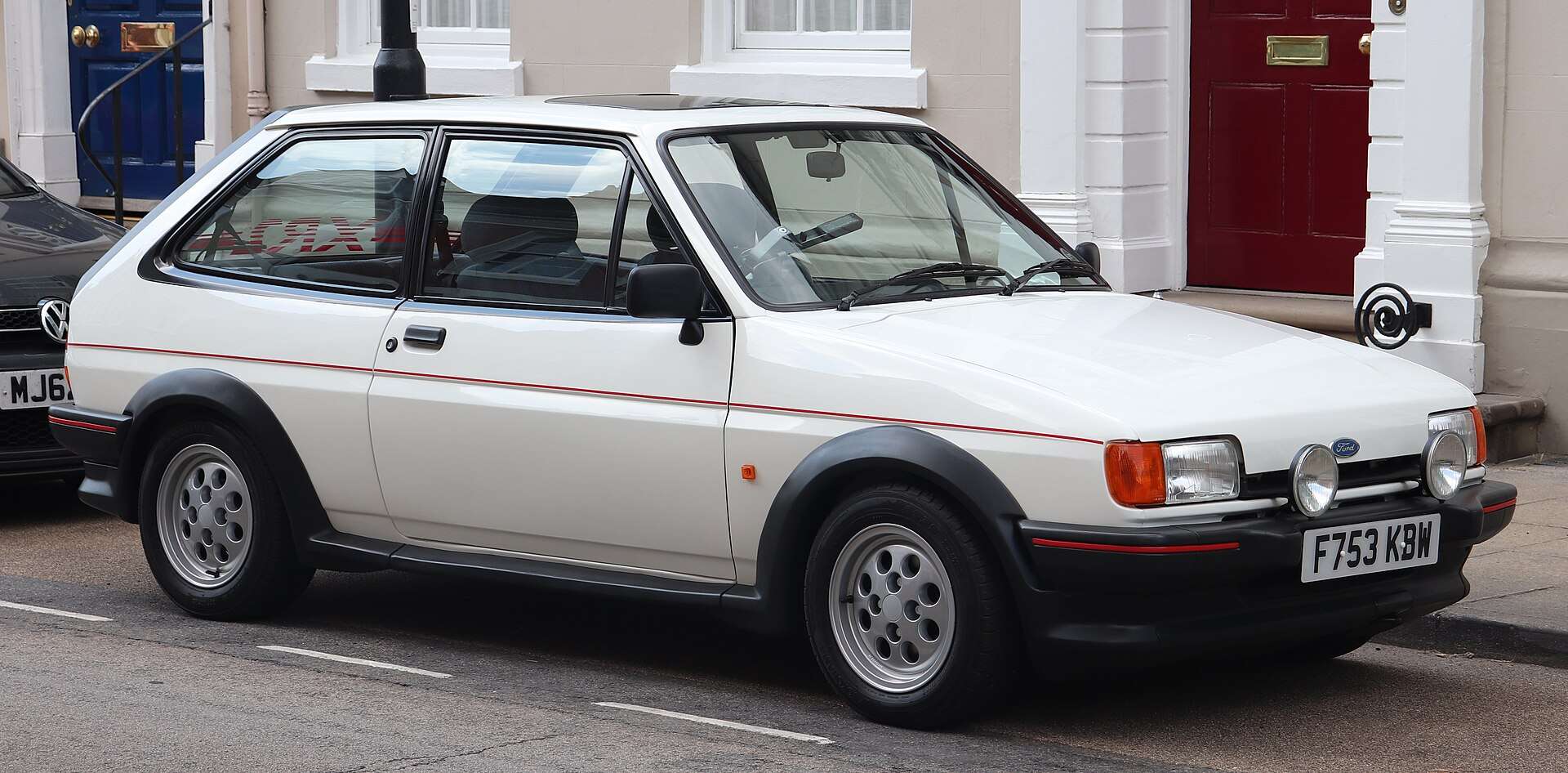
The Mk2 Ford Fiesta XR2 took the raw ingredients of the original and made them faster, more usable and unmistakably 1980s. Its rounded shape, CVH engine, five-speed gearbox and dramatic black trim created one of Britain’s defining attainable hot hatches. Here are ten details that distinguish the second XR2 from the car it replaced.
1. The Mk2 Fiesta was a major evolution rather than a clean-sheet car
The second-generation Fiesta arrived in 1983 with softer styling, a revised interior and structural changes that allowed Ford to fit a broader engine range. Much of the original car’s basic architecture remained underneath. That continuity helped keep the Fiesta compact and light while allowing the XR2 to become more refined.
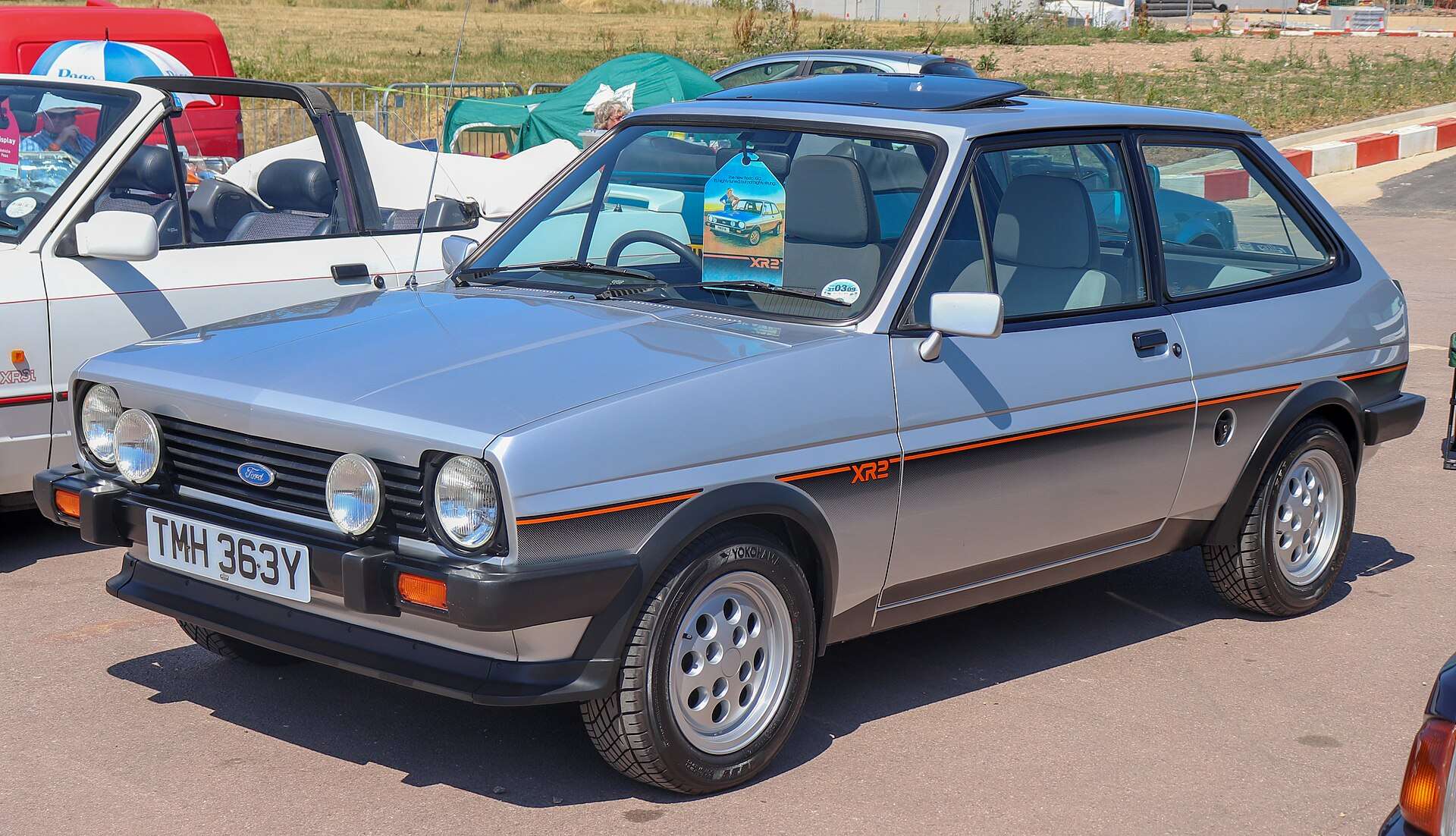
2. The Mk2 XR2 reached Britain in 1984
Ford introduced the revised XR2 in June 1984, several months after the ordinary Mk2 Fiesta. It sat at the top of the range and carried forward a badge that had already gained a strong following. Its longer production run meant it became the XR2 most frequently seen on British roads during the decade.
3. It abandoned the Mk1’s Crossflow engine
The Mk2 used a 1,597cc overhead-cam CVH engine related to the unit used by the Escort XR3. With a twin-choke Weber carburettor it produced about 96bhp and 133Nm—roughly 12bhp more than the Mk1. The newer engine gave the second XR2 a noticeably different sound and power delivery.
4. A five-speed gearbox transformed everyday use
Where the Mk1 made do with four forward gears, the Mk2 received a five-speed manual transmission. The extra ratio improved motorway cruising and made the faster Fiesta easier to use beyond short blasts. Gas-filled dampers, revised suspension and stronger brakes accompanied the more mature drivetrain.
Love cars you don’t see every day?
Get forgotten cars, surprising motoring stories and the most interesting finds from Unusual Cars by email.
Free to join. No spam. Unsubscribe whenever you like. See our Privacy Policy.
5. Ford authenticated it at 110mph
Ford’s own historical material quotes a maximum speed of 110mph for the Mk2 XR2. Contemporary performance testing commonly put 0–60mph in the high-eight-second range. Its advantage was not just the extra power: the five-speed gearbox and improved chassis made the performance easier to exploit.
6. The aerodynamic add-ons created its unmistakable silhouette
A deep front spoiler, wheelarch extensions, black sill treatment and a U-shaped rear spoiler wrapped around the tailgate. Driving lamps and bumper overriders completed the look. The package was more integrated than the Mk1’s decoration and made even a stationary XR2 immediately recognisable.
7. Not every Mk2 XR2 left the factory with pepper-pot alloys
The familiar perforated alloy wheel is closely associated with the car, but market and specification differences mean some XR2s used steel wheels with distinctive covers. Period photographs and documentation matter when judging originality; fitting the most recognisable wheel does not automatically recreate a car’s factory specification.
8. Ford changed the engine specification during production
For the 1986 model year Ford introduced a lean-burn revision with changes to the cylinder head and carburettor. The objective was better economy and emissions rather than a dramatic rise in power. Enthusiasts therefore distinguish between early and later CVH specifications when identifying components and tuning cars.
9. Turbo Technics offered a Ford-approved route to 125bhp
British specialist Turbo Technics developed a turbocharger conversion raising output to approximately 125bhp. The conversion was available with Ford approval, giving buyers a remarkably potent small car without stepping into a different model range. Genuine period conversions are now a fascinating branch of XR2 history.
10. The XR2 name disappeared when the Mk3 adopted injection
Production ended with the Mk2 Fiesta in 1989. The larger Mk3 performance model became the XR2i, its “i” advertising electronic fuel injection. That change closed the carburettor-fed XR2 era and makes the Mk2 the final car to wear the original, unqualified badge.
Love cars you don’t see every day?
Get forgotten cars, surprising motoring stories and the most interesting finds from Unusual Cars by email.
Free to join. No spam. Unsubscribe whenever you like. See our Privacy Policy.
Research sources: Ford Press Office Fiesta history; Ford Heritage material; period specification records; Unusual Cars UK Fiesta XR2 guide.