The Mk2 Escort RS2000 looked simple on paper: a compact rear-wheel-drive Ford with a 2.0-litre Pinto engine. In reality, its polyurethane nose, German assembly, dealer tuning catalogue and carefully split trim levels make it one of the most layered RS stories of the 1970s.
1. The RS2000 name began before the Mk2
Ford introduced the original Escort RS2000 late in the Mk1’s life. The Mk2 therefore inherited an established Rallye Sport badge rather than inventing a new one. That continuity helped the road car borrow credibility from Ford’s works Escorts even though the most exotic competition machinery used very different engines.
2. The Mk2 was announced in 1975 but reached buyers in 1976
The RS Owners Club records a January 1975 preview and an official January 1976 launch. That gap helps explain why period references sometimes attach different years to the model’s arrival. Production then continued through the Mk2 Escort era to 1980.
3. Its famous nose was polyurethane
The sloping four-headlamp “droop snoot” was moulded rather than stamped from steel. It gave the RS2000 a cleaner aerodynamic face and instantly separated it from ordinary Escorts. Original noses can distort or crack, which is why the fit, lamp apertures and repair quality matter on restored cars.
4. The engine was Ford’s familiar 2.0-litre Pinto
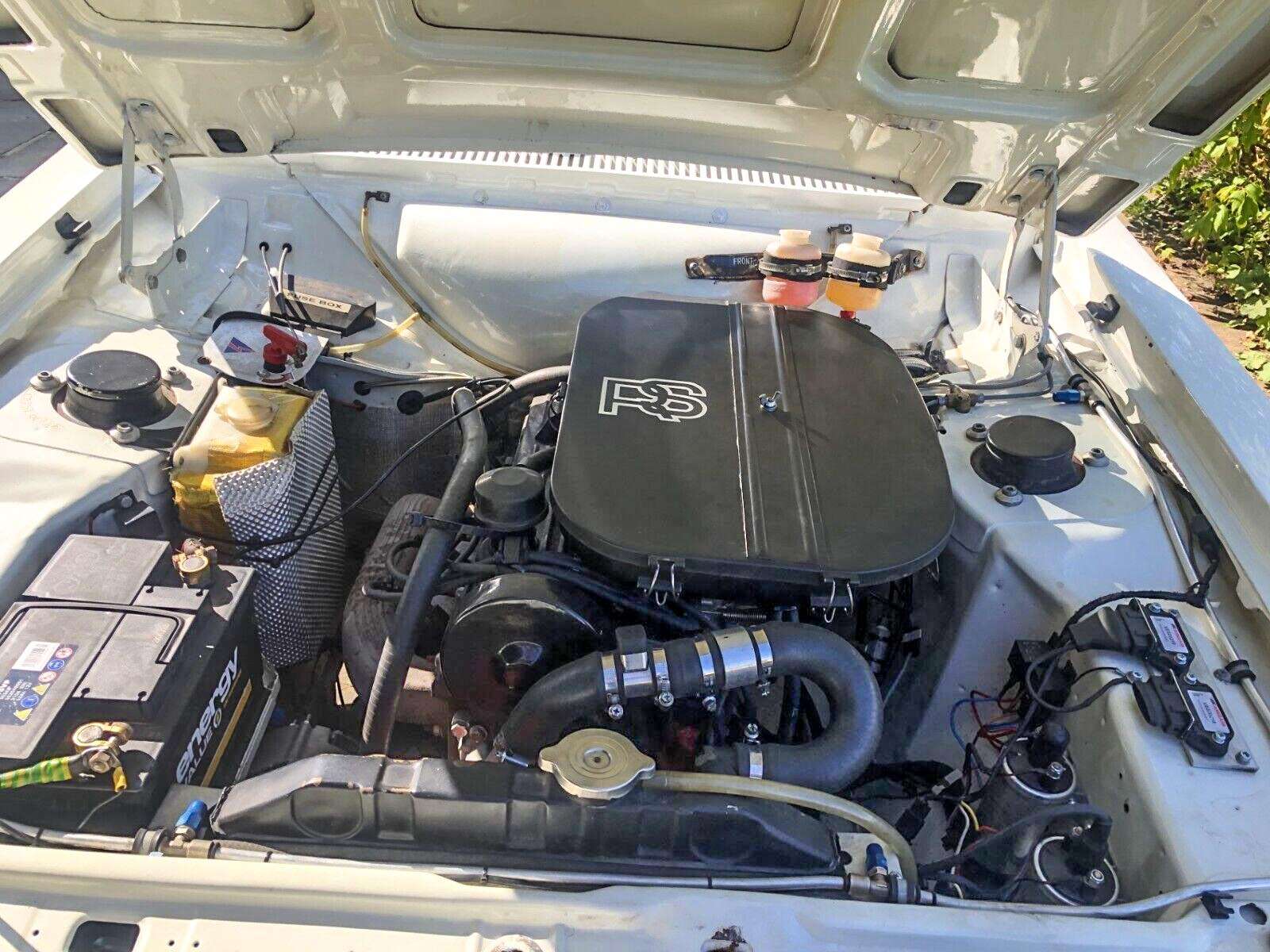
Unlike the high-revving BDA-family engines associated with works rally Escorts, the road RS2000 used the durable overhead-cam Pinto. In European form it produced roughly 110bhp, driving the rear wheels through a four-speed manual gearbox. Its broad torque and serviceability were central to the car’s appeal.
Love cars you don’t see every day?
Get forgotten cars, surprising motoring stories and the most interesting finds from Unusual Cars by email.
Free to join. No spam. Unsubscribe whenever you like. See our Privacy Policy.
5. The Mk2 RS2000 was assembled in Germany
After Ford’s specialist Advanced Vehicle Operations plant at Aveley closed, Mk2 RS production moved to Saarlouis in West Germany. That makes the archetypal British fast Ford a genuinely European product and distinguishes its manufacturing story from the Mk1 AVO cars.
6. Early cars came in one main specification
For its first years, buyers did not choose between the familiar Base and Custom trims. Ford divided the range in September 1978: the simpler Base concentrated on performance, while the Custom packaged the equipment many owners wanted.
7. The Custom’s “fishnet” Recaros became an icon
The Custom added reclining Recaro seats with open-pattern head restraints, tinted glass, centre console, clock and alloy wheels. Those details now have real value, which makes replacement interiors, wrong wheels and recreated badges important clues when assessing originality.

8. Ford officially offered serious Series X upgrades
The Rallye Sport parts programme let owners go far beyond cosmetic accessories. Series X equipment covered engine tuning, suspension, brakes, wheels and bodywork. A modified survivor may therefore contain genuine period Ford-linked hardware—but invoices and correct part identification are still essential.
9. The rally legend can be misleading
The Mk2 Escort dominated international rallying, but the works championship cars were principally RS1800s with BDA-derived engines, not showroom RS2000s with standard Pintos. The RS2000 nevertheless competed widely in production-based and national categories and gave privateers an accessible route into motorsport.
10. A genuine car is more than a droop-snoot shell
Ordinary Escorts have often been converted with RS noses, arches, stripes and Pinto engines. A convincing RS2000 should have coherent chassis identity, build details, correct structural features and a documented history. A well-built replica can be excellent fun, but it should never be priced or described as a factory car without evidence.
See also our earlier Mk2 RS2000 Group 1 rally-car feature.
Love cars you don’t see every day?
Get forgotten cars, surprising motoring stories and the most interesting finds from Unusual Cars by email.
Free to join. No spam. Unsubscribe whenever you like. See our Privacy Policy.
Explore every 10 Things article →