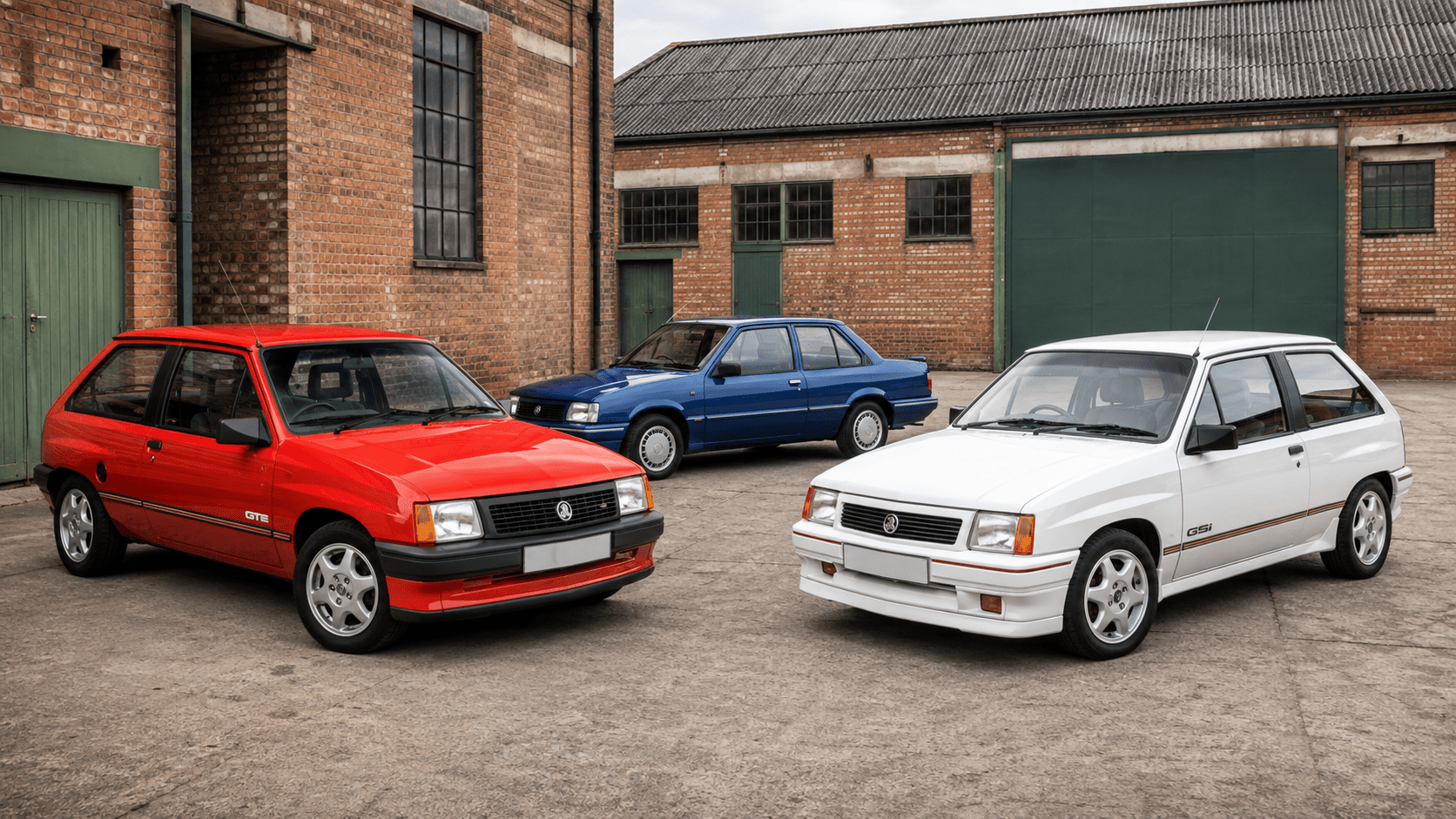
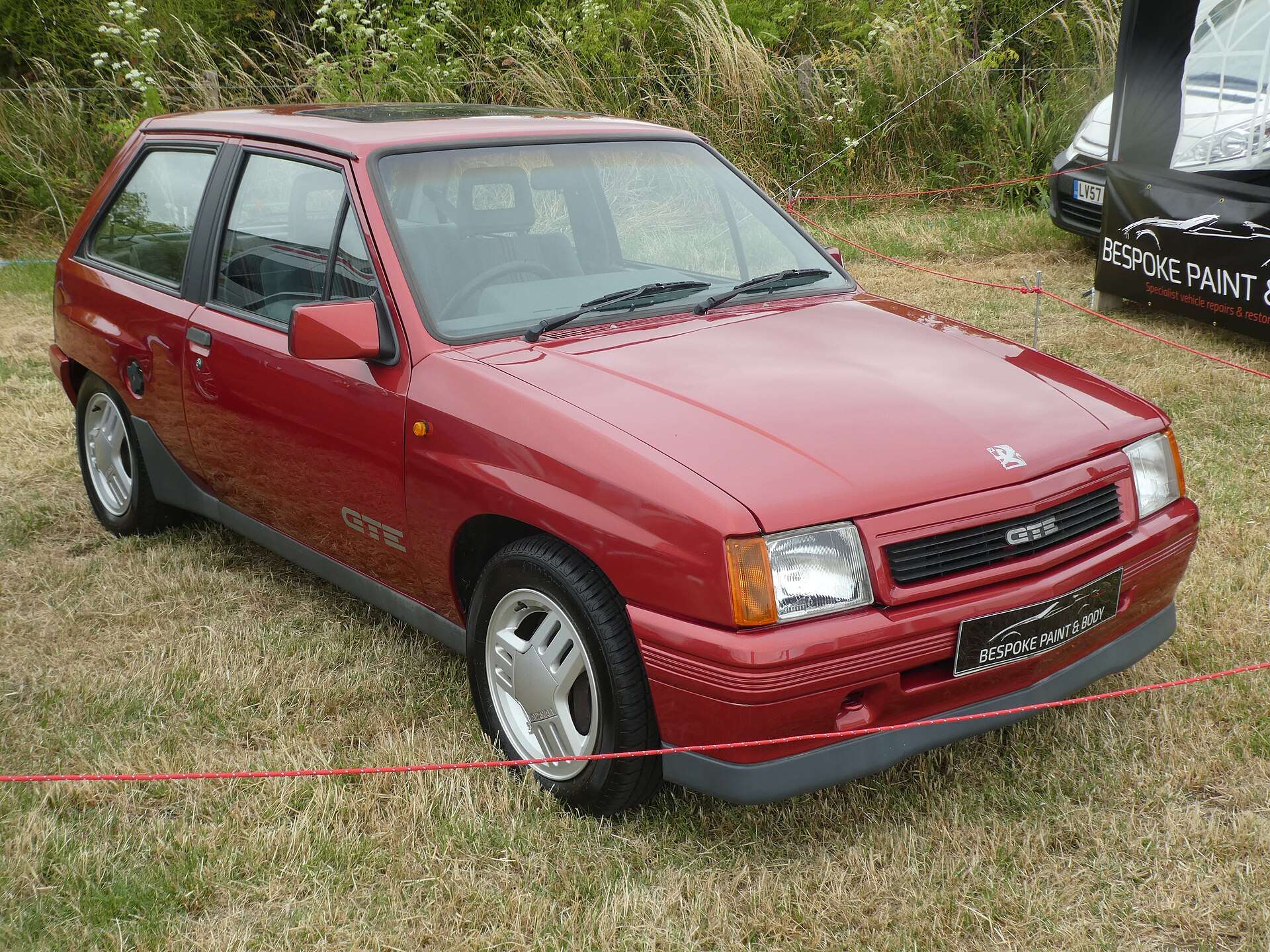
The Nova Sport looked like a stickered-up 1.3, but it existed for a serious reason: motorsport homologation. Its mixture of modest origins, dealer-fitted performance parts and rally success created one of the most collectible Novas.
1. It existed to satisfy rally rules
Vauxhall needed a production model that could homologate the Nova for Group A competition. The Sport was therefore built around the requirements of motorsport rather than showroom fashion.
2. Only about 500 were required
The accepted production figure is 502 cars, enough to meet the period homologation target with a tiny margin. That limited run explains the model’s rarity from the outset.
3. Every genuine car began white
Nova Sports were finished in Polar White and used a deliberately plain base-model shell. The famous stripes and graphics supplied the visual drama.
4. The graphics were not always fitted at the factory
The Sport decal package could be supplied for dealer or owner application. Photographs of new or competition-prepared cars without a full set of stripes are therefore not automatically proof of inauthenticity.
Love cars you don’t see every day?
Get forgotten cars, surprising motoring stories and the most interesting finds from Unusual Cars by email.
Free to join. No spam. Unsubscribe whenever you like. See our Privacy Policy.
5. Irmscher supplied the important hardware
The 1.3-litre engine gained an Irmscher-developed induction kit with twin Weber 40 DCOE carburettors, a different inlet manifold and supporting parts. Output was commonly quoted around 93 bhp.
6. Some cars reached dealers in a milder state
The competition-oriented carburettor kit could be installed during preparation rather than on the main line. Surviving paperwork and correct components are crucial when authenticating a car.
7. Its cabin was intentionally basic
Weight and cost mattered more than luxury. Sport-specific details sat inside a sparse Nova interior, making later additions and replacement trim easy to spot.
8. It became a successful club rally car
A light shell, simple mechanics and excellent parts support made the Sport competitive and affordable. Many were converted immediately, so untouched road cars were always unusual.
9. Rallying destroyed many originals
Competition use, accidents and re-shelling mean identity can be complicated. Buyers should examine chassis numbers, documentation and period evidence rather than relying on decals.
10. Its influence exceeded its power figure
The Sport established the Nova as a credible competition platform before the GTE and GSi became better-known road cars. Today it is one of the defining British-market homologation specials.
Keep exploring
Read the full Vauxhall Nova history and model guide, browse the Rare and Forgotten Cars hub, or discover more in the 10 Things hub.
Love cars you don’t see every day?
Get forgotten cars, surprising motoring stories and the most interesting finds from Unusual Cars by email.
Free to join. No spam. Unsubscribe whenever you like. See our Privacy Policy.
Sources and further reading
- Vauxhall period homologation and sales material
- Motorsport histories of the Nova Sport
- Unusual Cars UK Vauxhall Nova guide