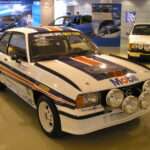
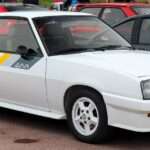
The Opel Ascona 400 is one of the defining Group 4 homologation cars: a rear-wheel-drive road car created so Opel could challenge at the highest level of international rallying. Only 400 were required for homologation, and surviving genuine cars are now valuable enough that identity matters as much as condition.

Opel Ascona 400 history
Developed from the rear-wheel-drive Ascona B, the 400 used a 2.4-litre, 16-valve engine with competition potential far beyond the road car’s output. FIA homologation was granted in November 1979. The production model delivered about 142bhp, while works rally versions developed substantially more.
The competition car’s greatest result came in 1982, when Walter Röhrl won the World Rally Championship for drivers. British enthusiasts could buy the road car at a listed price of £9,526 in 1981, but UK sales were extremely small.
Specifications
| Engine | 2,410cc DOHC 16-valve four-cylinder |
|---|---|
| Power | Approximately 142bhp in road trim |
| Transmission | Five-speed manual |
| Drive | Rear-wheel drive with limited-slip differential |
| 0–60mph | About 7.2 seconds |
| Top speed | Approximately 124mph |
| Production | 400 homologation cars, 1979–1981 |
What is it like to drive?
The road-going 400 is fast rather than brutal. Its appeal lies in balance, steering feel, a close-ratio gearbox and the sense of driving a competition-bred machine. It is firm, noisy and less flexible than a normal Ascona, but the light front end and limited-slip differential make it rewarding on a flowing road.
Opel Ascona 400 common problems
Authenticity and rally replicas
Many convincing replicas exist. Confirm the chassis number, homologation details, build plates, engine type, five-speed transmission, axle, brakes, suspension and 400-specific body and interior components with recognised specialists. A car with competition history needs documentary evidence, not stories.
Rust and accident damage
Inspect the front chassis rails, inner wings, strut towers, bulkhead, sills, jacking points, floors, rear suspension mounts, wheelarches and boot floor. Rally use can produce hidden distortion, cracks and repeated repairs. Measure panel gaps and look beneath underseal.
Engine and fuel system
The 16-valve 2.4 is specialist and parts are scarce. Check for timing noise, low oil pressure, smoke, head-gasket trouble, overheating and poor compression. Carburation or injection equipment varies with specification; any modification should be documented and correctly set up.
Gearbox, axle and brakes
Listen for gear whine, weak synchromesh and differential noise. Competition-style components may be noisy but should not be rough. Inspect propshaft joints, wheel bearings, dampers, bushes, brake calipers and lines. Correct parts can be expensive to rebuild.
Buying checklist
- Authenticate the car before commissioning cosmetic work or agreeing value.
- Request a full history file and trace previous owners.
- Have the shell measured and inspected for rally damage.
- Check engine numbers, compression, oil pressure and cooling.
- Confirm that rare drivetrain, brake, interior and body parts are present.
- Use an Opel motorsport specialist for the pre-purchase inspection.
Frequently asked questions
How many Ascona 400s were made?
Four hundred road cars were built to satisfy Group 4 homologation requirements. Competition cars and replicas should not be confused with those production examples.
Was the Ascona 400 available in Britain?
Yes, it appeared on the UK market in very limited numbers and was listed at £9,526 in 1981. Most surviving cars encountered in Britain today require their individual provenance to be checked carefully.
Research sources
- FIA Historic Database: Opel Ascona 400
- Classic & Sports Car archive
- Opel/Stellantis historic media archive
Explore more rare Opel models in our Opel history and buying guides hub.